

It sounds like one of those questions that ought to have a simple answer. Sleep on your side. Buy the right pillow. Get a firmer mattress. Problem solved. But you and I know the body rarely works that neatly. A patient can have what looks like good sleep posture and still wake up stiff, restless, or poorly recovered. Another can sleep in a position we would never choose for them and get a good night’s sleep every night.
Sleep posture deserves more attention in chiropractic because people spend roughly one-third of their lives asleep. That is an enormous amount of time in a relatively static position. How the back and neck, pelvis, shoulders, and legs are supported during those hours can influence comfort and sleep quality. But for the chiropractor, sleep position is only the beginning of the conversation. The bigger question is what nighttime posture may tell us about how that patient is functioning, adapting, and recovering.
Why Sleep Posture Matters for the Spine, Back and Neck
Sleep posture is simply the position of the body during sleep. It is a form of static posture, much like sitting at a desk or standing in one place. Dynamic posture describes how the body organizes itself while walking, exercising, working, and moving. Both matter because the spine is continuously responding to load, gravity, movement, and support.
Good sleep posture generally means maintaining the natural curves of the spine without leaving the head, pelvis, or lower back in an unnecessarily strained or twisted position for hours at a time. We are not trying to make the spine perfectly straight. We want a supported, aligned position that does not force the body to spend the night fighting its sleeping surface.
This becomes useful in chiropractic when a patient tells you they wake with neck pain, back pain, stiffness, or a feeling that they simply cannot get comfortable. Another patient may change position repeatedly or wake feeling like they have done more work than rest. Those observations do not diagnose the reason. They simply give you another part of the patient’s story.
Age, pregnancy, body size, medical conditions, an aging mattress, pillow height, and existing neck and back pain can all affect sleep posture. Something that worked beautifully ten years ago may no longer be the preferred position today. That is why a chiropractor should be careful about giving every patient the same answer. Position matters, but context matters just as much.
What Is the Best Sleep Position for Your Spine?
When patients ask about the best sleep position, they usually want a winner. Side, back, or stomach. Pick one. Sleep research gives us a more useful answer. The best position to sleep is generally the position that allows that individual to rest comfortably, keeps the spine reasonably supported, and accounts for relevant breathing, reflux, pregnancy, and medical considerations.
The three main categories are side sleeping, back sleeping, and stomach sleeping. There are important variations within each common sleep position, and many people shift positions throughout the night. The goal is not to force everybody into one right sleep position. It is to find the best sleeping position for the person in front of you.
Side Sleeping and the Lateral Position
Side sleeping, also called the lateral position, is the most common sleeping position among adults. It includes sleeping on your left side, sleeping on your right side, and variations such as the fetal position.
When patients sleep on their side with the head, hips, and legs properly supported, the position can work very well. In the fetal position, the knees are bent while the legs remain relatively aligned. Some people with lower-back complaints find this comfortable because it can reduce strain through the spine.
The problem often begins when side sleeping becomes half-side and half-stomach. The upper body stays lateral while the pelvis twists forward and the top leg drops across the body unsupported. A pillow between your knees can help limit that rotation. Some patients prefer a body pillow because it supports both the arms and legs and can help them maintain their preferred position.
There are situations where the side itself also matters. Sleeping on the left side may help some people with reflux because it can make it harder for stomach acid from flowing back into the esophagus. Sleeping on your right side may aggravate reflux for some individuals. During pregnancy, sleeping on the left side with appropriate support is also commonly recommended for circulation and comfort.
Back Sleeping and the Supine Position
Back sleeping, or the supine position, is another popular sleep posture. Lying flat on your back may look ideal because the body is symmetrical and the neck is not rotated. For some patients, back sleeping is often a comfortable choice when the mattress and pillow support the body’s natural curves.
A back sleeper may benefit from a pillow under your knees to reduce stress on your lower back. The pillow for your head should not drive the neck excessively forward. Ideally, use a pillow that supports the natural curve of your neck while allowing the head to rest comfortably.
But back sleeping is not automatically the best sleep position. You will sometimes see statements online claiming that “back sleeping is the worst.” That is far too broad. For one back sleeper it may be excellent. For another, particularly someone who tends to snore or have sleep apnea, it may be a poor fit.
Back sleeping can increase snoring and may worsen obstructive sleep apnea when airway obstruction is position-dependent. People with positional obstructive sleep apnea may experience fewer breathing interruptions when they avoid sleeping on their back and instead sleep on their side. If someone has loud snoring, witnessed breathing pauses, gasping, or other sleep apnea symptoms, that deserves proper medical evaluation. Sleep medicine has an important role here. Positional advice alone should not be used to treat sleep apnea.
Stomach Sleeping and the Prone Position
Stomach sleeping, or the prone position, is the least popular sleep position among adults in the supplied sleep research. It is also usually the sleep position that demands the most attention to neck rotation and mattress support.
If you sleep on your stomach, the head generally has to turn to one side so you can breathe. That means sleeping on the stomach may leave the neck rotated for long stretches. Depending on the person, stomach sleeping may also alter the lower-back position if the pelvis sinks deeply into the mattress.
You may hear that stomach sleeping is the least desirable option or that the stomach position provides the least back support. That can be true for some people, but it should not become an absolute rule. If a patient sleeps comfortably this way, look at the whole picture before telling them they must change.
Pillow height matters here. A thick pillow can increase neck extension and rotation. Some stomach sleepers are more comfortable with a thin pillow or no pillow beneath the head. Rather than telling every patient to avoid sleeping on your stomach, help them recognize whether that position consistently contributes to morning signs.
Learn more about INSiGHT scanning?
Fill this out and we’ll get in touch!
"*" indicates required fields
How the Right Pillow and Mattress Can Improve Sleep Posture
You cannot have a meaningful sleep posture conversation without talking about the mattress and pillow. The same sleep position can look very different on two different sleep surfaces.
The sleep foundation beneath the body has to provide enough support without forcing the spine into an uncomfortable shape. Research cited in the supplied materials generally favors medium-firm mattresses for many sleepers because they can balance comfort with spinal support. That does not mean medium-firm is automatically the right mattress for every patient. Body size, sleeping style, mattress materials, and personal comfort all matter.
A very soft mattress may allow the pelvis and heavier parts of the body to sink farther than the surrounding regions. A very hard mattress may create pressure points or fail to accommodate natural spinal curves. The goal is not hardness. It is support.
The right pillow works the same way. A side sleeper generally needs enough pillow height to fill the space between the shoulder and head. A back sleeper usually does better with a pillow that supports the natural curve without pushing the head too far forward. For stomach sleeping, a smaller amount of support may be more comfortable.
- Side sleeping: Use a pillow between the knees to help reduce unnecessary pelvic rotation.
- Back sleeping: A small pillow or pillow under the knees may make the lower back more comfortable.
- Position support: A body pillow or pillow behind the back can help someone remain in a lateral position.
- Head and neck support: Choose the right pillow for the person’s sleep position rather than relying on a one-size-fits-all label.
For chiropractors, this is where better questions become useful. What position does the patient fall asleep in? What position do they wake in? Do they repeatedly wake because they need to move? How old is the mattress? Do they wake with back pain or neck pain? Are the morning signs different from what they notice at bedtime? Do they snore or have sleep apnea? Do they wake feeling restored?
Those questions can help patients improve sleep without turning the chiropractor into a mattress salesperson. The goal is to understand the entire nighttime posture story and identify simple sleep solutions when appropriate. Sometimes a better pillow helps. Sometimes a mattress is worn out. Sometimes a patient needs to position your body differently. And sometimes the sleep posture question is only pointing toward a much broader functional story.
How Neurological Scanning Adds to the Sleep Posture Conversation
This is where sleep posture becomes a much more interesting chiropractic conversation.
You can observe a patient’s position. You can ask whether they sleep on your back, sleep on your side, or sleep on your stomach. You can talk about the right pillow and mattress. But you cannot look at someone’s favorite sleep position and know how well their nervous system is adapting, how much postural tension they are carrying, or how much adaptive reserve they have available.
That is where INSiGHT scanning technology adds another layer. It does not diagnose insomnia, sleep apnea, reflux, or the cause of poor sleep quality. It does not tell you which sleep posture a patient should use. It gives the chiropractor objective exam data that can help analyze nervous system performance beyond the symptom story.
neuroCORE and the Postural Tension Story
For a sleep posture discussion, neuroCORE gives us a very natural starting point. neuroCORE uses surface EMG to analyze electrical activity in the paraspinal muscles. It helps the chiropractor look at postural tension, symmetry, motor tone reactions, compensation, and energy expenditure.
Think about the patient who says, “I can’t find a comfortable position.” Maybe they have tried a new mattress, three pillows, side sleeping, back sleeping, and every sleep solution their friends could recommend. Their history matters, but it does not tell us what the spinal motor system is doing.
neuroCORE provides objective analysis that can be interpreted alongside the history and chiropractic examination. It does not prove that a pillow caused a finding or that one sleep position created neurological interference. It gives us another piece of the patient’s performance story.
neuroPULSE and the Recovery Conversation
Restful sleep should support recovery, yet some patients report that they spend seven or eight hours in bed and still do not feel restored. That raises a bigger question than simply whether they need a new pillow.
neuroPULSE analyzes Heart Rate Variability, or HRV, to give the chiropractor insight into autonomic balance, adaptability, reserve, and recovery. HRV looks at beat-to-beat variation rather than heart rate alone, giving us another way to consider how flexible the autonomic nervous system may be.
A resilient system should respond when demand rises and recover when that demand passes. HRV does not diagnose why someone has poor sleep health or tell us how to improve your sleep in isolation. It gives us objective analysis that can support the broader clinical conversation.
neuroTHERMAL and Autonomic Patterns Along the Spine
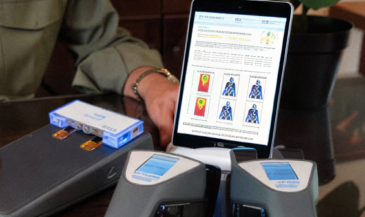
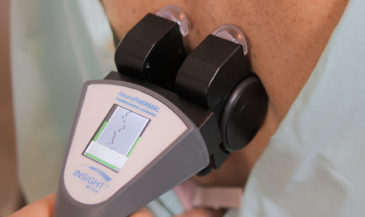
neuroTHERMAL adds another dimension. It analyzes paraspinal temperature patterns associated with autonomic regulation and allows the chiropractor to complete a full spine nerve system scan in under 30 seconds.
With neuroTHERMAL, chiropractors can analyze neurological distress patterns during examinations and compare scan views over time. Again, the purpose is not to diagnose a sleep condition. It is to add objective information about nervous system status.
Synapse Turns Complex Neurology Into a Conversation
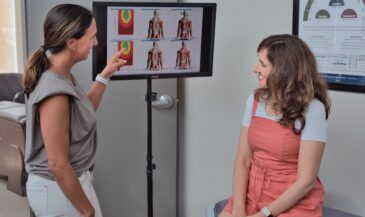
The bigger value appears when neuroCORE, neuroPULSE, and neuroTHERMAL are brought together through INSiGHT neuroTECH and Synapse software. Synapse organizes complex neurological information into scan views and reports that patients can understand.
I like to think of the process as baseline, response, and trajectory. The baseline establishes a starting point. Comparative scans help assess response. Over time, the trajectory helps show how patterns fluctuate under care.
The chiropractor still does the important work. You take the history, conduct the examination, interpret the scan views, provide the adjustments, and build the care plan from the complete clinical picture. INSiGHT does not create that care plan. It provides objective neurological analysis that supports it.
For a patient who came in asking about sleep posture, the conversation can be simple: “Your sleep position matters, and we can talk about your mattress and pillow. But I also want to understand how much work your nervous system is doing underneath all of that.”
That takes the conversation from one common sleep position to nervous system performance. When patients can see where neurological distress may be building and how well they are adapting, they start seeing sleep posture as one piece of a much larger picture.
Finding the Right Sleep Position Is Only Part of Better Sleep
So when a patient asks, “What is the best position to sleep?” resist the temptation to hand them one universal answer.
Side sleeping works well for many people. Back sleeping may be comfortable for others when the head, neck, and knees are supported properly. Some people will continue sleeping on the stomach and feel perfectly comfortable. The right sleep position depends on the individual.
Help patients find the best sleeping position by looking at the whole picture. Is their sleep posture supported rather than forced? Does the pillow complement their preferred position? Does the mattress allow the natural curves of the spine to settle comfortably? Do they wake with new or aggravated back and neck pain? Are reflux, pregnancy, snoring and sleep apnea, or other medical considerations affecting their sleep and breathing?
Good sleep posture can contribute to better sleep, but it is not the only factor involved in a good night’s sleep. Sleep stages, breathing, the sleep environment, neurological distress, medical conditions, and recovery all influence sleep quality. When concerns go beyond ordinary positioning, collaboration with appropriate sleep experts or sleep medicine providers may be necessary.
For chiropractors, sleep posture is useful because it gives us another window into the patient’s story. But the bigger opportunity is to look past position alone. Patients may come in wanting to improve sleep, find a better mattress, or decide whether they should lie on your back or sleep on their side. We can help with those questions without stopping there.
Because you and I know the bigger chiropractic question is not simply how someone is positioned for eight hours.
It is how well their nervous system is adapting through those eight hours, how well it recovers, and how much reserve it has for everything tomorrow is going to ask of it.