

Surgery for a herniated disc is not always necessary. In fact, most individuals who experience a disc injury never require a surgical procedure. That is not to say surgery is not effective, but rather that the body has a remarkable ability to adapt and heal, especially when care is guided by an understanding of how the nervous system is performing and not solely based on structural imaging.
This article is a comprehensive look at when herniated disc surgery becomes appropriate, what surgical care actually involves, and how neurologically focused chiropractic care, supported by objective scanning technology, fits into every phase of that journey. Whether you are a chiropractor guiding your patient or someone researching your own care options, this article is designed to give you clarity, confidence, and a neurologically sound framework to make informed decisions.
What Is a Herniated Disc?
Each vertebra in the spine is separated by a cushion known as an intervertebral disc. These discs have a tough, fibrous outer layer and a softer gel-like core. The primary purpose of these discs is to absorb shock and support mobility between the bones of the spine. When a disc weakens or tears, the inner material can push outward, creating a bulge or rupture. This is what we call a herniated disc.
Herniated discs are most common in the lumbar spine, especially at the lower levels that support the greatest weight and movement. However, cervical disc herniation in the neck is also frequently seen. Thoracic herniations, which affect the mid-back, are relatively rare. The symptoms vary based on location and severity, but they often include radiating leg or arm pain, tingling, numbness, and in some cases, weakness in the limbs.
The critical detail to understand is that not all herniated discs are symptomatic. Research has shown that a significant percentage of people have disc bulges or herniations visible on MRI, yet they experience no discomfort or dysfunction. This reinforces a core principle in neurologically based chiropractic care: structure does not always equal function. What matters most is how the nervous system is adapting to the stress.
The Nervous System’s Role in Disc Symptoms
When a herniated disc is positioned in a way that causes irritation or compression to a nerve root, symptoms can appear downstream. For example, a herniation in the lumbar spine may irritate the sciatic nerve, causing symptoms such as leg pain, numbness, or weakness. In the cervical spine, it may affect the nerves that control the shoulders, arms, or hands.
The body’s response to this compression is not just physical, it is neurological. Nerve roots become irritated when under constant stress, and the surrounding tissues may respond with inflammation. This irritation sends distress signals through the nervous system, which then affects muscle tone, coordination, and in some cases, organ regulation. This is why a full neurological evaluation is essential, even if the patient presents with what appears to be a simple back injury.
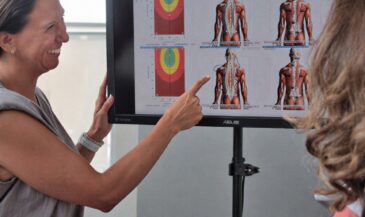
When chiropractors utilize neurological scanning, they are able to objectively analyze how the body is responding to that stress. They can identify where the sympathetic system is overactive or where postural muscles are showing tension imbalances. These findings provide insight into the overall adaptability of the nervous system and help determine whether a conservative care path is appropriate or if further medical consultation is needed.
Learn more about INSiGHT scanning?
Fill this out and we’ll get in touch!
"*" indicates required fields
When Herniated Disc Surgery Is Indicated
There are a few situations where surgery moves from an option to a necessity. The first and most urgent is cauda equina syndrome. This is a rare but serious condition in which the nerves at the base of the spinal cord become compressed. It can lead to bowel or bladder dysfunction, severe leg weakness, and numbness in the saddle region. If these symptoms are present, immediate referral to a hospital or spine specialist is required.
Outside of emergencies, surgery is considered when neurological deficits are worsening or when symptoms persist despite a structured, consistent, and neurologically guided conservative care plan. If a patient’s strength is declining, reflexes are dropping out, or coordination is deteriorating, these are signals that surgical decompression may be necessary to prevent permanent nerve damage.
Another indication for surgery is when the patient’s daily function is significantly impaired, and care over a reasonable trial period has not yielded improvement. This is where imaging plays a role. If an MRI confirms a disc herniation that matches the clinical symptoms and those symptoms have plateaued or worsened under care, a surgical consultation may be appropriate. However, the presence of a disc bulge alone is never a sufficient reason to schedule surgery. It is always about matching the scan to the symptoms and performance trends.
Types of Herniated Disc Surgeries
Microdiscectomy
This is the most common surgery performed for lumbar herniated discs. The procedure involves a small incision through which the surgeon accesses the disc using a microscope or other magnification tools. A small amount of bone may be removed to reach the disc safely. Then, the portion of the disc that is pressing on the nerve is carefully extracted. Because it is minimally invasive, recovery is typically quicker, and many patients return home the same day.
Open Discectomy
In some cases, a larger incision is necessary. This may be due to the anatomy of the patient, the size of the herniation, or the need for additional stability. While recovery from open surgery is often longer, the goals are the same: remove the offending disc material and relieve nerve tension.
Laminotomy or Laminectomy
These procedures are often used when the spinal canal is narrow or when a broader decompression is needed. A laminotomy removes a small portion of the vertebral arch, while a laminectomy removes a larger section. These options are sometimes paired with a discectomy for better access to the affected area.
Artificial Disc Replacement
For certain patients, particularly those with single-level degeneration in the lumbar or cervical spine, artificial disc replacement may be an option. This procedure preserves motion by replacing the damaged disc with a synthetic one. It is not appropriate for all cases, especially where arthritis or multiple-level degeneration is present.
Spinal Fusion
When there is instability or the risk of further degeneration at the affected level, spinal fusion may be performed. This involves permanently joining two or more vertebrae using bone grafts, rods, and screws. While motion at that level is sacrificed, stability is restored. This is sometimes recommended when multiple surgeries have failed or when the disc space is severely degenerated.
Recovery: What to Expect
Immediately after surgery, patients are monitored in a recovery area and usually begin walking within hours. For microdiscectomy patients, discharge often occurs the same day. Fusion or more complex surgeries may involve a longer hospital stay. Patients receive instructions on how to move safely, how to care for the incision site, and what movements to avoid during the initial healing phase.
In the weeks that follow, most patients gradually resume activity. Walking is encouraged early on, while lifting, twisting, and prolonged sitting are typically restricted. Physical therapy often begins within a few weeks, focusing on core stabilization, posture correction, and movement retraining. The goal is not only to heal the surgical site but to restore proper neurological coordination throughout the spine.
Return-to-work timelines vary based on the procedure and job demands. Desk workers may return within three to four weeks, while manual laborers may need up to three months. The true milestone of recovery is not just pain relief but improved endurance, balance, and nervous system performance.
Why Conservative Care Still Matters
For the majority of herniated disc cases, surgery is not the first choice—and it should not be. Chiropractic adjustments, structured exercises, movement education, and lifestyle coaching can lead to tremendous improvement, especially when care is neurologically guided. The nervous system is not just a bystander during recovery. It is the conductor of the healing process.
When nervous system adaptability is supported through adjustments and measured by objective scans, the body often finds ways to reduce nerve tension without surgical intervention. The right care, provided with the right strategy and the right data, helps patients improve function, reduce symptoms, and regain confidence.
However, care should not continue indefinitely without re-evaluation. If function plateaus or worsens despite appropriate effort and planning, re-imaging and surgical consultation should be considered. This is not a failure of care—it is a reflection of responsible clinical decision-making.
INSiGHT Scanning: The Chiropractor’s Navigation System
Throughout both conservative and post-surgical care, INSiGHT scanning technology gives chiropractors a way to measure what truly matters: nervous system performance. These instruments allow the chiropractor to monitor objective changes, not just symptoms or patient reports.
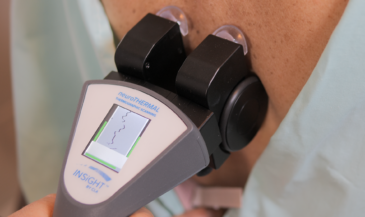
- neuroTHERMAL scanning reveals temperature imbalances along the spine, helping detect areas of sympathetic overdrive and regulation breakdown.
- neuroCORE sEMG tracks postural muscle tone, showing where the body is compensating or holding onto stress patterns.
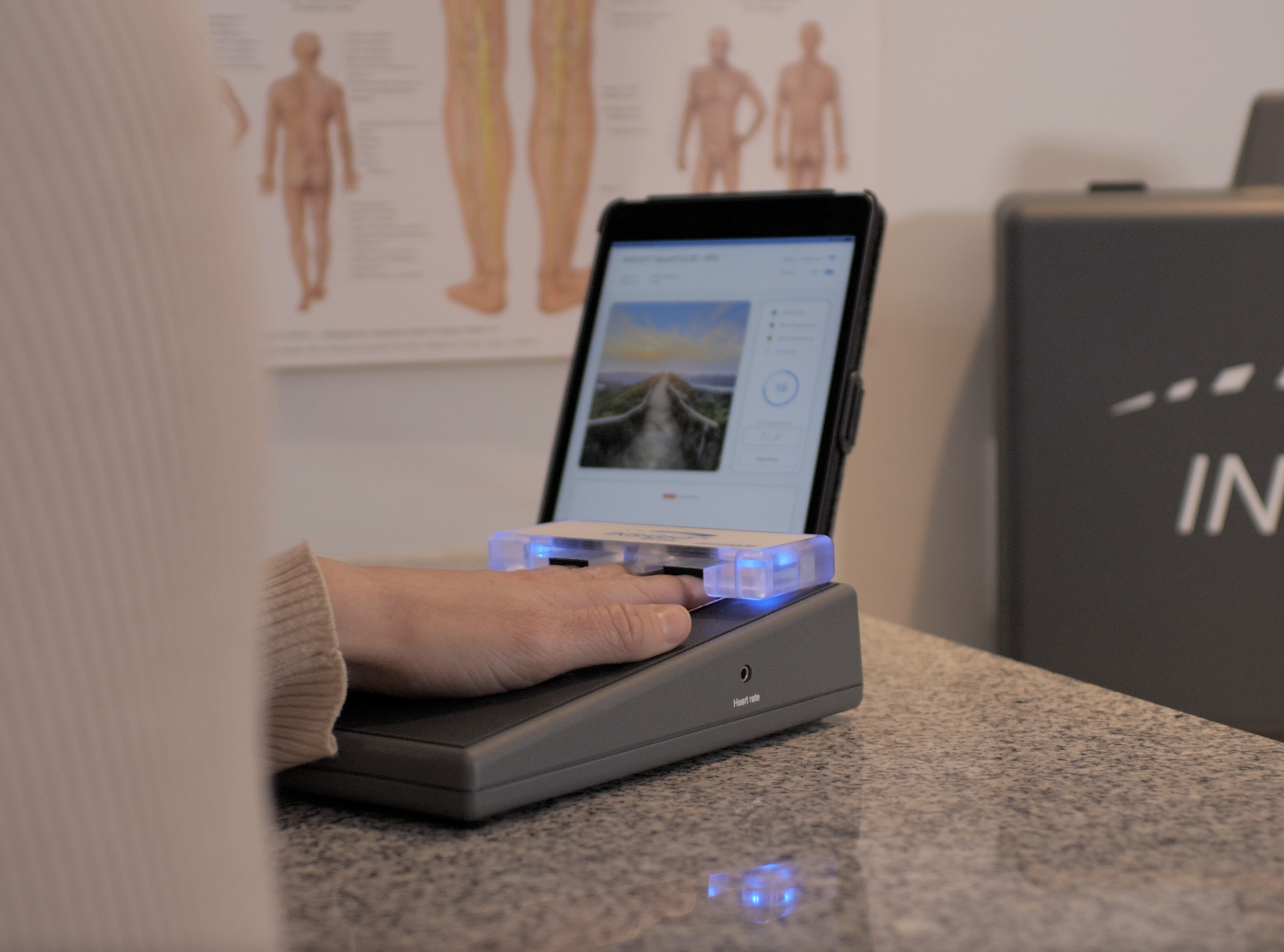
- neuroPULSE HRV uses heart rate variability to assess adaptability and autonomic balance, helping patients understand whether their reserve is rebuilding or stuck in stress mode.
These tools offer clarity. They show when care is making a difference, when change is stalling, and when a shift in strategy might be needed. And for patients, they turn abstract progress into something visual, measurable, and deeply empowering.
Build Care Plans Around Performance
Surgery is not the enemy. It is a valuable and sometimes essential tool in helping patients regain function and protect the integrity of the nervous system. But the decision to operate should never be rushed or made based on imaging alone. It should be rooted in a clear, neurologically grounded understanding of what the patient’s body is telling us through both symptoms and objective scans.
Chiropractors equipped with INSiGHT technology and a neurologically focused mindset are uniquely positioned to guide patients before and after surgery. They can help patients avoid unnecessary procedures by improving adaptability and function. And when surgery is needed, they can provide the support that allows for faster, more coordinated recovery.
In the end, whether care involves adjustments, rehab, or surgical referral, the guiding principle remains the same: support the nervous system. Because when performance improves, everything else tends to follow.