

Heart rate variability, or HRV, is one of the most meaningful windows into how the body is responding, adapting, and recovering. Yet for many patients, their exposure to HRV begins with a single number displayed on a wearable device. The natural next question they ask is, “Is this number good for my age?”
That’s where we, as chiropractors, can step in and provide clarity. Not just by explaining what is considered average sleeping HRV by age, but by helping our patients understand what these numbers really represent. HRV is not about chasing a high score. It is about tracking how the nervous system responds to everyday demands, how well the body recovers from them, and how the entire system restores balance during sleep.
Sleep-based HRV is especially valuable because it provides a clean, consistent signal. At night, the body is not dealing with the noise of posture changes, emotional fluctuations, physical activity, or external stressors. What remains is the story of the autonomic nervous system—laid out clearly and simply. This guide walks you through that story, from age-based averages and physiological influences to how you can use tools like the INSiGHT neuroPULSE and the Rainbow Graph to bring this powerful metric into every patient conversation.
What HRV Reveals About the Nervous System
HRV refers to the tiny differences in time between heartbeats. Although a heart might beat 60 times in a minute, those beats are not spaced exactly one second apart. Instead, they naturally vary. That subtle variation, measured in milliseconds, reflects how the autonomic nervous system is functioning.
The autonomic nervous system has two branches. The sympathetic system gets us ready to act. It increases our heart rate and prepares us to handle challenges. The parasympathetic system helps us slow down, digest, recover, and sleep. When these systems are balanced and flexible, the nervous system can quickly respond to stress and then return to a calm state. A high HRV indicates that this balance and adaptability are in place. A low HRV often means the system is stuck, spending more time in sympathetic dominance and struggling to bounce back after stress or exertion.
This is why chiropractors who assess HRV see it as a true indicator of how the nervous system is performing—not just reacting. And it is why sleeping HRV, collected during the body’s most restful and stable hours, provides such an accurate and reproducible baseline for evaluation.
Understanding the Averages: Sleeping HRV by Age
HRV naturally changes as we age. In general, children and young adults have higher HRV values, while older individuals tend to have lower HRV. This decline is largely due to physiological aging, but it can also be affected by lifestyle, environment, and long-term patterns of nervous system stress. That said, the range of what’s considered normal can be surprisingly wide—even within the same age group.
Here is a simplified chart that reflects typical sleeping HRV ranges by age:
| Age group | Typical sleeping HRV range |
|---|---|
| 18–25 | 55–105 ms |
| 26–35 | 55–75 ms |
| 36–45 | 50–70 ms |
| 46–55 | 45–65 ms |
| 56–65 | 42–62 ms |
| 66+ | 40–60 ms |
Note: Theese are reference ranges, not targets. The most useful comparison is your own long-term trend.
It is important to remind patients that these ranges are not goals. They are only reference points. What matters most is not how someone compares to a population average, but whether their own HRV is improving, stabilizing, or trending in the wrong direction. For example, a healthy, active 60-year-old may consistently track a higher HRV than a stressed, sedentary 30-year-old. As practitioners, we are most interested in where the individual is starting—and how they are changing under care.
Sleep-based measurements give us the most consistency. When we compare HRV values from week to week and month to month, we can start to see a true story emerge. This is far more powerful than a single-night snapshot.
Learn more about INSiGHT scanning?
Fill this out and we’ll get in touch!
"*" indicates required fields
How Sleep Stages Influence HRV
Sleep is not one uniform state. Instead, it cycles through several stages, each with its own impact on the nervous system and HRV.
- Light sleep: This includes stages 1 and 2, when the body begins to relax and shift out of conscious awareness. Heart rate begins to slow, and HRV gradually becomes more stable.
- Deep sleep: Also known as slow-wave sleep or stage 3, this is when the body performs its deepest recovery work. Heart rate is at its lowest, and HRV tends to peak in terms of stability. This stage is key for physical healing and cellular repair.
- REM sleep: During rapid eye movement sleep, the brain becomes highly active again, and heart rate tends to fluctuate. HRV often becomes less stable in this stage, and that is entirely normal. This is the time when emotional and cognitive processing takes place.
When we look at an HRV graph from a night of sleep, we can often identify these stages by the shifts in pattern. If deep sleep is cut short due to environmental disruption or physiological stress, the next day’s HRV baseline may be lower. And that gives you, as the provider, something to talk about with the patient—something specific, visible, and meaningful.
Average Sleeping HRV for Men vs Women
Is sleeping HRV is different for men and women? The short answer is yes, it can be, but age, overall health, fitness level, stress load, sleep quality, and your personal baseline usually matter more than comparing your number too closely to someone else’s.
Average sleeping HRV tends to decline with age in both men and women. Younger adults often record higher HRV values during sleep, while older adults typically show lower values over time. That pattern is normal. What matters most is understanding what is typical for your age range and then tracking how your own HRV changes from week to week and month to month.
Men and women may show slightly different average HRV readings depending on the study, wearable device, and measurement method being used. The best way to interpret sleeping HRV is to look at your age range, your recent lifestyle habits, your recovery, your sleep consistency, and your long-term trend. If your HRV is improving over time, that often points toward better recovery capacity and stronger nervous system adaptability. If it is consistently dropping, that can be a sign that stress, poor sleep, illness, overtraining, or other recovery issues are affecting your system.
It is also important to remember that different devices can produce different HRV values. Oura, WHOOP, Apple Watch, Garmin, and clinical tools may not all display the exact same number, even when measuring the same person. That means the smartest approach is to stay consistent with the same device and use it to monitor your own baseline over time.
Why Trends Matter More Than Numbers
Every patient wants to know, “Is this a good HRV?” But one number, taken in isolation, cannot answer that question. HRV naturally fluctuates based on many factors: hydration, nutrition, physical activity, emotional stress, illness, and sleep depth. A low reading after a tough day or poor night’s sleep is not a cause for concern. What matters most is the pattern over time.
When patients begin to track their HRV using wearables or INSiGHT scans, help them focus on trendlines. If their average HRV is rising week over week and their system is becoming more responsive, that tells us their nervous system is adapting more effectively. This may correlate with improved energy, reduced symptoms, and better function overall. But even before those changes are felt, the HRV scan lets you see and show progress early.
Patterns build certainty. A single number invites questions. But a stable trendline that improves over time tells a story patients can believe in. It supports your care plan and helps you stay anchored to objective indicators—especially when symptoms lag behind progress.

Common Factors That Reduce HRV During Sleep
Here are some of the most common culprits that push HRV down and sympathetic tone up during the night:
- Heavy meals close to bedtime: Digestion keeps the body working when it should be shifting into rest mode.
- Alcohol: Even small amounts disrupt the sleep cycle and suppress parasympathetic activation.
- Overtraining: Without proper recovery, physical stress adds load that the nervous system cannot easily process.
- Illness or inflammation: A body under immune stress tends to raise heart rate and suppress HRV until resolution begins.
- Environmental disruptions: Excess light, heat, or sound in the bedroom can reduce deep sleep and disrupt autonomic patterns.
Helping patients identify these patterns gives them agency. They begin to see how their choices shape their recovery. And they start to connect those patterns to what you are showing them in your care. That’s when HRV becomes more than a number—it becomes a motivator for lifestyle alignment and healing.
Teaching Patients to Measure HRV Correctly
Wearable devices have opened the door to HRV awareness, but they have also introduced new inconsistencies. Patients may come in with HRV numbers pulled from a variety of devices, each using different methods and algorithms. That is why we teach them to focus less on the brand and more on the method.
- Use the same device consistently, ideally one validated for nighttime HRV.
- Wear the device in the same position (same wrist or finger) every night.
- Go to bed and wake up at the same time to create repeatable conditions.
- Ignore one-off dips or spikes. Focus on weekly or monthly averages.
- Pair HRV data with sleep quality, resting heart rate, and daily habits.
Consistency is more important than precision. When the nightly conditions are stable, the patterns become more trustworthy. And when the patterns are trustworthy, the coaching becomes clearer.
Habits That Help Improve HRV Over Time
We don’t need to overcomplicate it. Patients want to know what they can do. Here are five foundational ways to support better HRV:
- Maintain a regular sleep-wake schedule throughout the week.
- Adhere to a chiropractic care plan
- Wind down without screens, bright lights, or emotional stimulation in the hour before bed.
- Finish eating and drinking alcohol at least three hours before going to sleep.
- Practice breathing techniques or gratitude journaling in the evening to activate the parasympathetic system.
- View exercise as a dose that requires appropriate recovery, not just intensity.
When these habits are paired with regular chiropractic adjustments, the results are magnified. Patients not only feel the difference—they begin to see it in their scan results. That creates a loop of engagement, trust, and follow-through.
How INSiGHT neuroPULSE and the Rainbow Graph Support Your Care
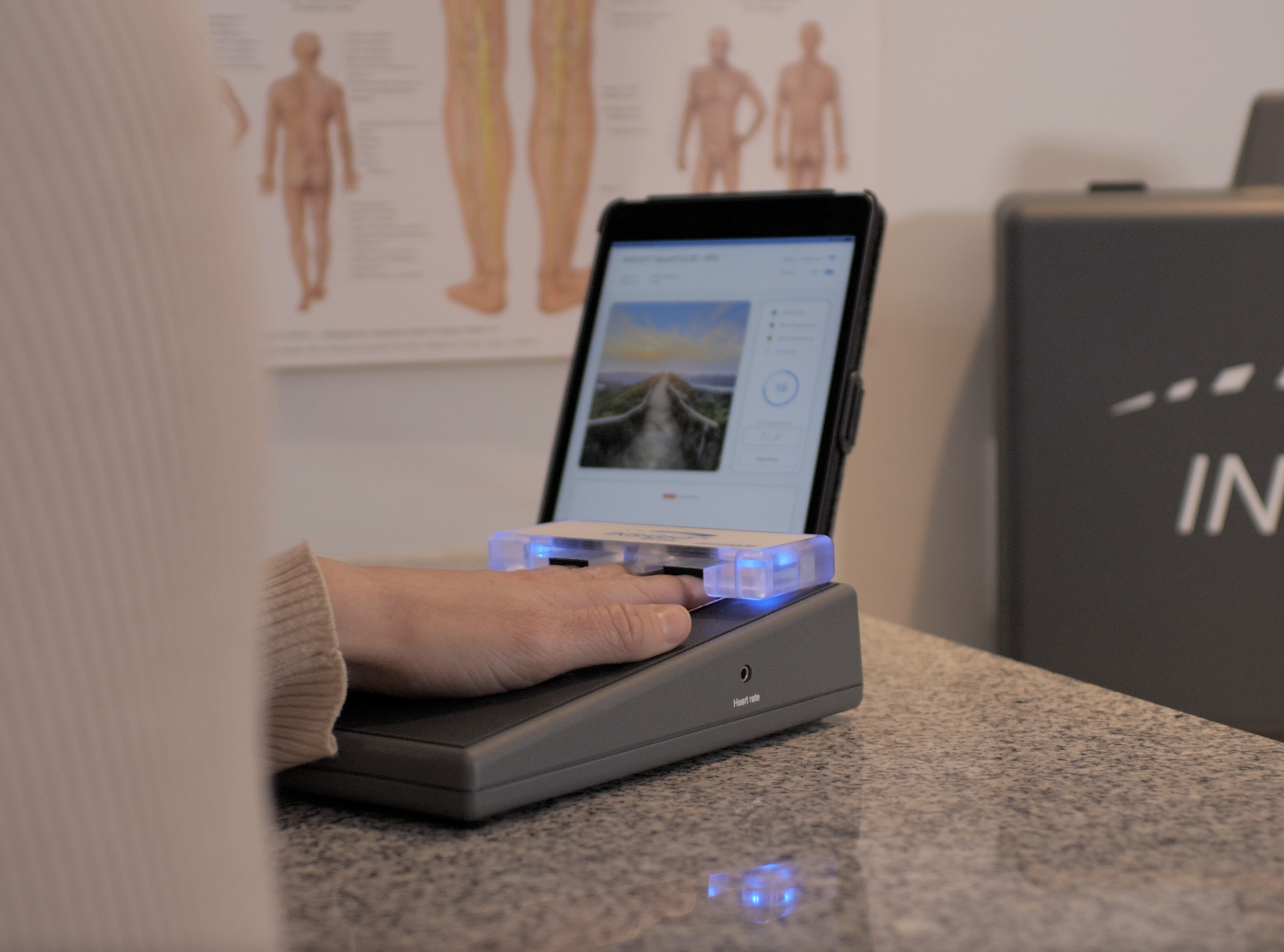
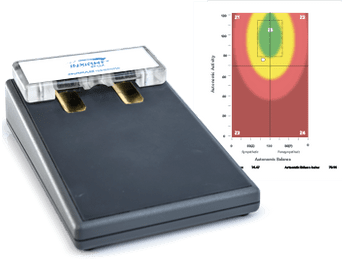
The neuroPULSE HRV scan allows you to gather clinically relevant HRV data in under three minutes. The analysis captures beat-to-beat intervals and presents the data visually through Synapse-powered software. The Rainbow Graph helps you explain where a patient plots in terms of sympathetic vs. parasympathetic tone and adaptive reserve.
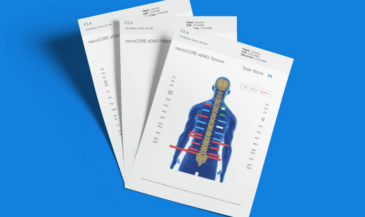
The result? A visual snapshot of the nervous system’s ability to manage stress and respond to care. The white dot shows where the patient is today. As it moves over time—toward center, upward into higher reserve—you and the patient both have objective proof that care is making a difference.
Most importantly, the neuroPULSE does not generate care plans. It informs them. You, as the clinician, interpret the data and design a care plan rooted in the objective findings and your expertise. This keeps the process rooted in clinical judgment while giving patients the clarity they crave.

The Real Value of HRV in Chiropractic
Average sleeping HRV by age gives us helpful context. But the true value of HRV lies in tracking how a person’s nervous system performs and adapts over time. HRV reveals how well the body is recovering, how deeply it is restoring during sleep, and how responsive the system is to care.
With tools like the neuroPULSE (part of the INSiGHT scanning tech) and the Rainbow Graph, you now have a way to show patients exactly how their body is changing instead of just how it feels. This helps build certainty in the care plan, anchors the patient to their progress, and deepens their commitment to both your recommendations and their own recovery routines.
Book a demo of the INSiGHT tech today, to see how you can integrate HRV scanning into your practice.
FAQ: Sleeping HRV by Age
What is a good sleeping HRV by age?
A good sleeping HRV by age is one that falls within a healthy range for your stage of life and remains strong relative to your own normal baseline. In general, younger adults tend to have higher sleeping HRV, while older adults often have lower values. That is a normal age-related pattern. A good HRV is not about chasing one perfect number. It is about understanding what is typical for your age, then watching how your HRV trends over time with changes in sleep, stress, recovery, fitness, and overall health.
What is a normal sleeping HRV range?
A normal sleeping HRV range can vary widely depending on the person, the device being used, and the measurement method. There is no single number that defines normal for everyone. Age, fitness level, stress load, medications, sleep quality, and nervous system balance can all influence the result.
Does sleeping HRV go down with age?
Yes, sleeping HRV generally declines with age. This is one of the most consistent patterns seen in HRV data. Younger individuals often have greater variability between heartbeats, which reflects stronger adaptability and recovery capacity. As people get older, HRV often becomes lower on average. That does not automatically mean something is wrong. It simply means age should always be considered when interpreting HRV.
Is low sleeping HRV bad for my age?
Not always. A lower sleeping HRV can be completely normal depending on your age and your baseline. The bigger question is whether your HRV is unusually low for you, especially if it stays down over time. A drop in sleeping HRV may reflect poor sleep, illness, stress, alcohol use, overtraining, emotional strain, or reduced recovery. One low reading is usually not enough to draw a strong conclusion. A pattern of lower readings, especially when paired with fatigue or poor sleep, is more meaningful.
Is a higher sleeping HRV always better?
Higher sleeping HRV is often associated with better recovery, resilience, and nervous system adaptability, but higher is not always better in every situation. Some people naturally run lower or higher than others.
Why is sleeping HRV important?
Sleeping HRV is important because sleep is one of the best times to measure recovery and autonomic nervous system activity with fewer daytime distractions. During sleep, especially deeper stages of sleep, your body has a chance to repair, regulate stress, and restore balance. A healthy sleeping HRV pattern can suggest stronger recovery capacity and better nervous system adaptability. Lower or declining sleeping HRV may suggest the body is under greater strain and not recovering as well as it could be.
Is sleeping HRV more accurate than daytime HRV?
Sleeping HRV is often considered more consistent and useful than daytime HRV because it is less affected by movement, caffeine, work stress, conversation, posture, and daily activity. Daytime HRV can still be valuable, but sleeping HRV usually provides a cleaner baseline for tracking long-term trends.
What affects sleeping HRV the most?
Several factors can influence sleeping HRV. Common ones include age, fitness level, recovery status, training load, emotional stress, sleep duration, sleep quality, hydration, alcohol, illness, inflammation, medications, and overall nervous system balance. Even travel, jet lag, and inconsistent bedtimes can affect overnight HRV.
Can poor sleep lower HRV?
Yes, poor sleep can lower HRV. Short sleep, fragmented sleep, inconsistent sleep timing, and reduced sleep quality can all place more stress on the body and reduce overnight recovery. Since HRV reflects how well your autonomic nervous system is adapting, poor sleep often shows up as a lower or less stable HRV pattern.