
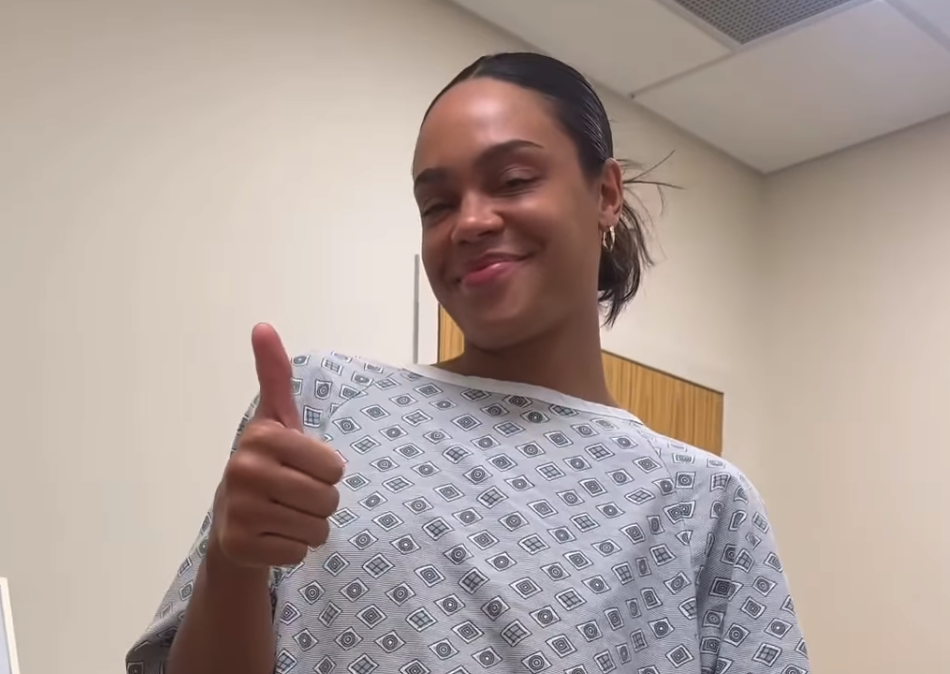
Michelle shares on social media what it has been like to live with debilitating symptoms, searching for answers, and working with a nervous system-based chiropractor who uses INSiGHT scans to measure and track patterns in her nervous system.
Her story is resonating because it touches something many people understand deeply: the frustration of feeling that something invisible is happening inside the body, while searching for clear answers and objective validation.
Why Michelle Young’s Story Resonates With So Many People
Michelle’s story is powerful because it is personal, honest, and highly relatable to people living with chronic symptoms or invisible illness.
She explains that although she was diagnosed with dysautonomia about six months ago, she can trace symptoms back four or five years. Over time, those symptoms became more intense and eventually debilitating. She experienced extreme fatigue, brain fog, panic attacks, heart palpitations, hypoglycemia, and other symptoms tied to POTS.
After her wedding to Jack Leius in 2025, Michelle continued to experience health challenges and later shared that she had been severely exposed to mold and mycotoxins. She has since explained that she developed POTS after her autonomic nervous system “completely crashed.”
Her story has brought the autonomic nervous system and POTS conversation into the national spotlight. She is helping people understand that the nervous system plays a role in many automatic functions of the body, including heart rate, blood pressure, and temperature regulation.
“Dysautonomia is basically an overarching or umbrella term for a range of disorders where there’s a malfunction in the autonomic nervous system.”
In her first reel, she explains that when she began seeing a nervous system-based chiropractor, POTS had “completely taken over” her life. She shares that she was struggling to get out of bed, could hardly work, and was experiencing panic attacks and other symptoms at an all-time high.
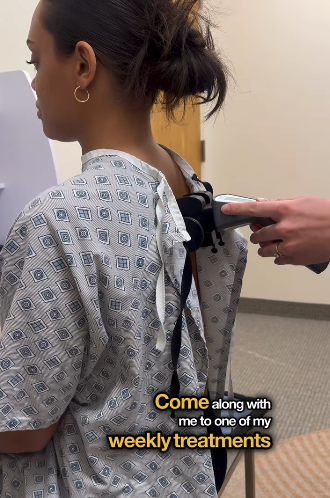 She describes her first experience with INSiGHT scans:
“At my very first appointment, I went through a bunch of INSiGHT Scanning, which accurately tests your own central nervous system.”
She shares that her results showed that her body was “very much stuck in fight or flight” and that both her sympathetic and parasympathetic systems were exhausted.
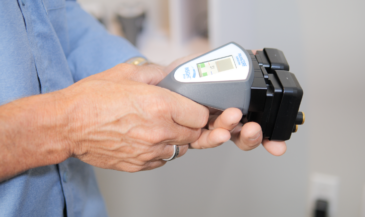
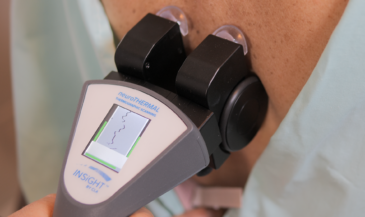
In her second reel, Michelle goes deeper into the three INSiGHT scanning technologies used by her chiropractor (the neuroPULSE, neuroCORE, and neuroTHERMAL). Adding that “Neurological scans that give you a very detailed look on how your nervous system is functioning.”
To Michelle, the real validation comes from seeing what is happening in the body in real time:
“I think it’s pretty cool that they’re able to see how your body is doing in real time, which truthfully is validating at times when it comes to invisible illness.”
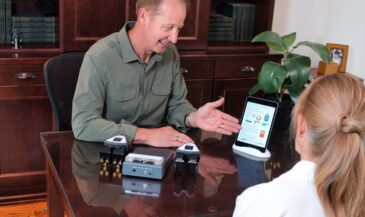
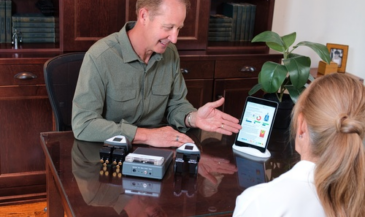
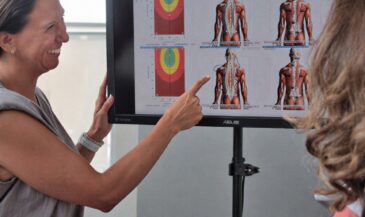
For people who feel symptoms deeply but struggle to explain them, objective data can create a bridge between experience and understanding. It gives the doctor and the patient something visual to discuss. It helps create a clearer conversation around patterns, baselines, and progress.
Michelle also highlights the importance of re-scanning over time. She shows an initial baseline scan that indicates her body is in a fight-or-flight pattern, and then compares it to a more recent scan showing that her body is becoming more stable.
That is a central strength of INSiGHT scanning technology. It gives chiropractors objective examination data they can interpret, communicate, and track over time.
What INSiGHT scans measure
INSiGHT scanning technology includes three core technologies: the neuroPULSE, neuroTHERMAL, and neuroCORE. Together, they help chiropractors gather objective neurological data related to nervous system performance.
Each technology measures a different aspect of nervous system function, giving the doctor a broader view of how the body is adapting, responding, and expressing stress patterns.
neuroPULSE
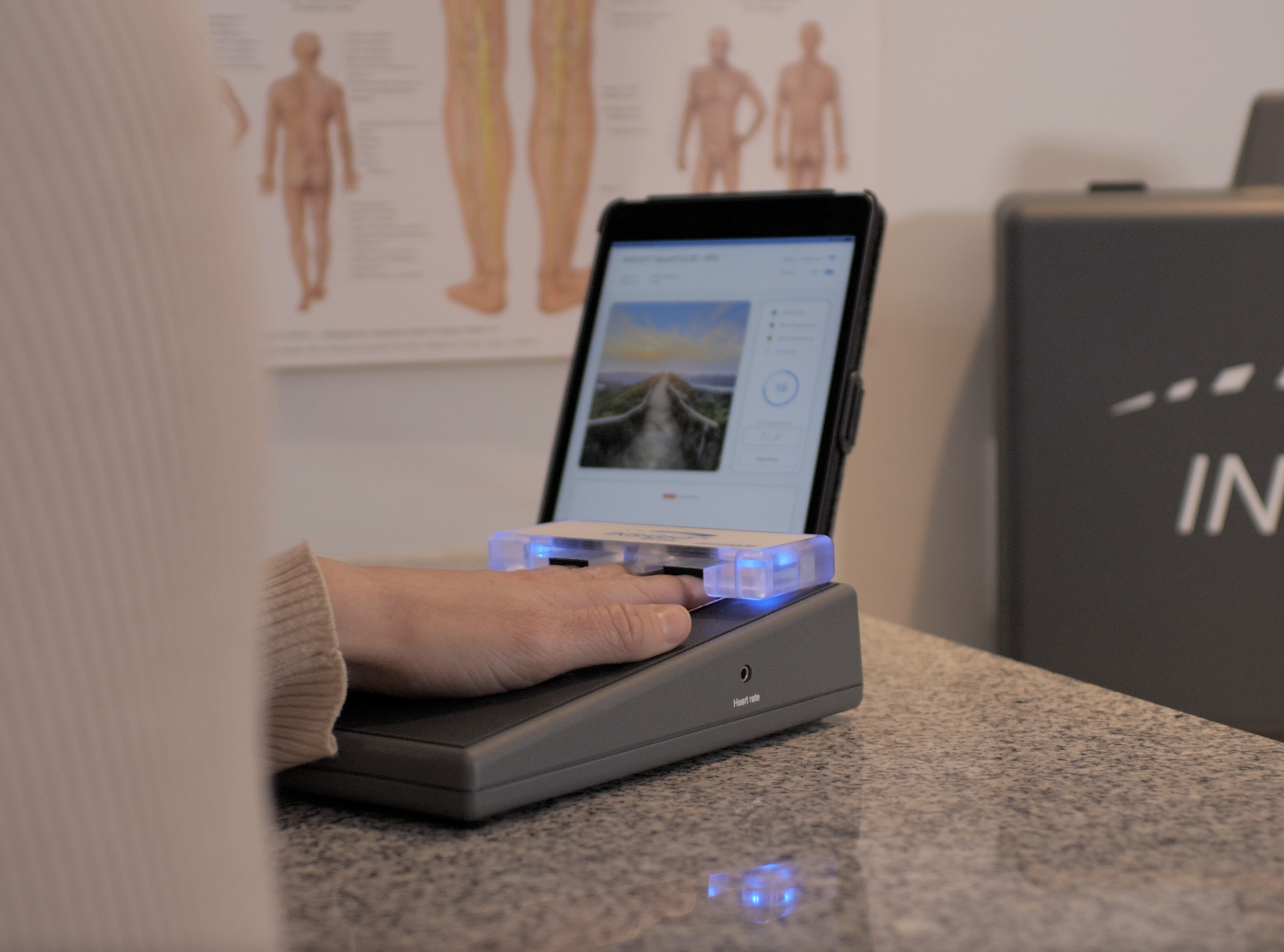
The neuroPULSE is designed to measure Heart Rate Variability, or HRV, in a clinical setting. HRV helps provide insight into autonomic balance, autonomic activity, adaptability, and stress response.
In simple terms, neuroPULSE gives the chiropractor objective data that helps show how the body is adapting to stress and whether patterns may be leaning toward fight-or-flight or recovery states.
neuroTHERMAL
The neuroTHERMAL helps chiropractors assess segmental stress patterns through temperature regulation. Because temperature regulation is influenced by the autonomic nervous system, this scan gives the doctor additional objective data to consider when evaluating nervous system patterns.
This can be especially meaningful for patients because it helps visualize patterns that are not always obvious from symptoms alone.
neuroCORE
The neuroCORE helps chiropractors measure energy and motor tone reactions. It provides objective data about muscle activity patterns and how the neuromuscular system is responding.
For the patient, this can make the conversation more visual. Instead of only talking about tension, fatigue, or stress patterns, the chiropractor has scan data that can help explain how those patterns are showing up through the body.
Learn more about INSiGHT scanning?
Fill this out and we’ll get in touch!
"*" indicates required fields
Why objective nervous system data matters
Patients often know what they feel. They may feel exhausted, overwhelmed, tense, foggy, anxious, dysregulated, or stuck in a stress pattern. But feelings alone can be hard to explain. They can also be hard to track over time.
That is where objective nervous system data becomes so valuable.
INSiGHT scans help chiropractors create a baseline. A baseline gives the chiropractor and patient a starting point. It allows the conversation to move from vague symptoms to visible patterns.
Then, with re-scans, the chiropractor can monitor how those patterns change over time. That makes progress easier to communicate because the doctor is not relying only on memory, symptom reporting, or guesswork. The scans provide objective examination data that the chiropractor can interpret in the context of the patient’s history, exam, and clinical picture.
When patients can see their scan results, the conversation becomes clearer. They can better understand what the doctor is observing. They can see why re-scans matter. They can recognize that nervous system performance is not static. It can shift over time, and those shifts can be measured and discussed.
That is the power of objective data. It brings clarity to the exam, meaning to the report of findings, and purpose to the re-scan conversation.
Learn more about INSiGHT scanning technology
INSiGHT scanning technology helps chiropractors measure, communicate, and track nervous system performance through objective examination data.
With neuroPULSE, neuroTHERMAL, and neuroCORE, doctors can create clearer conversations around autonomic patterns, stress response, adaptability, temperature regulation, motor tone reactions, and progress over time.
If you are a chiropractor who wants to bring objective nervous system scanning into your practice, contact our team to learn more about INSiGHT scanning technology.
If you’re looking for chiropractors in your area that use INSiGHT technology, visit our directory.