

The honest answer is yes, chiropractic care may help with certain forms of vertigo, but the cause determines the care. Benign paroxysmal positional vertigo requires a different approach than cervicogenic dizziness. Vestibular migraine does not behave like loose crystals inside an ear canal, and a central neurological or cardiovascular concern should never be reduced to a neck adjustment.
That distinction is where good clinical judgment begins. When a patient asks, “Can chiropractic help vertigo?” the better question is what is creating the dizziness, which balance systems are involved, and what form of care fits the findings. A thoughtful chiropractor brings those pieces together before deciding whether chiropractic care can help.
What Causes Vertigo and Dizziness?
Vertigo is a common reason people seek help, but the word is often used too broadly. Some patients use it to describe a spinning sensation. Others mean they feel faint, foggy, off-balance, or as if they are walking on a moving dock. Before deciding whether chiropractic care may help, the doctor must first understand the type of dizziness the patient is describing.
True vertigo is the false sense that the person or environment is moving. Disequilibrium feels more like unsteadiness. Lightheadedness may point toward cardiovascular, medication-related, metabolic, or autonomic factors. These differences matter because dizziness and vertigo are not interchangeable.
Balance Depends on the Eyes, Inner Ear, and Cervical Spine
Balance is a neurological team effort. The visual system tells the brain what the eyes see. The vestibular system in the inner ear reports head movement, acceleration, and position. Proprioceptive input from the cervical spine, muscles, joints, and the rest of the body tells the brain where the head and body are in space.
When those messages agree, the brain organizes movement with confidence. When they do not, a sensory mismatch may leave the patient feeling dizzy, unsteady, or disoriented. This is why the neck can be relevant in some cases, but should never be blamed automatically.
Common Causes of Vertigo
- Benign paroxysmal positional vertigo: BPPV occurs when a small crystal or group of crystals moves into a semicircular canal of the inner ear and causes brief positional episodes.
- Cervicogenic dizziness: Altered sensory input from the neck may contribute to unsteadiness, especially when vertigo symptoms occur with neck pain, restricted motion, or a previous neck injury.
- Vestibular neuritis or labyrinthitis: Inflammation involving the balance nerve or nearby inner-ear structures can produce significant dizziness and imbalance.
- Vestibular migraine: A migraine can cause vertigo, motion sensitivity, or imbalance with or without a typical headache.
- Meniere’s disease: This condition can involve hearing changes, tinnitus, ear pressure, and episodes of peripheral vertigo.
- Concussion or central neurological causes: These presentations require careful assessment and, when indicated, medical collaboration or urgent referral.
No single symptom, palpatory finding, or scan can identify all causes of vertigo. Neurological scanning can add objective information about nervous system performance, postural tension, autonomic patterns, and adaptive reserve, but it does not show displaced inner-ear crystals or diagnose the source of vertigo.
Can Chiropractic Help Vertigo? It Depends on the Cause
Can chiropractic help vertigo? In the right case, yes. Chiropractic may help when altered cervical function contributes to the presentation, when a trained doctor identifies BPPV, or when vestibular rehabilitation falls within the doctor’s training. But no responsible chiropractor should promise to treat vertigo before understanding why the patient is dizzy.
People searching for “chiropractor help with vertigo” deserve a cause-specific answer. One patient may benefit from an Epley maneuver, another may need gentle chiropractic care directed at cervical function, and a third may need medical evaluation or coordinated vestibular care.
Chiropractic Care and Cervicogenic Dizziness
Cervicogenic dizziness is generally considered when unsteadiness occurs alongside altered neck function. The patient may report restricted cervical movement, headache, postural tension, or dizziness after whiplash or another neck injury. Some notice that turning or holding the head in certain positions makes them feel less steady.
The neurological explanation centers on proprioception. If cervical input about head position does not match information from the eyes and vestibular system, the conflict may contribute to feelings of dizziness. This does not mean every patient with neck pain and dizziness has cervical vertigo. The full pattern still requires examination.
When cervical findings appear relevant, chiropractic care may include gentle chiropractic adjustments, mobilization, exercises for cervical control, and soft tissue approaches for postural tension. The goal is not simply neck alignment. The goal is to improve movement quality and sensory input while observing whether the patient’s balance and vertigo symptoms respond.
Other Forms of Vertigo Need Different Care
Vestibular neuritis, labyrinthitis, migraine-related vertigo, Meniere’s disease, and concussion-related imbalance do not share one simple course of treatment. Some patients need vestibular exercises to help the brain recalibrate. Others need medical care, hearing assessment, medication review, or coordinated rehabilitation.
That is the responsible answer to “Can chiropractic help vertigo?” Chiropractic care for vertigo may help in selected cases, but not every patient should receive the same approach. Sometimes the best route is collaborative care.
Learn more about INSiGHT scanning?
Fill this out and we’ll get in touch!
"*" indicates required fields
Chiropractic Techniques and Examination for Vertigo Relief
Patients with dizziness or vertigo often arrive with several labels but no clear explanation. A thoughtful chiropractor brings order to that story by determining whether the presentation appears positional, cervical, inner-ear, migraine-related, autonomic, or potentially central. The value is not in how quickly an adjustment is delivered. It is in the quality of the clinical decision.
When a patient asks, “Can chiropractic help vertigo?” a good history often provides the first useful clues. The duration, trigger, associated signs, and onset pattern usually tell the doctor more than the word dizziness alone.
Begin With the Patient’s Description
- Clarify the sensation: Is it a spinning sensation, rocking, imbalance, or lightheadedness?
- Identify the trigger: Does rolling over, looking up, bending, standing, or turning the neck bring it on?
- Ask about associated signs: Are there headaches, nausea, tinnitus, ear pressure, hearing loss, weakness, or vision changes?
- Review the history: Did the patient experience vertigo after illness, concussion, whiplash, or a medication change?
- Define the timeline: Does each episode last seconds, minutes, hours, or remain constant?
Short positional bursts point in a different direction than continuous dizziness. Hearing changes, neck-related triggers, headache patterns, or neurological signs also reshape the examination and referral decision.
Examine the Systems That Maintain Balance
Depending on training and scope, the doctor may assess cervical range of motion, joint function, posture, neurological findings, eye movements, gaze stability, balance, coordination, and tolerance to head movement. Orthopedic examination may be relevant after a neck injury. Neurological scanning becomes an essential part of the exam.
Each procedure should answer a clinical question. Is the complaint reproduced by head position or cervical movement? Can the eyes remain stable during head motion? Do the findings fit a peripheral pattern? One restricted joint, balance test, or scan cannot establish the cause alone.
Match the Chiropractic Techniques to the Findings
- Gentle chiropractic care: Adjustments or mobilization may be used when altered cervical function and sensory input appear relevant.
- Cervical exercises: These may improve movement quality, head-position awareness, and confidence with motion.
- Vestibular rehabilitation: A chiropractor may use gaze-stability, habituation, balance, and head-movement exercises when appropriate.
- Canalith repositioning: This may be used for an appropriate BPPV presentation rather than as a general vertigo treatment.
- Collaborative referral: Hearing, neurological, cardiovascular, or complex migraine findings may require another provider.
Patients who see a chiropractor deserve an approach that matches the problem. Some may experience vertigo relief quickly after repositioning, while cervical, concussion, or vestibular cases may progress more gradually. Long-term relief cannot be promised, but balance, movement tolerance, and objective findings can be followed.
Know When Not to Adjust
A patient with sudden severe vertigo and new neurological signs needs urgent medical attention. Warning signs include:
- Speech or facial changes: New difficulty speaking or facial weakness
- Limb findings: Weakness or numbness in an arm or leg
- Vision changes: Double vision or sudden vision loss
- Loss of coordination: An inability to stand, walk, or control movement
- Major neurological signs: Fainting, confusion, collapse, or a severe unfamiliar headache
- Hearing or trauma concerns: Sudden hearing loss or significant recent head or neck trauma
Responsible chiropractic care includes knowing when to adjust, when to rehabilitate, and when to refer.
How INSiGHT Scanning Supports Chiropractic Care for Patients With Dizziness
Vertigo is invisible. The patient can describe the room spinning, the uneasy feeling after turning the head, or the difficulty walking through a busy store, but those words do not show the broader nervous system status. This is where INSiGHT scanning technology supports a Neurologically-Focused Chiropractor without pretending to diagnose the cause of vertigo.
The purpose is not to label BPPV, Meniere’s disease, vestibular neuritis, or cervicogenic dizziness. INSiGHT neuroTECH and Synapse software provide objective exam data about nervous system performance that the doctor considers alongside history, cervical function, balance testing, and patient goals.

neuroCORE and Cervical-Postural Patterns
The neuroCORE analyzes surface electromyography in the paraspinal muscles. It helps the chiropractor see patterns of postural tension, asymmetry, motor output, and energy expenditure along the cervical and thoracic regions.
This can be useful when the examination also points toward altered cervical function or compensation after a neck injury. neuroCORE does not prove that postural tension causes vertigo. It provides objective analysis that supports the doctor’s interpretation of how the postural motor system is functioning.
neuroPULSE and Adaptive Reserve
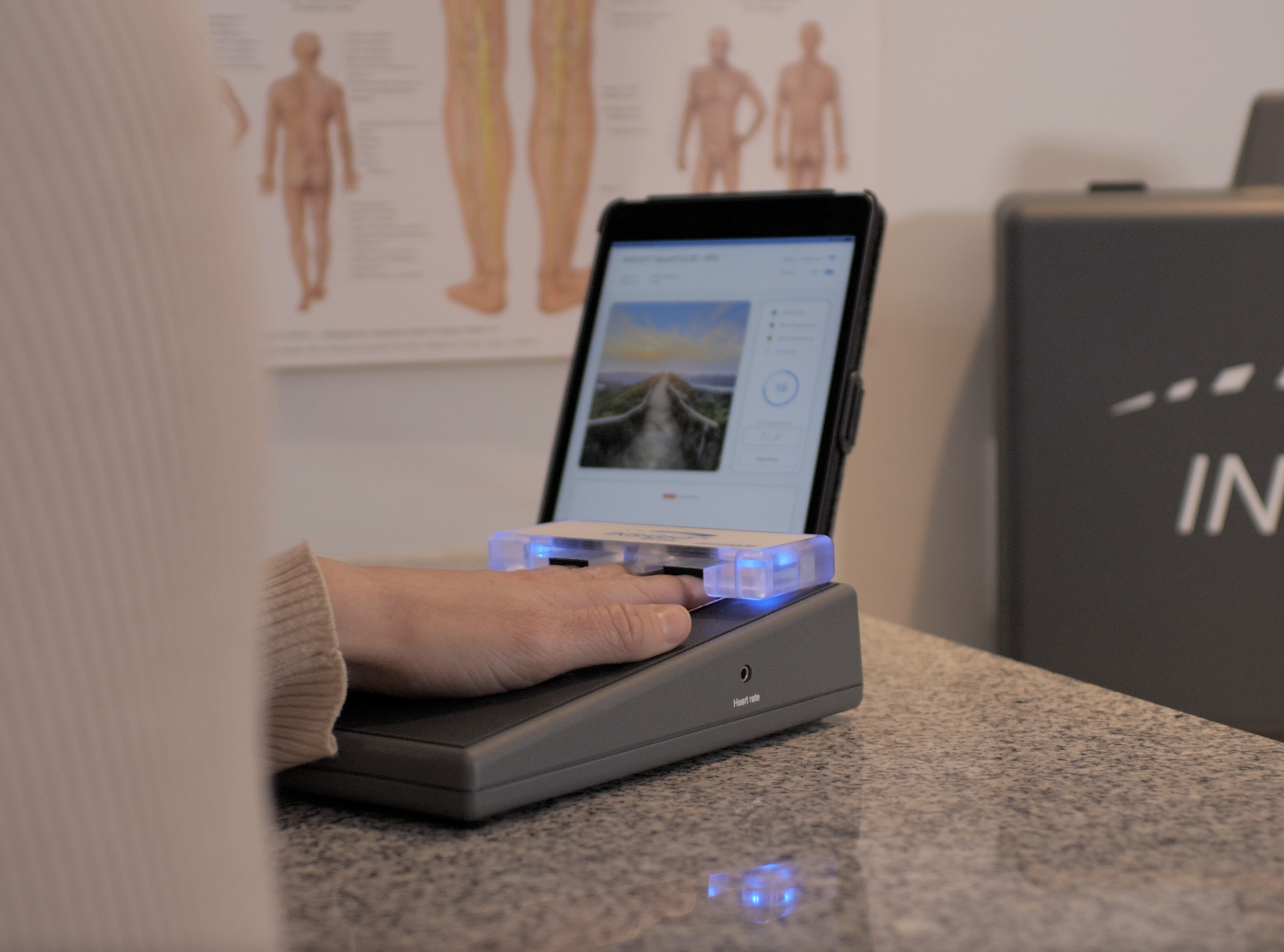
The neuroPULSE analyzes Heart Rate Variability, giving insight into autonomic balance, adaptability, recovery, and reserve. This can be relevant when patients with dizziness also report fatigue, poor recovery, or lightheadedness that does not behave like classic positional vertigo.
HRV helps the doctor ask whether the nervous system can respond to demand and return toward baseline, or whether it appears to be operating in sympathetic overdrive with limited reserve. It does not diagnose a cause of vertigo.
neuroTHERMAL and Autonomic Patterns
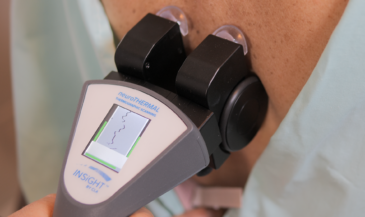
The neuroTHERMAL completes a full spine nerve system scan in under 30 seconds and analyzes paraspinal temperature patterns associated with autonomic regulation. Rolling and segmental modes help the chiropractor view patterns along specific spinal regions or across the full spine.
The neuroTHERMAL cannot see inner-ear debris, confirm cervical vertigo, or replace positional, neurological, or medical testing. Its value lies in showing another dimension of nervous system performance.
Synapse Software and Progress Reporting
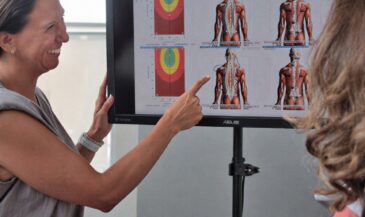
Synapse software brings neuroCORE, neuroPULSE, and neuroTHERMAL findings together through scan views, comparisons, and patient-friendly reports. CORESCORE can simplify the broader neurological picture into an understandable efficiency score, but it should never be described as a vertigo score.
- Establish a baseline: Complete appropriate screening and examination before interpreting the neurological scans.
- Explain the findings: Show patients what the scans suggest about postural, autonomic, and adaptive patterns.
- Build the care plan: Combine the objective data with the history, examination, and patient goals.
- Re-scan over time: Follow response, trajectory, and areas needing attention.
- Refer when appropriate: Reconsider the working explanation when the patient is not progressing as expected.
The technology does not create the care plan. The chiropractor does. INSiGHT scanning technology provides objective analysis and reporting that make the neurological conversation clearer.
Can Chiropractic Help Vertigo? Start With the Right Question
Can chiropractic help vertigo? Yes, chiropractic care can help selected patients when the care matches the cause. A patient with BPPV may respond to an appropriate repositioning procedure. Someone with cervicogenic dizziness may benefit from gentle chiropractic care, cervical rehabilitation, and exercises designed to improve balance. Another person may need specialized vestibular care, migraine management, or medical evaluation.
Patients may want to learn how chiropractic care can help reduce dizziness and improve balance, but the doctor’s first responsibility is not to promise relief from vertigo. It is to understand the presentation. Is the patient describing true vertigo symptoms or another type of dizziness? Do the findings point toward the inner ear, cervical spine, visual system, migraine, autonomic regulation, or a central neurological concern?
That is the best answer when someone asks, “Can chiropractic help vertigo?” Chiropractic care may help vertigo when the chiropractor identifies a factor within scope and selects an appropriate care plan. Neurological scanning strengthens that process by clarifying nervous system performance, not by replacing the examination or diagnosing the condition.
The goal is not simply to treat vertigo or stop one spinning episode. The goal is to understand why the patient feels unsteady, address the factors that can be helped through chiropractic, improve balance where possible, and follow nervous system performance with greater clarity. That is how a chiropractor can help with vertigo without overpromising, oversimplifying, or losing sight of the bigger neurological story.