
Dr. Stephen Porges introduced neuroception within Polyvagal Theory to describe this proposed subconscious evaluation of safety or threat. Unlike conscious perception, neuroception operates below conscious awareness. It is a kind of subconscious system for detecting risk and safety using information from inside the body, the surrounding environment, and social interactions. The autonomic nervous system can begin responding before the thinking mind has finished figuring out what is happening.
For chiropractors, that matters. Patients naturally describe their experience through what they consciously feel. But the nervous system is doing far more than the patient can put into words. Understanding neuroception gives us better language for talking about adaptability, physiological state, autonomic regulation, and why objective neurological analysis can add something important to the chiropractic exam.
What Is Neuroception and Why Neuroception Matters to Chiropractors?
At its core, neuroception describes neural processes proposed to evaluate safety and danger without requiring deliberate thought. Porges developed the concept as part of Polyvagal Theory to explain how the nervous system evaluates risk beneath conscious awareness. In practical terms, the nervous system may detect something important and begin organizing a response before the person consciously knows why.
That distinction is important. Neuroception is not simply anxiety, overthinking, or hypervigilance. It is not someone deciding, “I think this is dangerous.” It refers to a subconscious evaluation of safety that helps shape autonomic responses and the physiological state that follows.
Neuroception Is a Subconscious System for Detecting Safety and Threat
Think about a sudden noise behind you. Your body may react before you identify what caused it. Then your conscious mind catches up and says, “That was only the door.” That sequence helps explain the role of neuroception.
The nervous system detects information from many sources. Some cues may suggest safety. Others may contribute to detecting threat. Still others are ambiguous and have to be interpreted in context. Neural circuits, brain structures, internal sensations, environmental sounds, facial expression, and social interaction can all contribute to this ongoing evaluation of safety and threat.
- Internal information: Signals arising from inside the body can contribute to how the system evaluates safety or danger.
- Environmental information: Sound, movement, surroundings, and other stimuli can influence neuroception signals.
- Social information: Facial expression, vocal tone, body language, and interpersonal cues can become signals of safety or cues of safety or threat.
This is why two people can respond differently to the same stimulus. It is also why the same person may react differently depending on their current physiological state, prior experience, and available safety cues.
Neuroception Versus Interoception and Conscious Perception
It helps to separate neuroception from interoception and perception.
Perception generally involves conscious recognition and interpretation. Interoception involves sensing or processing signals arising from within the body, such as heartbeat, breathing, temperature, or internal sensations. Neuroception, as Porges uses the term, refers specifically to the proposed subconscious evaluation of safety or threat.
These processes overlap, but they are not interchangeable. Interoception may contribute information, while neuroception evaluates whether that information and the surrounding context suggest risk and safety.
Why This Matters in a Chiropractic Office
You and I both know how quickly a chiropractic conversation can become symptom dominated.
“How are you feeling?”
“Better.”
Wonderful. We want people to feel better. But that answer cannot tell us everything about nervous system performance. A patient may consciously feel calm while their physiology tells a more complicated story. Another may feel unsettled even when situations or people are safe.
That is why neuroception matters. How a patient feels is part of the story, but it is not the whole neurological story.
Polyvagal Theory and the Autonomic State Behind Neuroception
To understand neuroception, we have to spend a little time with Polyvagal Theory. Stephen Porges developed the theory to describe how the mammalian autonomic nervous system may organize different neural pathways for safety, mobilization, and defense.
It is worth being precise here. Polyvagal Theory is a theoretical framework, and parts of its evolutionary and neuroanatomical explanations remain debated. For chiropractors, the most useful idea is broader: nervous system performance is dynamic. The system should be able to shift appropriately as circumstances change.
The Social Engagement Pathway and Ventral Vagal Safety
From a Polyvagal perspective, the ventral vagal complex is associated with the social engagement system and a neuroception of safety. When the environment is interpreted as safe, people may be better positioned for communication, curiosity, connection, and social engagement behaviors.
Porges has emphasized the importance of facial expression, vocal tone, listening, and other cues involved in safety and connection. These cues of safety help explain why a person can feel safe around one individual and guarded around another before consciously knowing what is different.
This also brings in co-regulation. Human nervous systems do not operate in isolation. Voice, facial expression, presence, and social contact can help people connect with others and may influence autonomic state. During early development, caregivers play an especially important role in providing an environment for cues of safety.
Sympathetic Mobilization When the Nervous System Detects Threat
When neuroception of danger is present, the sympathetic nervous system can help mobilize the body for action. Heart rate and breathing may fluctuate. Attention may narrow. Energy becomes available. The body prepares to respond to threat.
That response is not inherently bad. We sometimes talk about sympathetic activity as if the goal is to get rid of it. That misses the point.
The goal is not constant calm. The goal is adaptability.
A resilient nervous system should be able to mobilize when the situation calls for action and then recover when the demand passes. The concern is not activation itself. The concern is reduced flexibility, especially when the system becomes biased toward detecting danger long after a threat response is useful.
Dorsal Vagal Immobilization and Shutdown
Polyvagal Theory proposes another defensive pathway involving the dorsal vagal system. Under circumstances interpreted as overwhelming or life-threatening, the theory describes older defensive strategies involving immobilization, collapse, or shutdown.
That does not mean a chiropractor should label a quiet, tired, or withdrawn patient as “dorsal vagal.” Polyvagal Theory describes three broad response patterns, but real nervous system responses are more complex than a simple three-box chart.
Nervous System Performance Is About Flexibility
The better clinical question is not, “Which autonomic state is this patient in?” The better question is, “How well can this nervous system shift gears?”
A responsive system can activate when needed, recognize cues of safety, return toward recovery, and reorganize as demands change. That is where Polyvagal Theory informs a useful chiropractic conversation around adaptability, reserve, and nervous system performance.
Learn more about INSiGHT scanning?
Fill this out and we’ll get in touch!
"*" indicates required fields
When Neuroception Becomes Biased Toward Detecting Threat
One of the most useful ideas in understanding neuroception is that conscious knowledge of safety does not always produce an immediate physiological experience of safety. The mind may say one thing while the body responds another way.
A person may consciously know that circumstances are safe, yet still notice a racing heart, guarding, increased alertness, or difficulty settling. That does not mean they consciously chose those nervous system responses. Neuroception describes a process happening beneath conscious awareness.
Understanding Faulty Neuroception Without Labeling the Patient
Porges has used the term faulty neuroception to describe situations in which the evaluation of safety and threat does not correspond well with actual circumstances. A person may respond defensively to relatively safe cues or fail to mobilize appropriately when a response is needed.
I would be careful with the word “faulty” in practice. It can sound like we are telling the patient their nervous system is broken.
A more useful explanation is that the system may become biased toward detecting threat. It may have become very practiced at protection. The key issue is flexibility. Can the nervous system shifts occur when circumstances change? Can it detect safety? Can the system modulate a defensive response when protection is no longer necessary?
Neuroception Matters Because Conscious Reassurance Is Not Always Enough
This helps explain why telling somebody to “just relax” may not change their physiological state.
If neuroception happens below conscious awareness, rational reassurance and autonomic regulation are not identical processes. The nervous system determines its response using information from internal sensations, the environment, previous learning, social contact, and other stimuli.
This does not mean poor sleep, difficulty concentrating, sympathetic overdrive, or social discomfort are always caused by neuroception. It means the nervous system responds to far more than conscious thought alone.
Trauma Therapy, Trauma Recovery, and the Role of Neuroception
Neuroception has become influential in trauma therapy and trauma-informed care. Deb Dana is one clinician widely associated with translating Polyvagal concepts into practical therapeutic language. Her work includes Polyvagal Theory in Therapy and Engaging the Rhythm of Regulation, with an emphasis on recognizing autonomic patterns, co-regulation, and safety cues.
These clinical applications of the Polyvagal framework are helpful context for chiropractors, but they also show us where professional boundaries matter. Trauma survivors and people with significant mental-health concerns deserve appropriately qualified care. A chiropractor should not diagnose trauma from posture, a scan, or a perceived autonomic response.
A chiropractor does not need to become a trauma therapist to appreciate the role of neuroception. The chiropractic lesson is simpler: physiological regulation is not entirely under conscious control, and patient self-report alone cannot describe every aspect of nervous system performance.
Why Symptoms Alone Leave a Visibility Gap
If much of the regulation of the autonomic nervous system occurs beneath conscious awareness, then asking the patient how they feel gives us useful but incomplete information.
- Symptoms: Tell us what the patient consciously notices.
- Examination: Adds clinical findings that the patient may not recognize themselves.
- Objective neurological analysis: Adds another view of how the nervous system is performing over time.
That visibility gap is exactly where neurological scanning begins to make sense.
How INSiGHT Neurological Scanning Adds Objectivity to the Neuroception Conversation
Let me make one distinction very clearly: INSiGHT scanning technology does not measure or diagnose neuroception. It does not tell you that a patient is ventral vagal, sympathetic, or dorsal vagal. It does not diagnose trauma or determine whether someone feels safe.
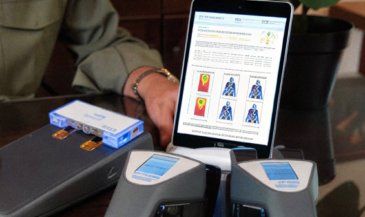
What INSiGHT scanning technology can do is provide objective neurological analysis related to autonomic performance, adaptive reserve, postural tension, and patterns along the spine. That fits beautifully into the neuroception conversation because neuroception reminds us how much nervous system activity happens outside the patient’s conscious awareness.
neuroPULSE and Autonomic Adaptability
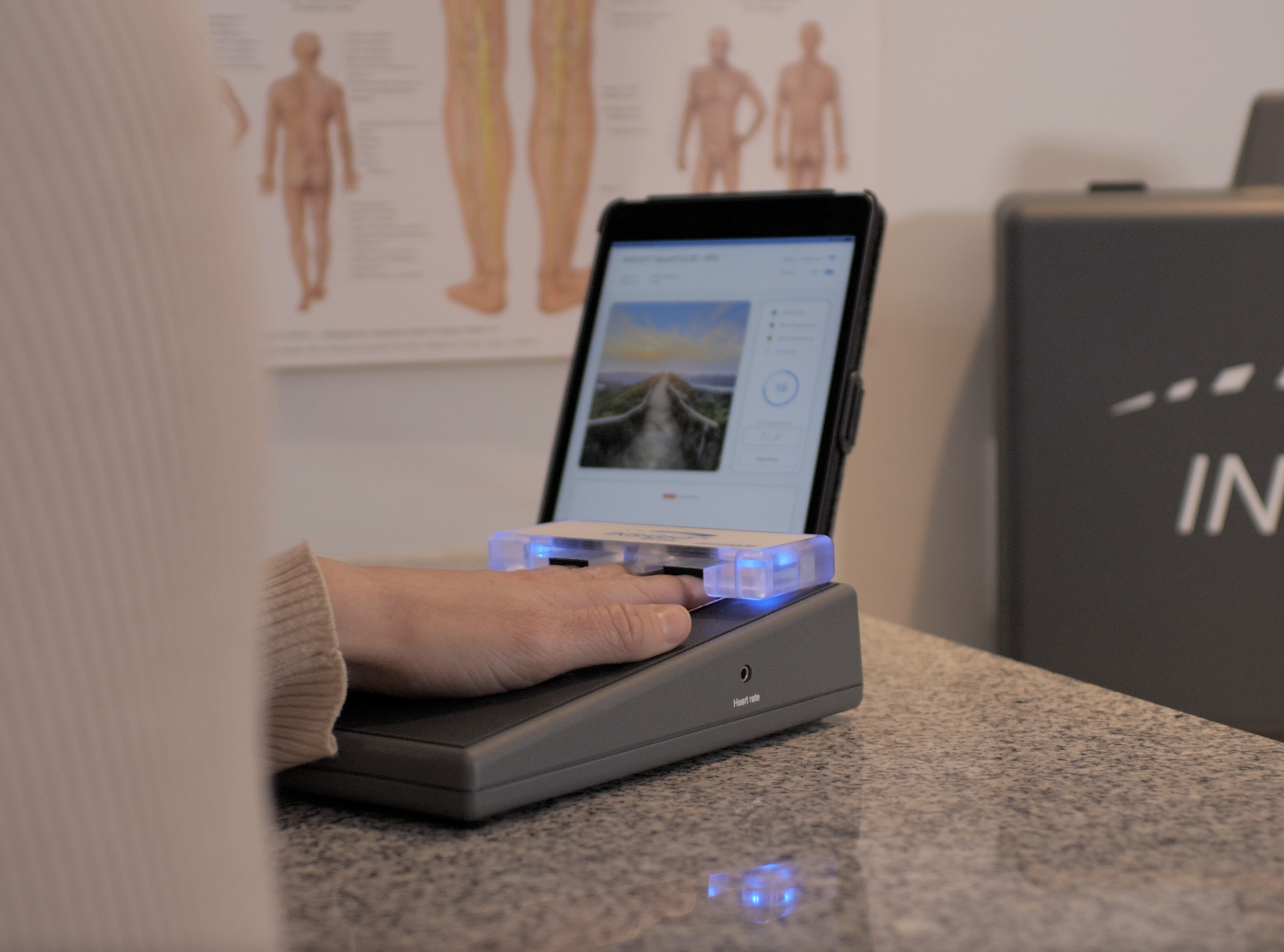
The neuroPULSE analyzes Heart Rate Variability, or HRV. Rather than simply looking at heart rate, HRV examines beat-to-beat variation and provides useful information related to autonomic balance, reserve, adaptability, and recovery.
If we are talking about how the autonomic nervous system responds to demand, then flexibility matters. HRV gives the chiropractor objective information about that broader autonomic picture.
It does not directly analyze neuroception signals. It gives you another window into how the nervous system is performing.
neuroCORE and the Somatic Side of Nervous System Performance
The neuroCORE analyzes surface EMG activity in the paraspinal muscles. It helps chiropractors evaluate postural tension, symmetry, motor tone reactions, energy expenditure, and compensatory patterns.
This adds an important layer because nervous system performance is not purely autonomic. Neural pathways involved in posture, motor control, and compensation also tell us something about how the body is organizing itself under demand.
neuroTHERMAL and Autonomic Patterns Along the Spine
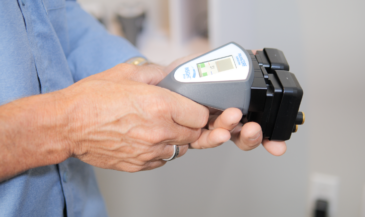
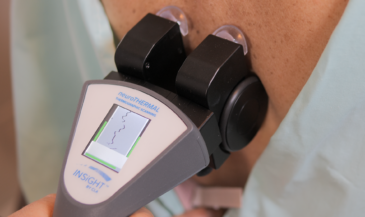
The neuroTHERMAL analyzes paraspinal temperature patterns associated with autonomic regulation. Because autonomic activity influences skin blood flow and temperature regulation, thermal analysis provides another objective view of nervous system status.
With neuroTHERMAL, a chiropractor can complete a full spine nerve system scan in under 30 seconds. Rolling and segmental scan modes help analyze stress patterns along spinal regions and follow how those patterns fluctuate under care.
Again, it is not a neuroception test. It is objective neurological analysis that gives the chiropractor another piece of the physiological picture.
Synapse Turns Complex Neurology Into a Patient Conversation
Put neuroPULSE, neuroCORE, and neuroTHERMAL together, and the story becomes much richer.
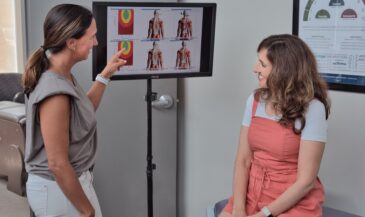
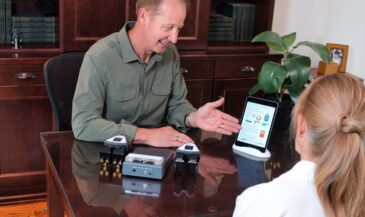
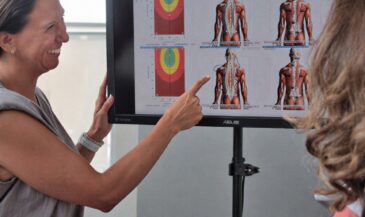
INSiGHT neuroTECH and Synapse software organize those findings into scan views and reports that make nervous system performance easier to explain. Instead of asking a patient to understand a lecture on neural circuits, autonomic responses, or Polyvagal Theory, you give them objective information they can see.
- Baseline scan: Establish where nervous system status begins.
- Progress analysis: Compare how patterns fluctuate under care.
- Trajectory: Look beyond one good or difficult day and assess the larger direction of nervous system performance.
The chiropractor combines those findings with the history and examination, applies clinical judgment, and builds the care plan from the complete picture. The technology does not replace the chiropractor. It strengthens the conversation.
Neuroception Gives Chiropractic Better Language for Nervous System Performance
For me, the biggest value of neuroception is not giving chiropractors another complicated term to teach patients. We have plenty of those already. Its real value is reminding us that the nervous system is constantly receiving information and organizing responses before conscious thought catches up.
A patient knows what they consciously feel. They know whether they slept well, whether they feel energetic, whether they can settle, and whether something feels different. That matters. But it does not tell us everything about their underlying physiological responses.
That is why I would resist turning neuroception into the latest chiropractic label. We do not need to tell patients they have a “neuroception problem.” We do not need to diagnose Polyvagal states. And we do not need to move outside our scope into trauma recovery or trauma therapy.
What we can do is ask better questions.
- Detection: How is the nervous system responding to the information coming in?
- Adaptation: Can it respond appropriately when demand rises?
- Recovery: Can it move back toward stability when the demand passes?
- Flexibility: Can the system recognize both threat and safety rather than remaining stuck in one defensive strategy?
- Performance: What does objective analysis tell us beyond how the patient feels today?
That is where neuroception matters to chiropractic. It reminds us that conscious experience and physiological state are not always the same thing.
And when so much of nervous system performance happens beneath conscious awareness, objective neurological analysis becomes increasingly valuable. INSiGHT scanning technology gives chiropractors a way to bring part of that invisible story into view without pretending to diagnose what the technology cannot diagnose.
Neuroception reminds us that the nervous system is always listening before the conscious mind has finished the conversation. For chiropractors, that makes neurological scanning more than a technology story. It gives us another way to understand adaptability, communicate the why behind care, and keep the conversation where it belongs: on nervous system performance.