

The human body is never standing still. Heart rate fluctuates. Blood vessels adjust. Breathing responds to metabolic demand. Hormones rise and fall. Body temperature shifts. Through all of that activity, the body regulates its internal environment so essential conditions remain within a narrow range compatible with normal function.
That is why homeostasis matters so much to chiropractors. It is not simply the maintenance of perfect balance. It is a dynamic physiological process of sensing change, organizing a response, and working back toward stability. Once you look at homeostasis through that lens, you are talking about something very familiar to chiropractic: adaptability.
What Homeostasis Means in Human Physiology
Homeostasis is a fundamental organizing principle of physiology. It describes the self-regulating processes by which a biological system works to maintain a stable internal environment while adapting to internal and external demands. A living organism stays stable not because nothing fluctuates, but because it can respond when conditions fluctuate.
This understanding of homeostasis is important because the body maintains many physiological variables across a range of values rather than at one perfectly fixed number. Homeostatic mechanisms continually make small corrections as environmental conditions, activity, food intake, sleep, temperature, and metabolic demands change.
Homeostasis Is Dynamic, Not Static
Homeostasis is often explained as “balance,” but that can make it sound as though physiology is supposed to stand still. In reality, the body maintains a dynamic equilibrium, sometimes described as a steady state. Continuous change occurs while relatively stable internal conditions are maintained.
A thermostat gives us a simple comparison. If room temperature falls below a set point, the thermostat detects the change and turns on the furnace. As the temperature rises, the furnace eventually shuts off. Biological systems are far more sophisticated, but the basic feedback system helps explain how homeostatic control works.
The body regulates itself in a similar way. A receptor detects a change. A control center receives and interprets that information. An effector then produces a response. That response is adjusted continually as new information comes back into the system.
- Receptor: Detects a physiological change in the internal environment.
- Control center: Processes the information and organizes an appropriate response. The brain and hypothalamus play important roles in several homeostatic processes.
- Effector: Carries out the response through muscles, glands, blood vessels, tissues, or organs.
That receptor-to-response sequence matters for chiropractors because homeostasis depends on communication. Information has to be sensed, integrated, and acted upon. That puts neurological coordination right in the middle of the homeostatic conversation.
Claude Bernard and the Concept of Homeostasis
The concept of homeostasis has deep roots in human physiology. French physiologist Claude Bernard explored the importance of maintaining the internal environment during the 19th century. Walter Bradford Cannon later coined the term homeostasis in the 1920s and expanded the concept into a broader explanation of physiological regulation.
The word homeostasis comes from Greek word roots commonly associated with “similar” and “standing still.” But the important point is that Cannon was not describing a motionless organism. The “wisdom of the body” lies in its ability to adjust continually while keeping important internal conditions maintained within workable limits.
How Feedback Mechanisms Help Maintain Homeostasis
One of the most important mechanisms by which homeostasis is maintained is feedback. The body receives information about a physiological change and then produces a response based on that information. Most discussions of homeostatic control focus on two broad categories: negative feedback and positive feedback.
Those names can sound misleading. Negative feedback is not bad, and positive feedback is not automatically good. They simply describe whether the response opposes or reinforces the original change.
Negative Feedback and Homeostatic Control
Negative feedback works by opposing a change and moving a physiological variable back toward its appropriate range. Many of the best-known examples of homeostasis are examples of negative feedback systems.
Body temperature is a classic example. If body temperature rises, receptors and control centers help organize responses that increase heat loss. Sweat can help cool the body, and changes in blood flow through blood vessels near the skin can help dissipate heat. If body temperature falls, shivering and other responses can help produce and conserve heat.
The hypothalamus plays an important role in the homeostatic control of body temperature. The system does not try to hold temperature to one absolutely fixed number every second. It works to regulate temperature within an appropriate physiological range.
Other examples of negative feedback include:
- Blood glucose: The endocrine system helps regulate blood glucose as levels rise and fall.
- Blood pressure: Cardiovascular mechanisms adjust vascular tone and heart activity to maintain adequate circulation.
- Fluid balance: The body adjusts water retention and elimination to help maintain appropriate internal conditions.
- Blood pH: Respiratory and metabolic mechanisms contribute to acid-base regulation.
- Oxygen and carbon dioxide: The respiratory system changes breathing according to metabolic demand.
These examples of homeostasis show why the idea reaches far beyond one organ. The cells of the body depend on stable conditions, and multiple tissues and organs contribute to homeostasis at the same time.
Positive Feedback Has a Different Job
Positive feedback works differently. Instead of opposing the original change, it reinforces that change until a specific endpoint is reached.
Labor is one familiar example. Stretching of the cervix contributes to nerve signaling and oxytocin release, which promotes stronger uterine contractions. Those contractions create additional stretching, reinforcing the process until delivery occurs.
Blood clotting offers another example. When a blood vessel is injured, activated clotting factors recruit additional clotting activity until the bleeding is controlled.
Negative and positive feedback systems serve different purposes. The larger lesson is that physiological regulation is not always about turning activity down. Sometimes the appropriate response is to increase activity. A resilient organism needs the ability to respond in the direction the situation requires.
Learn more about INSiGHT scanning?
Fill this out and we’ll get in touch!
"*" indicates required fields
The Nervous System, Homeostasis, and Chiropractic Adaptability
This is where the subject becomes especially useful for chiropractors. The nervous system participates in sensing conditions, integrating information, and coordinating a response to changes throughout the human body. It works alongside endocrine, cardiovascular, respiratory, immune, and metabolic systems as part of the larger regulation of the internal environment.
The autonomic nervous system is particularly relevant because it helps regulate automatic functions such as heart activity, vascular tone, digestion, sweating, temperature regulation, and other processes involved in maintaining homeostasis.
Homeostatic Physiology Requires Flexibility
The sympathetic nervous system helps mobilize the body when demand rises. Parasympathetic activity contributes to recovery, digestion, and restorative functions. Both are necessary.
It is easy to fall into the habit of describing sympathetic activity as bad and parasympathetic activity as good. That is not how physiology works. If you need to stand up quickly, exercise hard, respond to danger, or meet a demanding situation, sympathetic activation has an important job.
The better question is whether the system can shift appropriately. Can it increase activity when needed? Can it recover when the challenge passes? Can it return toward stability rather than remaining in sympathetic overdrive?
The goal is not to keep the nervous system quiet every minute of the day. The goal is adaptability.
Understanding Homeostasis Gives Chiropractors Better Language
Patients rarely walk into a chiropractic office asking about homeostatic mechanisms. They talk about what they feel. That makes sense. Patients have language for symptoms. They usually have much less language for regulation, reserve, recovery, and nervous system performance.
Symptoms matter, but they do not tell the whole story. A person can feel fine on a particular day while their physiology is still working hard to maintain a stable internal environment. Another person can notice a temporary symptom even while the body is appropriately adapting to a short-term demand.
Homeostasis gives chiropractors a more useful framework. Instead of thinking only in terms of symptom presence or absence, we can ask:
- Adaptation: Is the system responding appropriately when demand changes?
- Recovery: Can it return toward baseline after the demand passes?
- Reserve: Does the patient appear to have enough capacity available for the next challenge?
- Regulation: What does the objective examination tell us about nervous system performance?
Neurologically-Focused Chiropractic Care fits naturally into that conversation because chiropractic has always been concerned with the relationship between the spine, neurological interference, and the way the body organizes function. That does not mean vertebral subluxation should be described as the cause of every disruption of homeostasis. It means nervous system performance deserves objective attention when we are talking about adaptability.
Homeostasis Is More Than a Set Point
The body maintains stability by moving, not by remaining perfectly still. Blood glucose fluctuates. Body temperature fluctuates. Respiratory activity fluctuates. Autonomic activity fluctuates. Metabolic demand fluctuates.
Homeostasis is often misunderstood when we reduce it to one perfect set point. A resilient biological system needs flexibility across changing external conditions. The body maintains internal stability because it can make adjustments, not because it avoids fluctuation.
For chiropractors, that shifts the conversation from “Are you balanced?” to a much more meaningful question: “How well are you adapting?”
Making Homeostatic Regulation Visible With INSiGHT Scanning Technology
Homeostasis itself is not something a patient can see. They cannot watch autonomic activity fluctuate, see vascular tone change, or observe the nervous system organizing its response to neurological distress.
That is where neurological scanning can add real clarity. INSiGHT scanning technology does not diagnose a loss of homeostasis, and it does not reduce homeostatic physiology to one number. It provides objective neurological exam data that helps chiropractors analyze and communicate aspects of nervous system performance connected to adaptability, autonomic regulation, postural activity, and reserve.
neuroPULSE and Autonomic Adaptability
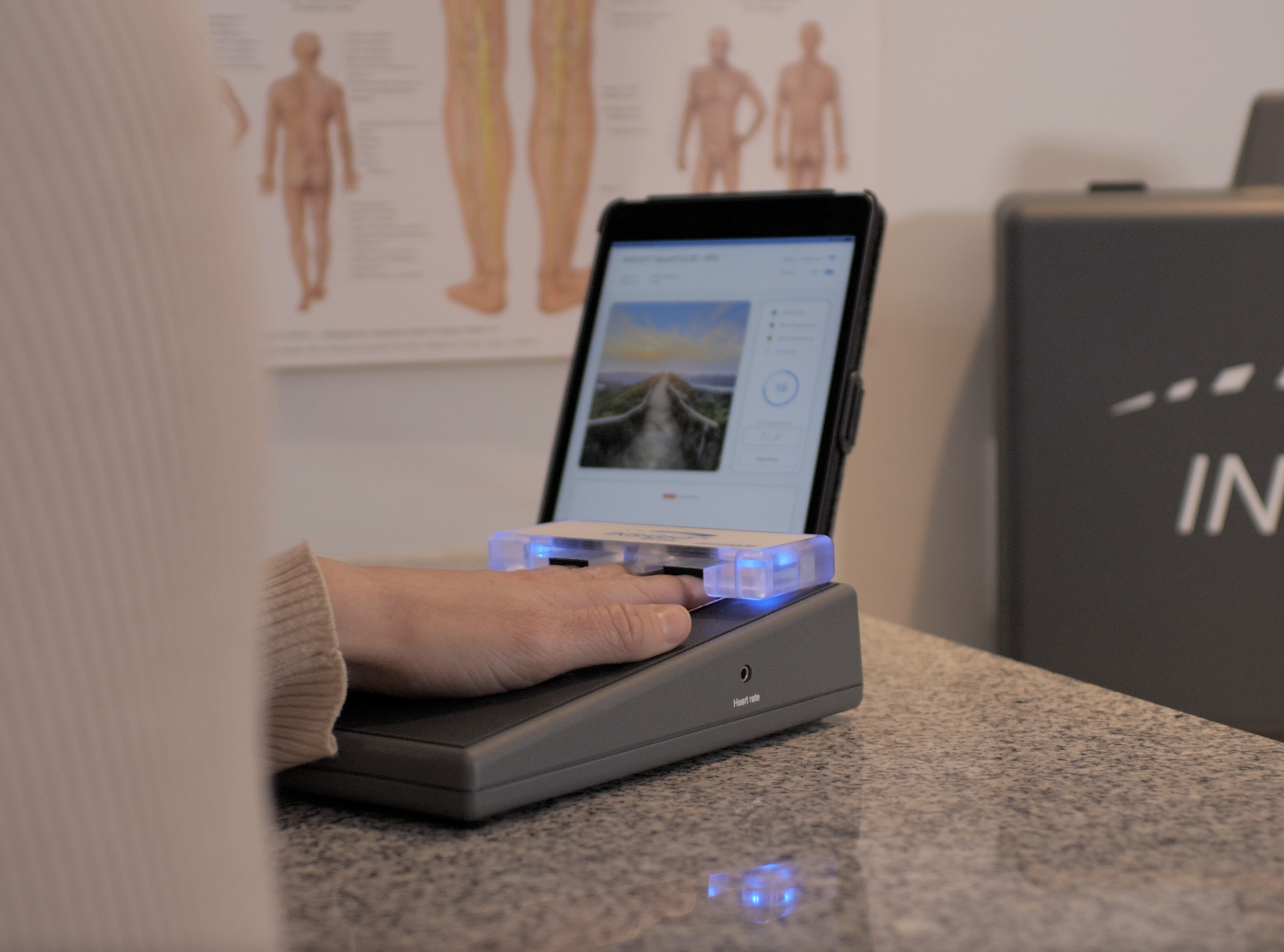
The neuroPULSE analyzes Heart Rate Variability, or HRV. HRV looks at the variation in timing from one heartbeat to the next rather than simply counting heart rate.
That variability gives chiropractors useful information about autonomic patterns, adaptability, reserve, and recovery. A responsive system needs flexibility. It needs to be capable of reacting when demand increases and recovering once that demand has passed.
That does not make HRV a homeostasis score. It gives the chiropractor another objective view of autonomic nervous system performance that is directly relevant to the broader homeostatic conversation.
neuroTHERMAL and Physiological Regulation Along the Spine
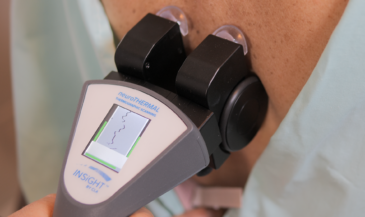
The neuroTHERMAL analyzes paraspinal temperature patterns along the spinal regions. Because skin temperature and regional blood flow are influenced in part by autonomic regulation of blood vessels, thermal analysis provides another useful view of neurological regulation.
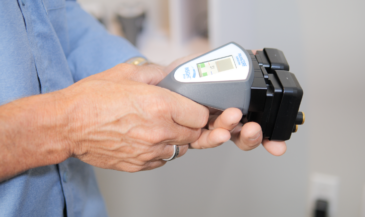
The INSiGHT neuroTHERMAL can complete a full spine nerve system scan in under 30 seconds. Rolling and segmental scan modes allow chiropractors to analyze patterns efficiently and reproducibly.
A thermal scan is not a diagnosis of a disruption of homeostasis. It is objective analysis of temperature patterns that can help the chiropractor understand another dimension of nervous system status.
neuroCORE and the Energy Demands of Adaptation
neuroCORE analyzes surface EMG activity in the paraspinal muscles. It helps chiropractors assess postural tension, symmetry, motor activity, and patterns of energy expenditure.
This matters because adaptation requires energy. A biological system constantly reallocates resources according to demand. neuroCORE provides another piece of objective neurological information that helps the chiropractor see how motor output and compensation may be organized.
It is not a test of tissue homeostasis by itself. It is one part of a broader neurological analysis.
Synapse Helps Turn Physiology Into a Patient-Friendly Story
This is where INSiGHT neuroTECH and Synapse software bring the different pieces together. neuroPULSE provides a view of autonomic adaptability and reserve. neuroCORE analyzes postural and motor activity. neuroTHERMAL adds information about autonomic temperature patterns along the spinal regions.
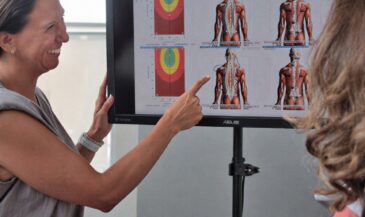
Synapse software organizes those findings into scan views and reports that are easier for patients to understand. CORESCORE can further simplify several dimensions of nervous system performance into a patient-friendly neurological efficiency score without being presented as a diagnosis or a direct measurement of homeostasis.
The chiropractor still interprets the history, examination findings, and scan views and builds the care plan. The technology supports that clinical judgment. It does not replace it.
A practical scanning rhythm can include:
- Baseline: Establish where the patient’s nervous system status begins.
- Response: Re-scan to see how neurological patterns fluctuate under care.
- Trajectory: Compare findings over time rather than judging progress from one symptom or one good day.
When patients can see their nervous system in living color, the discussion about regulation becomes much easier to understand. Complex physiology becomes something they can actually follow.
Homeostasis Brings Chiropractic Back to the Bigger Story
After all the receptors, effectors, feedback mechanisms, blood vessels, metabolic responses, and physiological regulation, homeostasis leaves us with a remarkably simple idea.
The human body was not designed to avoid change. It was designed to adapt to it.
The Goal Is Adaptability, Not Perfect Stillness
Homeostasis is maintained through activity. Temperature rises and falls. Blood glucose fluctuates. Respiratory demand changes. The endocrine system adjusts signaling. Blood flow shifts. The body maintains stability precisely because it can respond.
That gives chiropractors a much better way to talk about nervous system performance. We do not need to promise perfect physiological balance, and we do not need to make ordinary fluctuations sound alarming. We can help patients understand that adaptability is part of normal human physiology.
Instead of asking whether every variable is perfectly maintained by homeostasis at every moment, ask a better question: How effectively does this person respond and recover?
From “How Do You Feel?” to “How Are You Adapting?”
How a patient feels matters. It is simply one part of the story.
A patient can notice improvement before every objective metric has shifted. Another can feel fine while neurological findings still show patterns needing attention. That is why objective examination has such an important place in Neurologically-Focused Chiropractic Care.
Understanding homeostasis gives us the physiology behind that thinking. Life depends on the ability to sense change, respond to it, and continually return toward stability. The body maintains that regulation through a remarkable interaction of nervous, endocrine, respiratory, cardiovascular, metabolic, and other systems.
Neurological scanning gives chiropractors an objective way to bring part of that story into view. With INSiGHT scanning technology, you can establish a baseline, analyze response, follow trajectory, and help patients understand nervous system performance beyond how they happen to feel on a single day.
That is the bigger chiropractic story behind homeostasis. It is not about chasing one symptom or holding the body at one perfect set point. It is about adaptability, regulation, and the remarkable capacity of the body to respond to life.
And when patients can finally see that story for themselves, they begin to understand why nervous system performance matters long after the first symptom has changed.