

Balance
Balance is one of those things we hardly notice until it stops feeling automatic. A patient turns their head while walking, looks over a shoulder while driving, steps off a curb, or gets up from the table, and somehow the world stays visually steady while the body knows where “upright” is. There is an awful lot of neurology packed into something that looks that simple.
At the center of that conversation is the vestibular system, a remarkable sensory balance system located in the inner ear. It detects head movement, acceleration, gravity, and spatial orientation. But here is the part that matters for chiropractors: the vestibular system does not maintain balance by itself. It works alongside the visual system, proprioceptive pathways, the cerebellum, and other parts of the central nervous system to make sense of where the body is and how it is moving.
That gives chiropractors a much bigger way to think about the vestibular system and balance. Instead of seeing balance as simply an “inner ear thing,” we can see it for what it really is: a continuous neurological conversation between sensory input and motor response. For a profession already thinking every day about posture, movement, spinal sensory information, and nervous system performance, that is a conversation worth understanding.
What the Vestibular System Does as a Sensory Balance System
At its simplest, the vestibular system is a sensory system that tells the brain how the head is moving and where it is positioned relative to gravity. This sensory information contributes to our sense of balance, but vestibular function also plays an important role in posture, gaze stabilization, equilibrium, and spatial orientation.
Think about turning your head while keeping your eyes on a patient across the room. Your head is moving, yet the visual target does not appear to smear across your field of vision. Or think about walking across uneven ground. Your body continually makes small postural corrections without requiring you to consciously plan every response. The vestibular system helps make those everyday actions possible.
The information from the vestibular system includes several important types of motion:
-
Head movement: The system continuously monitors changes in the movement and position of the head.
-
Rotational movement: Specialized receptors detect rotation of the head and angular acceleration.
-
Linear movement: Other vestibular organs detect acceleration of the head in a straight line.
-
Gravity: Sensory receptors contribute information about the tilt of the head and its orientation relative to gravity.
-
Spatial orientation: Vestibular signals help the brain understand how the head and body are positioned in space.
The Vestibular System Is Part of a Larger Sensory System
The vestibular apparatus does not accomplish all of this alone. The brain is continuously comparing vestibular input with information from the eyes and proprioceptive pathways. The visual system reports what is happening around us. Proprioceptive pathways provide information about the position and movement of the body. Vestibular sensory receptors report what the head is doing relative to movement and gravity.
That integration matters to chiropractors. We already think about movement, cervical input, spinal sensory information, posture, and motor responses. Vestibular physiology reminds us that these are not isolated events. They are parts of a larger equilibrium system designed to receive information, organize it, and respond appropriately.
The vestibular system supplies essential data. The deeper neurological story is what the brain does with it.
Inside the Inner Ear and the Vestibular Sensory Apparatus
The peripheral vestibular system sits within the inner ear, close to the cochlea of the auditory system. Although these auditory and vestibular structures occupy neighboring territory, they perform different jobs. The cochlea is involved in hearing, while the vestibular apparatus primarily provides information about motion, acceleration, gravity, and orientation.
This part of the inner ear contains five major sensory end organs: three semicircular canals and two otolith organs. Together, these vestibular organs give the brain remarkably detailed information about how the head is moving through three-dimensional space.
How Each Semicircular Canal Detects Head Movement
The three semicircular canals are arranged in different planes. You can picture them somewhat like three sides meeting at the corner of a box, each oriented differently from the others. This arrangement allows each semicircular canal to respond most strongly to rotation occurring in its own plane and allows the three semicircular canals together to represent movement across three dimensions.
Inside each canal is a fluid called endolymph. During head movement, relative movement of the endolymph influences a gelatinous structure called the cupula. The cupula then bends specialized sensory hair cells. This hair cell deflection is where a mechanical event begins becoming neurological information.
Depending on the direction of hair cell deflection, signaling can increase or decrease. That provides information about the direction and magnitude of angular acceleration. The canals also operate in functional pairs between the two ears, with a particular head rotation tending to excite one member of a pair while inhibiting the other.
It is a wonderful example of something we see throughout neurology: the information becomes more meaningful because the brain can compare patterns rather than relying on one receptor in isolation.
The Utricle and Saccule Detect Gravity and Linear Acceleration
Rotational movement is only part of the story. The two otolith organs, the utricle and saccule, provide information about linear acceleration and orientation relative to gravity.
The utricle primarily senses movement in the horizontal plane, including forward-backward and side-to-side motion. The saccule primarily senses movement in the vertical or sagittal plane, including up-and-down movement. Each otolith organ contains specialized hair cells that function as a sensory receptor, allowing physical forces associated with movement and gravity to become neural signals.
Put the canal and otolith information together and the vestibular labyrinth becomes a remarkable motion-detection apparatus. The labyrinth of the inner ear can provide information about rotation, straight-line movement, gravity, and head orientation. But collecting that information is only the first step. It still has to reach the brain and be integrated with other vestibular stimuli and sensory information.
Learn more about INSiGHT scanning?
Fill this out and we’ll get in touch!
"*" indicates required fields
How Vestibular Nuclei Coordinate Eye Movement, Posture, and Balance
Once vestibular hair cells convert mechanical movement into electrical activity, vestibular afferents carry that information centrally through the vestibular nerve. Important projections reach the vestibular nuclei in the brainstem, where sensory information can begin contributing to pathways involved in balance, movement, gaze, and orientation.
This is why it is limiting to think of the vestibular system as merely an inner ear structure. The peripheral vestibular system detects movement, but the central vestibular system has to process that information. Vestibular neurons communicate with other regions involved in motor coordination, postural control, eye movements, and perception.
The cerebellum has an especially important relationship with these pathways. Connections between the vestibular nuclei and cerebellum help sensory information contribute to coordinated motor responses. Other pathways allow vestibular signals to participate in our perception of gravity, movement, and spatial orientation. Neurons in the vestibular nucleus complex are part of a much larger network rather than an isolated balance circuit.
The Vestibulo-Ocular Reflex Keeps the Visual World Stable
One of the easiest ways to appreciate this coordination is through the vestibulo-ocular reflex, commonly called the VOR. Fix your eyes on one point and gently turn your head from side to side. As the head moves, compensatory eye movement occurs in the opposite direction. This helps keep the visual target stable on the retina.
In practical terms, vestibular signals generated by head movement help control eye movement so the visual world remains useful while we move. Walking, running, bending, turning, and looking over a shoulder all depend on rapid coordination between head motion and eye movement.
For chiropractors, the important lesson is not simply memorizing the reflex. It is recognizing how closely movement, vision, orientation, and postural control are integrated.
Vestibular Reflexes Help Maintain Balance
Vestibular information also contributes to reflex pathways involved in posture. Vestibulospinal reflexes help organize automatic muscular responses that allow the body to maintain balance as the head or support surface moves.
Imagine stepping onto an uneven or unexpectedly shifting surface. There is no time to consciously calculate every response needed to remain upright. Sensory information must be processed rapidly and the motor system must respond.
That is why describing the vestibular apparatus as a balance system is accurate but incomplete. It detects movement, sends sensory information centrally, and participates in a larger process that coordinates gaze, posture, equilibrium, and movement. The real message is not simply, “The head moved.” The useful neurological message is, “The head moved, so what should the eyes and body do next?”
Vestibular Dysfunction, Chiropractic Assessment, and INSiGHT Scanning
Patients do not usually walk into a chiropractic office asking about their vestibular nuclei. They are more likely to say the room spins when they change position, they feel unsteady, motion bothers them, or their balance feels different. Vertigo and disequilibrium can be unsettling, and they deserve thoughtful evaluation rather than a one-size-fits-all explanation.
There are several vestibular disorders and many possible causes of these signs. Benign paroxysmal positional vertigo is not the same clinical situation as vestibular neuritis. Vestibular hypofunction may involve reduced peripheral function, while central vestibular concerns involve different pathways. Bilateral vestibular involvement presents another situation altogether.
The development of the vestibular system and the many pathways involved also remind us that there is no single “balance center” that explains every presentation. Common vestibular complaints can arise from different peripheral or central mechanisms. Good Neurologically-Focused Chiropractic Care means recognizing what belongs in our lane and when referral is appropriate.
Neurological Scanning Adds a Different Layer of Information
This is where INSiGHT scanning technology can add something valuable, provided we are precise about what it does.
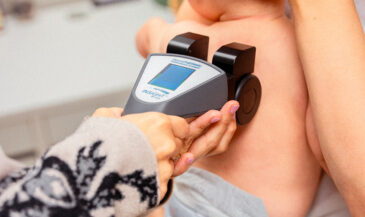
INSiGHT scanning technology does not test the semicircular canals, provide direct vestibular stimulation, diagnose vertigo, or identify vestibular pathology. A full spine nerve system scan is not a replacement for when appropriate, vestibular testing. Instead, INSiGHT neuroTECH and Synapse software give chiropractors objective exam data about other dimensions of nervous system performance.
That gives the chiropractor a broader neurological picture rather than forcing every finding into a vestibular diagnosis.
neuroCORE Shows the Postural Motor Side of the Story
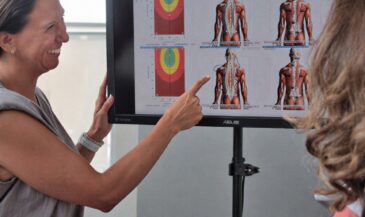
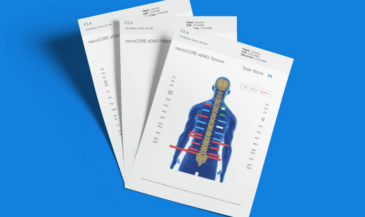
The neuroCORE analyzes surface electromyography along the paraspinal muscles. It provides objective analysis of motor activity, symmetry, postural tension, and energy expenditure.
There is a natural connection to a discussion of balance because vestibular information ultimately participates in postural and motor coordination. But neuroCORE is not analyzing the vestibular organs themselves. It is giving you another view of how the patient’s neurological system is organizing motor output.
That distinction makes the technology more useful, not less. Instead of trying to make one instrument answer every question, the chiropractor can look at different dimensions of performance and interpret them as part of the complete examination.
neuroPULSE Adds Adaptability and Reserve
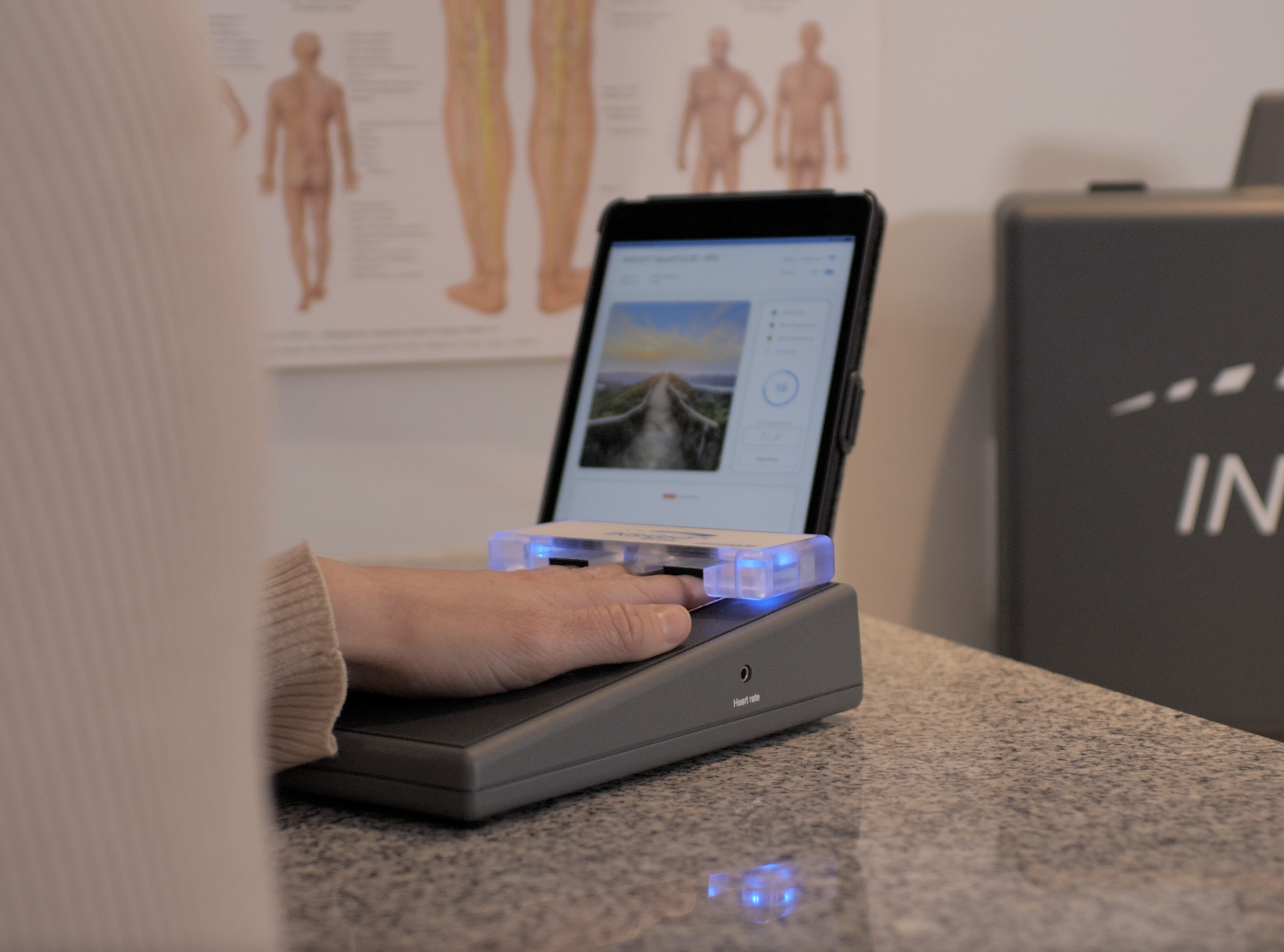
The neuroPULSE analyzes Heart Rate Variability to provide insight into autonomic balance, adaptability, and reserve. HRV is not a vestibular test, but it can provide useful context about how the patient’s system is responding and adapting to demand.
A balance complaint may have brought the patient through the door, but that complaint does not automatically tell you the full neurological story. Looking at adaptive reserve gives the chiropractor another objective dimension to consider alongside history, examination findings, and appropriate clinical testing.
neuroTHERMAL Adds Autonomic Patterns Along the Spine
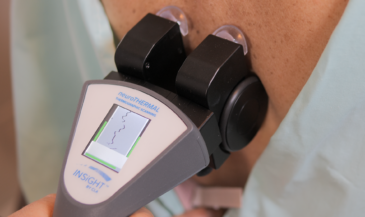
The neuroTHERMAL performs a full spine nerve system scan in under 30 seconds and analyzes paraspinal temperature patterns associated with autonomic regulation. Rolling and segmental scan modes give chiropractors reproducible scan views that can be compared over time.
Like neuroCORE and neuroPULSE, neuroTHERMAL is not diagnosing vestibular dysfunction. What it provides is another objective view of nervous system status. We do not need scanning technology to claim more than that. There is plenty of value in accurately showing patients how their system is performing.
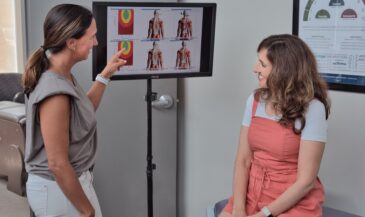
Synapse Turns Complex Neurology Into Something Patients Can Understand
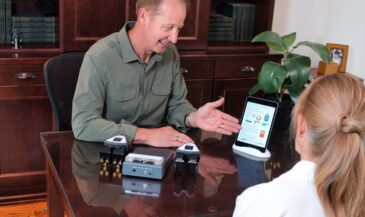
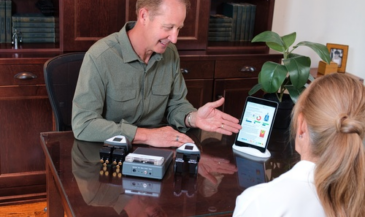
With INSiGHT neuroTECH and Synapse software, these different analyses can become part of a clear neurological story. The chiropractor can establish a baseline, interpret findings alongside the history and examination, build the care plan, and scan again to assess how patterns fluctuate under care.
-
Baseline: Establish objective neurological findings at the beginning.
-
Response: Re-scan to analyze how patterns are responding under care.
-
Trajectory: Compare findings over time rather than judging progress from one good or difficult day.
The technology does not create the care plan. The chiropractor brings together the patient’s history, examination, objective analysis, professional judgment, goals, and appropriate referral considerations.
That is how neurological scanning fits responsibly into a vestibular conversation. We are not claiming a CORESCORE tells us why someone has vertigo. We are giving chiropractors objective information about nervous system performance that the presenting complaint alone cannot provide.
Seeing the Vestibular System and Balance as a Bigger Neurological Story
Balance is a wonderful example of why neurology deserves our attention in chiropractic. What looks effortless from the outside requires continuous sensory detection, comparison, integration, and motor response underneath.
The vestibular system detects rotation, linear acceleration, gravity, and head orientation through specialized receptors in the inner ear. Hair cells convert mechanical events into electrical information. Vestibular afferents carry those signals centrally. The vestibular nuclei, cerebellum, visual pathways, and motor systems help organize them. The vestibulo-ocular reflex stabilizes gaze, while vestibulospinal pathways contribute to posture and equilibrium.
And all of that is happening while visual and proprioceptive information is arriving at the same time.
For chiropractors, that is the bigger story. We do not need to claim ownership over every case of vertigo or every vestibular condition to recognize how important sensory integration is. In fact, respecting those clinical boundaries makes the neurological conversation stronger. Patients with vestibular concerns deserve appropriate assessment, and presentations suggesting significant peripheral or central vestibular involvement deserve appropriate referral and collaboration.
But we should not miss what vestibular physiology teaches us about chiropractic. The person standing in front of you is an integrated sensory-motor system continuously receiving information, organizing that information, and adapting its output. Posture is part of that story. Proprioception is part of it. Vision is part of it. The vestibular apparatus is part of it. The nervous system ties those pieces together.
That is why objective neurological analysis belongs in a modern chiropractic examination. INSiGHT scanning technology shifts the conversation away from focusing only on spinal regions and joints and toward nerves and performance. It gives the chiropractor another way to analyze how the system is organizing itself and gives the patient something meaningful to see alongside the story they feel.
The next time you think about the vestibular system, do not stop at the inner ear. Think about the enormous neurological job happening every time a patient turns their head, fixes their eyes on a target, changes direction, or simply stands upright.
The better question is not only, “Is this patient balanced?”
It is, “How well is this system receiving information, organizing it, and adapting to the world around it?”