
That ability is called neuroplasticity, and it ought to get every chiropractor’s attention. Neuroplasticity refers to the brain’s ability to change and adapt in response to learning, movement, repetition, injury, and experience. In practical terms, your nervous system is continually asking, “What am I experiencing, and how should I adapt to it?
For chiropractors, that creates a much bigger conversation than brain health alone. The nervous system receives an enormous amount of information from movement, posture, proprioception, the spine, and the environment. If that system has the ability to learn and reorganize across the lifespan, then the quality and consistency of neurological input deserves our attention.
What Is Neuroplasticity and Why Should Chiropractors Care?
When we describe neuroplasticity, we are talking about the ability of neural networks to change their organization and function. “Neuro” refers to the nervous system and the neuron, while plasticity describes the ability to change. Brain plasticity can involve forming new connections, strengthening frequently used pathways, pruning connections that are no longer needed, and reorganizing function in response to experience.
You see the process of neuroplasticity in ordinary life. Learning a new language, practicing a musical instrument, memorizing a route, developing a physical skill, or simply learning somebody’s name requires neurons to communicate and networks to adapt. A neuron communicates with another neuron across a synapse, and repeated activity can strengthen those synaptic relationships. In other words, what we repeatedly ask the nervous system to do can influence how efficiently it does it.
Two Types of Neuroplasticity
There are two commonly described types of neuroplasticity that help explain the structural and functional nature of these adaptations.
- Structural plasticity: Learning and experience can produce brain changes involving neural connections and brain structure.
- Functional plasticity: Following certain forms of brain injury, functions may sometimes shift toward undamaged parts of the brain as networks reorganize.
Functional plasticity is particularly important in research involving stroke, traumatic brain injuries, and acquired brain injury. In some circumstances, a damaged brain can recruit different brain regions or develop new pathways that help support functions affected by injury. That does not mean every traumatic brain injury can be overcome or that the brain has an unlimited ability to reorganize. Some neurological damage is permanent, and particular brain areas have specialized functions that other regions cannot completely replace.
What brain research has made clear, however, is that plasticity does not simply disappear after childhood. Neuroplasticity in human development is especially active early in life, but the adult human brain retains an ability to learn and adapt. Older adults can experience changes in brain structure and function as well. The nervous system remains dynamic across the lifespan.
That matters in chiropractic. If brain function and nervous system performance are dynamic, a symptom report on one particular day cannot tell us the entire functional story. This is one reason objective neurological scanning can add so much to an examination. It gives us a baseline and something meaningful to compare as nervous system status fluctuates over time.
The Power of Neuroplasticity Is Built on Input, Repetition, and Adaptation
The power of neuroplasticity becomes easier to understand when you think about practice. At first, a new skill may require enormous concentration. With repetition, it becomes easier. Neural pathways involved in that activity become more efficient, while pathways that are rarely used may weaken.
This strengthening and pruning of synaptic connections is one of the important mechanisms of neuroplasticity. The nervous system does not keep every connection equally strong. Experience helps determine which neural connections are reinforced and which become less prominent.
Brain research has also explored neurogenesis, the creation of new neurons in particular regions of the brain. This is distinct from plasticity itself, but the concepts are related. The nervous system can modify existing networks, make new neural connections and, in certain brain regions such as the hippocampus, generate new neurons. Together, these processes contribute to changes in the brain associated with learning and experience.
Principles of Neuroplasticity That Explain How the Brain Learns
The widely cited principles of neuroplasticity described by researchers Jeffrey Kleim and Theresa Jones give us a useful framework for understanding experience-dependent change:
- Use it or lose it: Functions that are not regularly used can weaken.
- Use it and improve it: Repeated activity can strengthen performance.
- Specificity: The nature of the experience influences what the nervous system learns.
- Repetition: Repeated experience helps establish and strengthen a pathway.
- Intensity: The amount and intensity of practice can influence adaptation.
- Timing: When learning or rehabilitation occurs can matter.
- Salience: Experiences that are meaningful tend to command greater attention.
- Age: Plasticity continues throughout life, although age influences it.
- Transference: Training one ability can sometimes influence related abilities.
- Interference: Established patterns can sometimes compete with new learning.
There is an important lesson here for chiropractors: neuroplasticity is not automatically positive. Repetition can strengthen useful patterns, but the nervous system can also become very good at maintaining less useful patterns. Plasticity describes adaptation, not necessarily improvement.
That brings us to an important question: What information is the nervous system repeatedly receiving? Movement, joint position, proprioception, posture, sensory information, and motor activity all provide input. The brain and spinal cord have to interpret that information and organize a response. That is where neuroplasticity begins to become very relevant to a Neurologically-Focused Chiropractor.
Learn more about INSiGHT scanning?
Fill this out and we’ll get in touch!
"*" indicates required fields
How Chiropractors Can Leverage Neuroplasticity Without Overstating the Science
Most patients still arrive thinking chiropractic is primarily about spinal regions, joints, stiffness, and symptoms. But chiropractors understand there is a larger neurological story underneath that mechanical picture.
The spine is rich with sensory input. Movement and position continually provide information through proprioceptive and other sensory pathways. The central nervous system integrates that information and organizes motor responses. Neuroplasticity tells us these pathways are not simply fixed circuits. Experience and repetition matter.
This gives us a more useful way to discuss vertebral subluxation and neurological interference. Rather than reducing subluxation to a bone being “out of place,” chiropractors can look at altered movement, tension, sensory input, motor responses, and the larger question of how the nervous system is adapting.
Does an Adjustment Rewire the Brain?
We need to be careful with that language. Neuroplasticity does not give us permission to say that every vertebral subluxation causes a specific brain change or that an adjustment will rewire the brain in a predictable way.
A more responsible way to think about the role of neuroplasticity is that an adjustment introduces specific mechanical and sensory input into a nervous system that is continuously processing information. The nervous system responds to input, and neuroplasticity tells us that repeated experience can influence neural organization.
The goal is not to borrow an exciting neuroscience term and turn it into proof of every chiropractic claim. The goal is to recognize why neurological input, movement, repetition, and adaptability matter.
Why Symptoms Cannot Tell the Whole Story
A patient may report feeling better quickly, and that is worth celebrating. But how somebody feels does not completely describe nervous system performance. Patterns involving autonomic regulation, postural tension, motor output, or adaptive reserve may tell another part of the story.
That is why I like thinking in terms of baseline, response, and trajectory. One examination gives you a snapshot. Progress analysis gives you a story. Neurological scanning does not directly show structural and functional changes inside the brain, but it can provide objective functional data that helps the chiropractor follow nervous system patterns rather than relying entirely on symptoms or memory.
How INSiGHT Scanning Technology Supports the Neuroplasticity Conversation
There is one distinction I would make very clear, Doc: INSiGHT scanning technology does not directly analyze neuroplasticity. It cannot show a new synapse forming or tell us that a particular brain region has reorganized.
What it can do is provide objective exam data about functional neurological patterns involving autonomic regulation, motor activity, adaptability, and nervous system status. That matters when you are working with a nervous system that is dynamic rather than fixed.
neuroPULSE and Adaptive Reserve
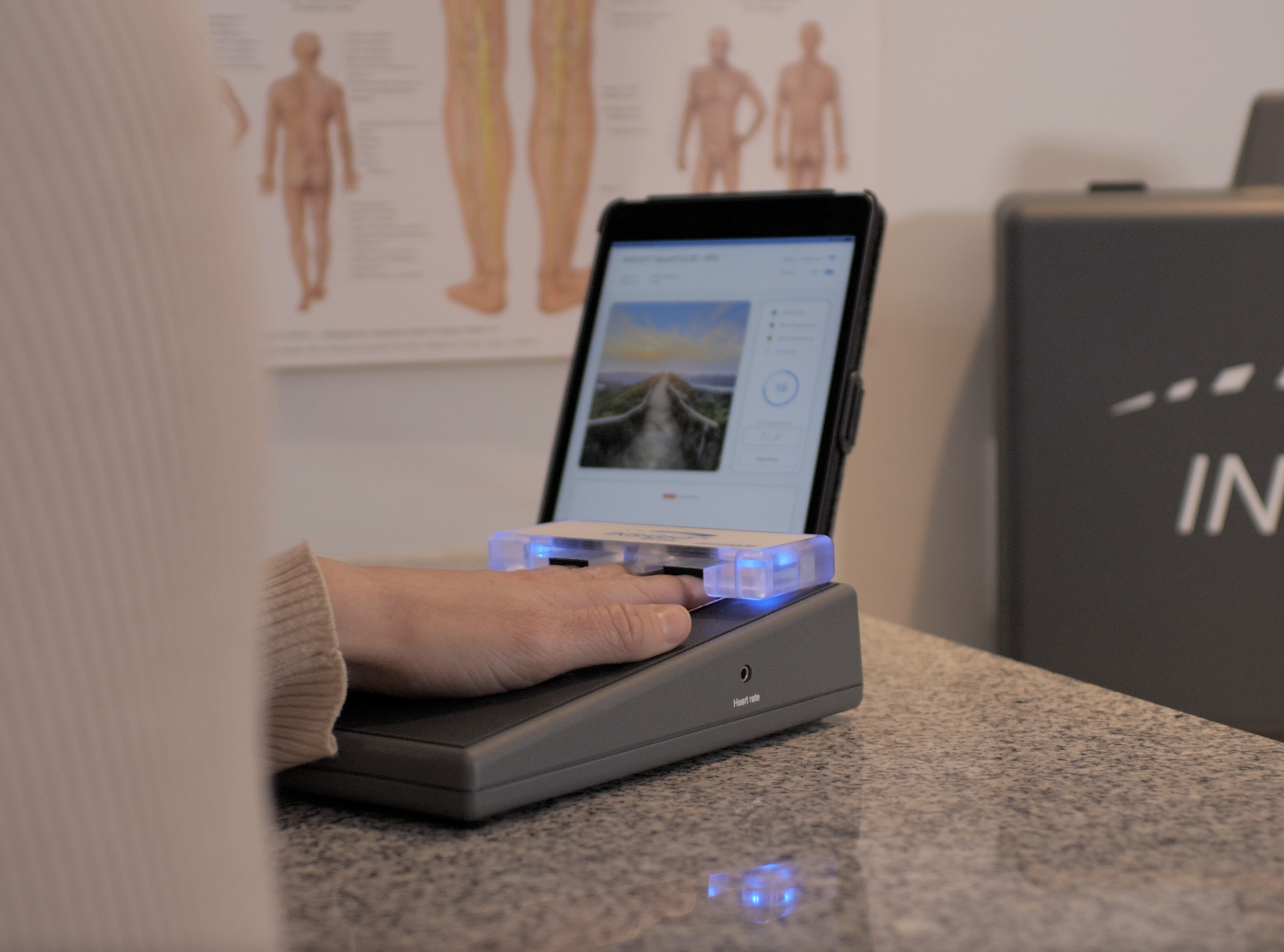
neuroPULSE analyzes Heart Rate Variability to give chiropractors insight into autonomic balance, adaptability, recovery, and adaptive reserve. HRV looks at beat-to-beat variation rather than simply heart rate. A resilient nervous system needs flexibility. It should be able to respond when demand rises and recover when that demand passes.
HRV is not an analysis of brain plasticity. Instead, it gives us one functional perspective on how the autonomic nervous system is regulating at the time of the examination.
neuroCORE and Sensory-Motor Patterns
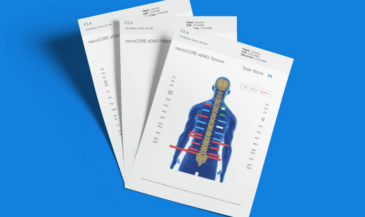
neuroCORE analyzes surface electromyography in the paraspinal muscles, helping the chiropractor evaluate postural tension, symmetry, motor tone, energy expenditure, and compensation patterns.
This fits naturally into the neuroplasticity conversation because the nervous system continually coordinates movement and stability. neuroCORE does not show functional changes in brain tissue, but its scan views give us objective information about how motor patterns are being expressed along the spine.
neuroTHERMAL and Autonomic Regulation
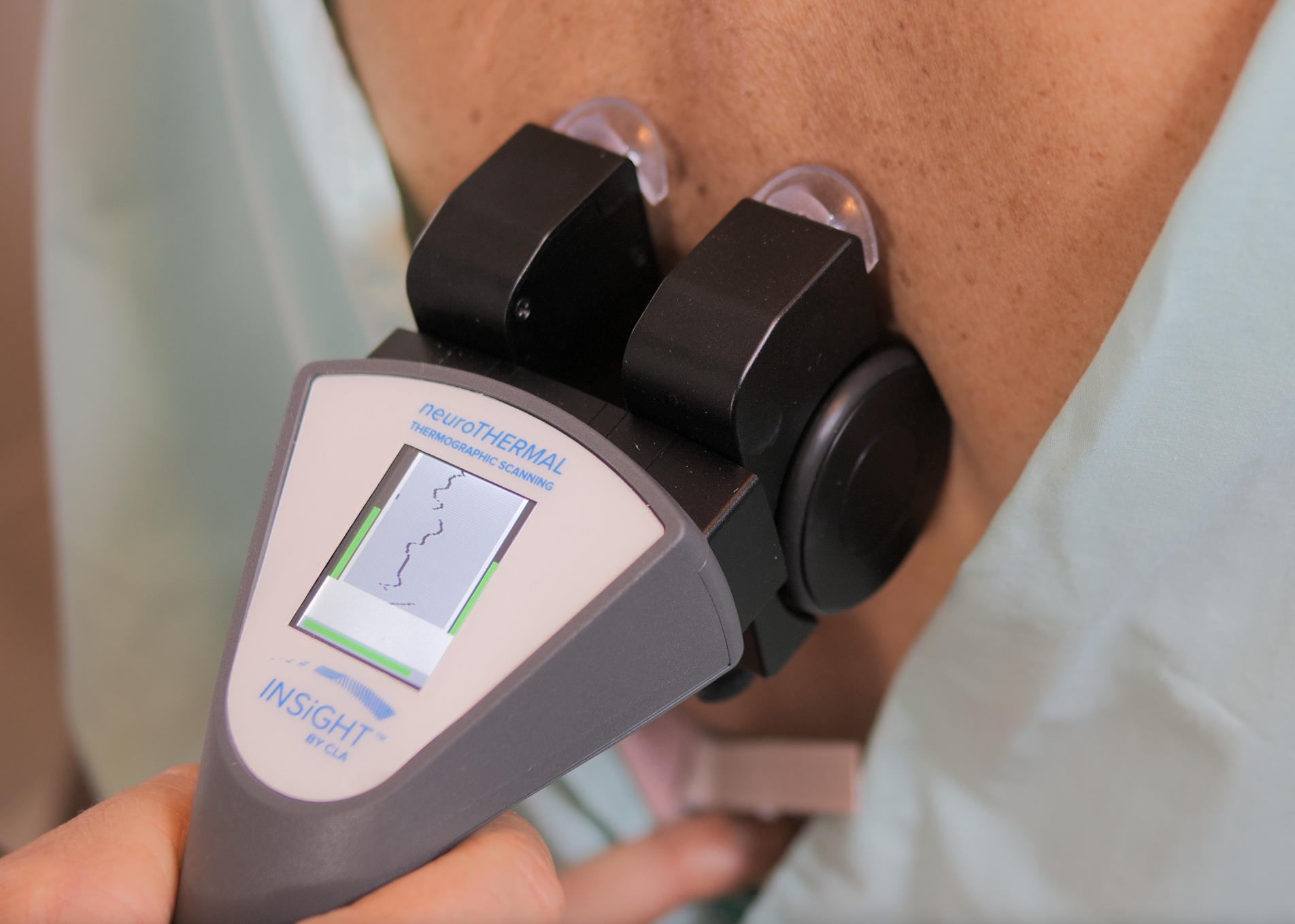
neuroTHERMAL performs a fast full spine nerve system scan to analyze paraspinal temperature patterns associated with autonomic regulation. Because autonomic activity influences blood flow and temperature regulation, thermal analysis gives the chiropractor another view of functional patterns along the spine.
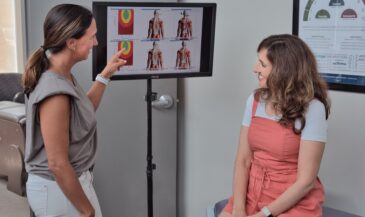
With INSiGHT neuroTECH and Synapse software, these different dimensions can be organized into scan views and comparative reports patients can understand. CORESCORE can further simplify complex neurological information into a patient-friendly neurological efficiency metric.
The technology does not create the care plan. The chiropractor interprets the scans alongside the history, examination, clinical findings, and professional judgment.
This is where three words become especially valuable: baseline, response, trajectory. Establish where nervous system performance began. Analyze what fluctuates. Then follow the trajectory over multiple examinations. That is not proof that a particular neuroplastic change occurred. It is objective analysis that gives the chiropractor and patient a shared reference point.
How Physical Activity and Learning Can Improve Neuroplasticity
Neuroplasticity is not limited to rehabilitation after brain injury. Learning, movement, sleep, novelty, repetition, and meaningful experiences can all influence the conditions involved in neuroplasticity.
Physical activity is one of the best-established examples. Aerobic exercise has been studied for its impact on the brain, including blood flow to the brain, brain connectivity, cognitive function, and brain-derived neurotrophic factor, or BDNF. BDNF is involved in neural and synaptic function and is associated with processes supporting neuronal growth.
Learning matters as well. Learning a new language, practicing a musical instrument, developing an unfamiliar physical skill, or trying other challenging activities asks the nervous system to process new information. With meaningful repetition, those experiences can help establish new pathways.
Sleep also deserves attention. Information gathered during the day needs to be processed and consolidated. Sleep supports memory and learning, making adequate recovery an important part of the larger brain plasticity conversation.
Supporting Neuroplasticity Across the Lifespan
There is no single trick to promote neuroplasticity. The research supplied for this topic points toward several practical habits that support an active, adaptable brain:
- Aerobic exercise: Regular movement supports processes associated with brain function, BDNF, and cognitive performance.
- New learning: A new language, musical instrument, route, recipe, or physical skill gives the nervous system unfamiliar information to process.
- Repetition: Meaningful practice helps reinforce neural pathways.
- Novelty: New experiences challenge established patterns and encourage learning.
- Sleep: Quality sleep supports memory consolidation and learning.
- Meaningful engagement: Salience matters. We tend to learn more effectively when the experience matters to us.
These principles apply across the lifespan. Brain development is especially active in children, but adults retain plasticity, too. Older adults still have the ability to learn and create brain changes, even if certain adaptations occur differently or require more time.
Physical activity, continued learning, and cognitive engagement are also studied in relation to long-term brain health and cognitive decline. They should not be presented as guarantees against neurological disease or as a certain way to achieve a lower risk of cognitive impairment. The more defensible point is that an active nervous system continues responding to experience throughout life.
Neuroplasticity Gives Chiropractic a Bigger Story to Tell
Patients usually walk into your office knowing what they feel. They have language for symptoms. What they rarely have is language for neural pathways, adaptive reserve, autonomic regulation, brain connectivity, or nervous system performance.
That is where the importance of neuroplasticity becomes useful for the Neurologically-Focused Chiropractor. It reminds us that the nervous system is dynamic. It learns from input. It can strengthen some pathways and weaken others. It can reorganize, form new connections, and continue adapting throughout life.
The goal is not to tell patients that chiropractic magically rewires their brain. That overstates what the science tells us. The better conversation is about a nervous system designed to receive information, respond, adapt, and continually refine how it functions.
Once patients understand that, it becomes easier to explain why we establish a neurological baseline, why symptoms are not our only metric, and why progress analysis matters. It also explains why objective neurological scanning belongs in a modern chiropractic examination.
INSiGHT scanning technology helps make nervous system performance visible. It does not replace your hands, your clinical judgment, or your adjustment. It gives you objective analysis that helps you see functional patterns, communicate them clearly, and follow them over time.
Neuroplasticity reminds us that the nervous system is never simply standing still. When patients begin to understand that their nervous system can learn, adapt, and reorganize, chiropractic stops looking like a conversation only about spinal regions and symptoms.
It becomes a conversation about nervous system performance. And when patients can see that bigger neurological story through objective scanning, they have a much better chance of understanding the why behind their care.