

But you and I both know the nervous system is rarely that simple. Sleeping HRV is not just a number generated after a night’s sleep. HRV refers to the tiny variability between heartbeats, measured in milliseconds, and gives us a window into how autonomic regulation behaves while many of the demands of waking life are turned down. That makes HRV during sleep a fascinating metric for chiropractors who already think in terms of adaptability, recovery, reserve, and nervous system performance.
The real question is not simply, “Was my sleeping HRV high last night?” The better question is, “What does that pattern tell us about how well this nervous system was adapting and recovering?” Once you ask that question, heart rate variability becomes much more useful.
What Sleeping HRV Tells Us About Heart Rate Variability and the Autonomic Nervous System
Heart rate variability, or HRV, refers to the variation in timing from one heartbeat to the next. If a heart beats 60 times in one minute, those heart beats do not necessarily land exactly 1,000 milliseconds apart. One interval may be a little shorter. The next may be a little longer. That variability between heartbeats is normal, and those subtle differences carry information about nervous system activity.
That is why HRV is not the same thing as heart rate. Resting heart rate tells you how many times the heart beats within a period of time. HRV measures the changing intervals between those beats. Those intervals are influenced by the autonomic nervous system, including the ongoing interaction between sympathetic and parasympathetic activity.
For chiropractors, that distinction matters. We are not simply interested in how fast the heart is beating. We are interested in how flexible the regulatory system appears to be. A resilient nervous system should be able to respond when demand rises and shift toward recovery when that demand passes. HRV gives us one way to look at that adaptability.
Why Sleeping HRV Gets So Much Attention
During the day, HRV can be influenced by movement, exercise, posture, meals, emotion, work demands, and other stressor exposures. That does not make daytime HRV useless, but it does mean there are plenty of moving parts.
Sleep removes many of those waking influences. The person is lying down rather than exercising, eating lunch, or rushing between appointments. That is one reason nocturnal HRV has attracted so much interest. It offers a quieter physiological window into autonomic regulation.
But quieter does not mean static. Sleep is an active biological process. The nervous system continues regulating breathing, cardiovascular activity, muscle tone, recovery, and many other functions throughout the night. Sleeping HRV naturally fluctuates as those processes shift, which is why one HRV score should not be treated as a complete verdict on overall health.
How HRV During Sleep Changes With Sleep Stages
One of the most important things chiropractors should understand about sleeping HRV is that sleep is not one uniform nervous system status. The body moves through different sleep stages, and autonomic activity moves with it.
Research examining HRV across wakefulness, non-REM sleep, and REM sleep has demonstrated meaningful differences between those stages. In normal subjects, non-REM sleep has been associated with greater vagal influence on the heart, while REM sleep shows a more dynamic autonomic pattern. That means an average sleep HRV number can hide quite a bit of physiology underneath it.
Non-REM Sleep and Parasympathetic Activity
In research comparing normal subjects with people who had recently experienced myocardial infarction, investigators examined five-minute ECG recordings during wakefulness, stable non-REM sleep, and REM sleep. Among the normal subjects, moving from wakefulness into non-REM sleep was accompanied by a marked increase in high-frequency HRV. High-frequency power rose from 19% to 40%, while the LF/HF ratio fell from approximately 4 during wakefulness to 1.22 during non-REM sleep.
The researchers characterized non-REM sleep as the state they examined with the greatest vagal influence on heart rate. In practical terms, quiet non-REM sleep provided a period of strong parasympathetic nervous system influence.
That helps explain why higher HRV is frequently discussed in connection with recovery and parasympathetic activity. But it does not mean HRV levels should remain high throughout an entire night.
REM Sleep Tells a Different Autonomic Story
During REM sleep, the same research found that high-frequency power decreased while the LF/HF ratio rose again to approximately 3 in the normal subjects. The researchers interpreted this as a relative withdrawal of some of the vagal influence seen during non-REM sleep.
This is why HRV while sleeping can move around considerably. REM sleep is not physiologically identical to deeper non-REM sleep. Autonomic activity fluctuates, and the heart rhythm can become more dynamic.
So when a patient sees lower HRV during part of the night, that does not automatically mean poor sleep. Sleep stages, arousals, sleep disturbances, sleep duration, and other physiological factors can all affect HRV.
Why One Average HRV Score Can Miss the Story
A wearable may summarize an entire night with one average HRV value. That can be useful for tracking, but it remains a summary. Underneath it are HRV patterns associated with different stages of sleep and different levels of autonomic activity.
That is also why poor sleep quality or sleep problems should not be diagnosed from an HRV score. HRV may add useful physiological information, but sleep disorders require appropriate clinical evaluation. For chiropractors, the larger lesson is familiar: one metric rarely tells the whole story.
Learn more about INSiGHT scanning?
Fill this out and we’ll get in touch!
"*" indicates required fields
What Is a Normal Sleeping HRV Range and Why Baseline Matters More
One of the first questions patients ask is, “What is a normal HRV while sleeping?” There is no single sleeping HRV range or normal range that defines a resilient nervous system for every person. HRV is highly individual, and individual differences in HRV matter.
Age and gender can influence HRV values, as can physiological condition, sleep quality, illness, neurological distress, medications, analysis method, and the technology being used. Differences in resting HRV also exist across individuals and age groups. That makes it difficult to point to one number as normal HRV or establish one universal standard for HRV for adults.
A person’s HRV baseline is generally more useful than comparing their score with somebody else’s. One patient may have an average HRV that appears lower than a friend’s yet remains stable within their own usual pattern. Another may record an unusually high value that still needs context.
Higher HRV Is Not Automatically Better HRV
There is a simple wellness message floating around that says higher HRV equals better performance and lower HRV equals worse performance. That may be directionally useful in some recovery conversations, but it is too simplistic to use as a clinical rule.
Higher HRV is often associated with greater parasympathetic influence and adaptability, while low HRV can accompany fatigue, illness, poor sleep, increased physiological demand, or elevated stress levels. But that does not mean every high HRV is desirable or that consistently low HRV identifies a specific condition.
A large observational study presented at the 2025 European Academy of Neurology Congress followed 4,170 people across 13,217 person-years. Researchers reported associations between different nocturnal HRV patterns and later health conditions. Low HRV appeared more often among participants who later developed depression, while unusually high or erratic patterns were reported in association with some other later conditions.
Those findings do not mean sleeping HRV can diagnose or predict those conditions in an individual patient. They do reinforce an important point: a healthy HRV is not simply the biggest number possible. Better HRV interpretation requires context.
Look at HRV Over Time Instead of One Night
A single night can be interesting. HRV over time usually tells you more.
This is particularly important with wearable technology. Different devices may calculate HRV differently, use different sampling periods, or apply different algorithms. If someone wants to monitor HRV, using the same device consistently gives HRV trends over time more meaning than jumping between devices.
The useful questions become:
- HRV baseline: What is typical for this individual?
- HRV patterns over time: Is there a meaningful trend rather than a one-night fluctuation?
- Changes in HRV: Do sustained shifts appear alongside illness, recovery demands, or inconsistent sleep?
- HRV status: Does the current value fit the person’s broader physiological picture?
- Sleep quality: Are poor sleep, sleep disturbances, or changes in routine occurring at the same time?
One number gives you a moment. A pattern gives you a story.
Factors That May Affect Sleeping HRV
Patients often ask what can influence your HRV or how to improve your HRV. There are several factors that may affect sleeping HRV from one night to another:
- Sleep consistency: Inconsistent sleep and irregular routines can influence recovery and nighttime autonomic patterns.
- Alcohol: Alcohol near bedtime can affect HRV and interfere with quality sleep.
- Heavy meals: A large meal close to bedtime can add physiological demand during the recovery period.
- Illness: HRV may shift when the body is dealing with greater physiological demand.
- Sleep disturbances: Fragmented sleep can influence HRV during the night.
- Sleep environment: Consistent routines and conditions that support restful sleep can support recovery.
- Breathing: Slow evening breathing may encourage parasympathetic activity before bed.
People naturally want to know how to increase HRV or improve HRV quickly. I would be careful about turning that into a game of manipulating the number. Stress and sleep, daily demand, recovery, and many other factors influence HRV. The goal is not to chase an HRV score. The goal is to support a nervous system that can regulate, adapt, and recover.
From Sleeping HRV on a Wearable to INSiGHT Neurological Scanning
This is where the sleeping HRV conversation becomes especially useful in chiropractic. Patients are already walking into practices knowing last night’s sleep duration, resting heart rate, recovery score, and HRV status. Rather than dismissing those numbers or treating them as diagnoses, chiropractors can use that interest to widen the nervous system conversation.
A patient may ask, “Why was my sleeping HRV low?” Instead of saying, “Your HRV is low, so we need to raise it,” we can ask better questions. Is this different from your usual HRV baseline? Is it one night or a longer pattern? What other demands are present? How well does your nervous system appear to be adapting and recovering?
That is a much more useful chiropractic conversation because it moves from chasing a number toward understanding nervous system performance.
A Wearable and a Chiropractic HRV Analysis Are Not the Same Thing
A wearable can be useful for longitudinal tracking. It may help someone monitor HRV across many nights and see how HRV changes alongside exercise, travel, illness, sleep duration, or routine.
A standardized chiropractic HRV analysis serves a different purpose. It is collected under more controlled conditions and interpreted as objective exam data within a broader neurological examination.
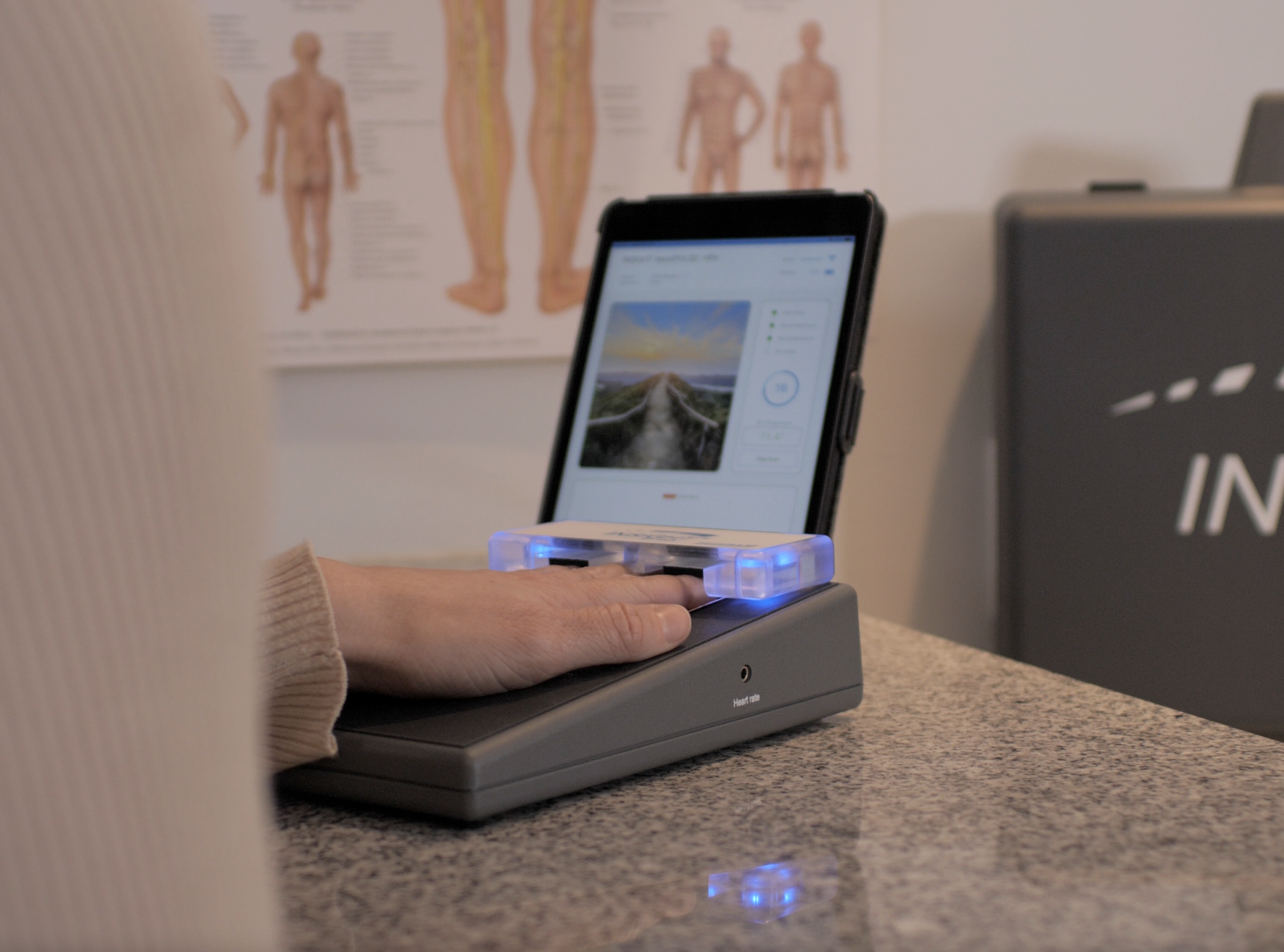
That distinction is important when discussing INSiGHT neuroPULSE. neuroPULSE does not track sleeping HRV overnight. Instead, it provides a standardized three-minute in-office HRV analysis that helps the chiropractor examine autonomic activity, balance, adaptability, and reserve.
How neuroPULSE Helps Chiropractors Measure HRV
INSiGHT neuroPULSE analyzes beat-to-beat information using time-domain and frequency-domain HRV measures. This gives the chiropractor objective information related to autonomic activity and balance. The Rainbow Graph then turns complex information into a scan view that is easier for doctors and patients to discuss.
The point is not to label every HRV score as good or bad. The point is to understand the pattern in context.
That is where neurological scanning changes the conversation. Sleeping HRV may get a patient interested in their nervous system. A standardized HRV analysis gives the chiropractor another way to examine adaptability and reserve objectively.
HRV Is One Dimension of the Neurological Picture
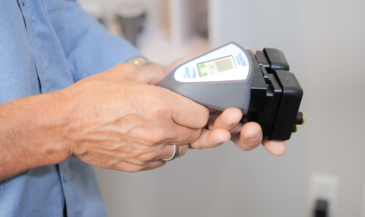
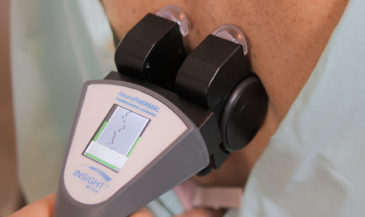
Heart rate variability is useful, but the nervous system is not one-dimensional. That is why INSiGHT neuroTECH and Synapse software examine nervous system performance from several complementary angles.
- neuroPULSE: Analyzes HRV, autonomic activity, adaptability, and adaptive reserve.
- neuroCORE: Analyzes sEMG activity related to postural tension, symmetry, motor patterns, and energy demand.
- neuroTHERMAL: Performs a full spine nerve system scan to analyze thermal patterns associated with autonomic regulation.
Synapse software brings those scan views together so the chiropractor can compare baseline and progress findings over time. INSiGHT scanning technology does not diagnose sleep disorders or cardiovascular, neurological, endocrine, or psychiatric conditions from HRV. It does not create the care plan. The chiropractor interprets the objective exam data alongside history, examination findings, professional judgment, and appropriate referral when needed.
When patients can see nervous system performance in living color, sleeping HRV stops being just another number on a phone. It becomes a doorway into understanding adaptability, reserve, and how the nervous system responds to demand.
Sleeping HRV Is Most Valuable When It Becomes a Pattern, Not a Score
Sleeping HRV has become popular because technology has made an invisible physiological process visible. People are paying attention to recovery, autonomic regulation, sleep quality, and nervous system activity in a way they simply were not doing years ago.
But the danger is turning sleeping HRV into another number people feel they have to win. Normal heart rate variability is not about producing the highest possible score every night. The goal is appropriate regulation. A resilient nervous system should be able to increase output when demand requires action and move toward recovery when the demand passes.
That is why HRV trends over time matter more than one night’s sleep. It is why a personal baseline can be more meaningful than comparing HRV values with somebody else. It is why high HRV and lower HRV both require context. And it is why HRV while sleeping should be considered alongside the broader picture rather than treated as a diagnosis.
For chiropractors, there is a tremendous opportunity here. We do not need to become sleep trackers. We can help patients understand what their interest in sleeping HRV is really pointing toward: adaptability, recovery, and the nervous system’s ability to handle life.
That is already our conversation.
Sleeping HRV gives patients a glimpse of something chiropractors have cared about for a very long time: the body’s ability to adapt. The real value is not in chasing the highest score. It is in understanding whether the nervous system can respond when demand rises, recover when that demand passes, and maintain enough reserve for what comes next. Objective neurological scanning gives us a clearer way to bring that bigger story into the chiropractic exam.