

Interoception is the sense that helps the brain recognize and interpret what is happening inside the body. Heartbeat, breathing, hunger, thirst, bladder fullness, internal temperature, bodily tension, and other physiological signals are all part of this conversation. For chiropractors, that matters because these internal signals do not exist separately from the nervous system. They are detected, carried, interpreted, and acted upon through the same neurological network we talk about when we discuss adaptability and nervous system performance.
And here is where it gets interesting, Doc. A patient can feel a sensation very strongly without necessarily interpreting it accurately. Another patient may have very little conscious awareness of what their body is expressing. The sense of interoception helps us understand why the question is not simply, “What do you feel?” The better question is, “How is your nervous system sensing, interpreting, and responding to what is happening inside you?”
What Is Interoception and Why Should Chiropractors Care?
At its simplest, the definition of interoception is the nervous system’s process of detecting and interpreting signals originating from within the body. These interoceptive signals provide the brain with a running update on the physiological condition of the body. Hunger may signal a need for energy. Thirst signals a need for fluid. A heartbeat provides ongoing cardiovascular information. Breathing, temperature, visceral sensation, and other body signals add to the picture.
This is part of the role of interoception in homeostasis. Homeostasis does not mean the body sits at one perfect setting. The body’s internal environment is constantly fluctuating. Heart rate rises and falls. Breathing shifts. Energy demands change. Hunger and thirst come and go. A resilient nervous system continually receives signals from the body, interprets what they mean, and organizes an appropriate response.
That makes the interoceptive sense an important part of body-to-brain communication. Some internal signals reach conscious awareness. Others are processed without us consciously thinking about them. Either way, the nervous system needs information about body state before it can adapt appropriately.
The neuroscience is fascinating. The insula, including the insular cortex, is an important brain region in the processing and integration of bodily information. The cortex is not working alone, of course. There are multiple regions involved in interoceptive processes across the central nervous system. Researchers including A. D. “Bud” Craig and Hugo Critchley have helped shape modern interoception research and our understanding of how physiological information contributes to bodily awareness and emotional experience.
For chiropractors, the concept of interoception fits naturally beside the sensory conversations we already have. We are interested in how the nervous system receives information, organizes it, and produces a response. Interoception simply gives us another important view of that process.
- Heartbeat and heart rate: Cardiovascular signals may become more noticeable during exertion, excitement, neurological distress, or recovery.
- Breathing: Respiratory rhythm, depth, and effort provide continuous physiological information.
- Hunger and thirst: These bodily sensations help communicate energy and fluid needs.
- Bladder and visceral sensation: Signals from internal organs contribute to regulation and behavior.
- Postural tension: Internal awareness can include the physical effort, guarding, or tension a patient senses in the body.
The important point is that sensing something and correctly understanding what it means are not necessarily the same thing.
Interoceptive Awareness, Interoceptive Accuracy, and Decision-Making
One of the easiest mistakes to make when you first study interoception is assuming that noticing more means sensing better. It does not. Interoceptive awareness, interoceptive attention, and interoceptive accuracy describe related but different dimensions of interoception.
Interoceptive awareness broadly describes awareness of bodily sensations. Interoceptive attention refers to how much attention someone directs toward the internal body. Interoceptive accuracy is more specific and concerns how accurately a person detects a physiological signal. Heartbeat perception tasks, for example, have been used among the measures of interoception in research.
Those distinctions matter. A patient can pay tremendous attention to interoceptive sensations without necessarily interpreting them accurately. Another patient may notice very little until a sensation becomes strong. So the development of interoception should not be framed as teaching someone to obsess over every breath, heartbeat, or internal sensation. Better interoception skills are about becoming more useful observers of bodily information.
Think about a faster heartbeat. The physiological signal may accompany exercise, excitement, anticipation, or perceived threat. The heartbeat is real in each situation, but the nervous system still has to interpret what it means. Context, previous experience, emotional state, and other sensory information can all contribute to that interpretation.
This brings interoception into the conversation around emotional experience, self-regulation, and decision-making. The nervous system is not simply collecting raw information. Internal physiological information can influence whether a person rests, moves, eats, drinks, approaches something, or avoids it.
Interoception, Exteroception, and Proprioception
For chiropractors, it helps to separate three related sensory processes:
- Exteroception: Sensory information associated primarily with stimuli outside the body, including touch.
- Proprioception: Information about body position, movement, and the relationship of the body in space.
- Interoception: Information associated with the internal physiological condition of the body.
During palpation, for example, a chiropractor receives exteroceptive information about texture, pressure, motion, and tension. The supplemental literature also describes practitioner interoception as awareness of internal autonomic, arousal, affective, or motivational responses that may occur while processing clinical information.
That idea should stay in its proper lane. Practitioner interoception is not a replacement for examination findings, objective analysis, or clinical judgment. But it does remind us that the nervous system processes more information than the fine-touch sensation we consciously notice through our hands.
Learn more about INSiGHT scanning?
Fill this out and we’ll get in touch!
"*" indicates required fields
Interoception and Mental Health, Self-Regulation, and Persistent Symptoms
Interoception becomes especially interesting when we consider persistent symptoms. A sensation is not merely detected. It is interpreted. When a nervous system becomes increasingly protective, bodily sensations that are safe or expected may sometimes be interpreted as more threatening. That can contribute to guarding, restricted movement, increased postural tension, heightened sensitivity, or hesitation around movement.
That does not mean the symptoms are imaginary. It does not mean tissue condition or structure no longer matters. It means the nervous system participates in how a sensation is experienced and what response follows. The goal is never to tell a patient, “It is all in your head.” The better conversation is that the nervous system is part of the experience.
When the brain perceives increased demand, the body may respond with shifts in heart rate, breathing, sensitivity, postural tension, and movement behavior. Those responses can be useful. The goal is not to eliminate activation. The goal is adaptability: respond when demand rises, recover when it passes, and return toward baseline without remaining stuck in sympathetic overdrive.
This is where self-regulation, autonomic activity, and the vagus nerve become part of the discussion. Breathing awareness, pacing, and mindful movement are sometimes used as an intervention to help people recognize shifts in physiological activation. But sympathetic activity is not automatically bad, and parasympathetic activity is not automatically good. A resilient nervous system needs both. What matters is flexibility.
What Interoception Research Says About Mental Health
Interoception and mental health have become important areas of neuroscience research. Scientists investigating interoception have studied altered interoception in connection with a range of mental health conditions and neurodevelopmental differences. Interoception in mental health research includes questions about anxiety, emotion, bodily awareness, and how internal information is interpreted.
Interoception differences and interoception difficulties have also been studied in autism and Autism Spectrum Disorder. Some research has asked whether particular populations demonstrate different levels of interoception or a general deficit of interoception, but those questions should not be reduced to a single explanation. An association with interoception does not establish one cause, and chiropractic care should not be presented as a medical intervention for these diagnoses.
The broader fields of interoception and psychopathology and interoception beyond homeostasis reinforce an important idea: internal physiological sensing contributes to more than hunger, thirst, and basic regulation. It can also interact with emotional processing, behavior, and physical and mental health.
Interoception Can Change With Experience
There is a hopeful side to this discussion. The nervous system learns from repeated experience. Interoception may therefore fluctuate rather than remaining fixed throughout life. Neuroplasticity gives us a framework for understanding how the nervous system can develop new responses to repeated, meaningful input.
Practical approaches discussed in this area include:
- Mindful movement: Slower movement can give a person more opportunity to notice bodily feedback.
- Graded movement: Repeated experience with appropriate physical load can help build confidence around movement.
- Breathing awareness: Paying attention to breathing can make physiological shifts easier to recognize.
- Pacing: Patients can learn to notice internal cues without waiting until the body is overwhelmed.
- Better language: Helping patients describe what they sense can make it easier to distinguish expected physical feedback from signals needing attention.
That is very different from teaching patients to fear every sensation. The goal is better awareness and interpretation, not hypervigilance.
How INSiGHT Neurological Scanning Adds Objective Context to Interoception
Here is the distinction I believe matters most for chiropractors: interoception tells us what a person senses internally. Neurological scanning gives us objective information about nervous system performance. Those are not the same thing, and that is exactly why they can complement one another.
A patient may say, “I feel calm.” Another may tell you, “My body feels like it is running all day.” Someone else may feel completely fine. Those experiences matter. But interoceptive awareness alone does not tell us everything about autonomic adaptability, postural tension, or nervous system status.
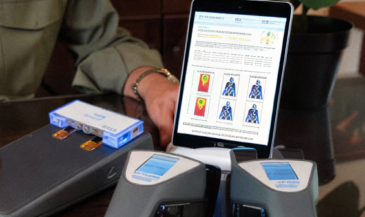
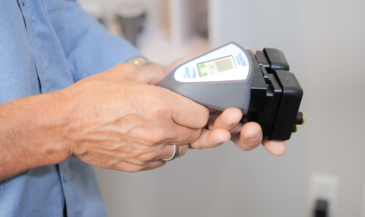
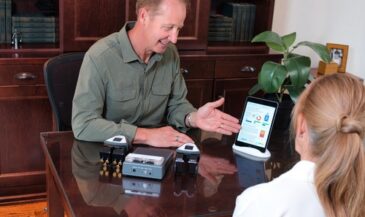
This is where INSiGHT scanning technology adds another layer. It does not directly measure interoception, determine interoceptive accuracy, or diagnose altered interoception. Instead, it provides objective neurological exam data that the chiropractor can interpret alongside the history, examination, and patient’s experience.
neuroPULSE and Heart Rate Variability
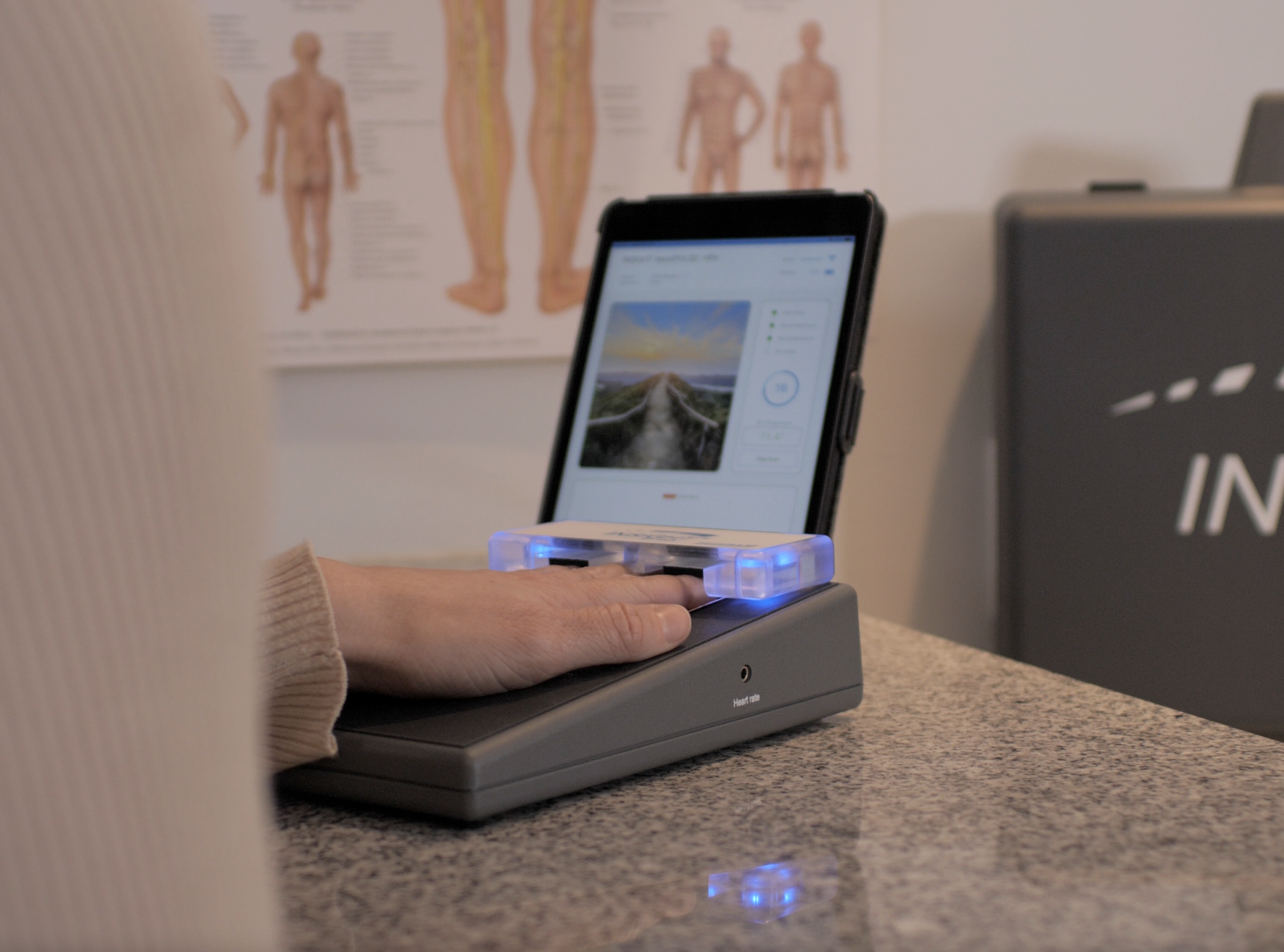
The neuroPULSE analyzes Heart Rate Variability, or HRV. HRV looks at variation in timing between heartbeats rather than simply counting heart rate. It gives chiropractors information about autonomic activity, adaptability, reserve, and recovery.
This distinction is important for anyone trying to measure interoception. Heartbeat perception has been used to study interoceptive accuracy, while HRV is an objective physiological analysis. They answer different questions.
A patient can tell you how regulated they feel. neuroPULSE can give you objective information about autonomic nervous system performance. Now you have two different perspectives on the same person rather than relying on one alone.
neuroCORE and the Energy Cost of Compensation
The neuroCORE analyzes surface EMG activity in the paraspinal muscles. It helps chiropractors see patterns of postural tension, symmetry, motor tone reactions, energy expenditure, and compensation.
A patient may report internal tension or fatigue. The neuroCORE does not prove what that bodily sensation means, but it provides objective context about how much energy the spinal motor system may be using. That gives the chiropractor another piece of the neurological picture.
neuroTHERMAL and Autonomic Patterns Along the Spine
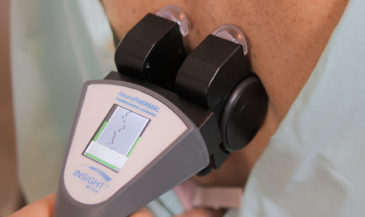
The neuroTHERMAL performs a fast full spine nerve system scan and analyzes paraspinal temperature patterns associated with autonomic function. Rolling and segmental scan modes help chiropractors assess how those patterns fluctuate, while reproducible scan views make complex neurological information easier to communicate.
Put these technologies together and the picture becomes richer. INSiGHT neuroTECH and Synapse software organize neuroPULSE, neuroCORE, and neuroTHERMAL findings into scan views and reports that can be compared across baseline, response, and trajectory.
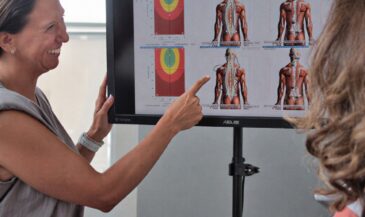
The CORESCORE further simplifies complex neurological information into a patient-friendly neurological efficiency score. It is not a diagnosis, and the technology does not create the care plan. The chiropractor interprets the history, examination, scan views, and patient experience and builds the care plan from the complete clinical picture.
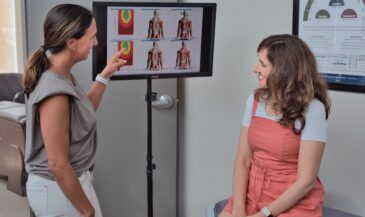
When patients see their nervous system in living color, where neurological distress may be showing up and how their nervous system performance fluctuates over time, the conversation gets clearer. Their internal experience matters, and now there is objective analysis sitting beside it.
Why Interoception Belongs in the Modern Chiropractic Conversation
The role of interoception gives chiropractors useful language for something we have been talking about for a long time: the nervous system has to sense what is happening before it can adapt to what is happening.
That sensing does not stop at touch or proprioception. The nervous system continually receives information originating from within the body. Heartbeat, breathing, hunger, visceral sensation, temperature, internal tension, and physiological arousal all contribute to the body’s ongoing picture of itself.
The useful question is not whether somebody has “good” or “bad” interoception. The different dimensions of interoception remind us that human physiology is more complicated than that. A person who notices every heartbeat is not necessarily more resilient. A person who rarely notices internal signals is not automatically functioning poorly. Context matters.
For the Neurologically-Focused Chiropractor, that opens a better conversation. Instead of letting every visit begin and end with “How do you feel today?” we can widen the frame:
- What are you noticing internally? Give the patient language for what their body is expressing.
- When do those sensations appear? Context can matter as much as the sensation itself.
- Does your body recover after a challenge? Adaptability includes activation and recovery.
- Are you becoming more confident interpreting your body signals? Awareness should create clarity, not fear.
- What does the neurological analysis show? Compare subjective experience with objective nervous system performance.
That last question brings the entire conversation back to neurological scanning. The patient tells you what they sense. Your examination tells you what you observe. INSiGHT scanning technology gives you objective neurological data. Your clinical judgment brings those pieces together.
That is why the study of interoception belongs in a modern chiropractic conversation. It helps us move beyond simply asking where a patient feels a symptom and toward understanding how the nervous system senses, interprets, regulates, and adapts.
When patients understand that bigger story, they begin to see that their nervous system matters long before a sensation becomes loud enough to demand their attention. And when their internal experience can be discussed alongside objective neurological scanning, the chiropractor has a clearer way to bring the conversation back to what matters most: nervous system performance, adaptability, and the why behind care.