

For many people, morning neck stiffness is occasional and short-lived. Maybe you were sleeping in an awkward position, changed mattresses, or spent too many hours looking down at a screen the day before. But when you regularly wake up with neck pain, stiffness, or restricted movement, there is a better question than simply, “How did I sleep?” The question becomes, “Why is my neck so easy to aggravate in the first place?”
Morning neck pain can absolutely be influenced by sleep position, posture, muscle strain, previous injury, arthritis, and the pillow under your head. But the neck is part of a much larger mechanical and neurological system. When morning neck stiffness keeps returning, chiropractors can look beyond the symptom and consider how the cervical spine, surrounding muscles, and nervous system are functioning together.
What Morning Neck Stiffness Can Tell a Chiropractor About Neck Pain
Morning neck stiffness is a symptom, not a diagnosis. That sounds simple, but it changes the clinical conversation.
A patient may describe stiffness in your neck, a sore neck, difficulty turning the head, or morning pain that gradually disappears after moving around. Others experience neck pain that continues for hours. When neck pain lasts longer or starts occurring more frequently, the pattern deserves attention.
The neck is a complex region containing cervical vertebrae, discs, facet joints, ligaments, neck muscles, connective tissues, spinal nerves, and sensory receptors. These structures work together to support the head and neck while providing information about movement, position, stability, and protection.
That is why the intensity of pain alone does not necessarily reveal the underlying pattern. One person may have substantial morning neck stiffness with relatively little discomfort. Another may have a painful neck but maintain fairly comfortable movement. Pain and stiffness matter, but they are only part of the picture.
Pay Attention to the Pattern, Not Just the Stiff Neck
For a chiropractor, useful information often lives in the pattern. Is the discomfort always on the same side of your neck? Does it improve after ten minutes of movement? Does the neck feel sore only after sleep, or does tension in your neck increase during the workday?
It is also helpful to ask whether the patient can comfortably move the head toward one shoulder and whether there has been a change in range of motion. A stiff neck usually behaves differently when it comes from a temporary awkward sleeping position than when there is a persistent functional issue.
Morning symptoms provide another clue because the body has spent several hours relatively still. If morning neck stiffness improves as movement begins, that pattern may be different from pain that worsens progressively with activity. Neither pattern provides a diagnosis by itself, but both give the chiropractor useful information.
Common Causes of Morning Neck Pain and Why Your Neck May Hurt
There is no shortage of reasons for neck pain when somebody gets out of bed. Some are wonderfully ordinary. Others deserve a closer look.
The common causes of morning neck symptoms can include sleep position, pillow support, muscle strain, posture, previous injury, arthritis, and changes in how the cervical region moves. Several factors can also contribute to morning neck pain at the same time.
A patient may spend eight hours at a computer, sleep on their stomach, have a previous whiplash injury, and carry considerable muscular tension. Blaming the pillow alone would miss most of the story.
Sleep Position Can Cause Neck Strain
Stomach sleeping is an obvious potential contributor because the neck usually needs to remain rotated to one side for breathing. Imagine holding your head turned for a few minutes while sitting at your desk. Now extend that position over several hours.
Sleeping in an awkward position can strain your neck muscles and make the neck feel stiff when morning arrives. Awkward sleeping can also become more noticeable when the cervical region is already irritated from the previous day’s activities.
Side or back sleeping may make neutral positioning easier. However, side and back sleeping are not automatically perfect for everyone. Body proportions, shoulder width, mattress support, and pillow height influence whether the head aligned with your spine remains comfortable throughout the night.
How Your Pillow Can Contribute to Morning Neck Pain
The pillow receives a lot of blame for morning neck stiffness, and sometimes it deserves it.
A pillow that is too high may push the head away from neutral. One that is too low may allow the head to drop. A very firm or deep pillow can hold the neck in an uncomfortable position, while an old pillow may simply stop providing the support it once did.
The goal is not to find a magical pillow. It is to find a pillow that supports the head and neck while allowing the natural curve of your neck to remain comfortable. During side sleeping, enough support is generally needed to account for the space created by the shoulder. During back sleeping, support should help keep your head comfortable without forcing the chin excessively toward the chest.
If someone has changed pillows three or four times and still wakes with the same morning neck stiffness, I become much more interested in the neck than the pillow.
Posture and the Stress Your Neck Carries Into Bed
One of the easiest assumptions to make is that neck pain in the morning must have started overnight.
Sometimes the morning is simply when yesterday’s workload becomes obvious.
Computer work, frequent phone use, driving, prolonged sitting, sustained forward-head posture, and repetitive activity can all create demands on the neck and shoulder region before bedtime arrives. If someone spends the day looking down and then sleeps for hours in another sustained position, it is easy to see how those factors might contribute to morning neck pain.
Good posture is not about sitting perfectly upright every second. Bodies need movement. Changing position throughout the day is often more practical than trying to maintain one supposedly perfect position for hours.
Muscle Strain, Muscle Spasm, Arthritis, and Previous Injury
A new workout, sudden movement, lifting, prolonged driving, or unusual activity can cause pain through muscle strain. In some cases, the body responds with increased muscular activity or muscle spasm.
That protective response matters. Tight muscles are not always muscles that simply need to be stretched harder. Sometimes muscular tension is part of the body’s response to an area it does not feel comfortable moving.
Previous whiplash, sports injuries, falls, and repetitive strain may also influence how the neck moves. Arthritis of the neck can contribute to stiffness and discomfort as well, although finding arthritis on an image does not automatically establish the cause of someone’s symptoms.
A herniated disc or another condition affecting a nerve may cause pain that travels into the shoulder, arm, or hand. Nerve pain may also be accompanied by numbness, tingling, or weakness. These symptoms require a different level of attention than uncomplicated morning neck stiffness.
Learn more about INSiGHT scanning?
Fill this out and we’ll get in touch!
"*" indicates required fields
How Chiropractors Evaluate Morning Neck Stiffness When Neck Pain Persists
When morning neck stiffness keeps returning, repeatedly changing pillows is not much of an assessment strategy.
The first job is to understand the pattern. How often does it happen? When did it begin? How long does the neck pain last? Does movement improve it? Does a particular sleep position make it worse? Did symptoms begin after an injury?
Morning neck pain often becomes more meaningful when somebody says, “This happened once every few months, but now I am experiencing neck pain four mornings a week.” A changing pattern deserves attention.
Look Beyond Where the Neck Hurts
A chiropractic examination can consider cervical movement, posture, symmetry, muscular tone, tenderness, neurological findings, and movement quality. Depending on the presentation, the surrounding spinal regions and neck and back mechanics may also be relevant.
The important idea is to look beyond the painful spot.
The neck muscles continually respond to sensory information involving movement, balance, position, load, and protection. Pain signals are important, but the area where someone feels symptoms does not necessarily provide a complete explanation for how the system is functioning.
When Neck Pain Lasts Longer or Needs Further Investigation
Most uncomplicated episodes of morning neck stiffness are not emergencies. Still, chiropractors need to recognize when neck pain persists or when a presentation requires further investigation or medical evaluation.
Prompt assessment is especially important when symptoms occur with:
- Significant trauma: Particularly after an accident, fall, or other substantial injury.
- Severe headache or fever: Especially when symptoms are unusual or rapidly developing.
- Neurological changes: Progressive weakness, numbness, tingling, or pain that travels into an arm or leg.
- Other concerning symptoms: Difficulty swallowing, chest pain, shortness of breath, or bowel or bladder changes.
- Persistent pain: Symptoms that worsen, behave unusually, or fail to improve as expected.
When the neck doesn’t get better, the answer is not simply to keep doing more of the same thing. Good chiropractic care includes recognizing when the presentation fits conservative care and when it does not.
How to Relieve a Stiff Neck With Movement, Neck Stretches, and Better Sleep Habits
Patients naturally want to know what they can do when they wake up with neck pain. For uncomplicated morning neck stiffness, gentle movement is often more reasonable than becoming afraid to move at all.
The goal is not to force the neck through sharp discomfort. It is to maintain comfortable movement while irritated tissues settle. Heat, cold in selected situations, changes in sleep habits, and appropriate exercise may also help ease the pain.
There is an important difference, however, between helping the neck feel better this morning and understanding why the same pattern keeps returning.
Gentle Movement and Neck Stretches to Start Your Day
Simple neck stretches may be appropriate for mild symptoms. Sit or stand comfortably, relax the shoulders, and slowly turn your head toward one side until a mild stretch is felt. Hold for a few seconds, return to center, and repeat gently in the opposite direction.
Do not force the movement into sharp pain.
Walking is another simple way to encourage general movement without aggressively loading the irritated area. For many people, comfortable movement can help reduce pain and prevent the neck stay from becoming unnecessarily guarded through prolonged immobility.
Heat, Cold, and Short-Term Pain Management
Heat is commonly used to relieve pain when the muscles feel tight because warmth can make movement feel easier. A warm shower may be enough to help relieve a stiff neck first thing in the morning.
Cold may be appropriate after a recent aggravation and may temporarily help with discomfort or inflammation. Over-the-counter medications are another common pain management strategy, but patients should follow label directions and seek guidance from an appropriate healthcare professional when needed.
These approaches can make a sore neck more comfortable, but symptom relief does not necessarily explain why the symptom developed.
Sleep Position and Exercises to Strengthen Your Neck
To help prevent neck discomfort, consider both nighttime and daytime habits. Sleeping can also expose an existing problem because the neck remains relatively still for hours.
- Reconsider stomach sleeping: Especially if it repeatedly leaves the neck rotated and sore.
- Try side or back sleeping: These positions may make it easier to keep the neck aligned comfortably.
- Check your pillow: Make sure the pillow supports the head without pushing it too high or allowing it to fall too low.
- Change positions during the day: Avoid prolonged static posture and take regular movement breaks.
- Exercise appropriately: Exercises to strengthen your neck and upper back may be useful when they match the individual’s needs.
Exercises to strengthen the cervical region should not be prescribed as a one-size-fits-all solution. Someone with acute symptoms, previous trauma, significant restriction, or neurological findings may require a different approach.
Chiropractic Care Should Ask a Bigger Question
Chiropractic care should not simply be presented as another way to relieve pain.
The more useful question is whether the cervical region is moving and adapting well. A chiropractor may assess movement, muscular patterns, posture, neurological function, and changes over time.
For appropriate patients, chiropractic care may be part of a conservative approach to morning neck stiffness and neck pain. Care should be guided by history, examination findings, response, and the individual’s presentation rather than assuming every stiff neck has the same cause.
Why INSiGHT Neurological Scanning Matters When Morning Neck Stiffness Keeps Returning
This is where the conversation gets especially interesting for chiropractors.
A patient can say, “My neck hurt when I got out of bed,” or “My neck feel better after a hot shower.” They can rate their stiffness and pain from zero to ten. That subjective information is valuable, but it does not objectively show how the neuromuscular system is functioning.
When morning neck stiffness keeps returning, chiropractors can ask what objective information might add to the examination. Not because a scan replaces the patient’s story, but because it provides another way to understand and follow function.
Looking Beyond Symptoms and Pain Signals
People with neck pain experience and report symptoms differently. Some notice tiny changes immediately. Others tolerate considerable discomfort before mentioning it.
The muscles surrounding the spine are also continually responding to neurological information involving posture, position, movement, balance, load, and protective responses.
This does not mean an abnormal neurological scan is the cause of neck pain. It means objective scanning can provide additional functional information that a chiropractor considers alongside the history, physical examination, movement findings, and symptoms.
How INSiGHT Scanning Adds Objective Information
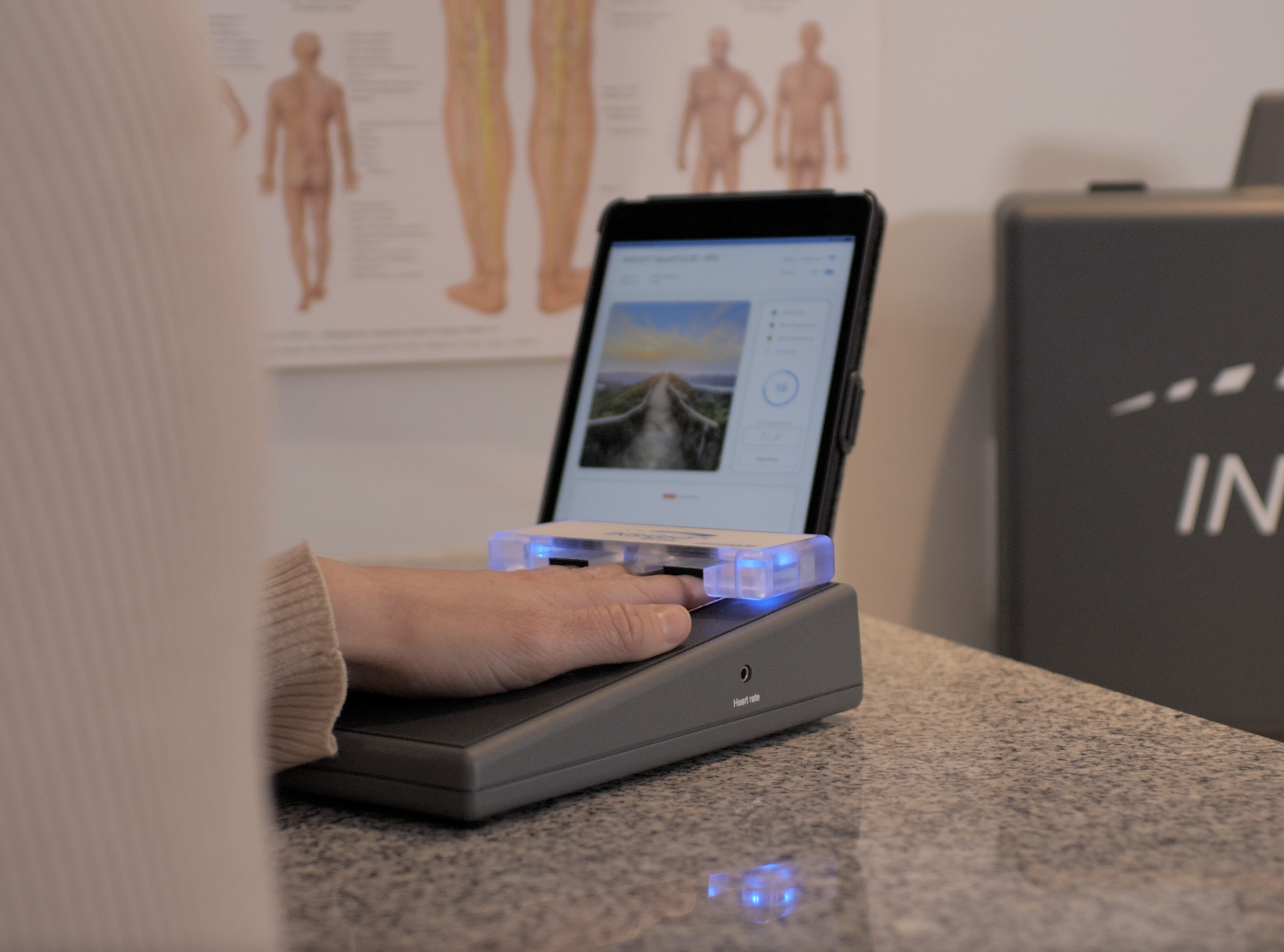
The INSiGHT neuroTECH gives chiropractors objective ways to examine different dimensions of nervous system performance. The INSiGHT software (powered by Synapse) brings these findings together so chiropractors can review, communicate, and track them over time.
The complete neuroTECH approach includes:
- neuroCORE: Uses surface electromyography to assess patterns of paraspinal muscle activity.
- neuroTHERMAL: Evaluates patterns of paraspinal temperature regulation.
- neuroPULSE: Uses heart rate variability to evaluate patterns related to autonomic adaptability.
For a patient with recurring morning neck stiffness, neuroCORE can be particularly relevant because it provides objective information about patterns of paraspinal muscular activity.
That does not mean neuroCORE diagnoses muscle strain, arthritis, a herniated disc, or the specific reason a patient’s neck hurts. It does not. The scan provides objective findings that can be considered as part of the chiropractor’s broader examination.
Baseline, Response, and Trajectory
One scan provides a starting point. Repeated scanning can tell a more useful story.
At CLA, we often think about this as baseline, response, and trajectory. Establish where the patient begins. Look at how findings respond. Then follow the trajectory over time.
That becomes particularly valuable because symptoms and function do not always change at exactly the same pace.
A patient may report that their morning neck stiffness improved quickly while objective patterns continue to change. Another may notice little subjective difference at first while measurable findings are shifting. Neither observation should be ignored.
The power comes from putting the patient’s experience and objective information together.
Making the Morning Neck Pain Conversation More Useful
There is a big difference between telling a patient, “Your neck is tight,” and showing objective findings while explaining what the chiropractor is evaluating.
The second conversation gives the patient something meaningful to see.
Neurological scanning is not designed to replace clinical judgment or diagnose the cause of a painful neck from a graph. It adds objective information to a thoughtful examination and gives chiropractors another way to follow neurological and muscular patterns over time.
For someone who has spent months chasing different pillows, changing sleep position, stretching every morning, and wondering why the same problem keeps returning, that broader perspective can be valuable.
When Morning Neck Stiffness Keeps Showing Up
An occasional sore neck after an unusual night’s sleep may be exactly that: an occasional sore neck. But recurring morning neck stiffness deserves curiosity.
The reasons for morning neck pain can include pillow support, sleep position, daytime posture, muscle strain, previous injury, arthritis, cervical movement, and other factors. Often, more than one contributor is present.
For chiropractors, the goal should not be to guess which explanation sounds easiest. It is to listen carefully, examine thoughtfully, recognize when referral is appropriate, and gather objective information that helps reveal how the patient is functioning.
That is where the conversation can move beyond chasing symptoms.
When history, physical examination, neurological assessment, and objective tools such as INSiGHT Scanning come together, the chiropractor has more information to understand and follow the patient’s functional patterns over time.
And for someone who keeps waking up with a stiff neck, that is a much more useful conversation than simply saying, “You must have slept wrong.”