

Most patients are taught to judge care by how they feel today. If the headache is quieter, they assume the issue is solved. If neck pain or stiffness returns, they may assume nothing is changing. You and I both know the body is rarely that simple. Symptoms fluctuate, daily demands change, and progress does not always move in a straight line.
The better answer brings together what the patient feels, what they can do, and what the doctor can objectively analyze over time. When those three parts begin telling the same story, the conversation shifts from short-term pain relief to measurable changes in function, adaptability, and neurological performance.
How Do I Know If Chiropractic Is Helping Through Changes I Can Notice?
The first answer to how do I know if chiropractic is helping should respect the patient’s experience. Symptoms are not the whole story, but they are still part of the story. When many patients notice that lower back pain is less intense, a headache is less frequent, or stiffness no longer controls the first hour of the morning, those are meaningful signs.
The key is to look for patterns rather than one dramatic moment. A chiropractic adjustment can help a patient move more comfortably, but the most useful question is whether that improvement continues to show up in real life. Is sitting easier? Is walking more comfortable? Is the patient sleeping longer before pain or discomfort wakes them? Those practical changes often tell us more than a pain score.
Common Signs of Progress
- Lower symptom intensity: Sharp or dull symptoms become less disruptive, and chronic back pain or neck pain is less disruptive.
- Better movement: The patient can turn, bend, walk, or exercise with greater confidence and less guarding.
- Improved range of motion: The neck, shoulders, hips, or spine move more freely with less stiffness.
- Easier daily function: Driving, working, lifting, sleeping, and completing household tasks require less effort.
- Longer-lasting improvement: The patient begins to feel relief for longer periods between chiropractic visits.
These are common signs patients use when they ask how do I know if chiropractic is helping. They matter most when compared with a baseline, especially because gradual improvement can be difficult to remember. The goal is not a few hours of relief, but more durable function and stability.
Results From Chiropractic Care Should Be Judged by More Than Symptoms
When patients ask how do I know if chiropractic is helping, they usually expect a symptom answer. They want to know whether the back pain is gone, whether the headache has stopped, or whether they can move without soreness. Those questions matter, but a Neurologically-Focused Chiropractor sees a broader picture.
Symptoms describe what the patient notices. Function describes what the patient can do. Objective findings help show how the body is organizing movement, posture, regulation, and adaptation. The most dependable results emerge when all three are considered together.
The Three Layers of Chiropractic Progress
- Subjective progress: Less pain or discomfort, fewer headaches, better sleep, and greater comfort.
- Functional progress: Easier movement, better posture, greater range of motion, and more tolerance for work or exercise.
- Objective progress: Examination findings, objective analysis, neurological data, and comparisons with the patient’s starting point.
This is why how do I know if chiropractic is helping cannot be answered from one good day or one difficult day. A patient may feel better before the deeper functional pattern has stabilized. Another may show improved movement or neurological organization before noticing a dramatic change in symptoms.
One chiropractic adjustment should not be the sole test of whether chiropractic care works. A response is useful, but the doctor still needs to know whether it is developing into a stable pattern.
Chiropractic Is More Than Spinal Alignment
Patients often hear that a licensed chiropractor uses their hands to realign your spine. They may also hear a chiropractic adjustment described as spinal manipulation, or also called spinal manipulation in general healthcare language. That mechanical explanation is familiar, but it is too small for the full chiropractic story.
The doctor may use their hands, an instrument, or a specialized chiropractic table. The clinical concern is not simply whether a joint makes a popping or cracking sound. It is how altered motion, vertebral subluxation, surrounding muscles, postural tension, and neurological interference may affect communication and coordination.
That does not mean every symptom comes from the spine. It means the chiropractor is looking beyond simple alignment and asking whether function and neurological performance are becoming more organized. That is a much more useful answer to how do I know if chiropractic is helping.
Learn more about INSiGHT scanning?
Fill this out and we’ll get in touch!
"*" indicates required fields
When Chiropractic Care or a Chiropractic Treatment Plan Is Not Progressing
Responsible care includes the willingness to reassess. No patient should be expected to continue indefinitely without understanding the goals, the findings being tracked, and the reason for the current schedule. What many patients call a treatment plan should be a clear care plan with defined checkpoints.
When a patient asks how do I know if chiropractic is helping and there has been no meaningful change, the answer should not be a rehearsed promise. It should be a careful review of the history, examination, response, consistency, and objective findings.
No Meaningful Change After Weeks of Consistent Care
There is no universal number of visits. A recent episode of musculoskeletal pain may not follow the same timeline as chronic back pain. Work demands, sleep, consistency, and the clinical findings can all affect the effectiveness of chiropractic care.
Even so, weeks of consistent care should not pass without purposeful communication. The chiropractor should be able to explain what has changed, what has not changed, and what the next progress examination is designed to determine.
If there is no improvement in mobility, symptoms, range of motion, daily function, or objective findings, the care plan deserves another look. Chiropractic treatment may help many patients, but good judgment includes recognizing when the current approach is not producing significant improvement.
Persistent or Worsening Symptoms Need Attention
It is possible to feel sore after a chiropractic adjustment, especially early in care or when the body is adapting to a different movement pattern. Mild soreness that settles is different from persistent or worsening pain. The distinction should be explained clearly.
Communication is especially important when symptoms become sharper, spread into a new area, or are accompanied by weakness, numbness, loss of coordination, or other neurological signs. Worsening pain should not be dismissed as proof that chiropractic adjustments might be making a difference. It should be evaluated.
Care can complement traditional medical care, and sometimes collaboration is the right next step. A chiropractor should recognize when imaging, emergency evaluation, or another provider is needed. That is responsible clinical judgment.

How INSiGHT Scanning Shows Whether Chiropractic Care Is Making a Difference
This is where neurological scanning changes the quality of the conversation. Without a baseline, the patient and doctor may be comparing today’s impression with memory. Objective analysis allows the doctor to compare current findings with where the patient began.
INSiGHT scanning technology does not diagnose disease, replace the examination, or create the doctor’s care plan. It provides objective exam data, scan views, and reports that support clinical interpretation. The doctor still brings the history, examination, judgment, adjustment, and relationship.
For doctors asking how do I know if chiropractic is helping, that distinction is essential. The goal is a shared reference point that helps the patient see whether neurological performance is moving toward greater organization, adaptability, and stability.
Begin With a Baseline, Not a Guess
A scan-centered process begins by establishing the patient’s starting neurological status. The baseline can then be compared with later analyses. In practical terms, the rhythm is baseline, response, and trajectory.
The baseline shows where the patient began. The response analysis shows how findings fluctuate during early care. The trajectory reveals whether the overall pattern is moving in a favorable direction. This helps answer how do I know if chiropractic is helping without overreacting to one visit or one symptom flare.
neuroPULSE Shows Adaptability and Reserve
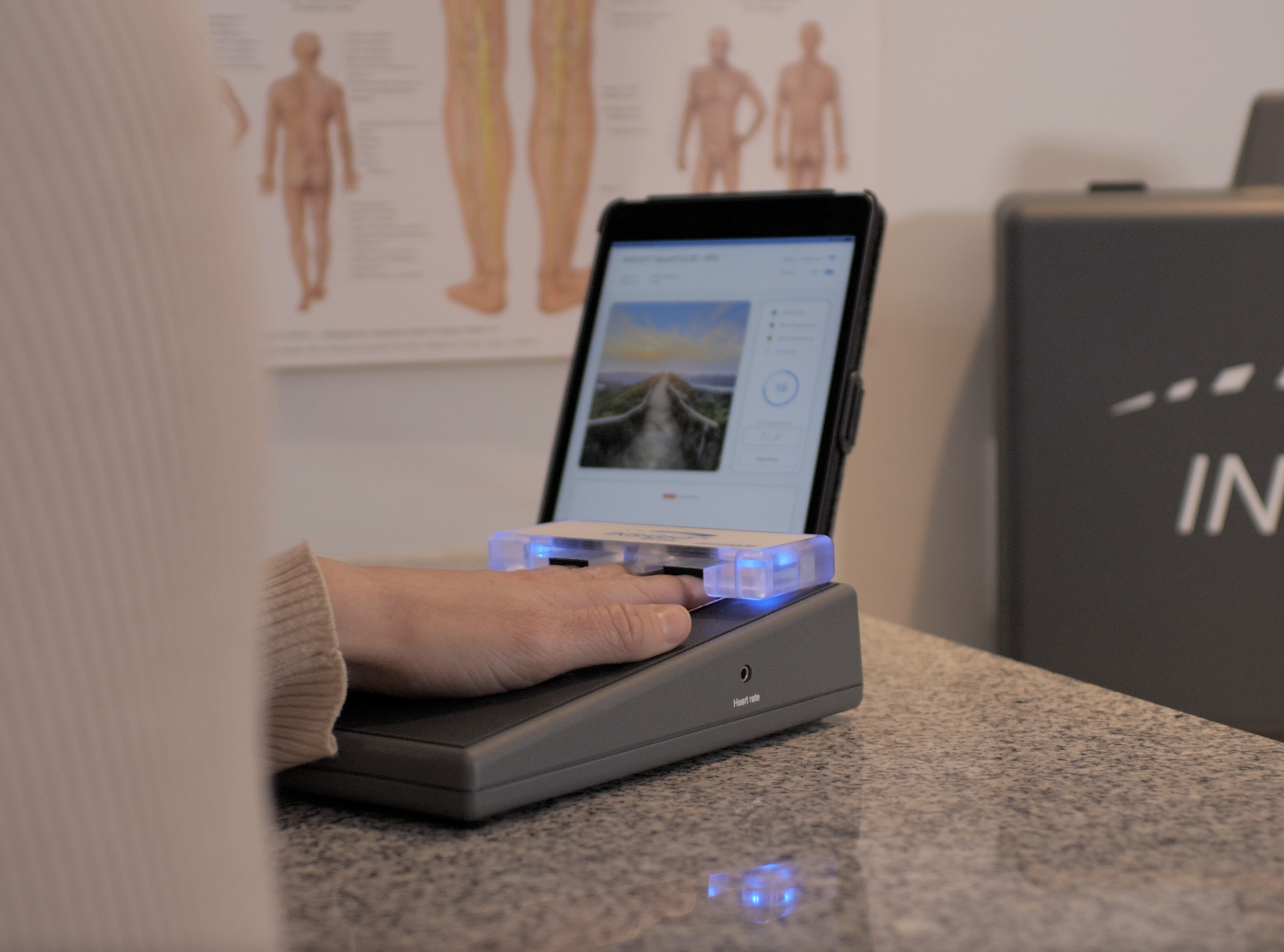
The INSiGHT neuroPULSE analyzes Heart Rate Variability, or HRV. HRV reflects the small variations in time between heartbeats and gives insight into autonomic balance, adaptability, reserve, and recovery.
For the patient, the explanation can stay simple: can the system respond when demand rises and recover when the demand passes? A resilient system is not calm every minute. It is flexible. neuroPULSE helps the doctor assess whether that flexibility is improving.
neuroCORE Shows the Energy Cost of Compensation
The INSiGHT neuroCORE analyzes electrical activity in the paraspinal muscles through surface electromyography. It helps reveal postural tension, symmetry, motor tone, energy expenditure, and patterns of compensation.
The patient-friendly question is whether the body is using less unnecessary energy to maintain posture and stability. This gives the chiropractor another way to evaluate progress beyond symptom reporting alone.
neuroTHERMAL Shows Autonomic Patterns Along the Spine
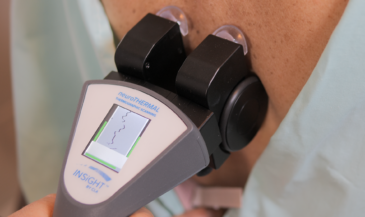
The INSiGHT neuroTHERMAL performs a full spine nerve system scan in under 30 seconds. It analyzes paraspinal temperature patterns connected to autonomic regulation and helps identify reproducible patterns, asymmetries, and breaks along spinal regions.
With neuroTHERMAL, the doctor can compare neurological distress patterns across progress visits. The patient can see whether autonomic patterns are becoming more organized or continuing to show areas needing attention.
Synapse Software and CORESCORE Make Progress Easier to Understand
INSiGHT neuroTECH and Synapse software bring these three dimensions together. Synapse organizes scan views, comparisons, and reports so the doctor can communicate findings without burying the patient in technical language.
The CORESCORE combines neuroPULSE, neuroCORE, and neuroTHERMAL findings into a patient-friendly neurological efficiency score. Think of it as a report card for neurological performance, not a diagnosis and not a guarantee.
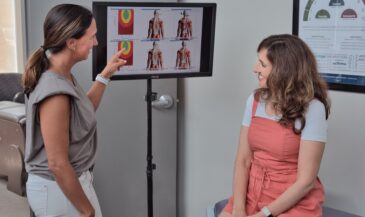
During a progress examination, the doctor can show:
- What has improved: Favorable movement in scan patterns or neurological performance.
- What is still fluctuating: Areas where the findings are not yet stable.
- What remains needing attention: Spinal regions or patterns that continue to show neurological distress.
- What happens next: Whether the care plan should continue, change, or move into another phase.
When patients see their neurological status in living color, they no longer have to judge progress from one symptom, one adjustment, or one difficult week.

A Better Question Than “Do I Feel Better Today?”
So, how do I know if chiropractic is helping? Start with what the patient notices, but do not stop there. Look for symptoms that are less frequent or less intense. Look for better mobility, improved range of motion, easier posture, and daily activities that require less effort. Look for progress that begins to hold longer between visits.
Then examine the deeper story. Are the findings moving in a favorable direction? Is the patient becoming more adaptable? Are patterns of compensation, postural tension, and autonomic regulation becoming more organized? Does the chiropractor have objective information that supports the next phase of the care plan?
A patient may be a good candidate for chiropractic care when the history, examination, and clinical findings support it. Care may help alleviate pain, improve mobility, and support better function, but the goal should never be to promise a result or keep someone returning without explanation.
Some patients seek chiropractic care because they are searching for signs you need care or wondering whether they need chiropractic care. A chiropractic adjustment can help you feel better, and chiropractic care can help some people with musculoskeletal pain. Still, no honest doctor should promise that chiropractic adjustments restore perfect alignment, remove every root cause of your pain, or prevent future problems.
For the chiropractor, the practical steps are straightforward:
- Define progress before care begins.
- Establish a meaningful baseline.
- Ask better questions than “How is your pain?”
- Re-examine at purposeful intervals.
- Compare subjective, functional, and objective findings.
- Modify the care plan when the evidence calls for it.
- Refer or collaborate when the patient’s needs extend beyond chiropractic.
Whether the patient heard about spinal manipulation from the American Chiropractic Association or another source, the chiropractor can give the conversation more depth. Chiropractic care offers more than an attempt to move the spine and reduce pain. It offers a clearer way to evaluate function, adaptability, and progress.
When patients can see where they began, understand what is fluctuating, and follow progress from baseline to trajectory, they stop wondering how do I know if chiropractic is helping. They begin to understand what meaningful, measurable progress really looks like.