

Most people walk into a chiropractic appointment thinking their lower back or neck and back issue is “just a joint problem.” They feel symptoms and assume something is out of place. What they do not realize is that the back muscle system along the spine is often the clearest indicator of how the nervous system is managing stress, load, and movement. This is why paraspinal muscles in chiropractic are never just about tightness. They are about control, coordination, and the ability to move your spine as you must in real life.
When chiropractors shift the conversation away from isolated pain and toward nervous system performance, everything changes. Neurological scanning helps make that shift possible. It moves the focus from what a patient feels to what their nervous system is doing, and that is where long-term clarity, confidence, and retention are built.
What Are the Paraspinal Muscles? A Chiropractic Perspective
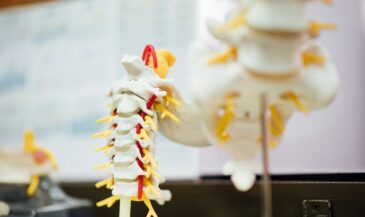
The paraspinal muscles in chiropractic refer to a group of muscles that run parallel to the spine, supporting posture, movement, and stability. This muscle group is responsible for helping hold up the spine, guiding movement, and providing constant feedback to the nervous system. Chiropractors pay close attention to these muscles because they reflect how well the spine is being controlled, not just how far it can move.
Anatomically, the paraspinal muscle system includes layers of skeletal muscle designed for endurance and coordination. Some fibers create larger movements like extension and rotation, while others fine-tune segmental motion. This is why the paraspinal musculature functions differently from many other muscles in the body. Its job is not just power. Its job is precision.
Key paraspinal muscle groups often discussed in chiropractic include the erector spinae, which act as a primary extensor muscle system, and the deeper stabilizers such as the multifidus muscle. The lumbar multifidus and lumbar multifidus muscle are especially important in the lumbar spine because they contribute to segmental control and stabilization. Together with other paravertebral muscles, these tissues form a coordinated system that supports alignment and movement throughout the whole spine.
Structure and Function of the Paraspinal Musculature
The structure and function of the paraspinal muscle system explain why chiropractors care so deeply about how these muscles behave. These spine muscles are built to work all day, every day. They provide postural support, guide movement, and help stabilize the spine under constant load. When the system is efficient, movement feels smooth and controlled. When it is not, the nervous system often substitutes tension for stability.
The erector spinae muscles act as the larger movers, assisting with extension and upright posture, while deeper stabilizers like the multifidus muscle provide fine-tuned control. If that balance is lost, the lumbar paraspinal muscle system often compensates by recruiting larger back muscle fibers, leading to fatigue and stiffness. Over time, this can affect muscle function, muscle strength, and physical function.
Paraspinal muscles do not work in isolation. They coordinate with abdominal muscles and other core muscles to manage load and motion. When one part of the system underperforms, another part overworks. This imbalance can affect alignment and movement across the global spine, from the upper back to the lower back.
Learn more about INSiGHT scanning?
Fill this out and we’ll get in touch!
"*" indicates required fields
Paraspinal Muscles as the “Eyes of the Spine”
The phrase “eyes of the spine” resonates because it captures the role of proprioception. The paraspinal muscles in chiropractic are rich in sensory receptors that constantly inform the brain about spinal position and movement. These signals help the nervous system decide how much muscle activity is needed to support and reposition your spine.
When proprioceptive input is clear, the spine moves efficiently. When it is distorted, the nervous system responds with postural tension and protective strategies.
Neurological distress can alter how paraspinal muscles in the control of spinal movement behave. Instead of fluid coordination, the system braces. This affects the ability to move your spine smoothly and can contribute to unilateral back pain, reduced flexibility, and fatigue.
What Happens When Paraspinal Muscles Are Not Functioning Well
When paraspinal muscles in chiropractic are not functioning efficiently, the body adapts. Patients may experience paraspinal muscle pain, muscle weakness, or a constant sense of tightness. Over time, chronic protective strategies can lead to changes in paraspinal muscle quality.
These changes are often associated with low back pain and low back disability, but they are better understood as part of a broader neurological strategy rather than isolated tissue failure.
Chiropractic Assessment of Paraspinal Muscles
An effective assessment of paraspinal muscle function blends observation, palpation, movement analysis, and objective neurological data. Traditional assessment of back function remains valuable, but it can miss compensation patterns that develop over time. Soft tissue approaches, including paraspinal muscles via fascia manipulation, may be part of the chiropractic treatment. Exercise also plays a role. Chiropractic recommends exercises as part of care plans to build endurance, coordination, and control, with the understanding that finding the right exercise matters.
Objective neurological scanning supports a more complete assessment of back and spine musculature, especially in patients with acute and chronic presentations where symptoms alone do not tell the full story.
Why Neurological Scanning Changes the Paraspinal Muscle Conversation
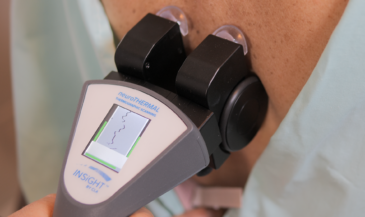
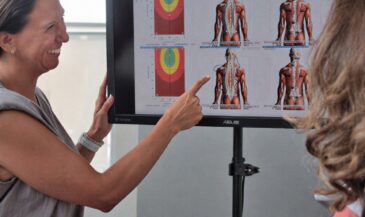
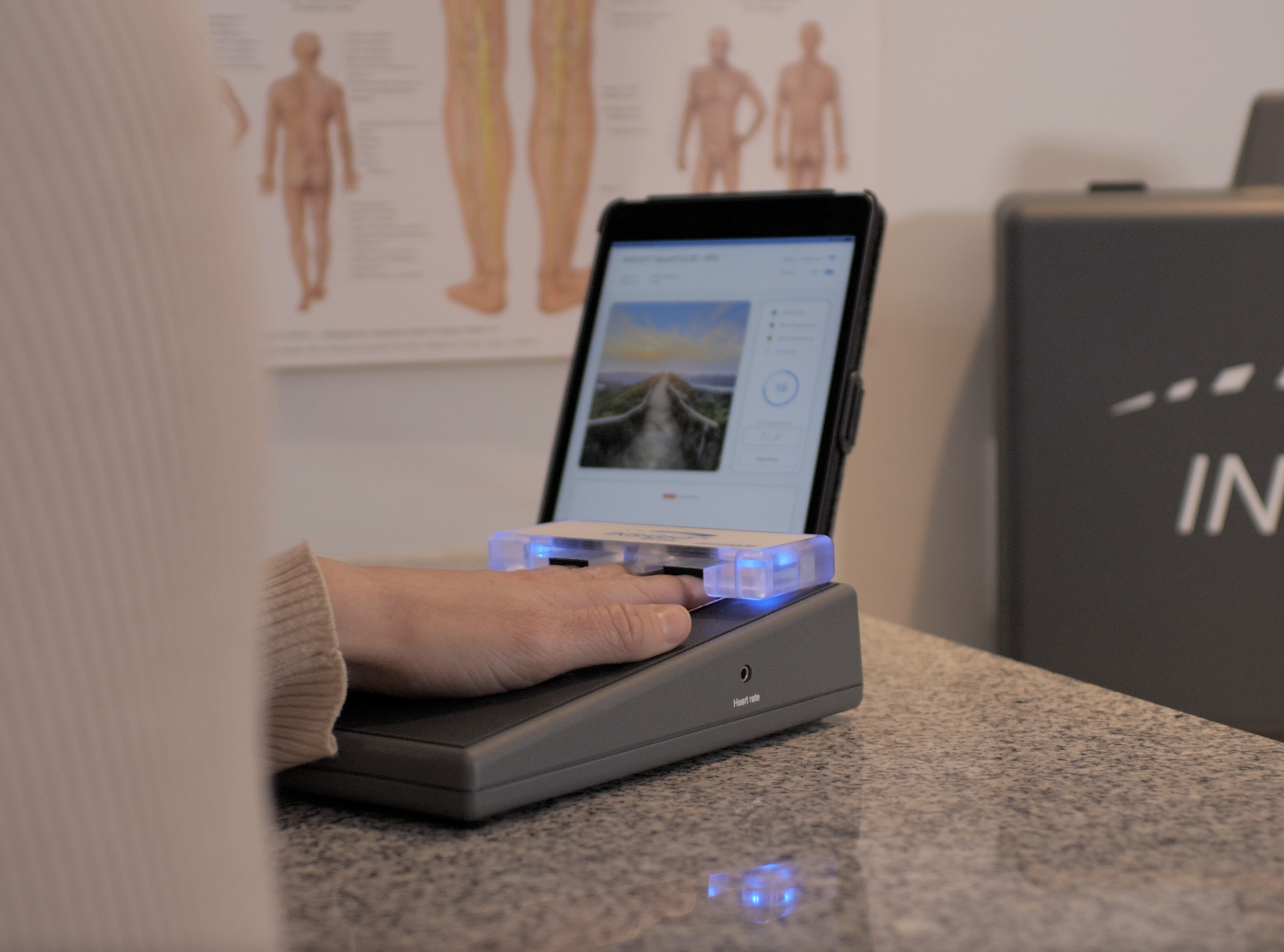
This is where the INSiGHT becomes central. INSiGHT scanning technology provides objective exam data that helps chiropractors interpret how the paraspinal muscle system is functioning. neuroCORE sEMG evaluates muscle activity patterns, neuroTHERMAL identifies segmental autonomic stress, and neuroPULSE HRV measures adaptability and resilience.
INSiGHT does not generate care plans. It provides data. Chiropractors interpret that data to design care plans and adjustments. When patients see scan views, the conversation shifts from chasing symptoms to understanding nervous system performance.
Tracking Changes in Paraspinal Muscle Function Over Time
Paraspinal muscle changes occur gradually. Baseline scans establish a starting point. Follow-up scans demonstrate changes in the paraspinal system over time, offering proof your care is making a difference.
This objective tracking helps patients understand why consistency matters, even when symptoms fluctuate.
Seeing the Spine Differently
Paraspinal muscles matter because they reflect how the nervous system is managing the spine. When chiropractors understand and track these patterns, chiropractic becomes clearer and more valuable.
This is chiropractic today. Objective data. Clear communication. Better outcomes. And it all starts with understanding the paraspinal muscles in chiropractic.