

That is why stress adaptation belongs in the chiropractic conversation. Stress adaptation is not just about helping patients feel calmer. It is about understanding how the nervous system reads a stressor, organizes a stress response, and helps the body return toward balance after that demand has passed.
The body is not broken because it responds to stress. In many cases, the response is adaptive. The real question is whether the nervous system can activate when needed, recover when the moment is over, and keep enough reserve for tomorrow. That is where neurologically focused chiropractic care and objective neurological scanning become so valuable.
What Stress Adaptation Means in Chiropractic
Stress adaptation is the body’s ability to adjust to changing demands. Those demands can come from the outside world or from inside the body. A stressor may be physical, chemical, emotional, environmental, or psychosocial. It may be a poor night of sleep, a hard workout, illness or injury, work pressure, early exposure to antibiotics and other environmental toxins, or grief after the death of a loved one.
Patients often think stress is only emotional. They may say, “I’m not stressed,” because they are not upset in the moment. But the nervous system may still be carrying neurological distress. The body’s response to stress does not always wait for the patient to notice it. It can show up in recovery, digestion, posture, temperature regulation, energy, and the ability to cope with stress.
Stress Is Not the Enemy
Acute stress can be useful. If a child runs into the street, you want the nervous system to respond quickly. If an athlete needs to perform, the body needs an adaptive stress response. The issue is not activation itself. The issue is whether that activation matches the demand and settles once the stimulus is gone.
A normal response to acute stress may increase focus, stimulate energy, and prepare the body for action. That physiological stress response helps a person meet the moment. But when the amount of stress stays high, or when the nervous system cannot stand down, the same protective response can begin to cost the body more than it gives.
The Nervous System Coordinates the Response
The autonomic nervous system helps regulate functions patients rarely think about until they begin to struggle with them. It influences heart rhythm, digestion, temperature regulation, recovery, and energy use. The sympathetic nervous system helps prepare the body for readiness. The parasympathetic side supports settling, repair, and recovery.
Patients know the phrase “fight or flight,” but many do not realize how much more sophisticated the nervous system really is. The fight-or-flight response is only one part of a much larger body’s response. Human beings do not simply react. They interpret, compensate, guard, withdraw, push through, problem-solve, and adapt.
That is why stress adaptation is such a useful concept for chiropractors. It shifts the conversation from “Do you have symptoms?” to “How well is your nervous system adapting to the demands being placed on it?”

The Three Stages of the Stress Response
One of the clearest ways to explain stress and adaptation is through the general adaptation syndrome described by Hans Selye. The phrase sounds academic, but the idea is simple. When the body meets a stressor, it often moves through three broad stages: alarm, resistance, and exhaustion.
This is not a diagnosis. It is not a rigid timeline. It is a teaching framework chiropractors can use to help patients understand why they may feel fine for a while, keep pushing through stressful situations, and then later realize their reserve is not what it used to be.
Stage 1: Alarm Reaction
The alarm reaction is the body’s immediate response to a stressor. This is where the body shifts into readiness. The adrenal system becomes involved. Cortisol, often called a stress hormone, may rise. The body may mobilize glucose and glycogen for quick energy. Heart rate, breathing, and alertness may increase.
This response is adaptive when there is a real demand. The problem is not that the body activates. The problem begins when the body stays activated longer than necessary or reacts as if every demand is an emergency.
This is a simple patient conversation. You might say, “Your body is designed to respond to stress. What we want to know is whether your nervous system can come back down when the pressure is gone.”
Stage 2: Resistance and Compensation
If the stressor continues, the body moves into a resistance phase. This is where the person keeps functioning, but the body is working harder to do it. The response to stressors becomes less about a short burst of survival and more about ongoing compensation.
The HPA axis, meaning the hypothalamic-pituitary-adrenal axis, plays an important role in this process. The hypothalamus can release corticotropin-releasing hormone, also known as CRH, which helps signal a cascade related to glucocorticoid secretion. In plain English, the brain and adrenal system help the body mobilize energy and maintain function under demand.
That response is useful in the short run. The body can redistribute resources, keep the person alert, and preserve function. But effort has a cost. Over time, patients may notice fatigue, poor sleep, slower recovery, irritability, reduced focus, or increasing postural tension.
Stage 3: Exhaustion and Reduced Reserve
The exhaustion stage does not always look dramatic. More often, it looks like reduced reserve. The patient can still work, care for the family, and get through the week, but they do not recover like they used to. Their ability to respond to another demand becomes less flexible.
This is where adaptation syndrome becomes a helpful teaching tool. The body was trying to protect the patient, but prolonged stress can turn a helpful pattern into a maladaptive one. The response is adaptive in one season, then costly if it becomes the body’s default setting.
That is a key chiropractic message. A patient can get used to carrying neurological distress, but “used to it” is not the same as well-regulated. Stress adaptation asks whether the nervous system still has enough reserve to recover, rebuild, and respond well.
Learn more about INSiGHT scanning?
Fill this out and we’ll get in touch!
"*" indicates required fields
When Adaptation Becomes Maladaptive
The presence of stress does not automatically mean something is wrong. A resilient nervous system can meet a demand and recover. The concern begins when the loop stays open. The body activates, but it does not receive a clear signal that the stressful events have resolved.
That open-loop problem is common in modern life. Patients move from one demand to the next with very little recovery space. They wake up tired, rush the morning, sit too long, work under pressure, skip meals, drink caffeine to push through, exercise without enough recovery, sleep lightly, and wonder why their body feels like it is always bracing.
The Body Pays for Constant Readiness
Constant readiness is expensive. The body’s internal environment has to shift to meet the demand. Energy gets prioritized toward immediate survival. Digestion may slow. Recovery may be delayed. The inflammatory response may be influenced by the broader stress load. The person may become more reactive to the next stimulus because their baseline has changed.
This is one reason chronic stress can be tricky in practice. The patient may not call it chronic stress. They may call it normal life. But the nervous system may show patterns of sympathetic overdrive, inefficient energy use, poor recovery, or reduced adaptability.
Stressors can be physical, such as repetitive strain, illness or injury, lack of sleep, poor movement, or physical exercise without adequate recovery. They can also be psychosocial, such as family strain, work pressure, financial burden, or the experience of stress that comes from feeling stuck in a difficult season.
Adaptive Does Not Always Mean Optimal
A response can be adaptive and still not be optimal. If the nervous system increases postural tension to create stability, that may help for a short time. But if the pattern stays, the patient may spend too much energy just holding themselves together.
The same idea applies to behavioral responses to stress. Some patients withdraw. Some overwork. Some become irritable. Some push harder. Some shut down. Those responses may make sense in context, but they may also reduce flexibility over time.
This is where chiropractors need clear, careful language. Chiropractic care does not diagnose or resolve an anxiety disorder, stress disorder, or any medical condition. In fields from chiropractic to nursing care, stress physiology is discussed because it affects the whole person. Our role is to assess nervous system performance, communicate clearly, and guide a care plan that supports better regulation.
A Better Clinical Hypothesis
A useful chiropractic hypothesis is not, “This patient has too much stress.” It is, “How is this patient’s nervous system adapting to the stress load they are carrying?” That question keeps the focus on function instead of fear.
Patients do not need shame around stress. They need clarity. The body’s response is trying to help. The clinical question is whether that response still fits the moment the patient is living in now.
How INSiGHT Scanning Technology Helps Chiropractors Assess Stress Adaptation
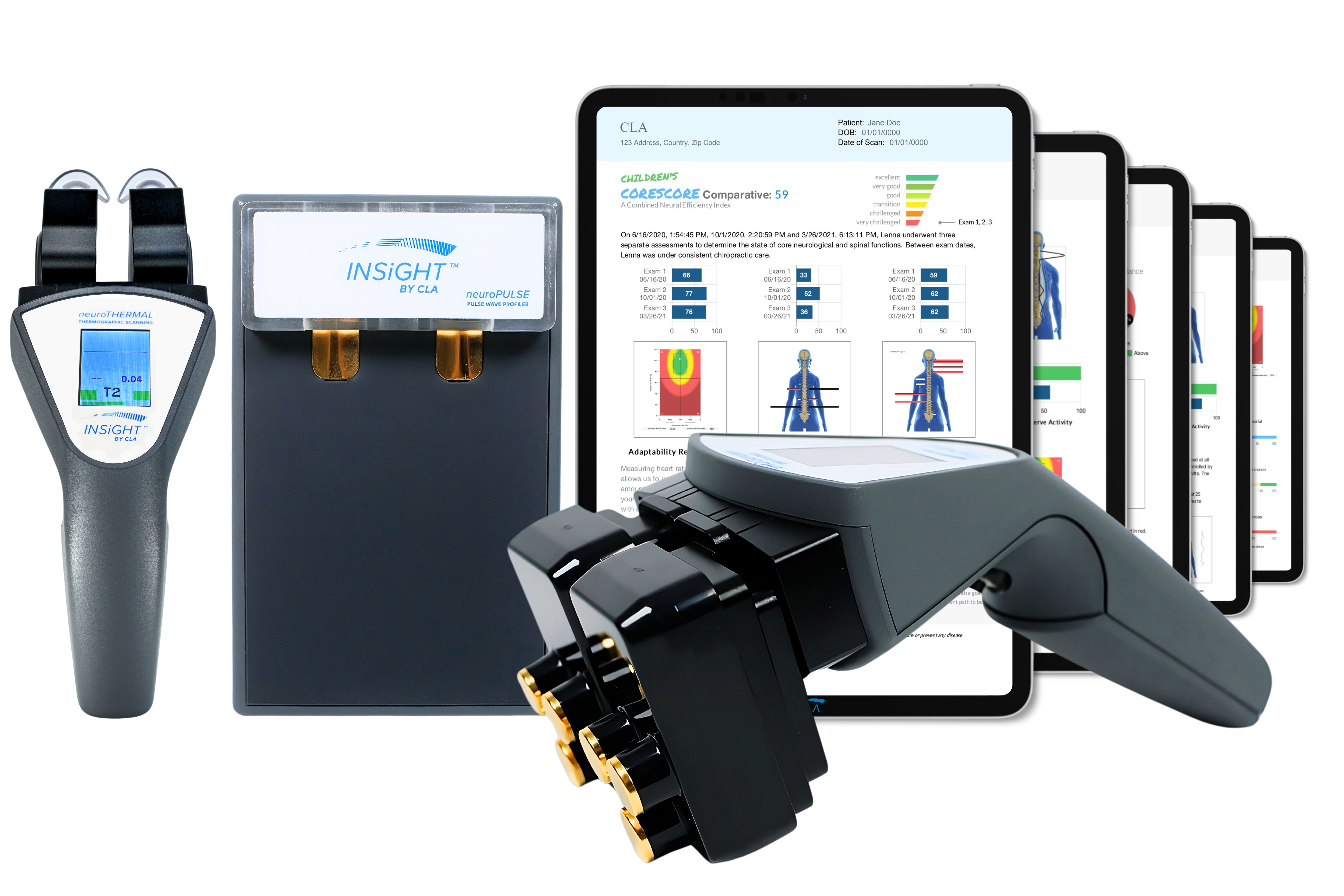
This is where INSiGHT scanning technology becomes so important in a chiropractic practice. Stress adaptation is often invisible to the patient until the body has been carrying the burden for a long time. Neurological scanning helps make patterns of adaptation visible, understandable, and trackable.
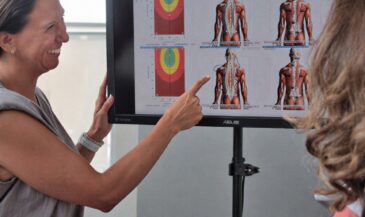
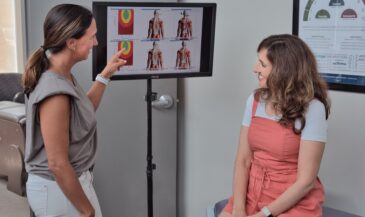
You can tell a patient their nervous system is under demand, and they may nod politely. But when they see objective examination data, the conversation changes. They begin to understand that their body is not just a collection of symptoms. It is a living, adapting system.
Symptoms Do Not Tell the Whole Story
Patients often judge progress by how they feel. But symptoms do not tell the whole story. A patient may feel better before their nervous system has restored adaptive reserve. Another patient may say they feel fine, yet their scan views may show patterns that deserve attention.
That is why chiropractors need more than a conversation about stress. They need objective data. INSiGHT scanning technology gives the doctor scan findings that help guide clinical thinking and support a more clearly articulated care plan.
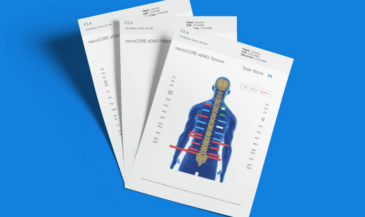
The scan report does not build the care plan. The chiropractor does that. INSiGHT scanning technology provides the objective analysis that helps the doctor understand nervous system status and communicate that story in a way patients can see.
neuroPULSE and HRV: Assessing Adaptability
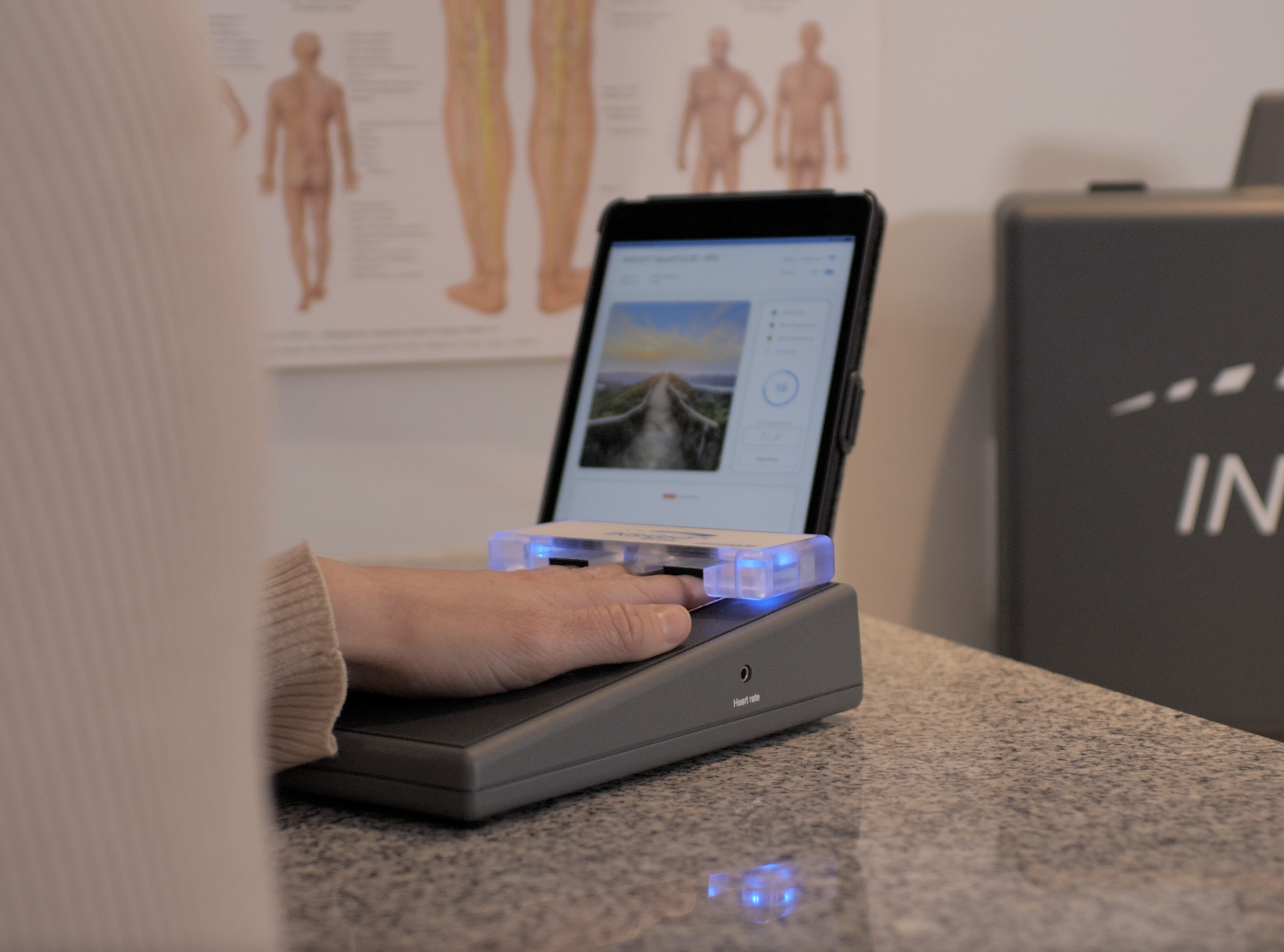
The neuroPULSE helps assess Heart Rate Variability, or HRV, which is one of the most useful windows into autonomic adaptability. HRV helps chiropractors discuss how well the nervous system is balancing readiness and recovery.
For stress adaptation, this is powerful. When HRV patterns suggest reduced reserve, the chiropractor can explain that the nervous system may be working harder to maintain balance. When HRV patterns improve over time, the chiropractor has a clearer way to talk about recovery capacity, adaptability, and the patient’s ability to cope with stress.
neuroPULSE does not measure cortisol levels directly. It does not measure cortisol, CRH, or activity in the cortex. Those belong to the broader physiology of the stress response. neuroPULSE gives the chiropractor an objective view into autonomic performance, which is one important piece of the larger stress adaptation picture.
neuroCORE: Seeing Postural Tension and Energy Demand
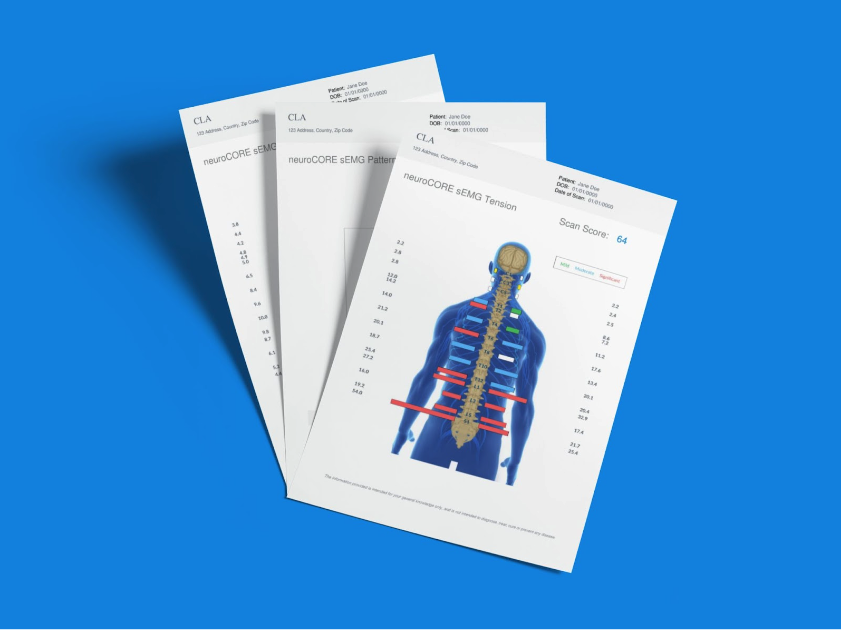
The neuroCORE uses surface electromyography to assess neuromuscular activity along the spine. In a full spine nerve system scan, it can help reveal postural tension, asymmetry, energy expenditure, and areas where the body may be working harder than expected.
That matters because stress adaptation is not only chemical or emotional. The body often adapts through posture, guarding, and muscular effort. When a patient is under neurological distress, the spine and supporting muscles may reflect that demand.
This gives the chiropractor a practical way to say, “Your body appears to be spending a lot of energy here.” That is far clearer than simply telling a patient they are tight or tense.
neuroTHERMAL: Observing Autonomic Patterns
The neuroTHERMAL provides another important window by assessing paraspinal thermal patterns connected to autonomic regulation. Since the autonomic nervous system influences blood flow and temperature regulation, thermal scan views can help the chiropractor observe deeper patterns of neurological distress.
Again, this is not about scaring the patient. It is about clarity. When patients see that stress physiology can show up in measurable patterns, they begin to understand why chiropractic care is about more than symptom relief.
- neuroPULSE: Helps assess autonomic adaptability and recovery through HRV.
- neuroCORE: Helps assess postural tension, asymmetry, and energy demand.
- neuroTHERMAL: Helps assess autonomic patterns through paraspinal thermal scan views.
- CORESCORE: Helps turn complex scan data into a patient-friendly report that supports baseline, progress, and re-exam conversations.
Together, INSiGHT neuroTECH and Synapse software help turn stress adaptation from a vague idea into a clearer patient conversation. The data does not replace the chiropractor’s hands, experience, or judgment. It strengthens the conversation around all three.
Helping Patients Build a More Adaptive Nervous System
A good chiropractic conversation does not end with, “You need to reduce stress.” Most patients already know that. The better conversation is, “Let’s understand how your nervous system is adapting to the stress you are carrying.”
That framing is hopeful. It respects the patient’s life. It acknowledges that not every stressor can be removed overnight. And it brings the doctor back to the central question: how is the nervous system performing?
Chiropractic Care Belongs in This Conversation
Chiropractic care has always belonged in the conversation about stress adaptation because the nervous system coordinates the body’s response to life. The adjustment is not just about chasing temporary comfort. In a neurologically focused practice, the adjustment is part of a care plan designed to support better communication, regulation, and performance.
A simple patient explanation might sound like this: “Your body is designed to respond to stress. What we want to understand is whether your nervous system is recovering after stress or staying stuck in protection. These scans help us see how your body is adapting so we can make better decisions about your care.”
Lifestyle Support Still Matters
Chiropractic care does not happen in isolation. Patients can support stress adaptation through practical choices that improve recovery and reserve.
- Sleep rhythms: Consistent sleep helps the nervous system recover from daily demand.
- Appropriate movement: Physical exercise can support resilience when it is matched with recovery.
- Hydration and nutrition: The body needs resources to regulate, repair, and perform.
- Stress management techniques: Breathwork, quiet time, and simple routines can help the body settle.
- Positive coping strategies: Patients may need practical support to adjust expectations, improve boundaries, or reduce unnecessary sources of stress.
The point is not to hand patients a generic health and wellness checklist. The point is to connect those habits back to nervous system performance. Every choice either adds demand or supports recovery.
A Better Way to Talk About Stress, Recovery, and Resilience
Stress is part of life. Stress adaptation is part of being human. The goal is not to create a life with no challenge, no pressure, and no demand. That is not realistic, and it is not how strong systems are built.
The real goal is to help the nervous system become more flexible, more responsive, and more capable of meeting a demand without getting stuck there. That is the heart of this conversation for chiropractors.
When you bring stress adaptation into the chiropractic conversation, you help patients understand that their body is not reacting randomly. It is communicating. It is compensating. It is trying to protect them.
And when you add INSiGHT scanning technology to that conversation, you give patients something they can see. You help them move from vague feelings to objective understanding. You give them a clearer picture of how their nervous system is responding, how their care plan is supporting progress, and why ongoing chiropractic care can make such a meaningful difference in nervous system performance over time.
That is the kind of conversation that changes the way patients see chiropractic. Not as a quick fix. Not as something they only need when symptoms are loud. But as a vitalistic, drug-free way to support the nervous system that helps them meet life with more reserve, more resilience, and a better ability to adapt.