
Parents usually arrive with observations. Their child is not sleeping well. Digestion fluctuates. Movement seems awkward. Emotional regulation is difficult. Focus is inconsistent. Those observations matter, but they do not tell the entire neurological story. A pediatric nervous system scan gives the chiropractor another way to examine how the child’s nervous system is functioning, organizing energy, and responding to the world around them.
The goal is not to label the child or claim that one scan can uncover the root cause of every concern. The goal is to see more clearly. When neurological scanning is combined with the child’s case history, examination findings, developmental stage, and parent observations, it can bring needed clarity to pediatric chiropractic care.
What a Pediatric Nervous System Scan Means in Chiropractic Care
The phrase pediatric nervous system scan can mean different things depending on the setting. In a hospital or medical clinic, diagnosing nervous system disorders in children may involve MRI, CT imaging, or EEG testing. Those tools investigate anatomy, injury, electrical brain activity, or possible pathology.
In a chiropractic office, a pediatric nervous system scan usually refers to functional neurological scanning. Rather than creating an anatomical image of the brain or spinal cord, this scanning technology analyzes patterns connected to autonomic regulation, paraspinal muscle activity, postural energy, symmetry, adaptability, and reserve. These neurological scans answer a different question from imaging. Imaging helps show structure; the scan shows functional patterns.
That distinction matters because a pediatric nervous system scan is not used to diagnose Autism Spectrum Disorder, ADHD, epilepsy, Sensory Processing Disorder, developmental delay, anxiety, or another medical condition. It also does not replace a physician, neurologist, developmental specialist, therapist, or another provider when that expertise is needed.
A complete pediatric examination may include:
- Case history: Pregnancy, birth, feeding, movement, sleep, development, and current health challenges when relevant
- Parent observations: Behavior, sensory responses, digestion, energy, posture, and emotional regulation
- Age-appropriate examination: Physical, neurological, postural, and movement findings
- Objective scanning: Functional information about autonomic and neuromuscular patterns
- Referral or collaboration: Additional evaluation when findings extend beyond chiropractic scope
The scan does not create the care plan. The chiropractor does. A customized care plan comes from the full clinical picture, including examination findings, professional judgment, the child’s needs, and how the child responds over time.
Parents often arrive wanting to get to the root of their child’s health challenges. One scan cannot prove that every concern has one root cause. What the scan can do is help the chiropractor identify functional patterns that may be affecting nervous system performance. The better question is not, “What diagnosis does this color mean?” It is, “What does the scan show about function, and how does that fit with everything else we know about this child?”
How the Central Nervous System Shapes Pediatric Chiropractic Care
A child’s nervous system is constantly receiving information, organizing it, and producing a response. Growth, movement, learning, digestion, sleep, recovery, and emotional regulation all depend on coordinated communication between the brain, spinal cord, nerves, muscles, organs, and the surrounding environment.
For practical purposes, pediatric chiropractors can think about a child’s neurological function through three broad categories: sensory input, motor output, and autonomic regulation. These systems overlap, but they give doctors and parents a useful way to understand what a pediatric nervous system scan is designed to explore.
Sensory Input and Motor Output
Sensory nerves carry information from inside and outside the child’s body toward the central nervous system. This includes touch, movement, body position, sound, vision, balance, and internal signals. The sensory system helps the brain understand what is happening and decide how the body should respond.
Motor pathways carry instructions outward from the brain and spinal cord. They influence posture, movement, coordination, stabilization, and muscular activity. When a child uses too much energy to sit upright, maintain balance, or stabilize the spinal region, that pattern may be reflected in an EMG scan. The EMG does not diagnose why the pattern exists, but it can help the chiropractor see how the neuromuscular system is working.
The Autonomic Nervous System and Adaptability
The autonomic nervous system coordinates functions that occur without conscious effort, including heart rhythm, blood flow, digestion, temperature regulation, activation, and recovery. The sympathetic branch helps the child mobilize and respond. The parasympathetic nervous branch supports restoration, digestion, and recovery.
Neither branch is inherently good or bad. Children need sympathetic activity to move, play, learn, and respond. They also need parasympathetic activity to settle, digest, sleep, and recover. A resilient pediatric nervous system should be able to increase activity when demand rises and return toward a calmer baseline when the demand passes.
This is where adapting to stress becomes a central chiropractic question. Can the child shift gears? Can the nervous system respond without becoming overwhelmed? Can it recover efficiently? Or does the scan suggest nervous system stress, low reserve, or excessive energy use?
Parents may describe difficulty settling, digestive changes, frequent meltdowns, sensory sensitivity, inconsistent focus, postural fatigue, reduced coordination, or feeling wound up and worn out. These signs can have many contributing factors. They are not proof that the nervous system is stuck or that neurological dysfunction is present, and the scan does not turn them into a diagnosis.
Children also require a different scan process than adults. The chiropractor must consider age, size, attention span, movement, comfort, and the child’s ability to follow instructions. The goal is reliable, age-appropriate information without making the examination overwhelming.
Learn more about INSiGHT scanning?
Fill this out and we’ll get in touch!
"*" indicates required fields
How Pediatric Chiropractors Use an EMG Scan, HRV Scan, and Thermal Scan
A pediatric nervous system scan should never stand alone. The most useful scan begins with a thoughtful case history and a careful examination. The doctor needs context before interpreting colors, scores, patterns, or graphs.
The child’s case history may include pregnancy and birth information, feeding, sleep, movement milestones, falls, injuries, current therapies, medication, family concerns, and previous medical evaluation. The chiropractor should also consider whether the child is working with a pediatrician, neurologist, occupational therapist, physical therapist, speech therapist, psychologist, or another provider.
That information helps determine what the child’s scan may mean and whether referral or collaboration is appropriate. Neurologically-Focused Chiropractic Care should not operate in isolation when a child has significant, progressive, or unexplained concerns. Responsible family chiropractic recognizes both the value and limits of chiropractic assessment.
Once the history and examination are underway, the first pediatric nervous system scan establishes a baseline. It may help document autonomic patterns, postural tension, paraspinal activity, symmetry, energy expenditure, and adaptive reserve.
A practical scan process follows four stages:
- Baseline: Establish the child’s initial nervous system status
- Response: Analyze how patterns fluctuate after chiropractic care has begun
- Trajectory: Compare several scans to identify the broader direction of neurological changes
- Continuation: Assess whether improved stability is being maintained as the child grows
This is where scans help the most. One scan provides useful information, but repeated scans provide context. A scan taken after a restless night, illness, demanding school week, or major routine change may look different from another scan. The value comes from comparison, interpretation, and clinical judgment.
Parent observations remain meaningful, but they should be documented as parent-reported progress. The chiropractor can compare those observations with objective findings. Is the EMG scan showing less postural energy expenditure? Does the HRV scan suggest improved adaptability or reserve? Are thermal patterns becoming more organized? Does the physical examination support the same direction?
That is how the scan helps us move from a good day or bad day toward a fuller understanding of nervous system function. The care plan comes from this combined picture. Neurologically-Focused Chiropractic adjustments should be recommended because the full examination supports them, not because one color or score appears on a report.
How INSiGHT Scanning Technology Makes Pediatric Neurological Patterns Visible
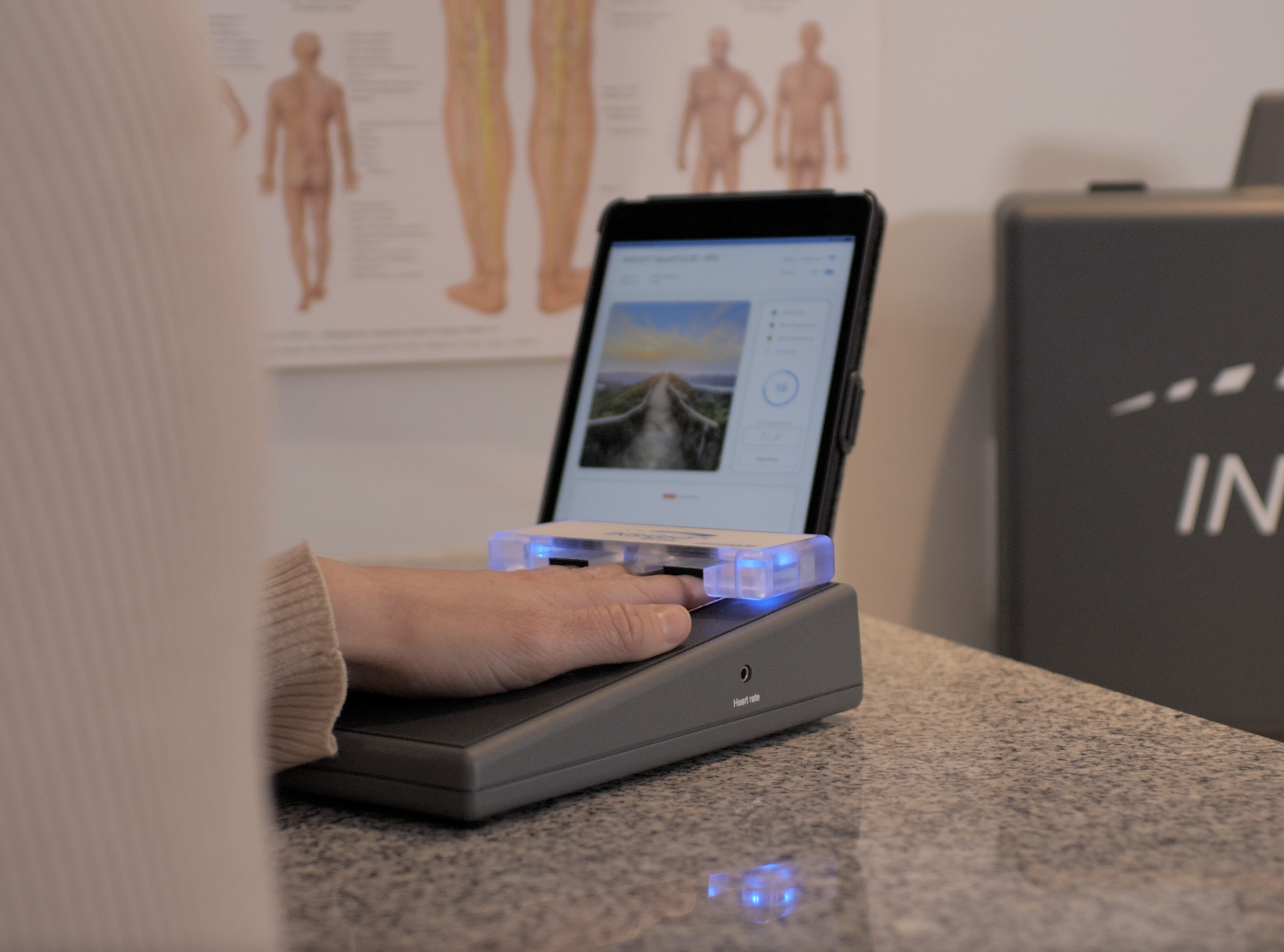
A complete pediatric nervous system scan should give the chiropractor more than one view of performance. The nervous system is too complex to understand through a single number or isolated test. That is why INSiGHT neuroTECH and the INSiGHT software, powered by Synapse, bring together three complementary forms of neurological analysis.
Each INSiGHT Scan answers a different functional question. neuroPULSE looks at reserve and autonomic adaptability. neuroCORE analyzes postural energy and neuromuscular activity. neuroTHERMAL looks at regional temperature patterns connected to autonomic regulation. Together, INSiGHT scanning technology provides a three-dimensional view of nervous system performance.
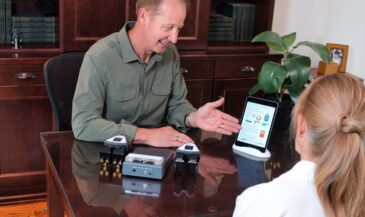
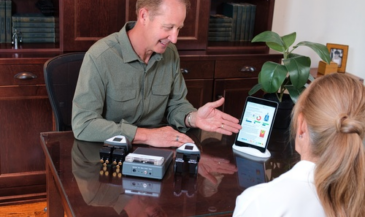
The technology does not replace the chiropractor. It strengthens the examination by adding objective exam data and scan views that can be interpreted, compared, and explained to parents.
neuroTHERMAL and Regional Autonomic Patterns
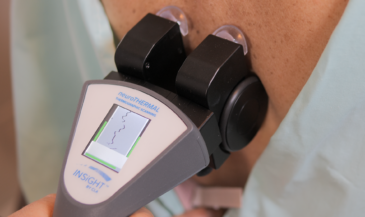
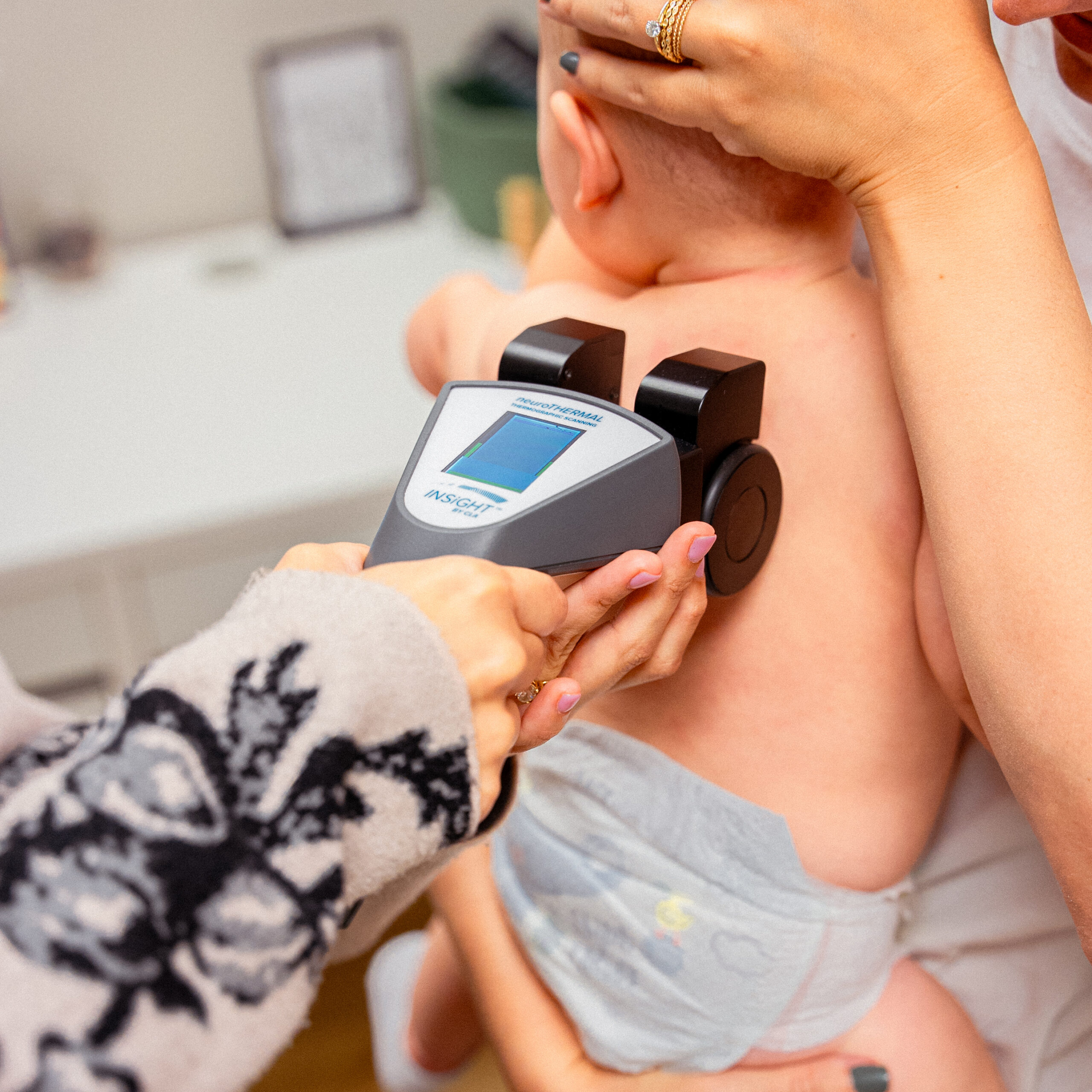
The INSiGHT neuroTHERMAL performs a full spine nerve system scan by analyzing temperature patterns along the paraspinal region. Skin temperature and regional blood flow are influenced by autonomic activity, so the scan can help identify side-to-side differences and recurring patterns that deserve closer attention.
The scan can be completed quickly, which makes it practical for newborns and young children. This scan measures temperature variation. It does not diagnose digestive concerns, immune conditions, sleep disorders, behavioral concerns, or organ dysfunction. It provides functional information about temperature regulation patterns associated with autonomic activity.
neuroCORE and the Pediatric EMG Scan
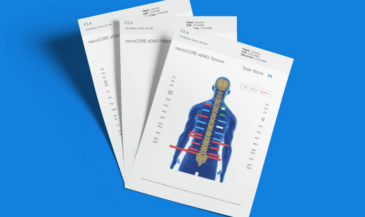
The neuroCORE uses surface EMG to analyze electrical activity in the paraspinal muscles. This is not a needle EMG. The sensors remain on the skin while the scan analyzes postural tension, symmetry, motor tone reactions, and the amount of energy the child appears to be using to stabilize the spinal region.
This information may be useful when a child’s case history includes posture, movement, coordination, sports, backpack use, prolonged sitting, spinal strain, or fatigue. An EMG scan may reveal areas of excessive activity, reduced activity, asymmetry, or inefficient compensation. It does not diagnose ADHD, Autism Spectrum Disorder, anxiety, Sensory Processing Disorder, or another developmental condition.
neuroPULSE and Heart Rate Variability
The neuroPULSE performs an HRV scan by analyzing the variation in time between heartbeats. Heart Rate Variability provides information about autonomic activity, balance, adaptability, recovery, and reserve.
A resilient nervous system should be able to respond when the child is active, learning, playing, or facing a challenge, then settle and recover when the demand passes. One HRV scan should not be viewed as a final judgment. Sleep, illness, activity, hydration, and emotional demand can influence the result, so the doctor should look for trends over time.
Reserve, Energy, Depth, and CORESCORE
INSiGHT organizes the three technologies through a practical framework:
- Reserve: neuroPULSE helps analyze autonomic adaptability and available reserve
- Energy: neuroCORE helps analyze postural energy use and motor activity
- Depth: neuroTHERMAL helps analyze regional autonomic patterns along the spinal region
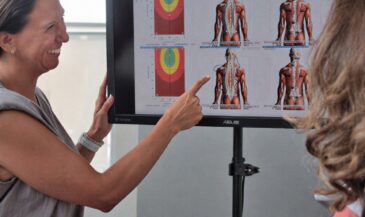
The INSiGHT software organizes these findings through pediatric reports, comparisons, and scan views. CORESCORE can simplify complex information into a parent-friendly neurological report card. It is a communication tool, not a diagnosis, prognosis, or guarantee.
Some pediatric networks, including PX Docs, use INSiGHT Scanning to support Neurologically-Focused Chiropractic Care. Regardless of the practice model, the principle remains the same: the technology provides objective information, and the chiropractor supplies the interpretation, chiropractic adjustments, and customized care plan.
Helping Parents See What Their Child Cannot Explain
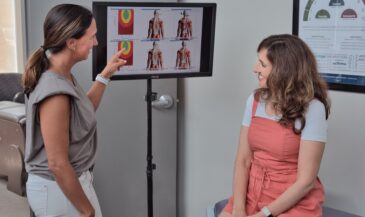
The real value of a pediatric nervous system scan is not found in a color, graph, or score by itself. It is found in the clearer clinical conversation that follows.
Children communicate through movement, posture, behavior, energy, sleep, digestion, emotion, and development long before they can describe neurological function. Parents notice those patterns, but they may not know how the pieces fit together. A pediatric nervous system scan gives the chiropractor and family a shared reference point.
The chiropractor’s responsibility is to use that information carefully. Listen to the family. Examine the child. Collect reliable scan data. Interpret the findings within scope. Collaborate or refer when necessary. Build the care plan from the full picture, and reassess rather than assume.
A pediatric nervous system scan can help show:
- Autonomic regulation: How thermal patterns are expressing along the spinal region
- Postural energy: How much energy the child may be using to maintain posture
- Motor activity: Whether EMG patterns appear balanced or compensatory
- Adaptive reserve: How the nervous system may be responding and recovering
- Progress over time: Whether repeated scans show greater stability or continued patterns needing attention
This information can strengthen pediatric chiropractic care because it gives parents something they can see and follow. It also keeps the doctor from relying only on symptoms, memory, or one day’s presentation.
The greatest opportunity is not to promise that neurological scanning can solve every child’s health challenge. It is to use objective analysis to understand the child more completely. When the chiropractor combines a careful examination with neuroTHERMAL, neuroCORE, neuroPULSE, and comparative reporting, the family gains a better view of how the nervous system is functioning.
That is the real promise of a pediatric nervous system scan. It does not label the child or replace good clinical judgment. It helps the chiropractor see more clearly, communicate more responsibly, and follow nervous system performance as the child grows.
When parents can finally see what their child cannot yet explain, the conversation around chiropractic care changes for the better. INSiGHT Scanning gives that conversation an objective starting point, a visible trajectory, and a clearer connection between pediatric chiropractic care and long-term health.