

And sometimes the explanation really is fairly straightforward. Poor posture, sitting for prolonged periods, repetitive daily activities, muscle strain, or simply not moving enough can contribute to mid-back pain and stiffness. But you and I both know there is another question worth asking. Why is this particular spinal region working so hard in the first place?
That is where mid back stiffness becomes a much more interesting chiropractic conversation. The thoracic spine is not simply a collection of joints and back muscles waiting for stretches and exercises. It is part of a living neurological system constantly coordinating posture, movement, stability and support, and adaptation. When we look beyond the stiff spot and examine how that system is functioning, we have an opportunity to show patients a much bigger picture.
Understanding Mid Back Stiffness and the Thoracic Spine
The mid back is generally the thoracic region of the spine, extending from the base of your neck toward the bottom of your rib cage. The rib attachments through this region create a thoracic back built for both movement and stability. Compared with the neck and lower back, the thoracic spine normally moves through a more limited range.
When patients describe mid back stiffness, they may be talking about several different experiences. One person notices tightness near a shoulder blade. Another feels restricted when trying to rotate. Someone else describes a dull ache through the middle of your back after sitting all afternoon. Mid back pain may also feel sharp, burning, or activity-related depending on the underlying situation.
Common symptoms involving the upper and middle back can include:
- Stiffness: The middle back feels difficult or uncomfortable to move.
- Postural tension: The mid-back muscles feel tired or tight after sustained positions.
- Reduced spine mobility: Rotation, extension, or changing positions feels restricted.
- Shoulder blade discomfort: Tightness or pain and discomfort develops between or around the shoulder blades.
- Back pain: A patient may describe dull, sharp, burning, or activity-related symptoms.
Here is where the chiropractic perspective becomes important. Posture is not simply the patient remembering to sit up straight. The nervous system is continuously receiving sensory information and producing motor output to organize posture and movement. Those back muscles do not decide on their own how hard to contract or when to stabilize the spine. They respond to neurological instructions.
So when a patient repeatedly reports mid back stiffness, there are really two stories worth examining. One is the symptom story: “This part of my back feels stiff.” The other is the functional story: “How is this person’s nervous system organizing posture and movement through this region?”
Symptoms tell us what the patient notices. Function tells us what we need to examine.
Common Causes of Mid-Back Stiffness and Mid-Back Pain
There is no single root cause behind every stiff middle back. That is important because it keeps us from turning every case of mid back stiffness into the same chiropractic story. Some of the common causes are wonderfully ordinary. Others deserve a more thorough evaluation.
Think about what modern life asks of the spine. We sit at computers. We look down at phones. We drive for long stretches. We work in one position and then wonder why the body does not particularly enjoy staying there.
Posture, Sitting, and Everyday Movement
Poor posture can increase demand on the muscles supporting the spine, particularly when someone stays in the same position for hours. Sitting for prolonged periods with a poor ergonomic setup can contribute to fatigue and stiffness in the mid-back. Lack of movement adds another layer because the joints and surrounding tissues are not regularly moving through comfortable ranges.
Activity can create a different kind of demand. Repetitive sports, swinging a golf club, lifting weights, carrying children, gardening, cleaning, or suddenly trying to twist while handling something heavy can contribute to overuse or muscle strain. Sleep position and mattress support may also influence how stiff the back area feels in the morning.
None of that means movement is bad. Quite the opposite. The body is built to move. The issue is often repeated demand without enough variation or recovery.
And this is where simply telling every patient to improve your posture can miss the point. There probably is not one perfect position they should hold all day. Good posture is dynamic. Proper posture requires the ability to move, stabilize, change positions, and respond to what the body is being asked to do.
Other Causes of Middle Back Pain
Not every patient with middle back pain has a simple muscular or postural complaint. Other possible causes of mid-back symptoms discussed in conventional spine care include osteoarthritis, degenerative disc disease, a herniated disc, spinal stenosis, spinal nerve irritation, injury, and vertebra fracture.
These situations require an appropriate history and examination. Imaging such as an X-ray or MRI may sometimes be indicated based on the clinical presentation. A herniated disc or another structural finding also should not automatically be assumed to be the source of pain in this area without appropriate clinical evaluation.
That is why the answer to every stiff thoracic region cannot simply be an adjustment. A good chiropractor first determines what they are dealing with. History matters. Mechanism of injury matters. Neurological findings matter. Age, activity, previous injuries, and accompanying signs matter. Sometimes the best possible care includes collaboration with another healthcare provider, physical therapist, or medical specialist.
Common Symptoms and Signs That Need More Attention
Common symptoms of middle back pain include tightness, reduced range of motion, muscle spasms, and discomfort with certain movements. But some signs deserve more immediate attention.
Significant weakness in an arm or leg, numbness or tingling, loss of bowel or bladder control, unexplained fever or weight loss, difficulty breathing or swallowing, or severe and radiating symptoms should not be treated like ordinary mid back stiffness. When pain persists, becomes severe or progressive, or appears with unusual neurological or systemic signs, further evaluation and medical advice may be appropriate.
That is not stepping outside chiropractic. That is practicing good chiropractic.
Once larger concerns have been appropriately considered, we can ask a different question. Is this simply a temporary episode of stiffness in the mid-back, or is the patient showing a recurring pattern of altered movement, postural tension, compensation, and neurological interference?
Learn more about INSiGHT scanning?
Fill this out and we’ll get in touch!
"*" indicates required fields
Exercises and Stretches to Alleviate Mid Back Stiffness and Improve Spine Mobility
If somebody has been sitting at a computer for four hours and their thoracic region feels stiff, getting them moving is a sensible place to start. You do not need to make that complicated. Simple exercises and stretches can help alleviate uncomplicated stiffness and encourage comfortable movement through the upper back.
The goal is not to force the spine into a position. It is to encourage movement and reduce the effects of remaining in one posture for too long. For some patients, these strategies may provide short-term pain relief and help them find relief during the workday.
Movement Strategies for Thoracic Spine Mobility
Common stretching exercises used to encourage thoracic mobility include cat-cow movements, gentle seated or standing rotation, and other controlled movements. A foam roller may also be used appropriately to encourage thoracic extension and mobility.
- Take movement breaks: Stand, walk, or change position every 30 to 60 minutes when desk work requires extended sitting.
- Try a gentle twist: Controlled rotation can encourage comfortable movement without forcing the thoracic region.
- Incorporate stretching: Incorporating stretches into a daily routine may help relieve stiffness associated with inactivity.
- Review ergonomics: Screen position, desk height, seating, and work habits can influence sustained demand on the spine.
- Use sensible lifting mechanics: Better positioning during lifting may help prevent further strain during work, exercise, and other daily activities.
- Consider heat or ice: Depending on the situation, these may alleviate discomfort or help reduce inflammation associated with minor musculoskeletal complaints.
The important word is appropriate. A movement that helps someone reduce pain from an uncomplicated stiff back is not automatically appropriate for a person with an injury, significant neurological signs, or another underlying condition.
There is another limitation to mid back stretches that chiropractors should appreciate. They may relieve pain temporarily without explaining why the same pattern keeps returning. If somebody has to stretch the same region several times every day just to feel comfortable, I become interested in more than flexibility or short-term pain management.
Where Chiropractic Adjustments Fit In
A chiropractic assessment can look beyond whether the patient rotates farther after a stretch. Depending on the presentation, the chiropractor may consider history, posture, thoracic mobility, range of motion, orthopedic findings, neurological findings, and other appropriate examination procedures.
You may even see the phrase “personalized treatment plan” used in conventional discussions of back pain. Whatever terminology is used, the treatment plan or care plan should be based on more than the patient’s desire for immediate symptom relief.
For the Neurologically-Focused Chiropractor, the conversation should not end with, “Did it move better?” or “Does it hurt less?” Those things matter. They simply do not tell the whole story.
If mid back stiffness continually returns, we want to know what the pattern around it is doing. How much postural tension is present? Is muscular activity balanced? How much energy is being spent stabilizing the spine? Are there broader patterns of neurological distress or reduced adaptability? Those questions move us from temporary relief toward a better understanding of function and overall spinal health.
How INSiGHT Scanning Technology Looks Beyond Mid Back Stiffness
This is where mid back stiffness becomes a terrific doorway into a nervous system conversation. Patients have language for stiffness, tight muscles, and back pain. What they rarely have language for is motor output, neurological interference, postural compensation, autonomic regulation, or adaptive reserve.
Neurological scanning changes that conversation.
INSiGHT scanning technology provides objective exam data that chiropractors can interpret alongside the history, examination, and other clinical findings. It does not diagnose the cause of mid back stiffness. It does not tell you that one scan pattern is the root cause of a patient’s symptoms. And it certainly does not replace the chiropractor.
What it does is help make nervous system performance visible.
neuroCORE and the Story Behind Postural Tension
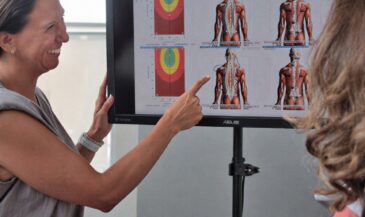
For mid back stiffness, neuroCORE gives us an especially useful place to start. neuroCORE uses surface electromyography, or sEMG, to analyze electrical activity in the paraspinal muscles. That gives the chiropractor objective information about motor activity, postural tension, symmetry, and the energy the system is spending to maintain posture.
Think about the patient who keeps saying, “It always feels tight between my shoulder blades.” We could palpate the region. We could assess motion. We could ask whether it feels better today than it did last week. Those findings matter.
But neuroCORE lets us ask another question: How much energy is this nervous system using to hold and stabilize the spine?
The scan can reveal patterns of excessive activity, asymmetry, or inefficient energy use that deserve attention within the broader examination. That does not mean an elevated sEMG finding proves what is causing mid back stiffness. It means we now have objective information about how the spinal motor system is behaving.
neuroTHERMAL and Autonomic Patterns Along the Spine
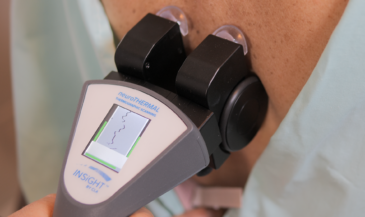
neuroTHERMAL gives us another view. It analyzes paraspinal temperature patterns associated with autonomic regulation and allows the chiropractor to perform a full spine nerve system scan in under 30 seconds. Rolling and segmental scan modes can help analyze neurological distress patterns and how those patterns fluctuate over time.
This is not structural imaging. An X-ray and a neuroTHERMAL scan answer different questions. Imaging can show structure and anatomy. neuroTHERMAL provides functional information about temperature regulation patterns along spinal regions.
A patient may arrive entirely focused on pain and stiffness through the thoracic region. Thermal analysis allows the chiropractor to widen the lens and consider autonomic patterns as another part of the patient’s overall nervous system status.
neuroPULSE and the Bigger Adaptability Story
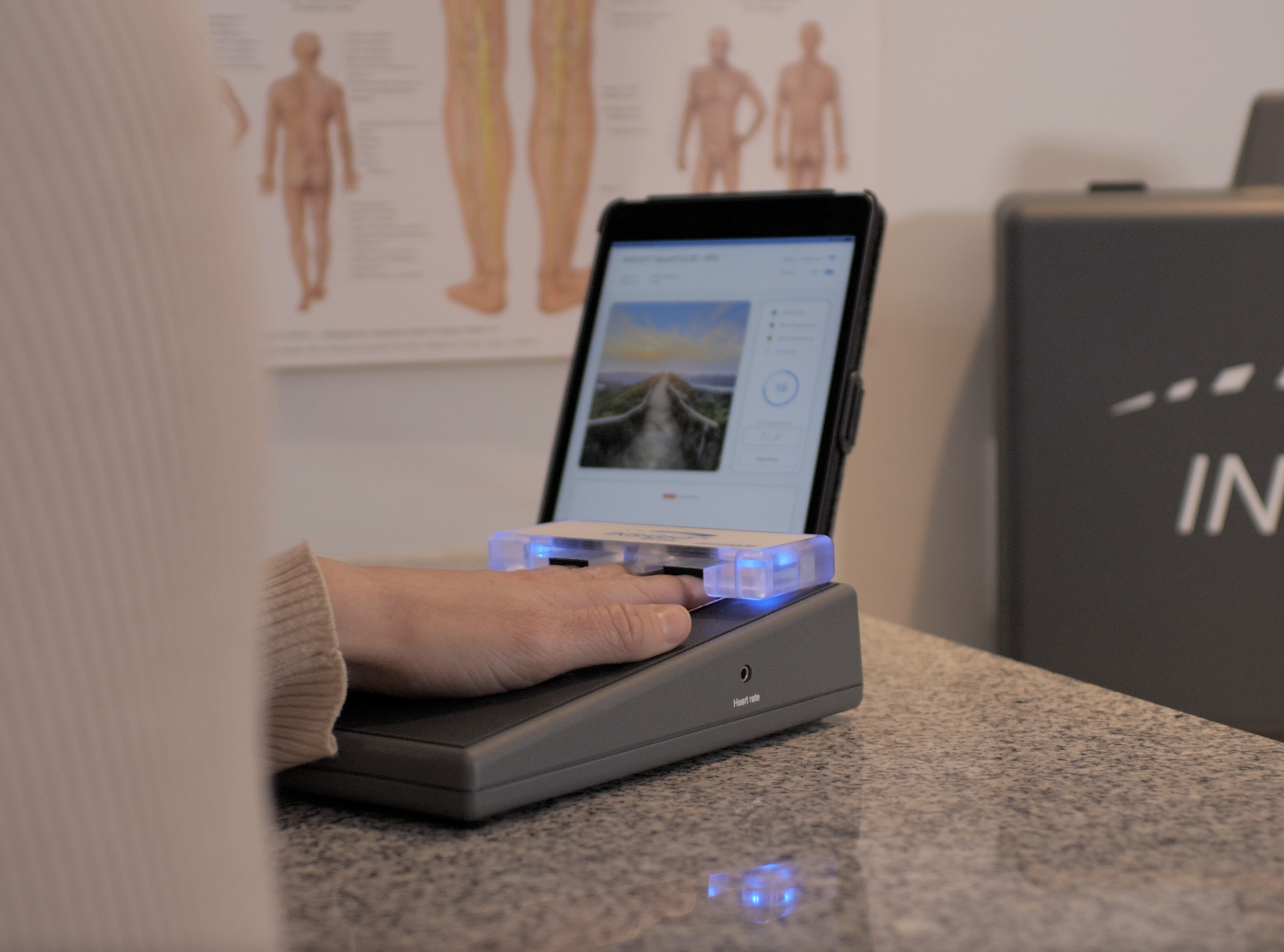
Then neuroPULSE takes us wider still. neuroPULSE analyzes Heart Rate Variability to provide information about autonomic balance, adaptability, and reserve. That matters because the nervous system does not experience the thoracic region as an isolated collection of parts.
The body is continually responding to physical demand, sleep, work, training, recovery, and everyday life. HRV gives the chiropractor another objective window into how flexibly that system is responding and recovering.
Now the conversation has moved from “your mid back feels tight” to something much more useful. We can consider motor output through neuroCORE, autonomic patterns along the spine through neuroTHERMAL, and adaptability through neuroPULSE. Together, that gives the chiropractor neuroTECH’s 3 dimensional analysis of nervous system performance.
Synapse Software and the Value of Re-Scanning
INSiGHT neuroTECH and Synapse software bring these findings together through scan views and patient-friendly reporting. And this is where the real value of scanning starts to show up.
One scan establishes a baseline. A later scan helps assess response. Continued comparative analysis begins to reveal trajectory.
Baseline → Response → Trajectory
That rhythm matters because nervous system status fluctuates. The patient may walk in one day feeling terrific and another day complaining of mid back stiffness. If the entire progress conversation depends on how they happen to feel that morning, we are working with a very small slice of information.
Re-scanning gives doctor and patient a shared reference point. The chiropractor compares objective findings with the examination and the patient’s experience, then uses the complete clinical picture to make decisions about the care plan. INSiGHT does not create the care plan. The doctor does.
Moving the Mid Back Conversation From Pain Relief to Nervous System Performance
There is nothing wrong with wanting lasting relief or wanting a stiff middle back to move more comfortably. When posture, inactivity, repetitive demand, or minor muscle strain contributes to mid back stiffness, sensible movement, ergonomic improvements, appropriate exercises and stretches, and chiropractic care may all have a role.
But chiropractors have an opportunity to ask more of the examination than, “Did the tightness go away?” A patient saying, “My back feels better,” is useful information. Celebrate it. Then keep looking.
How is the spine moving? What does the postural pattern look like? How much energy is the spinal motor system spending? Are the findings becoming more balanced and efficient? How is the nervous system adapting? What does today’s objective analysis show compared with baseline?
That gives us a better progression:
Symptoms → Examination → Objective analysis → Care plan → Re-analysis
For me, that is the bigger story behind mid back stiffness. We are not trying to convince every patient that a stiff spot between the shoulder blades is complicated. Quite often, it isn’t. We are helping chiropractors determine when there is more to understand and giving patients a clearer way to see it.
Neurological scanning shifts a patient’s focus from the spinal region and joints to nerves and performance. When patients can see postural tension, autonomic patterns, adaptability, and progress through INSiGHT scanning technology, they gain another way to understand why chiropractic looks beyond the spot that happens to feel stiff today.
The mid back stiffness may be what brought them through the door. Understanding nervous system performance can show them why we look deeper.