

There is a better conversation for chiropractors to have. The HPA axis, short for the hypothalamic-pituitary-adrenal axis, is one of the body’s major neuroendocrine systems for coordinating the stress response. It connects the hypothalamus, pituitary gland, adrenal glands, cortisol, and other physiological systems involved in adaptation. Chiropractic should not be presented as a way to directly reset a hormone or correct an endocrine condition. But the HPA axis gives chiropractors a valuable way to talk about something we have cared about for generations: how well a person responds to demand, regulates that response, and recovers afterward.
The goal is not a body that never has a stress response. You could not function very well without one. The better question is whether the nervous system has enough flexibility and reserve to respond when demand rises and then move back toward baseline when the demand passes.
How the HPA Axis Coordinates the Stress Response
The HPA axis gets its name from three structures: the hypothalamus, pituitary gland, and adrenal gland. Together, they form an important communication pathway between the brain and endocrine system. The role of the HPA axis is to help coordinate the body’s response to stress, energy availability, immune activity, metabolism, and other processes needed for adaptation.
It helps to think of the hypothalamic-pituitary-adrenal pathway as communication rather than simply hormone production. When the brain interprets a stressor as requiring a physiological response, the hypothalamus helps initiate a sequence of signals. Those signals move through the pituitary and eventually reach the adrenal cortex, creating a coordinated neuroendocrine response.
CRH, ACTH, and Cortisol
The basic sequence is straightforward enough to explain to a patient without turning the visit into an endocrinology lecture:
- Hypothalamus: The hypothalamus releases corticotropin-releasing hormone, or CRH. You may also see corticotropin-releasing factor, or CRF, used in the literature.
- Anterior pituitary: CRH acts on the anterior pituitary and helps stimulate release of adrenocorticotropic hormone, or ACTH.
- Adrenal cortex: ACTH travels through circulation to the adrenal gland, where it acts on the adrenal cortex and stimulates glucocorticoid production, most notably cortisol.
In simple form, the sequence looks like this: stressor → hypothalamus → CRH → pituitary gland → ACTH → adrenal cortex → cortisol. CRH and ACTH are the communication steps that link the hypothalamus and pituitary to the adrenal response.
Cortisol is not the enemy. It is a steroid hormone and glucocorticoid with important jobs. During an appropriate response to stress, cortisol helps mobilize energy, supports glucose availability, influences the immune response and inflammation, and helps the body respond to stress when demand rises.
The acute stress response also involves sympathetic activity and catecholamines such as epinephrine and norepinephrine. These rapid reactions are related to the broader stress response system, but they are not identical to HPA axis activation. That distinction matters because the body’s reaction to stress is not controlled by one hormone or one gland working alone.
Negative Feedback Helps Regulate the HPA Axis
The HPA axis also has a built-in braking mechanism. Through negative feedback, circulating glucocorticoid hormones provide information back toward the hypothalamus and pituitary. This feedback helps regulate CRH, ACTH, and continued activation of the HPA axis.
That negative feedback is a big part of HPA axis function. A resilient system is not one that never activates. It is one that can activate when necessary, respond appropriately, and then reduce the response when the demand has passed.
How Acute and Chronic Stress Affect the HPA Axis and Cortisol
A short-term stressor and prolonged stress do not ask the same thing of the body. If you have to slam on your brakes because someone pulls out in front of you, you want an acute response. Heart rate, attention, autonomic activity, energy availability, and neuroendocrine function all need to shift quickly. That acute stress response is doing exactly what it was designed to do.
The trouble starts when the duration of stress keeps extending and recovery keeps shrinking. Acute or chronic stress can place very different demands on the system depending on timing, intensity, sleep, recovery, and what else the person is already adapting to. That is why neuroscience looks at patterns of HPA axis activity rather than simply declaring that cortisol is either “good” or “bad.”
Cortisol Levels Have a Daily Rhythm
Cortisol levels normally fluctuate across the day. Levels of cortisol generally rise around the morning awakening period and then decline toward evening. This daily rhythm is one reason a single analysis does not always tell the whole story about HPA axis activity.
The timing of stress also matters. So does sleep. So does recovery. Following chronic stress, research has described altered HPA axis activation, glucocorticoid signaling, negative feedback, and cortisol rhythms. The effects of chronic stress are not identical in every person, which is one reason the idea that chronic stress always creates one predictable cortisol pattern is too simple.
What HPA Axis Dysfunction Really Means
HPA axis dysfunction is a phrase you will hear frequently in health and wellness conversations. The useful part of the term is that it recognizes a communication problem rather than simply blaming an exhausted adrenal gland.
Dysregulation may involve altered signaling between the hypothalamus and pituitary, differences in ACTH response, altered cortisol output or timing, changes in receptor sensitivity, or altered control of the HPA axis through negative feedback. In other words, there can be different patterns of HPA axis dysfunction rather than one predictable chronic HPA axis profile.
This is also why the popular adrenal fatigue explanation deserves caution. It suggests prolonged stress simply wears out the adrenal glands until they can no longer make enough stress hormone. The actual hypothalamic-pituitary-adrenocortical stress response is more complex and involves communication across the neuroendocrine system.
Fatigue, disrupted sleep, cognitive complaints, mood changes, and altered energy may be discussed alongside HPA axis dysfunction, but they are not specific enough to diagnose an endocrine condition. An over-reactive HPA axis cannot be identified from a symptom checklist alone. Suspected adrenal or endocrine disease deserves appropriate medical evaluation.
That is also an important scope line for chiropractic. Current evidence does not establish spinal adjustment as a direct treatment for HPA axis dysfunction, and we should not claim that an adjustment simply resets cortisol. We do not need that claim to have an important role in this conversation.
Learn more about INSiGHT scanning?
Fill this out and we’ll get in touch!
"*" indicates required fields
Why the Hypothalamic-Pituitary-Adrenal Axis Matters in Chiropractic
Here is where the subject becomes especially useful for chiropractors. The HPA axis does not work in isolation. The hypothalamic-pituitary-adrenal axis is embedded in a much larger network involving the central nervous system, autonomic regulation, the endocrine system, immune signaling, and the brain’s ongoing interpretation of what is happening inside and outside the body.
The autonomic nervous system and HPA stress response are not the same thing, and we should not talk about them as though they are interchangeable. But they interact within the body’s broader regulation of the stress response. That gives chiropractors a better way to discuss neurological distress than simply telling patients they have “too much stress.”
Most patients already know life is demanding. The better question is: how well is this person adapting?
Adaptability Matters More Than Avoiding Every Stressor
A resilient system needs range. Sympathetic activity has a purpose. Parasympathetic activity has a purpose. HPA axis activation has a purpose. The goal is not to keep somebody permanently relaxed or eliminate every response to stress.
The goal is adaptability.
Can the person mount an appropriate response when something requires action? Can the system regulate when that demand passes? Does it have enough adaptive reserve for the next challenge? Or does the person appear to be spending more time in sympathetic overdrive with less room for recovery?
This is where the impact of chronic stress becomes a performance conversation instead of a symptom-only conversation. Symptoms matter, but they are one part of the story. A person may feel better while the body is still spending considerable energy on compensation. Another may have a difficult day even while the overall neurological trajectory is moving in a better direction.
Where Vertebral Subluxation Fits
Neurologically-Focused Chiropractors are interested in vertebral subluxations because chiropractic is fundamentally concerned with the relationship between the spine and nervous system. That does not require reducing subluxation to a spinal region being “out of place.”
A broader neurological model looks at neurological interference, altered sensory input, motor responses, nerve tension, postural tension, and the way the body organizes itself under demand. Chiropractic research has explored relationships between vertebral subluxation, somatic and autonomic function, Heart Rate Variability, and broader neuroendocrine responses.
What the evidence does not establish is that subluxation directly causes HPA axis dysfunction or that an adjustment directly normalizes cortisol. What it does support is continued investigation into the relationship among neurological function, autonomic regulation, adaptability, and chiropractic care.
That is a strong enough story. The HPA axis helps regulate stress through an interconnected physiological network. Chiropractic gives us a reason to ask how efficiently the neurological side of that network is performing.
How INSiGHT Scanning Supports the HPA Axis and Stress Response Conversation
If you are going to talk with patients about the HPA axis, cortisol, regulation, and adaptability, it helps tremendously to have something more objective than “you seem stressed.” This is where INSiGHT scanning technology belongs in the conversation.
Let’s make an important distinction right away. INSiGHT scanning technology does not measure cortisol, ACTH, CRH, or diagnose HPA axis dysfunction. It is not an adrenal test, and it does not tell you whether a patient has a hormone condition.
What it provides is objective neurological exam data that helps a chiropractor analyze patterns associated with nervous system performance, autonomic regulation, postural demand, reserve, and recovery.
neuroPULSE and Autonomic Reserve
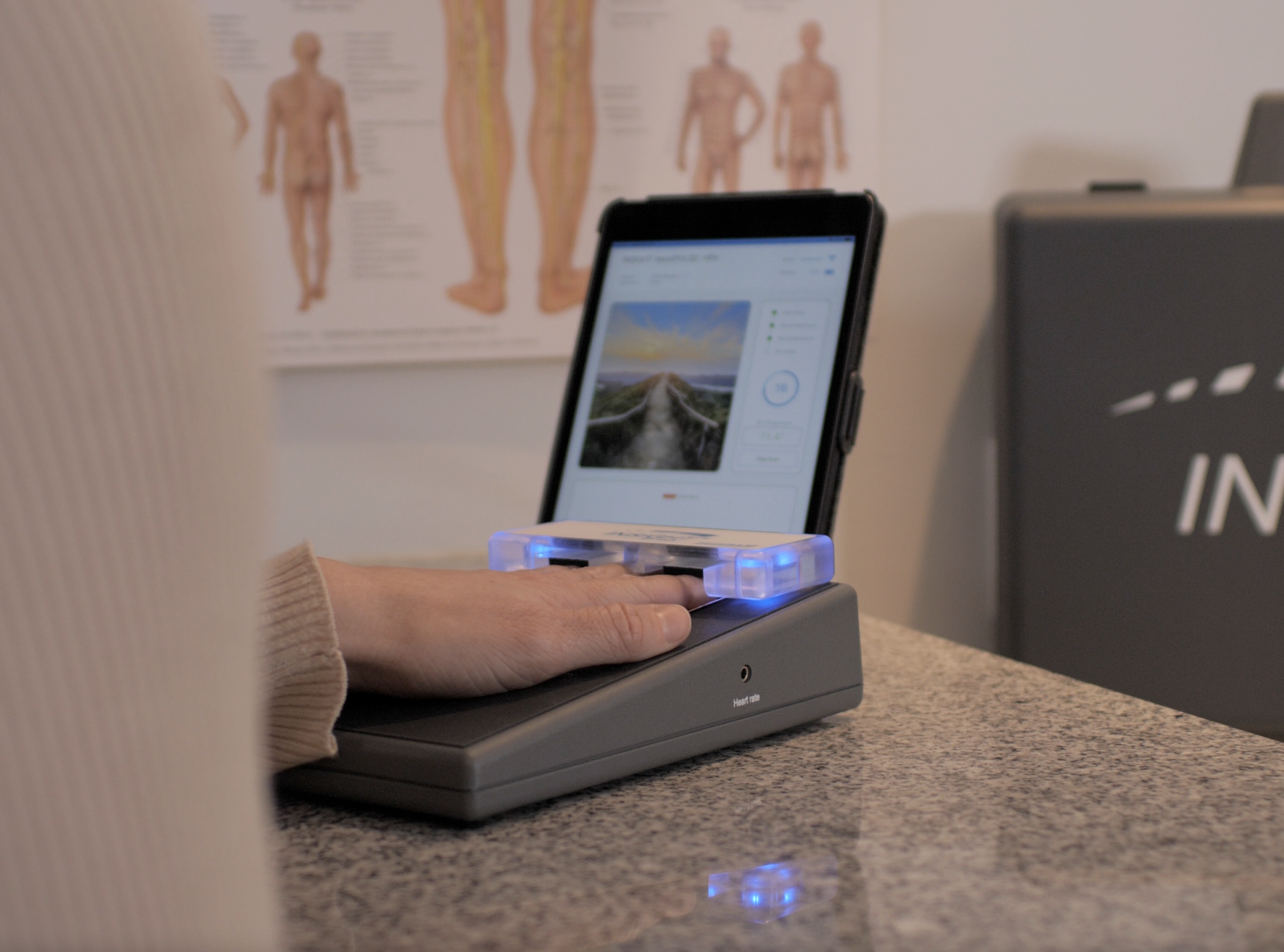
The neuroPULSE analyzes Heart Rate Variability, or HRV. HRV gives chiropractors useful information about autonomic balance, activity, adaptability, and reserve. It provides another window into how efficiently the body is responding and recovering under demand.
HRV is not a cortisol analysis and should not be presented as an HPA axis test. What it does give you is objective information about a neurological system closely involved in the body’s response to stress. For a chiropractor, that makes the HPA axis conversation more useful without crossing into endocrine diagnosis.
neuroCORE and the Energy Cost of Compensation
The neuroCORE analyzes surface electromyography along the spine. It gives the chiropractor information about paraspinal electrical activity, postural tension, symmetry, motor tone reactions, and energy expenditure.
That matters because adaptation does not happen in separate boxes. A patient may be spending substantial energy simply maintaining compensation through the spinal region. neuroCORE helps make that motor and energy story visible, adding another dimension to neuroendocrine and autonomic discussions without pretending to directly analyze the adrenal gland.
neuroTHERMAL and Autonomic Patterns Along the Spine
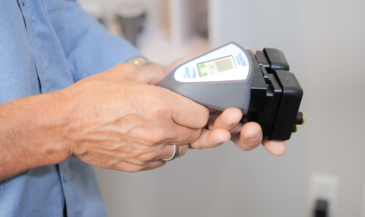
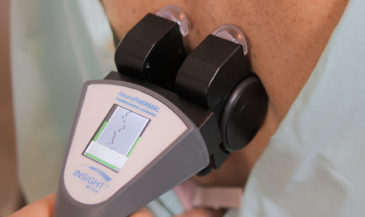
The neuroTHERMAL performs a full spine nerve system scan in under 30 seconds and analyzes paraspinal temperature patterns associated with autonomic regulation and vasomotor activity.
This adds another view of nervous system status. The chiropractor can analyze patterns across examinations, use repeatable scan views, and compare how those patterns fluctuate over time. Thermal analysis is not cortisol analysis, but it helps show another piece of the body’s regulation story.
Reserve, Energy, and Depth With Synapse Software
INSiGHT neuroTECH and Synapse software bring the three dimensions together through the RED framework: Reserve, Energy, and Depth. neuroPULSE contributes the reserve story. neuroCORE shows energy expenditure and postural response. neuroTHERMAL adds deeper autonomic patterns along the spinal region.
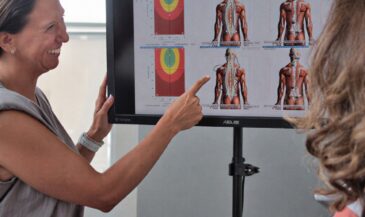
Synapse software organizes those findings into patient-friendly scan views and comparative reporting. The CORESCORE can simplify complex neurological findings into a single neurological efficiency metric that patients can follow without treating that number as a diagnosis.
A practical scanning rhythm looks like this:
- Establish a baseline: Analyze nervous system status before relying on assumptions about how the patient feels.
- Explain the findings: Use scan views to make regulation, reserve, compensation, and adaptability easier to understand.
- Build the care plan: The chiropractor combines objective analysis with history, examination, clinical judgment, and patient needs.
- Re-scan: Compare findings over time rather than depending entirely on symptoms or memory.
- Follow the trajectory: Look at patterns across repeated exams instead of overinterpreting one difficult or unusually good day.
The technology does not replace the chiropractor. It strengthens the chiropractor’s ability to examine, interpret, and communicate nervous system performance.
Neurological scanning shifts the conversation from vague descriptions of chronic stress toward objective findings. When patients can see where neurological distress is building, how well they are adapting, and how their patterns fluctuate under care, the HPA stress response becomes part of a much bigger and more useful story.
Bringing the HPA Axis Back to Nervous System Performance
There are two easy mistakes chiropractors can make with the HPA axis. One is to avoid the subject entirely because cortisol and adrenal physiology sound like somebody else’s lane. The other is to go too far and claim that an adjustment resets the hypothalamus-pituitary-adrenal axis or directly corrects hormone imbalance.
Neither position gives chiropractic its strongest story.
The hypothalamus, pituitary gland, adrenal cortex, autonomic nervous system, endocrine signaling, and central nervous system participate in an interconnected physiological network built to help human beings respond to stress. CRH and ACTH, cortisol, glucocorticoid feedback, sympathetic activation, and recovery are all parts of that larger adaptation story.
And adaptability is something chiropractors understand.
You can explain it to a patient simply: “Your body is supposed to respond when life demands more from you. What we are interested in is whether your nervous system can respond appropriately and then recover when that demand is gone.”
That keeps us away from diagnosing HPA axis dysfunction from a checklist. It keeps us away from promising to fix an adrenal gland. And it brings the discussion back to something Neurologically-Focused Chiropractors can objectively analyze: nervous system performance.
Patients may first ask about cortisol, fatigue, the effects of stress, post-traumatic stress disorder, early life stress, or how to regulate their nervous system. Those questions can open the door to a much bigger principle. The body’s response to stress is not about one gland, one hormone, or one difficult day. It is about adaptability across an interconnected neurological and neuroendocrine network.
That is why neurological scanning belongs at the end of this conversation. INSiGHT scanning technology gives chiropractors objective analysis that helps make nervous system status visible and trackable over time. Once patients see their nervous system in living color, the conversation moves beyond symptoms and toward reserve, regulation, recovery, and performance.
The goal is not a nervous system that never responds to a stressor. The goal is a nervous system with enough reserve and flexibility to respond, regulate, recover, and keep adapting.