

Patients often arrive looking for pain relief or reassurance about their posture. Those concerns deserve attention. But a photograph, a symptom description, or an adjustment alone cannot tell the whole story. The examination needs to connect what patients notice with what the doctor can observe and analyze.
That is where spine alignment becomes a useful starting point for discussing nervous system performance. When we explain that relationship clearly, patients gain a better understanding of their bodies and the purpose behind our recommendations.
What Spinal Alignment Means in Chiropractic
Spinal alignment refers to the relationships among the structures supporting the back and their position during standing, sitting, and movement. From the side, the neck and lower back curve inward, while the mid-back curves outward. These are called cervical lordosis, lumbar lordosis, and thoracic kyphosis. Each natural curve contributes to support and movement. A healthy spine has curves rather than forming a perfectly straight column.
Proper spinal alignment must also account for individual variation. Anatomy, age, previous injuries, and physical demands influence how someone stands and moves. Good alignment should be considered alongside comfort and function. We should avoid suggesting that everyone needs to match one ideal silhouette to maintain overall health.
Connecting Structure With Neurological Function
The spinal cord travels within a protective canal, while nerve roots pass through openings between adjacent structures. Sensory receptors in muscles and joints contribute information used for balance and movement. Communication between the brain and body helps coordinate the muscular responses that support the upper body as demands fluctuate.
For a Neurologically-Focused Chiropractor, spinal alignment therefore belongs within a broader examination. Structural findings and physiological findings answer different questions. Imaging, when indicated, can show anatomy. Neurological scanning contributes information about selected functional patterns. A scan does not determine the position of an individual vertebra, and appearance alone cannot establish nervous system performance.
Posture and Alignment: Which Findings Deserve Attention?
Patients commonly associate spine alignment with how they look in the mirror. Uneven shoulders or a forward head position may catch their attention before they notice any discomfort. These observations can start a useful discussion, provided we investigate their significance rather than assume every difference needs correction.
Prolonged sitting, repetitive tasks, sustained positions, and limited movement variety can contribute to fatigue and postural tension. What patients call poor posture may reflect habit, discomfort, or the demands of their work. Someone who tends to slouch does not necessarily have structural damage. The question is whether a position or activity is associated with symptoms, reduced capacity, or other relevant findings.
Common Concerns Behind Alignment Questions
Searches for “spinal misalignment” often bring patients to the office with concerns that have several possible explanations:
- Back pain or stiffness: Ask about onset, duration, activity tolerance, sleep, and previous episodes.
- Uneven shoulders or hips: Consider whether the finding is longstanding, flexible, new, or associated with other signs.
- Difficulty getting comfortable: Explore positional tolerance and the effect on daily activities.
- Headaches or neck symptoms: Assess the presentation without assuming spine alignment explains the complaint.
- Numbness, tingling, or weakness: Perform the appropriate neurological assessment and consider referral.
A thorough evaluation combines the history with movement assessment, relevant orthopedic and neurological testing, and consideration of bone health. Imaging may be appropriate when a fracture, disc condition, or other structural concern is suspected. New or progressive weakness needs prompt evaluation. Saddle numbness or new bladder or bowel dysfunction accompanying back symptoms requires emergency assessment. Neurological scanning can supplement an examination, but it cannot exclude these conditions or establish the cause of symptoms independently.
Learn more about INSiGHT scanning?
Fill this out and we’ll get in touch!
"*" indicates required fields
Supporting Spine Alignment Through Chiropractic Care and Daily Habits
A useful care plan connects findings to the patient’s health goals. Perhaps they want to sit through a meeting comfortably, return to gardening, or sleep with fewer interruptions. Those goals make the spine alignment conversation practical. They also give the doctor and patient meaningful outcomes to review together.
Chiropractic care may include adjustments, progressive exercise, education, and collaboration with another healthcare provider. A spinal adjustment involves a controlled force applied to a joint using the hands or an instrument. Evidence supports spinal manipulation as an option for some people with lower back symptoms, with benefits generally described in terms of symptoms and function. It does not establish that adjustments permanently restore proper alignment or improve every aspect of health and well-being.
Spine Alignment Exercises That Build Capacity
Exercise recommendations should reflect ability, examination findings, and the tasks the patient wants to resume. Explain that spine alignment exercises support strength and movement rather than guarantee anatomical correction. Appropriate exercises to strengthen the trunk can be combined with manageable walking and gentle mobility work:
- Walking breaks: Interrupt long periods of sitting with short, comfortable walks. Increase duration gradually according to tolerance.
- Modified planks: Begin against a wall, counter, or supported floor position. Encourage comfortable breathing and manageable effort.
- Gentle cat-cow movements: If comfortable on hands and knees, move slowly between gentle rounding and extension without forcing either direction.
- Progressive strengthening: Choose activities that match current capacity and build toward meaningful work or recreational demands.
Practical advice can help improve posture without turning every position into a rule. Support the feet when sitting, place the screen at a comfortable viewing height, and change positions regularly. Discuss body mechanics and manageable loads rather than promising to eliminate all stress on the spine. Sleeping on your back with support beneath the knees may feel comfortable; side sleeping with a pillow between your knees is another option. To keep your spine aligned is a familiar goal, but comfortable support and movement variety are more useful instructions than holding rigidly all day. At re-exams, review activity tolerance, symptoms, examination findings, and relevant scan comparisons before progressing the plan.
How INSiGHT Scanning Adds Objective Findings to Spine Care
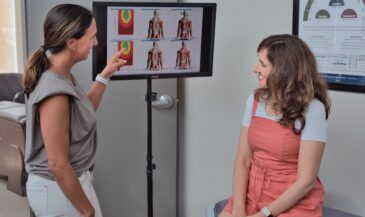
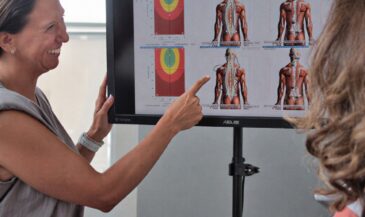
Spine alignment becomes easier to discuss when patients have something concrete to review alongside their symptoms and examination findings. INSiGHT scanning technology adds objective physiological information that supports the doctor’s interpretation. It helps bring postural tension and nervous system performance into a conversation patients can understand.
The distinction matters: these instruments do not photograph anatomical relationships, diagnose conditions independently, or create the care plan. CLA’s RED framework organizes interpretation around Reserve, Energy, and Depth, moving through neuroPULSE, neuroCORE, and neuroTHERMAL. Each contributes a different perspective, with the full clinical picture guiding its meaning.
neuroPULSE: Reserve and Autonomic Regulation
The neuroPULSE analyzes heart rate variability, or HRV, which describes variation in timing between successive heartbeats. These findings provide information relevant to autonomic regulation and adaptability. Breathing, recording position, sleep, recent activity, medications, and other factors can influence the results. Consistent conditions support meaningful comparisons. HRV does not locate alignment issues or establish that an adjustment caused a particular response.
neuroCORE: Energy and Paraspinal Activity
The neuroCORE uses surface electromyography to analyze electrical activity in the paraspinal muscles. This is particularly relevant to spine alignment discussions involving postural tension, muscular recruitment, and side-to-side activity patterns. The doctor can consider those findings alongside movement testing and observation. Electrical activity does not directly show vertebral position, and amplitude alone is not a complete calculation of energy expenditure. A clear explanation gives patients useful information without making every colored area sound threatening.
neuroTHERMAL: Depth and Temperature Patterns
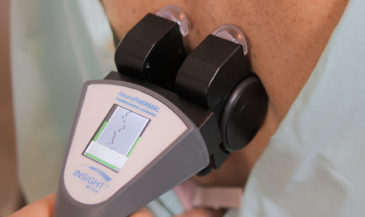
The neuroTHERMAL uses infrared technology to analyze bilateral paraspinal skin temperature differences during a full spine nerve system scan. Skin temperature is influenced by blood flow and physiological regulation, including autonomic activity. Room conditions, acclimation, recent activity, and skin exposure affect interpretation, making consistent technique important. Thermal findings contribute another perspective within the examination; they do not independently establish organ dysfunction, nerve compression, or structural displacement.
Making Reports Useful for Reassessment
The INSiGHT software (powered by Synapse) organizes scan views and comparative reports that support explanation and reassessment. CORESCORE combines findings from the three technologies into a reporting metric, while the component findings remain important. It is not a spine alignment score. The INSiGHT software helps the doctor compare findings over time through CLA’s Rule of 3 Scans: baseline, response, and trajectory. Timing reflects clinical judgment. When regular chiropractic visits are recommended, those comparisons can support a clear discussion about progress and the reasons for continuing, modifying, or concluding a particular approach.
Making the Spine Alignment Conversation More Useful
A spine alignment question often carries a deeper concern: “Can I move comfortably, and what should I do next?” Patients deserve an answer that connects their experience with a thoughtful examination. Proper posture and spinal health are useful discussion points when they lead toward practical choices rather than anxiety about every position.
The benefits of chiropractic should be explained through appropriate goals and realistic expectations. The spine isn’t a structure patients need to hold perfectly still. Supporting spine health includes building movement capacity, developing strength, finding comfortable positions, and addressing concerns that deserve further evaluation.
Reassessment keeps recommendations accountable. A patient may move more comfortably while a scan pattern fluctuates, or a recording may look different without a meaningful improvement in function. Both situations require interpretation. Neither symptoms nor scan findings should carry the entire decision alone.
That is how spine alignment leads to a stronger chiropractic conversation. INSiGHT Scanning gives the doctor objective findings to examine, explain, and compare alongside the patient’s goals and clinical presentation. When patients understand what you are assessing and how progress will be reviewed, they have a clearer foundation for making decisions about their care.