

Tension headaches are often treated as simple, common, and ordinary. And yes, headache is the most common reason many people begin looking for answers. But common does not mean unimportant. A recurring headache can affect concentration, sleep, mood, work productivity, family life, and a patient’s trust in their own body.
For a Neurologically-Focused Chiropractor, a tension headache is not just a head complaint. It is a chance to ask a better question. What is the nervous system showing us? Where is the body carrying load? How well is this patient adapting? That is where chiropractic has something important to bring to the table.
Why Tension Headaches Belong in the Chiropractic Conversation
Most patients think about headaches in a narrow way. If the headache is present, they want it gone. If the headache is gone, they assume the problem is handled. That is natural, but it is not always a complete way to understand what is happening.
Tension headaches often create a dull, steady ache or pressure that may feel like a band, clamp, or vice around the head. The headache may involve the forehead, temples, sides of the head, back of the head, or upper neck. Some patients describe scalp tenderness. Others describe a heavy feeling that builds as the day goes on. Headaches usually feel more like pressure than throbbing, and the intensity is often mild to moderate.
That presentation is exactly why a common headache can be overlooked. It is not always severe. It does not always stop a patient in their tracks. But headaches are common, and headaches that keep coming back can quietly shape the way a person lives.
In a chiropractic office, the patient is rarely asking only about headache pain. They may not say it this way, but they are often asking, “Why does my body keep doing this?” That is where the conversation can shift from symptom management to nervous system performance.
- Adaptability and recovery
- Postural tension and daily load
- Workstation habits and screen posture
- Sympathetic overdrive
- Neck and shoulder strain
- Autonomic regulation
- Frequency and severity of headaches over time
The chiropractic profession has always had a bigger story to tell than symptom chasing. Tension headaches give you a practical way to tell that story. They help patients understand that the head, neck, spinal region, posture, and nervous system are not separate parts. They are one coordinated system trying to adapt.
What Chiropractors Should Know About Tension-Type Headache Patterns
Before we expand the conversation, we need to understande?
A tension-type head the common language patients are already hearing. Most conventional resources describe tension-type headache as a primary headache that causes mild to moderate pain, pressure, or tightness around the head. Patients often remember one phrase: a headache that feels like a tight band.
The International Headache Society and the Headache Classification Committee have helped organize headache disorders into categories, including primary headache disorders such as tension-type headache and migraine. That classification helps doctors ask better questions. Not every headache type behaves the same way, and not every headache diagnosis belongs in the same clinical bucket.
What Is a Tension-Type Headachache causes mild to moderate symptoms that are usually dull, aching, and steady. Tension-type headache causes mild pressure more often than throbbing. In many cases, headache causes mild to moderate pressure on both sides of the head, across the forehead, or into the back of the head and neck.
The exact cause of tension headaches is not fully understood. For years, many explanations focused on muscle contraction in the face, scalp, and neck. That is why older terms such as muscle contraction headache or contraction headache became common. You may still hear patients talk this way, especially if they have been told that muscle tension is the main reason their headache occurs.
Current explanations are broader. Muscle tenderness and postural tension may still be part of the picture, but a sensitized nervous system can also influence how a patient experiences a headache. The tissue may be talking, but the nervous system is interpreting the message.
Episodic and Chronic Tension Headache Patterns
Tension-type headaches occur in different patterns. Infrequent episodic tension-type headaches occur less than one day per month. Frequent episodic tension-type headaches occur more often, but less than 15 days per month for at least three months. Chronic tension-type headaches occur 15 or more days per month for at least three months.
That distinction matters. A patient with an occasional episodic tension-type headache may have a very different history than patients with chronic tension-type headache patterns. A chronic tension headache is not just “more of the same.” It suggests the headache pattern has become more established, and the nervous system may be carrying a longer-standing adaptive load.
A headache diary can help clarify the pattern. Keeping a headache diary allows patients and practitioners to track when the headache occurs, how long the headache lasts, what may trigger symptoms, what medicine was used, and whether the headache pattern is changing. That simple record can help separate a random bad day from a pattern that deserves closer attention.
It can also help you recognize the conversion of episodic to chronic patterns. When headaches occur 15 or more days per month, the conversation changes. The doctor is no longer looking at a rare episode. The doctor is looking at chronic tension, recurring neurological distress, and chronic headache types that deserve a more complete analysis.
Tension Headache vs. Migraine
Tension headaches and migraine headaches can be hard for patients to tell apart. A migraine is more likely to involve throbbing, nausea, vomiting, visual changes, or stronger sensitivity to light and sound. Physical activity often makes migraine symptoms worse. Tension headaches usually do not behave that way.
Still, real patients do not always read the textbook. Some people with chronic migraine may also experience background headache symptoms that resemble tension type headaches. Some patients use the word migraine for any strong headache. Others minimize chronic headaches because they have learned to live with them.
This is why diagnosis and treatment should not be guessed from one sentence. A proper headache diagnosis begins with history, examination, pattern recognition, and clinical judgment. When headache symptoms change, become sudden, or feel different than usual, that deserves attention.
When a Headache Needs Medical Attention
A chiropractor should always listen carefully for red flags. A severe headache that comes on suddenly, a headache following head injury, or a headache with fever, stiff neck, mental confusion, seizures, double vision, weakness, numbness, or trouble speaking needs urgent medical evaluation.
That does not take anything away from chiropractic. It strengthens the chiropractor’s role as a responsible, trusted doctor. The goal is not to turn every headache into a chiropractic case. The goal is to understand what kind of headache is present, what needs referral, and where Neurologically-Focused Chiropractic Care may help assess the patient’s function more completely.
Learn more about INSiGHT scanning?
Fill this out and we’ll get in touch!
"*" indicates required fields
Looking Beyond Triggers to Postural Tension and Nervous System Load
Most patients already have a list of suspected headache triggers. They blame the computer. They blame their pillow. They blame a hectic day, skipped lunch, poor sleep, or too much caffeine. Often, they are not wrong. But a trigger is not always the same thing as the cause of tension headaches.
A trigger may simply reveal a nervous system that has been running close to its limit. The long meeting may have triggered the headache, but why was the system so ready to express that headache in the first place?
Common Tension Headache Triggers
Tension headaches occur around recognizable lifestyle and neurological load factors. Headaches can be triggered by many daily habits and demands, especially when recovery is low.
- Long hours at a computer
- Poor workstation setup
- Reduced movement throughout the day
- Clenched jaw or shallow breathing
- Poor sleep or irregular sleep
- Skipped meals
- Dehydration
- Eye strain
- Overuse of pain medicine
- Neurological distress that builds without enough recovery
A Neurologically-Focused Chiropractor is looking for the deeper pattern underneath. Is the patient stuck in sympathetic overdrive? Is the motor system wasting energy? Is there muscular tension that keeps repeating? Is the patient recovering between episodes, or are the symptoms simply quieting down until the next flare?
Why “Just Stress” Is Too Small of an Explanation
Patients hear the word stress all the time, but it often makes them feel dismissed. “It’s just stress” can sound like “it’s all in your head.” That is not helpful, and it is not how we should talk about the nervous system.
Neurological distress is not imaginary. It affects tone, posture, breathing, digestion, sleep, recovery, and autonomic balance. When a patient is living in constant demand, the body may adapt by increasing muscle activity, altering movement patterns, and reducing recovery capacity. Over time, that may contribute to symptoms of tension.
This is where chiropractic language becomes powerful. We can help patients understand that the headache may be the alarm, not the whole fire. The symptom is real, but the pattern behind the symptom deserves attention.
The Chiropractic Connection
From a chiropractic perspective, the head and neck do not operate in isolation. The upper cervical region, thoracic spine, shoulders, posture, and autonomic nervous system all influence how the body carries load. A tension headache may involve the back of the head, forehead, temples, or neck, but the pattern can be much bigger than the location of the symptom.
That does not mean every tension headache comes from the spine. It does mean chiropractors are uniquely positioned to assess spinal region function, neurological interference, postural tension, and adaptive capacity in a way many patients have never experienced before.
When a patient asks about the treatment of tension headache symptoms, you can acknowledge what they want while guiding them toward what they need to understand. Yes, they want the headache reduced. But they also need to know why tension headaches may keep returning, what their nervous system is showing, and why the body may need a different kind of support.
What Patients Often Try at Home
Many patients try to manage tension headaches at home before they ever walk into your office. They may use heat, cold, rest, stretching, massage, hydration, breathing exercises, or over-the-counter medicine. Some home treatment strategies may provide short-term relief, especially when the headache is mild.
Patients may also ask how to prevent headaches. Helpful habits often include regular sleep, regular meals, hydration, movement breaks, workstation changes, and relaxation practices. These strategies may help prevent tension headaches, reduce muscle tension during demanding seasons, and help prevent a tension headache from building as quickly.
The key is helping patients understand that tension headaches at home should not become an endless cycle of guessing. If the headache may last for hours, if headaches also return week after week, or if medicine is becoming a routine part of the day, the conversation needs to expand.
Medicine Overuse and Rebound Patterns
Medicine can have a place in acute treatment conversations, and many patients use acetaminophen, ibuprofen, naproxen, aspirin, or other options under appropriate guidance. The concern comes when frequent use becomes part of the headache cycle.
Frequent use can contribute to medication overuse headaches or rebound headaches. That means the very strategy a patient uses to get through the day may begin to lead to rebound headaches over time. Chiropractors should ask how often medicine is used, how long the headache lasts, and whether the patient notices the headache returning as medicine wears off.
This is not about shaming patients. It is about helping them see the pattern clearly. Preventing tension begins with understanding the whole picture.
How INSiGHT Scanning Technology Helps Chiropractors See the Bigger Headache Pattern
Patients can describe a headache, but they cannot always describe their nervous system status. They can tell you how they feel today, but they may not know how long their body has been compensating.
That is where INSiGHT scanning technology changes the conversation. INSiGHT neuroTECH and Synapse software do not diagnose tension headaches. They help analyze patterns of nervous system performance that may be present when patients show up with recurring headache symptoms.
Why Objective Data Changes the Headache Conversation
Without objective neurological data, the conversation can get stuck in one question: “Do you still have the headache?” That is a limited way to evaluate progress because headache symptoms fluctuate. A patient may feel better today because they slept well, avoided a trigger, or took medicine. Another patient may feel worse after a demanding week even though longer-term nervous system performance is improving.
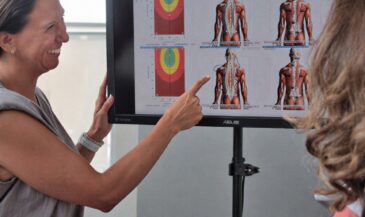
INSiGHT scanning technology gives the chiropractor a wider lens. Baseline scans establish a starting point. Progress scans help show how the nervous system responds under care. Comparative scan views help the patient see patterns across time instead of judging everything by the headache of the day.
neuroCORE and Postural Tension Patterns
The neuroCORE uses surface electromyography to analyze paraspinal muscle activity. In the context of tension headaches, this can help the chiropractor see patterns of postural tension, imbalance, energy expenditure, and dysponesis, which refers to errors in energy expenditure.
That matters because many patients with tension-type headache live in a body that is working too hard to sit, stand, breathe, and move through the day. Their symptoms may be in the head, but their motor system may be telling a broader story.
The neuroCORE does not say, “This patient has a tension headache.” It helps you analyze how the spinal region is expressing tone and tension. For patients with tension-type headache causes mild pressure or recurring head tightness, that information can support a more meaningful care plan conversation.
neuroPULSE and Adaptive Reserve
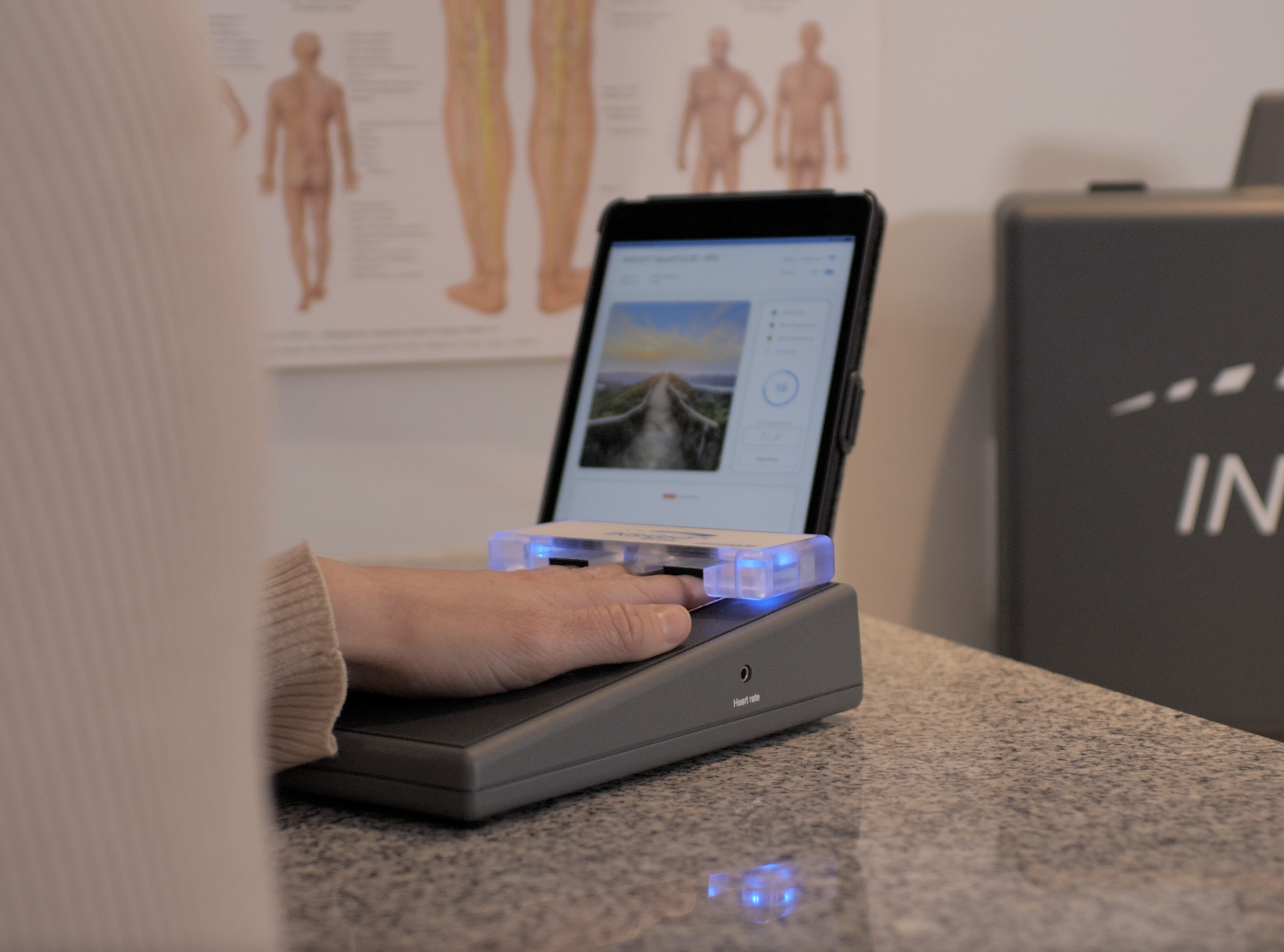
The neuroPULSE assesses Heart Rate Variability, giving insight into autonomic balance, adaptive reserve, and the relationship between sympathetic and parasympathetic activity. This is especially useful for patients who say their headaches occur during busy seasons, poor sleep cycles, emotional load, or long workdays.
A patient in sympathetic overdrive may not simply need a reminder to relax. They may need a clearer understanding of how their nervous system is adapting and whether they have enough reserve to recover from daily demand.
When patients with chronic tension patterns see objective information about their adaptive capacity, the conversation changes. Patients with chronic tension begin to understand that their headache may be part of a larger recovery and resilience story.
neuroTHERMAL, Synapse Software, and CORESCORE
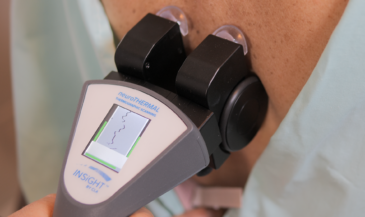
The neuroTHERMAL performs a full spine nerve system scan that analyzes paraspinal temperature patterns. These patterns can help reveal autonomic imbalance and dysautonomia that may be relevant when considering the patient’s overall neurological profile.
The INSiGHT software, powered by Synapse, helps organize complex neurological data into scan views and reports patients can understand. CORESCORE provides a simple neurological report card that reflects nervous system performance across INSiGHT’s core technologies.
This is particularly helpful when working with patients with tension-type headache patterns, chronic headaches, or headaches that keep coming back. You can explain that the headache is one sign, but the scans help reveal whether the nervous system is showing patterns in reserve, energy, and depth over time.
How This Supports the Chiropractor’s Care Plan
INSiGHT does not create the care plan. The chiropractor does.
INSiGHT provides objective neurological data. The chiropractor combines that data with history, examination, orthopedic and neurological findings, patient goals, and appropriate referral decisions. From there, the chiropractor builds a care plan that fits the person in front of them.
For patients who ask how tension headaches are treated, this gives you a better answer than a generic list of treatment options available. You can explain that the care plan is based on their pattern, not just the name of their headache. That is the difference between chasing symptoms and practicing with neurological certainty.
Helping Patients Understand Tension Headaches Through a Neurological Lens
The best headache conversation is simple enough for a patient to understand and deep enough to honor what is really happening. Patients do not need a neurology lecture. They need a clear explanation that helps them connect their symptoms to nervous system performance.
You might say, “Your headache is real, but it may not be the whole story. We want to understand what your nervous system is showing us, how your body is adapting, and whether these patterns are changing over time.”
A Better Way to Explain Tension Headaches to Patients
A patient may come in asking for help with a tension headache. But the deeper opportunity is helping them understand the pattern behind the headache.
- Your headache tells us something is asking for attention, but it does not tell us the whole story.
- We want to look at how your nervous system is adapting, not just whether the headache is present today.
- Symptoms may guide the conversation, and scans help us see patterns symptoms alone can miss.
- The goal is not only to get through today’s headache. The goal is to understand why this pattern keeps showing up.
That is the kind of explanation patients can hold onto. It is clear. It is honest. It does not overpromise.
What Chiropractors Should Ask
When a patient presents with tension headache symptoms, good questions can reveal the pattern quickly. A strong intake conversation may include:
- When does the headache occur?
- Where do you feel it?
- What does the headache feel like?
- How long does the headache last?
- How often do headaches occur?
- What seems to trigger the headache?
- Has the headache pattern changed?
- What medicine do you use, and how often?
- Do you experience visual changes, nausea, numbness, weakness, or speech difficulty?
- Have you had a recent head injury?
These questions help clarify headache diagnosis and treatment, identify referral needs, and support a better chiropractic analysis. They also help distinguish episodic tension, chronic tension, migraine, and other types of headaches.
Bringing the Headache Conversation Back to Performance
Tension headaches are common, but common does not mean simple. Headache is the most common symptom some patients bring into the office, but the story underneath can be much deeper. A tension headache may be occasional, frequent, episodic, or chronic. It may be mild, moderate, or part of a broader headache disorder pattern.
For chiropractors, this is where the profession shines. We can acknowledge the symptom while leading the patient into a bigger understanding of function. We can explain that the body is not a collection of isolated parts. It is a coordinated, adaptive system directed by the nervous system.
When patients understand that, the conversation changes. They stop thinking only about whether the headache is present today. They begin to see why the pattern deserves attention.
And when INSiGHT scanning technology makes that pattern visible, the doctor no longer has to rely only on words. The patient can see the scan views, understand their CORESCORE, and follow objective changes over time.
That is the real opportunity with tension headaches in a chiropractic office. Not to make the headache conversation bigger than it should be, but to make it clearer, more objective, and more connected to the nervous system. When that happens, patients begin to value chiropractic for what it has always been meant to support: better function, stronger adaptability, and a more resilient expression of life.