
Think about what happens every second. Receptors in the skin and muscles send sensory information inward. The brain and spinal cord process that input. Motor instructions travel back outward. At the same time, autonomic pathways help regulate heart rate, digestion, blood vessels, glands, and other functions without the patient having to think about them. The central nervous system and peripheral nervous system are having a remarkable two-way conversation all day long.
For chiropractors, that gives us a much bigger neurological story than spinal regions and joints alone. The spinal column protects the spinal cord, while peripheral nerves provide essential communication pathways from the spinal cord to the rest of the body. Once you begin looking at chiropractic through that lens, the better question becomes less about what a patient happens to feel today and more about how well their nervous systems are communicating, regulating, and adapting.
How the Peripheral Nervous System Connects the CNS to the Body
The peripheral nervous system, or PNS, is the portion of the nervous system that lies outside the brain and spinal cord. The other major component is the central nervous system, or CNS, which consists of the brain and spinal cord. These are two major parts of the nervous system, and while they are anatomically distinct, functionally the CNS and PNS are continually working together.
I like to think of the nervous system as a tree. The brain and spinal cord form the central trunk, while peripheral nerves branch farther and farther outward until that neurological network reaches the skin and muscles, limbs, glands, organs, fingers, and toes. Another useful comparison is an electrical grid. The CNS is the central station, while the PNS contains the nerves that connect that station with tissues throughout the body.
That communication goes both ways. Nerve fibers that carry information inward continually tell the CNS what is happening throughout the body. Other pathways transmit information outward, allowing the CNS to coordinate movement and automatic functions. The peripheral nervous system is not simply an outgoing wiring system. It is a living feedback network.
Cranial Nerve and Spinal Nerve Pathways
The nervous system includes major peripheral pathways associated with both the brain and spinal cord. There are 12 pairs of nerves traditionally identified as cranial nerves and 31 pairs of spinal nerves associated with the spinal cord. Most cranial nerves are considered part of the PNS, although the optic nerve is commonly classified with the CNS because of its developmental and structural characteristics.
The twelve pairs of cranial nerves participate in sensory and motor functions involving the head, face, neck, and internal organs. Cranial nerves emerge in association with the brain and brain stem and contribute to functions involving taste, hearing, facial sensation, movement, and the senses of smell, among others. One particularly important cranial nerve is the vagus nerve, which travels well beyond the head and neck and participates extensively in parasympathetic regulation.
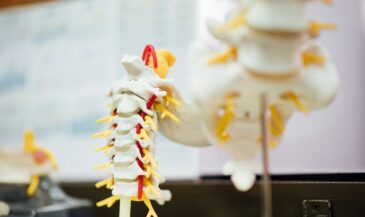
The thirty-one pairs of spinal nerves connect with the spinal cord at different levels. These pairs of spinal nerves pass through spinal column openings and become progressively smaller nerves that branch throughout the body. By the time those branches reach the skin, fingers, toes, muscles, and other tissues, the peripheral nerve network has become remarkably extensive.
For a chiropractor, this anatomy matters. The spine is not simply a collection of structural parts. It surrounds and protects the spinal cord, while a spinal nerve provides part of the communication pathway between central neurological structures and the periphery. That is one reason a nervous-system-first understanding of chiropractic gives us a broader perspective than structure alone.
What a Peripheral Nerve Is Made Of
At its basic level, the PNS is built around the neuron, or nerve cell. Although different cell types contribute to nervous system function, neurons are the cells carrying information through electrical and chemical signals. Each neuron has a cell body, receiving structures called dendrites, and an axon that carries a signal away from the cell body.
At the end of an axon, communication can occur at a synapse. Dendrite structures receive signals from nearby neurons, allowing an extraordinary amount of information to move through interconnected nerve cells. Collections of neuron cell bodies and their extensions are organized differently depending on their location and function.
Many axons are surrounded by myelin. This protective sheath around the axon supports efficient signal transmission. Individual axons contribute to a nerve fiber, and multiple fibers are organized into a bundle. Larger peripheral nerves contain bundles of nerve fibers along with connective tissue and blood vessels.
So when we talk about a peripheral nerve, we are not talking about a simple wire. We are talking about organized living tissue capable of carrying enormous amounts of information. That distinction becomes important when we start asking what those nerves actually communicate.
How Peripheral Nerve Pathways Send Sensory and Motor Information
The real beauty of the peripheral nervous system is not simply where it is located. It is what it does. Peripheral nerves allow the body to send information toward the central nervous system and carry instructions back toward muscles, organs, and other tissues. That continuous exchange allows the spinal cord and brain to know what is happening outside and inside the body.
Your brain, for all its complexity, needs input. Receptors in the skin, muscles, joints, and internal tissues continually provide information. That sensory information travels along peripheral pathways toward the CNS, where it contributes to sensation, movement, regulation, and appropriate responses.
Then information moves in the other direction. Commands originating within the CNS travel through a motor nerve toward muscles and other targets. Instead of thinking about these nervous systems as one-way highways, think about a busy communication network that is constantly receiving, processing, responding, and updating.
Afferent Sensory Nerve Pathways Bring Information Inward
The word afferent describes information traveling toward the central nervous system. Sensory neurons receive input and carry it centrally. A sensory nerve may communicate information related to touch, temperature, pressure, and other forms of sensation.
Those pathways are not limited to information we consciously notice. Afferent pathways also send information back about what is happening internally. That feedback contributes to homeostasis, the ongoing process through which the body regulates its internal conditions.
That is an important distinction for chiropractors. Patients have plenty of language for what they consciously feel. They have much less language for the enormous amount of neurological information being processed beneath conscious awareness.
Efferent Motor Nerve Pathways Carry Instructions Outward
An efferent pathway carries information away from the CNS. A motor neuron, for example, can carry an instruction toward skeletal muscle, allowing voluntary movement. From reaching for a coffee cup to walking across the room, outgoing neurological signaling is required to turn intention into coordinated movement.
The PNS therefore connects central processing with the rest of the body. Peripheral nerves do not merely report what is happening. They also provide pathways through which the central nervous system coordinates a response.
Sensory, Motor, and Mixed Nerves
There are several types of nerve organization worth understanding. Sensory nerves contain fibers carrying information toward the CNS. Motor nerves primarily carry outgoing commands. A mixed nerve contains both sensory and motor pathways, allowing information to move in both directions within the same larger nerve structure.
- Sensory nerves contain: nerve fibers primarily involved in carrying sensory input toward the CNS.
- Motor nerves: carry outgoing instructions toward skeletal muscles and other targets.
- Mixed nerves contain: both sensory and motor nerve fibers within the same larger peripheral nerve.
This is where the chiropractic conversation starts getting more interesting. A patient’s neurological story is bigger than what they happen to feel during an appointment. Sensory input, motor output, posture, automatic regulation, and adaptation are occurring simultaneously.
Symptoms matter. But you and I both know they are one part of the story, not the whole story. Understanding the peripheral nervous system helps us move from a symptom-only conversation toward a functional one.
Learn more about INSiGHT scanning?
Fill this out and we’ll get in touch!
"*" indicates required fields
Somatic and Autonomic Nervous Systems Show How Broad PNS Function Really Is
The peripheral nervous system includes two major functional divisions that are particularly helpful for understanding its role: the somatic nervous system and autonomic nervous system. One helps connect conscious sensation with voluntary movement. The other helps regulate functions that happen largely without conscious thought.
That distinction is especially useful in chiropractic because it shows just how broad neurological function really is. The same overall network that allows someone to feel the floor beneath their feet also participates in regulating heart rate, digestion, vascular activity, and countless internal functions.
The goal is not to turn every chiropractic conversation into a neuroscience lecture. It is to understand enough neurology that we stop reducing the patient to one spinal region or one complaint.
The Somatic Nervous System Connects Sensation With Voluntary Movement
The somatic division is associated primarily with conscious sensation and voluntary skeletal muscle activity. Sensory pathways communicate information inward while motor pathways communicate instructions outward.
Think about touching something unexpectedly hot. Sensory receptors detect what happened and peripheral pathways carry that information centrally. Or think about consciously reaching your hand toward an object. A motor neuron helps carry the outgoing instruction contributing to that movement.
For chiropractors, the somatic side of these nervous systems matters because posture and movement are neurological activities. What we see in postural tension and motor patterns is not simply a muscle story. The nervous system is coordinating that activity.
How the Autonomic Nervous System Regulates Functions Patients Rarely Think About
The autonomic nervous system manages functions that do not depend primarily on conscious control. Heart rate, digestion, blood vessel activity, and other internal processes depend on autonomic regulation. Some descriptions also distinguish the enteric nervous system because of its extensive role within the gastrointestinal tract.
Within the autonomic network, the sympathetic nervous system is strongly associated with mobilization and activation. It helps prepare the body to respond when demand rises. The parasympathetic nervous system is associated more strongly with recovery, digestion, conservation, and restorative activity.
Neither branch is the enemy. I think that is worth emphasizing because patients hear an awful lot about getting out of sympathetic activity these days. We need sympathetic activation. We also need parasympathetic recovery. The goal is not to live permanently in one side of the equation. The goal is adaptability.
A resilient nervous system should be capable of responding when demand increases and returning toward baseline when that demand passes. When patients understand it that way, the autonomic conversation becomes less about labeling one branch “good” and another “bad” and more about neurological flexibility.
From Peripheral Nerve Function to INSiGHT Neurological Scanning
Once you understand how much information moves through these nervous systems, you begin to see why a symptom-only examination leaves part of the story untold. A patient can tell you what they notice. They cannot consciously report every shift in autonomic regulation, motor activity, postural tension, or adaptability occurring within the entire nervous system.
This is where objective neurological analysis becomes valuable. Chiropractic has always had a strong structure-and-function story. Neurological scanning gives us another way to examine the function side of that relationship and put objective information in front of the patient.
neuroCORE Gives Chiropractors a Window Into Somatic Motor Activity
The INSiGHT neuroCORE uses surface electromyography, or sEMG, to analyze electrical activity in the paraspinal muscles. That gives chiropractors objective information about postural tension, symmetry, motor tone reactions, energy use, and patterns of compensation.
Remember our earlier discussion about the somatic nervous system. Muscles do not contract because they decided to. Motor activity is neurologically directed. When neuroCORE analyzes paraspinal muscle activity, it gives the chiropractor a functional view of how the motor system is organizing activity along the spine.
neuroCORE is not a peripheral nerve-conduction test and does not diagnose peripheral nerve disease. It provides objective analysis of paraspinal motor activity that the chiropractor can interpret alongside history and other examination findings.
neuroPULSE Helps Analyze Autonomic Adaptability
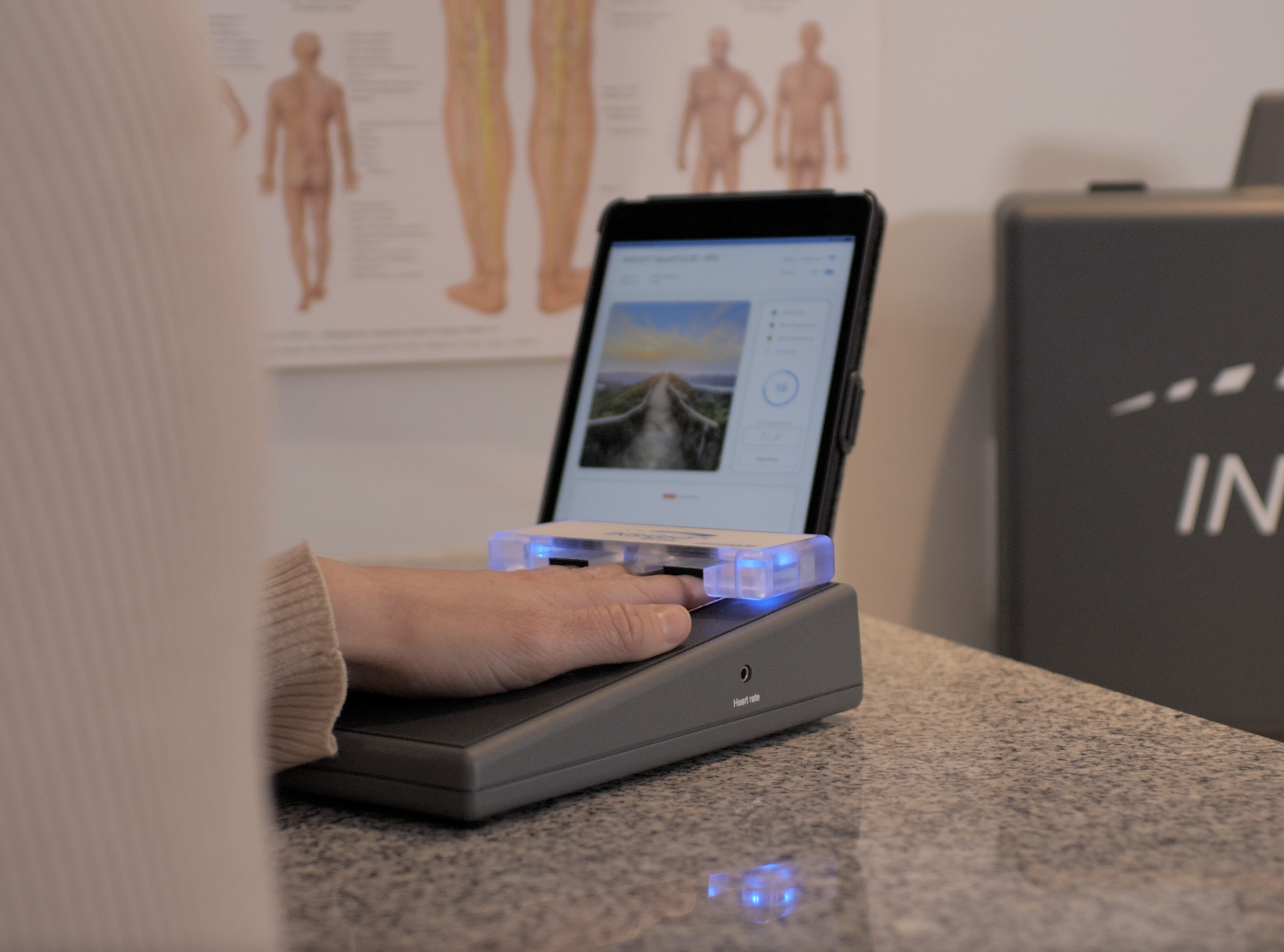
The INSiGHT neuroPULSE brings another dimension into the examination through Heart Rate Variability, or HRV. Rather than simply looking at heart rate, HRV analyzes beat-to-beat variation and provides information related to autonomic balance, adaptability, reserve, and recovery.
This ties directly back to the sympathetic and parasympathetic conversation. A resilient system should have flexibility. It should be able to respond when life asks more of it and recover when the demand has passed.
That gives chiropractors a very different conversation than simply telling patients they are “stressed.” We can talk about adaptive reserve. We can talk about sympathetic overdrive when appropriate. Most importantly, we can show patients objective information related to nervous system performance.
neuroTHERMAL Adds Another View of Autonomic Regulation
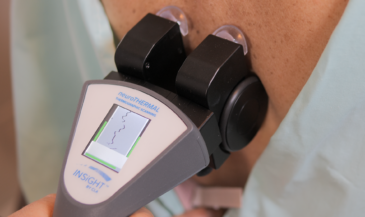
The INSiGHT neuroTHERMAL analyzes paraspinal skin temperature patterns. Because autonomic regulation influences vascular activity and temperature regulation, thermal analysis gives chiropractors another perspective on autonomic patterns along the spinal regions.
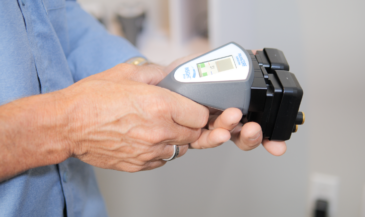
With neuroTHERMAL, you can complete a full spine nerve system scan in under 30 seconds. Rolling and segmental scan modes allow the chiropractor to analyze neurological distress patterns and track how those patterns fluctuate across examinations or around adjustments.
Again, the value is not that a colored area diagnoses a disease. It does not. The value is reproducible objective analysis that contributes to a larger neurological picture.
Bringing Three Dimensions Together With Synapse Software
This is where INSiGHT neuroTECH and Synapse software become particularly useful. neuroPULSE provides information related to reserve and autonomic adaptability. neuroCORE helps analyze energy expenditure and motor activity. neuroTHERMAL adds a view of autonomic patterns along the spine.
- Reserve: neuroPULSE and HRV help assess autonomic adaptability and recovery.
- Energy: neuroCORE helps analyze paraspinal motor activity, postural tension, and energy expenditure.
- Depth: neuroTHERMAL helps analyze autonomic temperature patterns along spinal regions.
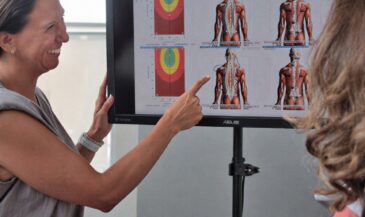
Synapse software organizes that information into scan views and reports that make complex neurology easier to communicate. Instead of handing a patient a neuroscience textbook, you can show them their nervous system in living color and explain what you are assessing.
A baseline establishes where the patient is starting. Later scans allow the chiropractor to compare findings and look at response and trajectory. INSiGHT scanning technology does not create the care plan. The chiropractor combines objective exam data with history, examination findings, clinical judgment, and the patient’s individual needs to build that care plan.
The Peripheral Nervous System Gives Chiropractic a Bigger Story to Tell
The peripheral nervous system is sometimes defined almost as an afterthought: everything in the nervous system outside the brain and spinal cord. Anatomically, that is a useful starting point. Clinically, it does not come close to describing its importance.
The PNS is the communication network connecting central neurological processing with the body. Twelve pairs of cranial nerves and 31 pairs of nerves associated with the spinal cord form major pathways within that network. Peripheral nerves extend and branch from there, carrying sensory information inward and motor or autonomic instructions outward.
That means the entire nervous system is having a continuous conversation. Sensory pathways send information back toward central structures. Motor pathways carry instructions outward. Autonomic pathways participate in regulating functions patients rarely consciously notice. Somatic pathways contribute to sensation and voluntary movement. The CNS and PNS are different anatomical divisions, but nervous system performance depends on their coordination.
For chiropractors, that gives us a bigger story to tell. The spine matters, but not simply because it is structural. Its relationship to the spinal cord, peripheral nerves, sensory input, motor activity, and autonomic regulation is what makes the neurological conversation so compelling. Neurological interference and nerve tension should make us interested in how the system is functioning, not simply where a patient happens to feel symptoms.
And this is why neurological scanning belongs in the conversation. When objective analysis gives us a clearer view of autonomic adaptability, postural tension, motor activity, and thermal patterns, we have more than an opinion to discuss with the patient. We have a shared reference point. We can establish a baseline, assess how nervous system status fluctuates, and help the patient understand why their care is about more than chasing the sign that happened to bring them through the door.
Neurological scanning instantly shifts a patient’s focus from spinal regions and joints to nerves and performance. In less than a minute, you can begin to erase years of underestimating the full power of chiropractic. When patients begin to understand that the brain, spinal cord, peripheral nerves, muscles, and organs are part of one continuously communicating system, chiropractic starts making sense in a much bigger way.
The real question is no longer simply, “How do you feel today?” It becomes, “How well is your nervous system performing?”