

For chiropractors, developmental milestones deserve more than a quick glance at a checklist. They give us observable clues about a developing nervous system learning to coordinate movement, posture, communication, social connection, balance, and adaptation throughout infancy and early childhood. A milestone tells us what a child has learned to do. How that child organizes the task can tell us something different.
That distinction matters. Developmental milestones are not a chiropractic diagnostic tool, and missing a milestone does not automatically point to a chiropractic problem. But when chiropractors understand normal development, recognize developmental concerns, and combine a thoughtful pediatric examination with objective neurological analysis, we can have a much better conversation with growing families.
Developmental Milestones Are More Than Dates on a Checklist
Developmental milestones are skills and behaviors children are expected to achieve as they grow. Parents tend to remember the big ones, but child development includes much more than walking and talking. Developmental milestones can help parents and healthcare professionals follow a child’s development across several connected areas.
The major developmental domain categories include movement, communication, social-emotional development, fine motor coordination, and thinking or play skills. Children develop these abilities together rather than as completely separate systems. A baby reaching for a toy is using visual attention, sensory input, postural control, motor planning, and coordination at the same time.
- Gross motor: Head control, rolling, sitting, crawling, standing, walking, running, and balance.
- Fine motor: Reaching, grasping, transferring objects, and developing increasingly precise hand control.
- Speech and language: Vocalizing, understanding communication, saying early words, and eventually using more complex language.
- Social and emotional: Eye contact, smiling, interacting with a caregiver, waving “bye,” playing pat-a-cake, and later playing with other children.
- Cognitive and play: Exploring objects, solving simple problems, points to things of interest, and eventually engaging in imaginative play.
This is where developmental milestones become especially interesting to a Neurologically-Focused Chiropractor. Head control requires organized sensory and motor activity. Rolling requires coordinated movement through the trunk. Sitting adds postural control and balance. Crawling and walking require another level of integration between sensory input, motor output, balance, and body awareness.
None of that means chiropractic care causes a child to achieve a certain milestone. It means certain milestones give us another reason to appreciate just how much neurological organization is taking place during early childhood development. The goal is not to turn development into a race. The goal is to understand the developing child in front of us.
Developmental Milestones From 2 Months to Age 5
There is a reason milestone guidance is organized by age. Development tends to build. Earlier abilities provide a foundation for increasingly complex movement, communication, play, and independence. Still, children develop at their own pace, and a child may reach one skill earlier and another later within the expected age range.
At 2 months, parents may begin noticing more social engagement, visual attention, movement, and emerging head control. By 4 months, head control is becoming stronger, movement is increasingly purposeful, and social interaction continues to expand. During the middle months of infancy, rolling and sitting become important parts of the motor story.
By around 9 months, a baby is commonly showing increasingly organized sitting, interaction, communication, and movement exploration. Moving toward 1 year and the first birthday, mobility becomes more sophisticated. Crawling, pulling toward standing, gestures, early language, and the progression toward independent standing or walking may begin to appear.
- 0–3 months: Emerging head control, lifting the head during tummy time, visual tracking, and early social responses.
- 4–8 months: Rolling, stronger trunk control, reaching, and progressing toward independent sitting.
- 9–12 months: Increasing mobility, crawling patterns, pulling to stand, gestures, and early communication.
- 12–24 months: Walking, improving balance, language growth, and increasingly complex exploration.
By 18 months, a toddler is building on the motor, language, and social foundations of infancy. Through 30 months, communication, coordination, problem solving, and play continue to become more sophisticated. Heading toward age 5, growth and development includes richer speech and language, greater independence, stronger social-emotional abilities, imaginative play, and more complex movement.
Developmental Trajectories Matter More Than One Milestone
The better question is not simply, “Did this child hit the milestone on the expected date?” Look at the developmental trajectories instead. Is the child continuing to acquire new abilities? Is movement becoming more coordinated? Are communication and social skills progressing? Is there a persistent deviation in one area? Has a previously acquired skill been lost?
A child may reach certain milestones earlier or later than another child. That alone does not establish an abnormality or developmental delay. But a meaningful delay in development, concerns across several areas, or loss of previously acquired skills deserves attention.
That perspective can enhance the anticipatory guidance chiropractors offer families. Milestones help us follow development, but they should not become a pass-or-fail scorecard. Good anticipatory guidance helps parents appreciate development while still knowing when a concern deserves a closer look.
When a Milestone Concern Deserves More Attention
There are physical patterns a chiropractor may notice, or a parent may report, that deserve closer attention. These can include persistent difficulty turning the head comfortably in both directions, strong distress during tummy time, unusually stiff or floppy tone, persistent movement asymmetry, or an unusual locomotor strategy such as primarily bum scooting.
These observations do not explain why the pattern is occurring. One skipped milestone does not determine if a child has a developmental condition. Likewise, developmental concerns involving communication, social and emotional interaction, eye contact, speech, or play may require a broader pediatric perspective.
When findings suggest developmental delay or another concern beyond chiropractic scope, referral matters. A pediatrician may recommend a complete evaluation, and early intervention services may become appropriate. Depending on the situation, collaboration may include physical therapy, occupational therapy, speech-language professionals, or another healthcare professional.
That is good pediatric care: observe carefully, validate the parent’s concern, support development within our scope, and recognize when someone else needs to be part of the team.
Learn more about INSiGHT scanning?
Fill this out and we’ll get in touch!
"*" indicates required fields
How Pediatric Chiropractors Look at Developmental Milestones
A milestone tells us what a child is doing. A chiropractic neurological examination asks a different question: How is this child organizing and adapting while doing it?
If an infant turns the head, we can observe whether movement is comfortable and reasonably symmetrical. When head control develops, we can watch how that control is organized. As rolling, sitting, crawling, standing, and walking emerge, posture, balance, coordination, and movement patterns give us additional information.
The pediatric chiropractic examination may consider history, birth experience, developmental stage, spinal function, head and neck movement, posture, movement symmetry, reflexes, motor patterns, tone, and other age-appropriate findings. That examination should come before assumptions about why a milestone has or has not appeared.
This is where chiropractors need to be especially careful with language. A child who reaches a developmental milestone later than expected should not automatically be labeled as having neurological interference. A child who skips crawling has not proven the presence of a chiropractic finding. And it would be inappropriate to promise that an adjustment will make a child crawl, walk, talk, or achieve another skill.
Pediatric Care Is Not Adult Care Made Smaller
An infant is not a miniature adult. Their joints, reflexes, motor tone, and neurological pathways are still developing. Pediatric chiropractic techniques should therefore respect the child’s age, size, developmental stage, and comfort.
Care for young children may use very light, specific contact rather than the forces associated with adult adjusting. The point is not to force a milestone. The chiropractor is examining spinal-neural function and looking for findings that may need attention while respecting the broader child’s developmental picture.
This can also help parents understand chiropractic differently. We are not simply looking at spinal regions in isolation. We are interested in the relationship between the spine and a nervous system that is developing at an extraordinary pace.
The child’s developmental milestones provide one layer of information. Parent observations provide another. The chiropractic examination provides another. With young children who cannot explain what they feel, objective neurological analysis can add another useful layer.
How INSiGHT Scanning Can Enhance the Pediatric Milestone Conversation
One of the obvious challenges of pediatric chiropractic is that babies are not very good historians. An infant cannot explain tension. A toddler cannot describe autonomic regulation. Even older children may not have the language to explain what their body is experiencing.
Parents can tell us what they see, and that matters tremendously. But INSiGHT scanning technology gives the chiropractor objective neurological information that can be interpreted alongside developmental observations, history, and the rest of the examination.
To be clear, INSiGHT scanning technology does not diagnose developmental delay, determine whether a child is meeting developmental milestones, or screen for autism. It provides objective exam data and scan views related to nervous system performance.
neuroTHERMAL and the Developing Nervous System
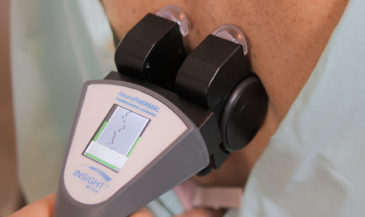
The INSiGHT neuroTHERMAL is particularly useful in pediatric practice because it can complete a full spine nerve system scan quickly. It analyzes thermal patterns along the spinal region associated with autonomic regulation.
With young children, speed matters. So does reproducibility. neuroTHERMAL gives the chiropractor objective scan views without asking the child to explain what they are experiencing. A baseline can be established and later analyses can be compared to see how patterns fluctuate over time.
That scan still does not tell you why a child has or has not reached a milestone. It gives you another piece of the neurological picture.
neuroCORE and Motor Patterns
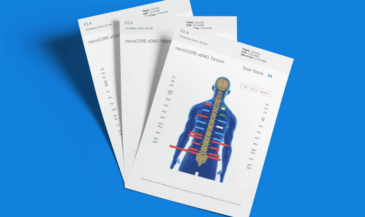
For children old enough for appropriate sEMG scanning, neuroCORE adds information about electrical activity in the paraspinal musculature. It helps the chiropractor analyze postural tension, symmetry, motor tone, and patterns of energy expenditure.
That fits naturally with development because movement becomes progressively more demanding. The nervous system goes from organizing head control to sitting, standing, walking, running, climbing, and increasingly complex activities. neuroCORE does not predict whether a child will reach the next milestone. It provides objective information about the motor and postural system being examined.
neuroPULSE and Adaptability
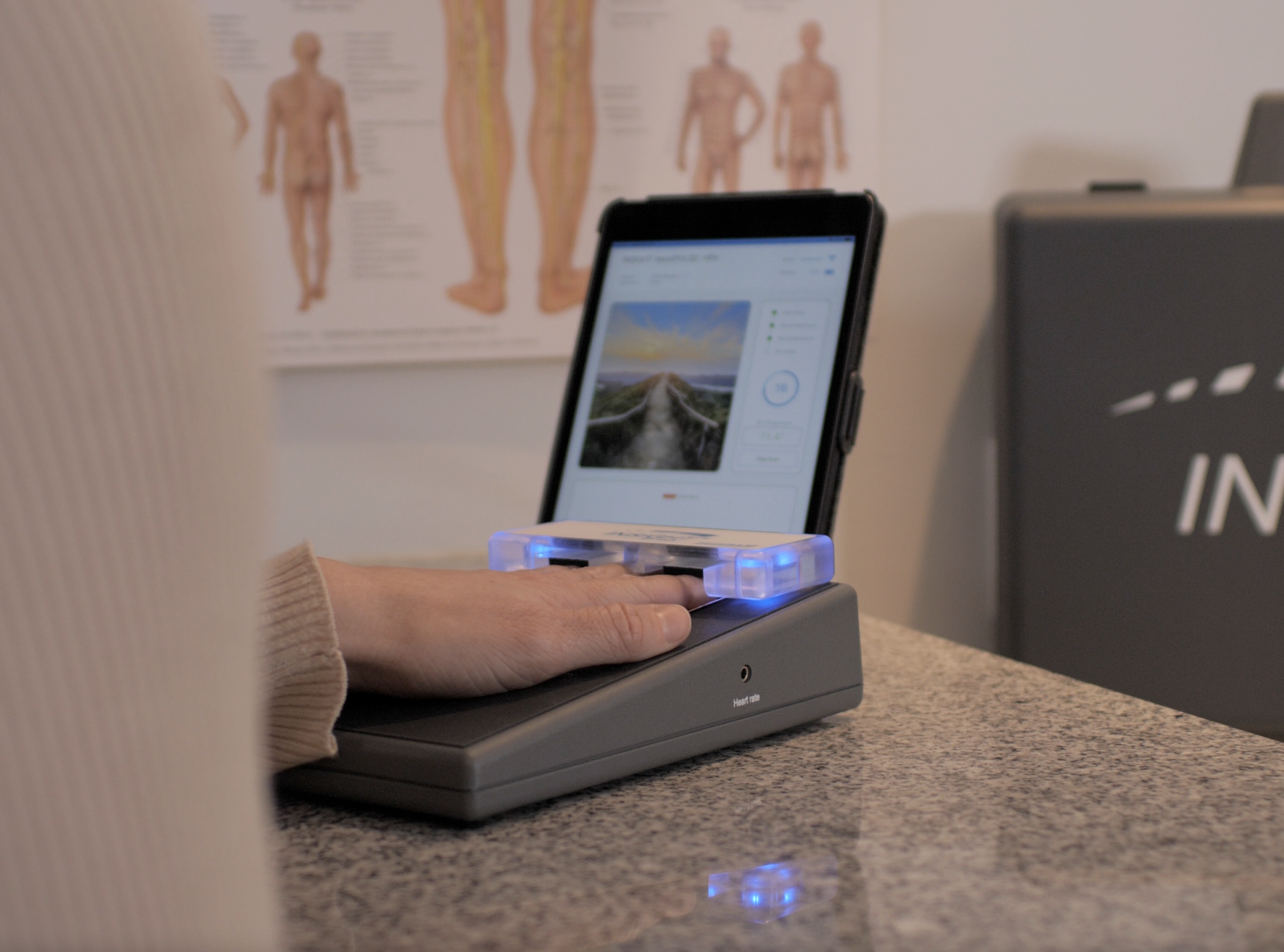
neuroPULSE analyzes Heart Rate Variability and gives the chiropractor information about autonomic balance, adaptability, and reserve. That adds another useful dimension because development continually asks the nervous system to receive information, respond, recover, and adapt.
Again, HRV does not measure developmental achievement. It helps the chiropractor look at nervous system performance from another angle.
Synapse Software Helps Parents See the Bigger Story
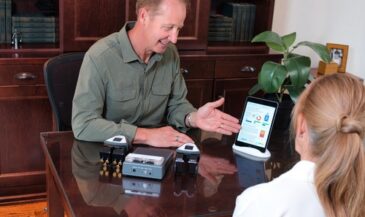
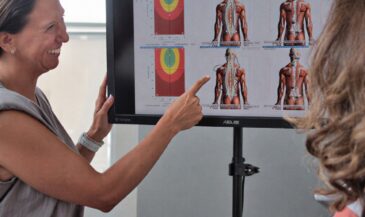
With INSiGHT neuroTECH and Synapse software, neurological findings become visual and easier for families to understand. Parents have language for milestones. “She started crawling.” “He always turns his head this way.” “She is not walking yet.” What they usually do not have is language for nervous system performance, autonomic regulation, postural tension, or adaptive reserve.
Synapse helps bridge that gap through scan views and reporting. The chiropractor interprets those findings, combines them with the history and examination, and builds the care plan from the full clinical picture.
A simple scan rhythm works well:
- Baseline: Establish objective neurological findings.
- Response: Analyze how neurological patterns fluctuate under care.
- Trajectory: Compare findings over time alongside developmental observations and the broader pediatric picture.
Just keep two trajectories separate. A developmental trajectory describes the child’s acquisition of developmental skills. A neurological scan trajectory describes how objective chiropractic findings fluctuate over time. One does not prove the other.
Helping Families See the Bigger Developmental Story
Developmental milestones are wonderful things to celebrate. The first smile. The first roll. The determined crawl across the floor. The first birthday. The first steps. The explosion of words, play, and personality that follows.
But for chiropractors, there is something even more interesting underneath those moments. We are watching a nervous system develop.
When parents understand that developmental milestones are more than a collection of firsts, they begin to see why nervous system performance deserves attention throughout childhood. INSiGHT scanning technology gives chiropractors an objective way to add that neurological conversation to pediatric care while keeping developmental screening, referral, and good clinical judgment exactly where they belong.