

Cortisol is a hormone the body actually needs. Epinephrine has a job. The sympathetic nervous system has a job. Even the fight-or-flight response has a job. The better question is not whether your patient releases stress hormones. Of course they do. The better question is whether their body can react to stress appropriately, meet the demand, and recover when that demand is gone.
That distinction gives chiropractors a much better conversation. Instead of making cortisol the villain, we can help patients understand the neurological side of adaptation. How much reserve does the system have? Is it flexible enough to respond, recover, and prepare for the next demand? Those are questions that bring stress hormones right back to nervous system performance.
Stress Hormones Are Part of a Normal Stress Response
Stress hormones are part of an intelligently coordinated stress response that helps keep us alive and functioning. When a stressful situation demands action, the brain and body do not wait around for us to consciously organize the response. Neurological and hormonal pathways begin preparing the body to respond to stress almost immediately.
Cortisol is a hormone produced by the adrenal cortex and is commonly described as the main stress hormone. That description is useful, but it can also mislead patients into believing cortisol is bad by definition. It is not. Cortisol participates in energy metabolism, cardiovascular regulation, immune activity, and other body functions. Cortisol also helps make energy available when the body must respond to demand.
The stress response system includes more than one hormone. Epinephrine, cortisol, and other chemical messengers form a group of hormones and signaling molecules that help coordinate the body’s response to stress. The hypothalamus helps organize that response, while the adrenal glands play an important role in producing and releasing stress hormones.
What Happens When the Body Needs to React to Stress
When the brain identifies a challenge, the hypothalamus helps initiate reactions to stress. Sympathetic activity rises, the adrenal response becomes involved, and the body releases a surge of hormones that prepares it for immediate action. Epinephrine acts quickly, while the hypothalamic-pituitary-adrenal axis contributes to the somewhat slower process that leads the adrenal glands to release cortisol.
- Cardiovascular activity rises: Heart rate and blood pressure can increase so circulation supports immediate demand.
- Energy becomes available: Stored fuel can be mobilized so the body has resources to act.
- Alertness increases: The person may move into a high alert state that prioritizes the immediate challenge.
- Circulation shifts: Blood flow can be directed toward tissues needed for action.
- Postural tension increases: The motor system may prepare the body for physical stress or movement.
That is the familiar fight-or-flight response. Acute stress can be entirely appropriate. Physical stress, emotional stress, psychological stress, exercise, illness, and an unexpected stressful situation can all require the body to respond quickly.
The goal is not to eliminate this response. The goal is flexibility. A resilient system should be able to rise when demand requires action and return toward recovery when the demand passes. That recovery side of the equation is where stress hormones become especially important to the chiropractic conversation.
How Chronic Stress Can Affect Cortisol Levels and Stress Hormone Levels
Acute stress and chronic stress are very different physiological stories. Acute stress asks the body to mobilize resources for a limited period. Chronic stress asks the same system to keep answering the bell over and over again, sometimes without enough recovery between demands.
The effects of stress depend on more than whether stress is present. Duration, intensity, frequency, sleep, recovery, physical capacity, and the amount of stress a person is already carrying all matter. Chronic low-level stress can become especially important when the system has little reserve left for the next demand.
This is where sympathetic overdrive becomes useful language in the chiropractic office. The sympathetic response is not the enemy. But when the system remains activated for too long, the cost of adaptation can rise. During times of chronic stress, cortisol production and other aspects of hormonal regulation may become altered.
What High Levels of Cortisol Can Mean
High levels of cortisol that remain elevated for prolonged periods can have broad effects on the body. Elevated cortisol levels have been associated with altered sleep, metabolic effects, appetite regulation, cardiovascular function, immune activity, and energy regulation. Elevated levels of cortisol can also be seen in specific medical conditions that require appropriate medical evaluation.
Excess cortisol in those situations can contribute to significant physiological effects. High cortisol levels may be associated with weight gain, and some cortisol-related conditions can lead to weight gain. Cortisol can cause changes in blood sugar regulation and cardiovascular function when exposure is excessive or prolonged. Chronic elevation may also contribute to high blood pressure in some situations.
But this is where chiropractors need to stay disciplined. Stress can cause many different experiences, but not every tired patient has abnormal cortisol. Stress may lead to sleep disruption, appetite changes, fatigue, irritability, or a state of stress without proving a hormonal condition. Likewise, symptoms of high cortisol overlap with many other situations.
You cannot look at somebody with stress and anxiety, weight gain, poor sleep, or elevated stress and know their levels of cortisol. You also cannot infer high cortisol levels from a neurological scan. When there are signs suggesting an endocrine condition, significant mental health concerns, or another medical issue, appropriate testing, referral, or collaboration with a mental health professional or medical provider matters.
Why “Manage Stress” Is Not the Whole Answer
Patients already know they should manage stress. They have heard about sleep, exercise, breathing practices, mindfulness, time outdoors, social connection, and other forms of stress management. Those habits may help people cope with stress and reduce stress in useful ways.
But telling somebody to manage your stress does not tell us how efficiently their physiology is adapting. Two people can deal with stress very differently. One may recover quickly. Another may stay activated for hours. A third may be dealing with chronic stress and crisis on top of years of poor recovery.
That is why adaptive reserve is a better chiropractic conversation. Instead of asking only about stress levels, we can ask how much capacity the person has available to respond, recover, and meet the next demand. Stress can affect each person differently because adaptability is different.
The goal is not simply lower cortisol levels. The better goal is appropriate activation followed by appropriate recovery. That moves the conversation from managing stress hormones as if they were the enemy toward understanding the flexibility of the person’s physiology.
Learn more about INSiGHT scanning?
Fill this out and we’ll get in touch!
"*" indicates required fields
Why Stress Hormones Matter to the Neurologically-Focused Chiropractor
The neurological and endocrine systems do not operate as separate departments. The brain, autonomic pathways, adrenal activity, cardiovascular system, metabolic system, and immune system all participate in the body’s response to changing demands. That relationship is why stress hormones belong in a Neurologically-Focused Chiropractic conversation.
Think about what happens when the body must respond. The brain interprets information. The autonomic system organizes rapid activity. The hypothalamus participates in endocrine signaling. The adrenal response follows. Cardiovascular activity, metabolism, muscle tone, alertness, and recovery all fluctuate together.
That does not mean every hormonal concern is chiropractic in origin. It means the neurological side of stress adaptation deserves attention in a profession centered on the relationship between the spine, neural communication, and adaptability.
Symptoms Do Not Tell You How Well a Patient Is Adapting
Patients have plenty of language for stress symptoms. They can tell you they feel exhausted, overwhelmed, wired, tense, or unable to recover. What they usually cannot tell you is how well their autonomic regulation is adapting underneath those experiences.
A person may feel better while objective neurological findings still need attention. Another patient may experience a major stress event without developing a persistent maladaptive pattern. Stress affects people differently, and that is exactly why symptom-only conversations are incomplete.
- Adaptability: Can the system increase output when demand rises and settle when it passes?
- Reserve: How much capacity appears to be available for recovery and future demand?
- Motor output: Is the body spending excessive energy maintaining postural tension?
- Autonomic regulation: Are autonomic patterns showing flexibility or persistent strain?
- Trajectory: Are these findings improving, fluctuating, or remaining relatively unchanged across progress exams?
This keeps the chiropractic conversation in the right lane. We are not practicing “cortisol care.” We are examining nervous system performance, neurological interference, vertebral subluxation, adaptability, and the way those patterns fluctuate over time.
How INSiGHT Scanning Connects the Nervous System to the Stress Hormone Conversation
Here is where neurological scanning becomes particularly useful. Stress hormones are mostly invisible in a chiropractic office. You cannot palpate cortisol, and INSiGHT scanning technology does not directly analyze cortisol levels, epinephrine, or other stress hormone levels.
What INSiGHT scanning technology can do is help make the neurological side of adaptation visible. That is an important distinction. We are not claiming that a scan reveals the amount of cortisol circulating in the bloodstream. We are gathering objective neurological exam data related to autonomic activity, reserve, postural energy, and regulation.
That gives the chiropractor another layer of objective analysis to interpret alongside the patient’s history, examination findings, goals, and overall presentation.
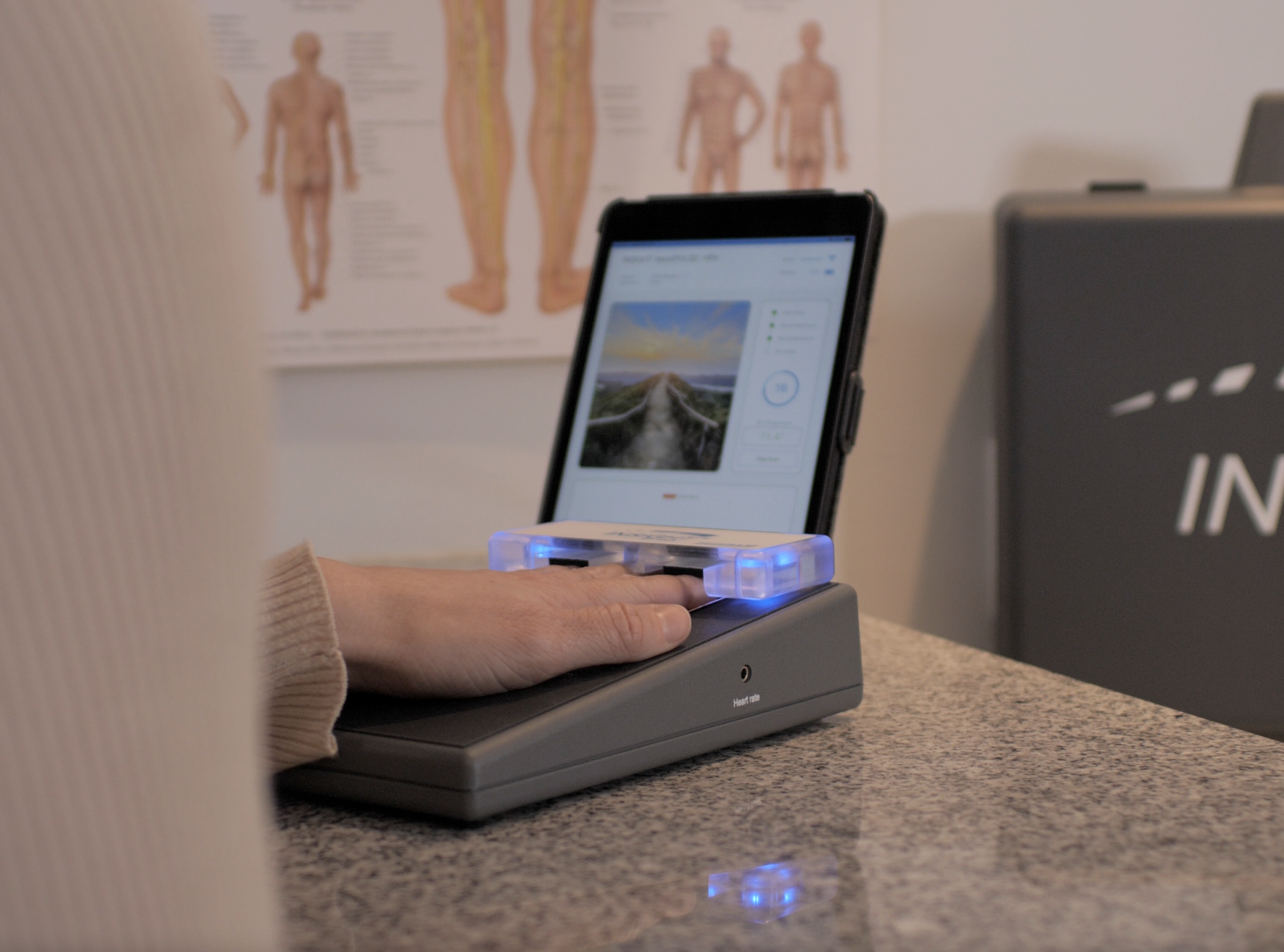
neuroPULSE Helps Show Adaptability and Reserve
The neuroPULSE analyzes Heart Rate Variability, or HRV. HRV looks at beat-to-beat variation rather than simply heart rate. That variation provides insight into autonomic balance, adaptability, recovery, and available reserve.
This makes neuroPULSE especially useful when patients arrive talking about cortisol and stress hormones. A patient-friendly explanation might sound like this:
“We are not analyzing your cortisol here. We are looking at how flexible your autonomic regulation appears to be. Can your body respond when demand rises and recover when that demand passes?”
That shifts the conversation away from chasing one hormone and toward understanding performance.
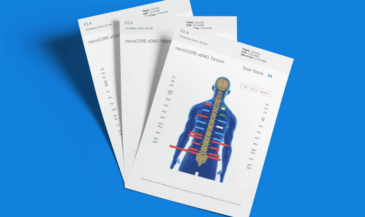
neuroCORE Shows the Energy Cost of Compensation
The neuroCORE analyzes electrical activity in the paraspinal muscles through surface electromyography. It helps the chiropractor look at postural tension, symmetry, motor tone, energy expenditure, and compensatory patterns.
That matters because a stress response is not only hormonal. The motor system participates too. A person may say they do not feel particularly stressed while their body appears to be spending considerable energy simply maintaining posture and stability.
That does not prove excess cortisol. It does give the chiropractor another objective piece of the adaptation story.
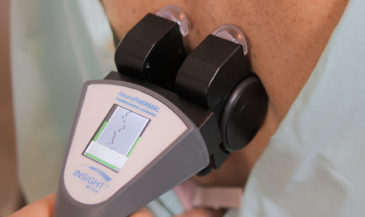
neuroTHERMAL Adds a Regional Autonomic View
The neuroTHERMAL performs a fast full spine nerve system scan that analyzes paraspinal skin-temperature patterns. Autonomic regulation influences blood vessel activity and temperature control, so thermal patterns provide another view into how autonomic activity is being expressed along spinal regions.
Again, a thermal scan is not a cortisol test. It does not diagnose adrenal dysfunction. It gives the chiropractor objective scan views that can be interpreted as part of the larger neurological picture.
Synapse Software Makes Progress Easier to See
INSiGHT neuroTECH and Synapse software bring neuroPULSE, neuroCORE, and neuroTHERMAL together into reports and scan views that help doctors and patients understand complex neurology more clearly. When all three scans are completed, CORESCORE can provide a patient-friendly neurological efficiency score that simplifies the broader pattern without turning it into a diagnosis.
The real clinical value comes from trajectory. Establish the baseline. Re-scan. Compare progress. Look at how the findings fluctuate over time.
- Baseline: Establish the patient’s starting neurological profile.
- Response: Analyze how the patient’s patterns are responding under the care plan.
- Trajectory: Compare repeated scans to see whether adaptability, reserve, postural energy, and autonomic patterns are moving in a more resilient direction.
The technology does not create the care plan. The chiropractor does. INSiGHT scanning technology supplies objective analysis and reporting that support the chiropractor’s clinical interpretation.
That is where stress hormones become a much better patient conversation. Instead of saying, “Your cortisol is probably high,” you can say, “Let’s look at how your system is adapting.”
Move the Stress Hormone Conversation From Cortisol to Adaptability
Patients are going to keep hearing about managing stress hormones, cortisol levels, adrenal function, elevated cortisol, and ways to lower stress. Some of that information will be helpful. Some will make one hormone responsible for nearly everything happening in the human body.
Chiropractors have an opportunity to improve that conversation.
The body is supposed to react to stress. Cortisol is supposed to rise when appropriate. Epinephrine is supposed to help prepare the body for immediate action. The body releases these chemical signals because adaptation requires them. The problem is not that stress hormones exist. The concern is whether activation is appropriate, whether recovery follows, and whether the system has enough reserve for whatever comes next.
A simple way to explain it to patients is this:
“Your body is designed to respond when life demands something from you. What we want to understand is whether your system can respond appropriately, recover afterward, and maintain enough reserve for the next demand.”
That is a much stronger chiropractic conversation than telling patients stress is bad or promising that an adjustment will somehow control a particular hormone.
When we combine a good history, thoughtful examination, appropriate adjustments, and objective neurological scanning, we can help patients understand something far more useful than a single cortisol number. We can help them see how their body is adapting.
Stress hormones give us the opening. INSiGHT scanning technology helps make the neurological story visible. And once patients can see where neurological distress is building, how well they are adapting, and how their nervous system status is fluctuating under care, the conversation changes.
They stop asking only, “How stressed am I?”
They start asking a better question:
“How well am I adapting?”