

POTS stands for Postural Orthostatic Tachycardia Syndrome. POTS is a condition involving orthostatic intolerance, blood flow, heart rate, and the autonomic nervous system. The classic pattern is an exaggerated heart rate increase after becoming upright, often accompanied by lightheadedness, brain fog, fatigue, palpitations, and other POTS symptoms. For chiropractors, understanding what is POTS matters because it provides a clear example of how posture, circulation, and nervous system regulation are tied together.
There is an important distinction from the start. A chiropractor should not use neurological scanning to diagnose POTS, and INSiGHT scanning technology does not replace the medical testing used to confirm a POTS diagnosis. But when a person diagnosed with POTS walks into your office, their story involves the same fundamental question Neurologically-Focused Chiropractors ask every day: how well is this nervous system recognizing demand, adapting, and recovering?
What Is POTS and Why Does Heart Rate Increase When Standing?
So, what is POTS physiologically? POTS is part of a group of conditions involving orthostatic intolerance. Symptoms of orthostatic intolerance develop when someone is upright and often improve when they lie down. A common symptom of POTS is a fast heartbeat, but POTS affects more than heart rate alone.
Every time we stand, gravity shifts blood toward the lower half of the body. The autonomic nervous system normally responds by tightening blood vessels, adjusting heart rate and blood pressure, and maintaining enough blood flow back toward the heart and brain. Most people without POTS never notice this process because the adjustment happens automatically.
Breaking Down Postural Orthostatic Tachycardia Syndrome
The name Postural Orthostatic Tachycardia Syndrome tells us quite a bit about what is happening:
- Postural: Related to body position.
- Orthostatic: Related to standing upright.
- Tachycardia: An increased heart rate.
- Syndrome: A recognizable group of signs and symptoms.
In adults, clinicians typically diagnose POTS when the heart rate rises by at least 30 beats per minute within 10 minutes of standing without the blood pressure response meeting criteria for orthostatic hypotension. In adolescents, the commonly used threshold is an increase of at least 40 beats per minute.
This is an important part of answering what is POTS. POTS is not simply a fast resting pulse. It is the relationship between posture and cardiovascular response that matters.
Heart Rate and Blood Pressure Tell Different Parts of the Story
Heart rate and blood pressure must be considered together. Orthostatic hypotension involves a significant drop in blood pressure after standing, typically at least 20 mmHg systolic or 10 mmHg diastolic within the first three minutes. That is different from the standard POTS diagnosis.
With POTS, blood may pool excessively below the heart, blood volume may be reduced, or blood vessels may not constrict efficiently enough. The nervous system may respond with increased epinephrine and norepinephrine activity, driving a larger increase in heart rate to maintain circulation.
Some people with POTS may eventually experience a drop in blood pressure with prolonged standing, while others may experience an increase. That variation is one reason POTS can be challenging to understand from one number alone.
POTS Symptoms, Cause of POTS, and Why POTS Affects People Differently
If you ask several people with POTS what bothers them most, you may hear very different answers. One may describe lightheadedness. Another may talk about fatigue or brain fog. Another may experience symptoms mainly with exercise or prolonged standing. Understanding what is POTS means understanding that POTS symptoms are broader than tachycardia alone.
The autonomic nervous system influences heart rate, blood pressure, sweating, digestion, temperature regulation, and vascular tone. When that regulation is altered, many times associated with neuro-spinal interference, specific symptoms can appear across several systems. POTS symptoms may also fluctuate. Symptoms may come and go, and symptoms in some patients may become more noticeable after prolonged standing, exertion, illness, or other demands.
Common POTS Symptoms
- Lightheadedness: Dizziness or feeling faint when upright.
- Palpitations: A forceful, pounding, or fast heartbeat.
- Brain fog: Difficulty concentrating, remembering, or thinking clearly.
- Fatigue: Persistent exhaustion or reduced exercise tolerance.
- Headaches: Head discomfort that may accompany other signs.
- Nausea: Digestive upset, sometimes with vomiting.
- Shakiness: Tremor or a feeling of internal shaking.
- Vision changes: Blurred or tunnel vision.
- Exercise intolerance: Increased difficulty tolerating physical activity.
POTS can also be associated with sweating changes, weakness, shortness of breath, sleep problems, digestive difficulties, and occasional fainting. Some people have mild symptoms, while others experience symptoms for months or longer and find that living with POTS changes what they can comfortably do during the day.
What Is the Cause of POTS?
There is no single proven cause of POTS. Researchers continue to study why people develop POTS and why the condition looks different from one person to another. Several patterns are commonly discussed.
Neuropathic POTS is associated with small-fiber nerve involvement that may affect blood vessel constriction. Hyperadrenergic POTS is associated with elevated norepinephrine. Hypovolemic POTS is associated with low blood volume. Secondary POTS may occur alongside another condition capable of affecting autonomic function.
POTS is more commonly diagnosed in women than men and primarily affects people between the ages of 15 and 50. Some people develop POTS after puberty, pregnancy, surgery, trauma, or viral illness. A family history of POTS or related autonomic conditions may also be relevant.
COVID-19, Long COVID, and Cases of POTS
COVID-19 has become part of the POTS conversation because some people with Long COVID have developed POTS. Researchers are still working to understand why this association occurs. Current investigations include immune activity, genetics, brain function, autonomic regulation, and other mechanisms.
That is another reason chiropractors should be careful not to oversimplify what causes POTS. POTS is not caused by one universal chiropractic finding, and a scan should never be used to claim otherwise.
Learn more about INSiGHT scanning?
Fill this out and we’ll get in touch!
"*" indicates required fields
How POTS Is Diagnosed and How POTS Is Treated
Another important part of answering what is POTS is understanding how clinicians diagnose the condition. POTS can be challenging because fatigue, dizziness, palpitations, brain fog, and exercise intolerance can cause similar symptoms in many other situations.
Doctors typically review the history of POTS symptoms, assess heart rate and blood pressure, and observe the response to becoming upright.
The 10-Minute Standing Test and Tilt Table Test
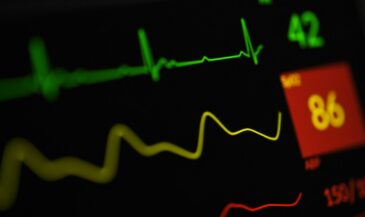
A 10-minute standing test allows clinicians to monitor blood pressure and heart rate as the person moves from lying down to standing. The characteristic adult pattern is an increase of at least 30 beats per minute within 10 minutes of standing without a significant blood pressure decrease that would meet the definition of orthostatic hypotension.
How Is POTS Treated?
POTS treatment usually focuses on helping improve circulation, support blood volume, reduce symptoms, and make upright activity more tolerable.
Common medical treatments for POTS described in the supplied medical sources include:
- Hydration: Increased fluid intake may help support circulating blood volume.
- Salt intake: Additional dietary salt may be recommended for appropriate patients under medical guidance.
- Compression: Waist-high compression garments can help reduce lower-body blood pooling.
- Physical activity: Carefully structured rehabilitation may improve tolerance in some people with POTS.
- Medications for POTS: Depending on the patient, physicians may prescribe medications such as fludrocortisone, midodrine, or beta-blockers.
Researchers are also studying medications such as pyridostigmine and investigating more individualized treatment strategies. Because many POTS patients have exercise intolerance or other complicating factors, recommendations need to be personalized.
People who have POTS often use several approaches together to manage symptoms. Some strategies help reduce symptoms, and many people improve over time, but symptoms may persist in others. There’s no cure for POTS currently established in the supplied sources, so claims that chiropractic or any single intervention can cure the condition would go beyond the evidence.
What Is POTS in Chiropractic and How INSiGHT Scanning Supports Neurological Analysis
Now we get to the part of what is POTS that matters specifically to the Neurologically-Focused Chiropractor. POTS patients already have a condition defined partly by autonomic regulation. The opportunity is not to use chiropractic technology to re-diagnose POTS. The opportunity is to objectively analyze the broader nervous system performance story within chiropractic scope.
POTS stands as a clear reminder that nervous system regulation is not an abstract idea. Standing changes blood flow. The body must respond. Blood vessels must adjust. Heart rate must change appropriately. The brain still needs adequate circulation. That is an adaptation story, and it gives chiropractors a useful framework for explaining why objective neurological analysis matters.
neuroPULSE and Autonomic Adaptability
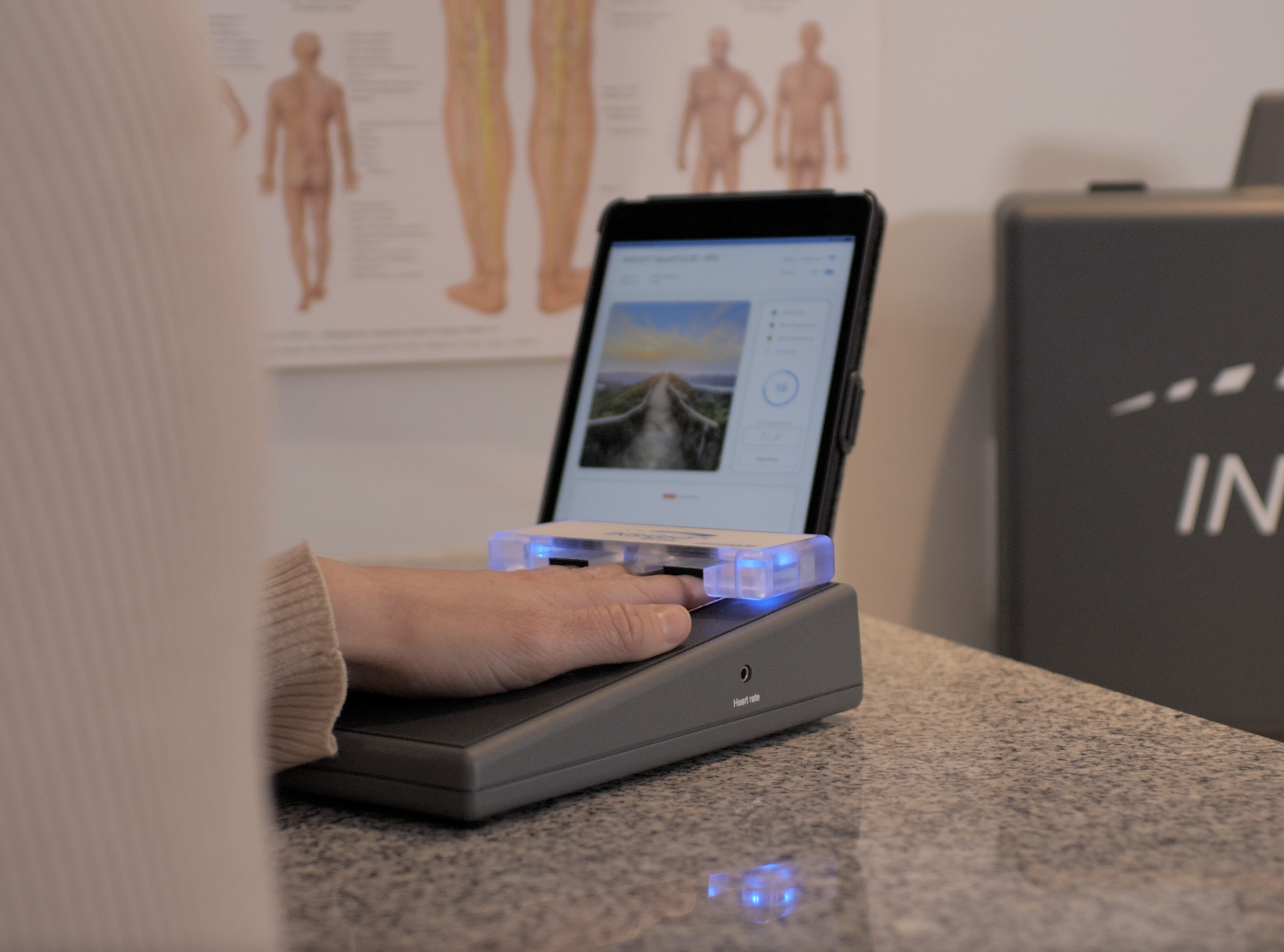
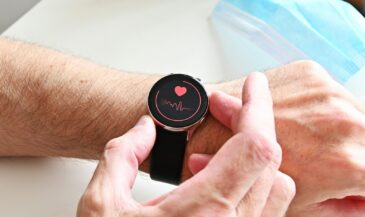
INSiGHT neuroPULSE analyzes Heart Rate Variability, or HRV. Heart rate tells us how often the heart beats. HRV looks at the beat-to-beat variation between those beats and provides information about autonomic activity, adaptability, recovery, and reserve.
That distinction is critical. A POTS diagnosis depends on the increase in heart rate that occurs with posture. neuroPULSE looks at a different aspect of autonomic nervous system performance. It cannot be used to diagnose POTS or say whether a person has POTS.
What it can do is give the chiropractor objective analysis of autonomic performance that can be considered alongside the chiropractic examination, history, and the patient’s existing medical care.
neuroTHERMAL and Autonomic Patterns Along the Spine
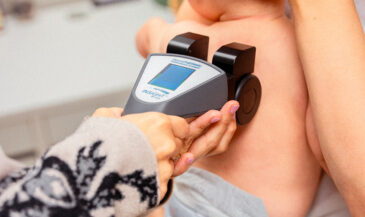
The INSiGHT neuroTHERMAL performs a fast full spine nerve system scan and analyzes paraspinal temperature regulation patterns. Since autonomic activity influences blood vessel tone and skin temperature, neuroTHERMAL provides another view of autonomic regulation along the spinal region.
We are not looking for a special “POTS pattern” on a thermal scan. We are establishing objective neurological findings and looking at how those patterns fluctuate over time.
neuroCORE and the Somatic Side of the Story
INSiGHT neuroCORE analyzes electrical activity in the paraspinal muscles. It helps chiropractors look at postural tension, symmetry, motor tone reactions, compensation, and energy expenditure.
That matters because autonomic function does not exist in isolation from the rest of the nervous system. A complete chiropractic neurological examination can consider autonomic adaptability, postural energy use, and deeper regulation patterns together.
INSiGHT neuroTECH and Synapse Software Bring the Findings Together
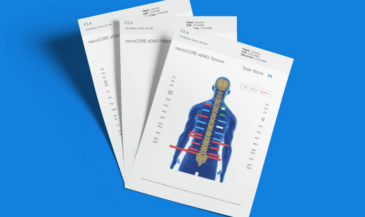
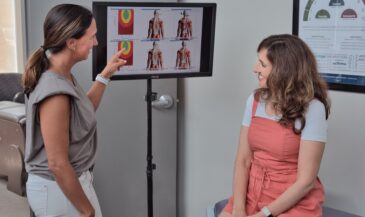
INSiGHT neuroTECH and Synapse software bring neuroPULSE, neuroCORE, and neuroTHERMAL findings into scan views and reports that are easier for patients to understand. This is neuroTECH’s 3 dimensional analysis: autonomic adaptability, postural energy patterns, and deeper autonomic regulation along the spine.
The chiropractor can establish a baseline, assess response, and follow trajectory over time. Synapse helps organize the objective exam data, but it does not create the care plan. The chiropractor combines history, examination findings, neurological analysis, patient goals, and professional judgment to determine the care plan.
For patients with POTS, that distinction is especially important. They may already be tracking heart rate and blood pressure, taking medications, seeing specialists, or learning how to manage symptoms. Chiropractic should not create more confusion. Neurological scanning should create clarity.
What POTS Can Teach Chiropractors About Nervous System Performance
When we ask what is POTS, the simplest answer is that it is a form of dysautonomia characterized by orthostatic intolerance and an excessive heart rate increase when upright. But for the chiropractor, there is a bigger lesson sitting underneath that definition.
Standing is an ordinary event that demands extraordinary coordination. Gravity changes circulation. Blood vessels respond. Blood pressure and heart rate must adapt. The nervous system has to organize the whole response without conscious instruction.
People with POTS make that normally invisible process easier to appreciate. The goal is not to suggest chiropractic can treat POTS as a medical diagnosis. The goal is to understand how important nervous system adaptability is to everyday performance.
Symptoms Matter, but Regulation Tells a Bigger Story
Patients have language for dizziness, fatigue, brain fog, palpitations, and headaches. They rarely arrive talking about adaptive reserve, autonomic regulation, postural tension, or nervous system performance.
That is where the Neurologically-Focused Chiropractor can help. Symptoms matter, but they are not the whole story. Objective neurological analysis allows the doctor to examine chiropractic findings beyond how the patient feels on a single day.
Keep POTS Diagnosis and Chiropractic Analysis in Their Proper Lanes
We do not need to say chiropractic is a cure for POTS. We do not need to claim that vertebral subluxation is the universal cause of POTS. We should not suggest that neuroPULSE, neuroCORE, or neuroTHERMAL can diagnose the condition.
What we can do is practice excellent chiropractic. Perform a thorough chiropractic examination. Analyze nervous system performance objectively. Analyze neurological signs and scan data for dysregulated patterns. Apply appropriate adjustments based on the complete clinical picture. Re-scan and observe how neurological patterns fluctuate over time.
Make the Invisible Easier to Understand
The final lesson in what is POTS is really a lesson about adaptation. The nervous system is constantly responding to posture, movement, exertion, recovery, digestion, temperature, and the demands of daily life.
INSiGHT scanning technology gives chiropractors a way to make parts of that performance story visible. Not to diagnose POTS. Not to replace medicine. Not to promise a cure. But to give the chiropractor objective analysis and give the patient a clearer way to understand what their nervous system is expressing.
When patients can see their nervous system status in living color, where neurological distress may be building, how well they are adapting, and how those patterns fluctuate under care, the conversation becomes clearer. They begin to understand that chiropractic is about more than today’s symptom.
And once a patient understands the why behind their care, they stop counting visits and start valuing results.