
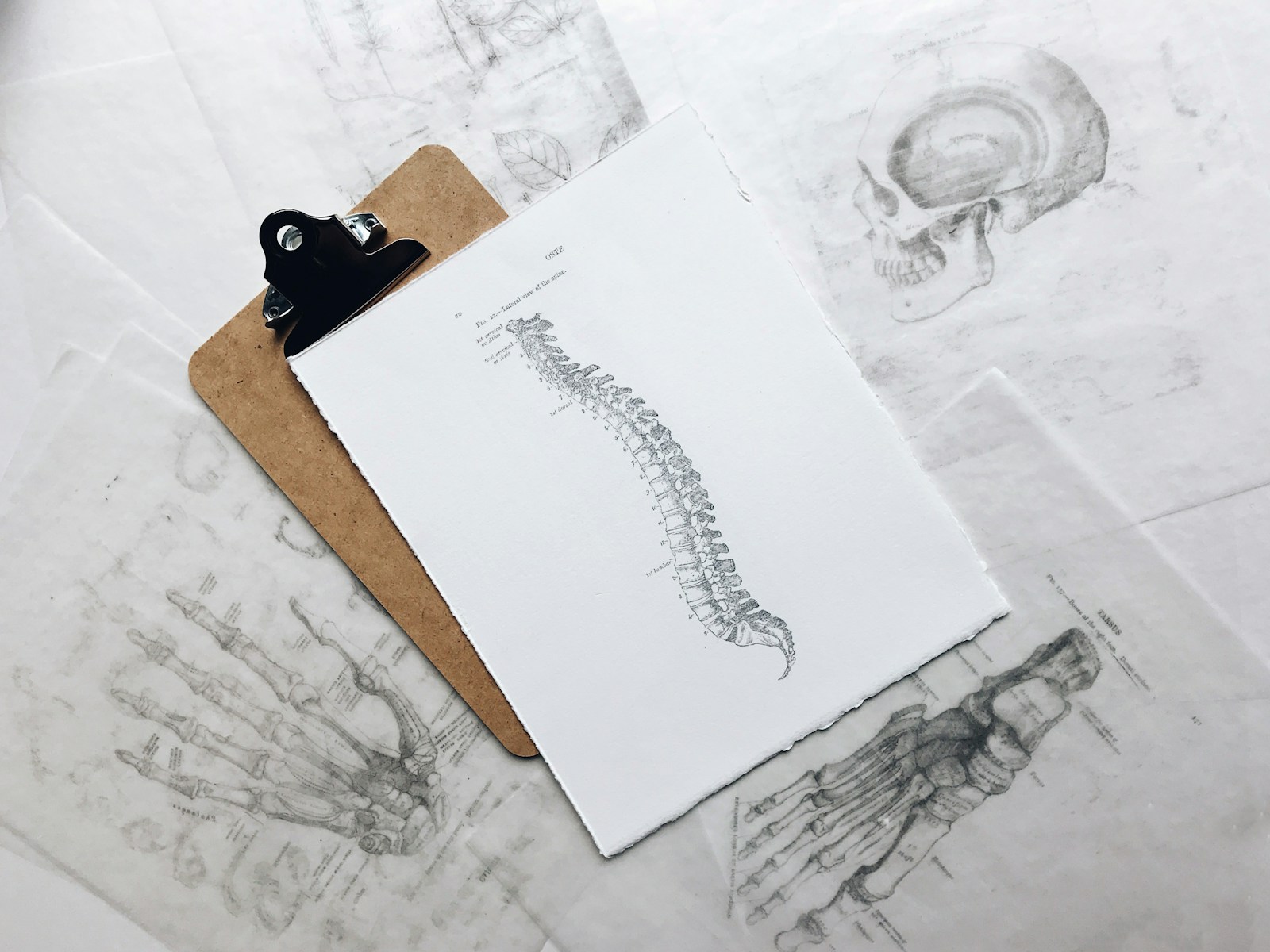
When viewed from the side, the spine of an adult has a series of natural spinal curves that create a gentle S-shaped profile. The cervical and lumbar regions curve inward, while the thoracic and sacral regions curve outward. Those spinal curves are not mistakes that need correcting. They are part of the remarkable engineering that allows the spine to support us, move with us, absorb forces, and adapt to the physical demands of everyday life.
For chiropractors, however, the interesting question is not simply whether a curve in the spine looks normal. It is what that finding means in the context of the person sitting in front of us. Structure matters. So do movement, posture, symptoms, adaptation, and nervous system performance. Understanding the importance of spinal curves gives us a valuable starting point. Knowing when to look beyond spinal curvature gives us a much more complete clinical picture.
1. What Are the Normal Spinal Curves of the Spine?
If you look at a healthy spine from the front or back, the spine appears relatively straight. Turn that same person to the side and the picture changes. The normal spinal curves become visible, creating the characteristic S-shaped profile of the spinal column.
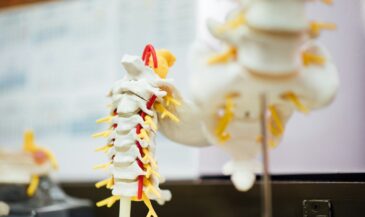
The spine has four primary curves. These four curves allow the spine to be both stable and mobile. Rather than thinking about a healthy spine as a rigid stack of bones, it is more useful to picture a dynamic structure built to carry load while still allowing the body to move.
Cervical, thoracic, lumbar, and sacral curves
Each region contributes a different curve to the overall shape of the spine:
- Cervical: The cervical spine in the neck normally forms an inward curve. This is called lordosis, or more specifically cervical lordosis.
- Thoracic: The thoracic spine through the middle and upper back forms an outward curve. This normal kyphotic shape is known as thoracic kyphosis.
- Lumbar: The lumbar spine in the lower back curves inward again. This lordotic curve is known as lumbar lordosis.
- Sacral: The sacral spine curves outward, completing the series of distinct curves seen through the spine.
Put these regions together and you get the natural S curve of the adult spine. The curves alternate between lordotic and kyphotic orientations as you move from the neck toward the pelvis.
Kyphosis and lordosis are not automatically disorders
This is an important distinction because patients frequently encounter the words lordosis and kyphosis online and assume they describe a problem.
They do not. Kyphosis and lordosis describe the direction of normal spinal curves. A lordotic curve bends inward, while a kyphotic curve bends outward. Problems may arise when the degree of curvature becomes unusually increased or reduced, when there is a loss of curvature, or when a curve reverses from its expected orientation.
The exact size and appearance of spinal curves can also vary from person to person. There is no reason to assume that every individual must conform to one visual template for the formation of an ideal spine. For the chiropractor, a structural measurement becomes more meaningful when it is considered alongside the patient’s history, examination, symptoms, function, and other objective findings.
2. The Importance of Spinal Curves in Chiropractic Biomechanics
Why is the ideal spine not shaped like a perfectly straight column?
Because human beings are not statues. We walk, bend, rotate, lift, reach, sit, run, and carry loads. Even standing quietly requires the body to continually manage gravity. The natural curvature of the spine helps the body handle these demands while maintaining a useful balance between mobility and stability.
Think about the difference between a rigid pole and a spring. A rigid pole can carry load, but it has relatively little ability to adapt when forces arrive from different directions. The curved architecture of the spine gives the body more options. Spinal curves contribute to shock absorption and help distribute mechanical forces through the vertebra, disc, muscles, ligaments, and surrounding tissues.
That is one reason curves are important for more than appearance. A healthy spine naturally has curves because the spine needs to manage movement and load rather than simply remain straight.
Each spine curve has a different job
The cervical region supports the head while maintaining enough mobility to look up, down, and around us. The cervical lordosis portion of the spine exists in an area where mobility and stability have to coexist throughout the day.
The thoracic region has a different job. It works closely with the rib cage and provides considerable stability through the trunk. The normal kyphosis curve through the upper back is therefore part of healthy spinal architecture, not something that should simply be straightened.
The lumbar region faces yet another set of demands. The lumbar curve sits beneath the spinal regions above it and handles substantial mechanical forces during standing, walking, bending, lifting, and twisting. The vertebrae and discs of the lower back are built differently from those in the neck because their jobs are different.
When one curve changes, the rest of the body may adapt
The spine functions as one connected structure. When the position or shape of one region changes meaningfully, mechanical demands elsewhere may change as well. The body is remarkably good at maintaining balance, keeping the eyes level, and finding ways to continue moving. Sometimes that involves compensatory positioning elsewhere in the spine.
This does not mean that every altered spine curve creates a predictable chain reaction or inevitably causes back pain. Human biomechanics are far more complex than that. It does explain why chiropractors often examine the entire spine rather than focusing exclusively on one painful area or one vertebra.
Posture can offer useful clues too. Forward head carriage, rounded shoulders, or altered pelvic positioning may accompany changes in spinal mechanics. But posture is information, not a diagnosis. A photograph cannot tell us everything about health, just as looking at the back of the spine cannot tell us everything about how the nervous system is performing.
This is where good chiropractic reasoning matters. We want to understand spinal curves without becoming trapped by the structure alone.
Learn more about INSiGHT scanning?
Fill this out and we’ll get in touch!
"*" indicates required fields
3. When Spinal Curvature Changes: Lordosis, Kyphosis, and Scoliosis
Patients often hear lordosis, kyphosis, and scoliosis mentioned together and assume all three are spine disorders. We have already established why that is not quite right.
Lordotic and kyphotic spinal curves are normal when they occur in their expected regions. The clinical conversation changes when there is excessive curvature, a meaningful reduction or reversal of a normal curve, or an abnormal lateral curving of the spine.
For chiropractors, identifying the curvature is only the beginning. We also want to know why it is present, whether it is structural or functional, whether it is progressing, how the person moves, and how the finding relates to the rest of the examination.
Changes in lordosis
The cervical and lumbar regions normally have lordotic curves. In some people, the inward curvature becomes more pronounced. In others, the normal curve may become reduced or reversed.
Excessive lumbar lordosis is sometimes called hyperlordosis or “swayback.” The appearance may include a more pronounced inward lumbar curve along with changes in overall posture. Some people experience lower back discomfort, stiffness, or muscular fatigue, while others may have a noticeable curvature with few symptoms.
The same principle applies to cervical lordosis. Changes in the cervical curve may be seen alongside altered head and neck positioning, including forward head posture. But the appearance of a curve does not automatically tell us how a person feels or functions.
When thoracic kyphosis becomes excessive
The thoracic region is normally kyphotic. When the outward curve becomes unusually pronounced, it may be described as hyperkyphosis.
Patients may encounter the older term “hunchback,” but that label tells us very little about why the curvature in the upper spine exists. There are different forms of kyphosis, including postural, Scheuermann-type structural, and congenital presentations. Their causes and clinical implications are not interchangeable.
That is why identifying an abnormal curve is not the same as understanding it. Age, history, mobility, symptoms, progression, and physical examination findings all matter. Significant structural findings may also require collaborative assessment with another healthcare professional or spine surgeon.
How scoliosis differs from normal spinal curves
Scoliosis deserves its own distinction because it is not simply an exaggerated lordotic or kyphotic curve.
When viewed from the front or back, scoliosis involves an abnormal lateral curvature. Structural scoliosis also involves vertebral rotation, making it a three-dimensional condition rather than simply a spine shaped like a C when viewed from one direction.
An X-ray may be used when clinically appropriate to assess structural curvature and calculate a Cobb angle. A lateral spinal curvature of approximately 10 degrees or greater is generally used as the radiographic threshold for scoliosis. Curves less than 20 degrees may still require appropriate clinical monitoring depending on factors such as age, skeletal maturity, progression, and individual presentation.
For people with scoliosis, the existence of the curve alone does not determine the appropriate management. Curve magnitude, location, age, progression, skeletal maturity, symptoms, and function can all matter.
How chiropractors evaluate changes in spinal curvature
No single examination finding tells the whole story. Depending on the patient’s presentation, a chiropractic evaluation may include:
- Health history: Understanding symptoms, previous injuries, development, lifestyle, and relevant health history.
- Postural and movement assessment: Looking at how the patient stands, moves, bends, and adapts to load.
- Physical examination: Range of motion, palpation, orthopedic testing, neurological testing, and other clinically appropriate procedures.
- Structural assessment: Imaging may provide additional information about spinal alignment and the curvature of the spine when clinically indicated.
- Functional assessment: Objective neurological information can add another dimension that cannot be determined from spinal structure alone.
Chiropractic care may be part of managing patients with altered spinal mechanics, but chiropractic adjustments should not be presented as a guaranteed way to produce one ideal spine curve. Depending on the presentation, management could involve chiropractic care, exercise or rehabilitation, observation, bracing, referral, or specialist assessment.
The same caution applies when discussing long-term chiropractic care. The purpose should not be to promise that every structural curve will be permanently changed. Good care begins by understanding what is clinically relevant for the individual patient.
4. Beyond the Spine Curve: Adding INSiGHT Neurological Scanning to Chiropractic Care
Here is where the conversation about spinal curves gets especially interesting for me.
Chiropractors have always been interested in structure. We look at the spine, how it moves, how its segments relate to one another, and how the person organizes themselves around it. Techniques such as Chiropractic BioPhysics have also contributed to a profession-wide conversation about spinal alignment and structural measurement.
But if we stop at structure, we risk making an assumption I have never been comfortable with: that what the spine looks like automatically tells us how the nervous system is functioning.
It doesn’t.
A structural image and a neurological scan answer different questions
Structural imaging can provide useful information about vertebral relationships, alignment, healthy curvature, and changes in spinal curves. What it cannot directly measure is nervous system performance.
Likewise, someone can have a substantial structural finding without experiencing a corresponding level of symptoms. Another person may have significant functional concerns even though the shape of the spine does not immediately look dramatic.
So rather than asking only, “What does this curve look like?” I believe a neurologically focused chiropractor should also ask, “What else can we objectively measure about this person?”
That is why neurological scanning can be such a valuable addition to the chiropractic examination.
How INSiGHT Scanning adds another layer
INSiGHT Scanning is designed to give chiropractors objective information about nervous system performance. It does not diagnose scoliosis, hyperlordosis, hyperkyphosis, or structural pathology, and it does not replace structural imaging when imaging is clinically appropriate.
It measures something different.
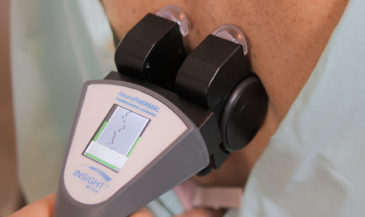
The INSiGHT neuroTECH brings together three scanning technologies:
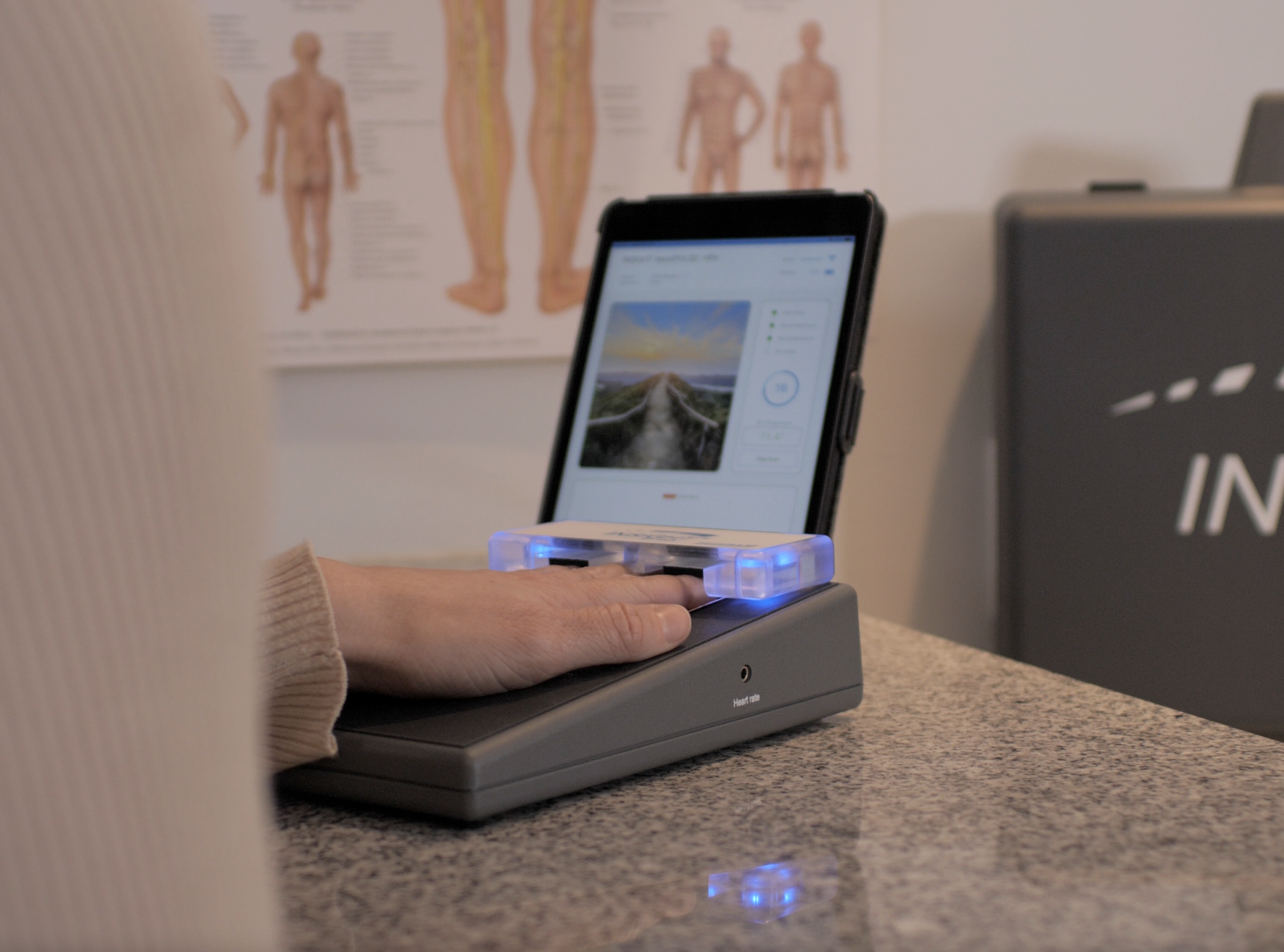
- neuroPULSE™: Uses heart rate variability, or HRV, to provide information about neurological reserve and adaptability.
- neuroCORE™: Uses surface electromyography, or sEMG, to measure patterns of paraspinal muscle activity, symmetry, and energy use.
- neuroTHERMAL™: Measures paraspinal temperature patterns to add information about patterns of neurological regulation along the spine.
That distinction becomes particularly valuable when discussing spinal curves. An image can show us architecture. INSiGHT Scanning lets us ask another question about the person living inside that architecture: How is their nervous system performing?
From a spinal snapshot to an objective neurological baseline
A first examination gives us a starting point. With INSiGHT Scanning, chiropractors can establish objective baseline neurological findings and compare those findings during later progress examinations.
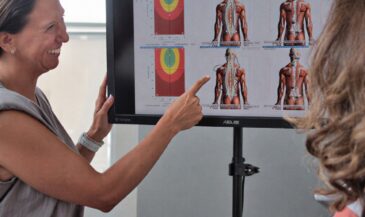
The INSiGHT software (powered by Synapse) transforms scan findings into visual reports that can support the Report of Findings and subsequent re-examinations. The CORESCORE brings the three neuroTECH perspectives together into a clear reporting framework, helping the doctor communicate where the patient started and compare neurological findings over time.
The technology does not decide what care a patient needs. INSiGHT provides objective examination data and reports. The chiropractor builds the care plan by bringing those findings together with history, physical examination, structural information, clinical judgment, and the individual patient’s needs.
Technology should strengthen clinical reasoning, not replace it.
Helping patients see more than the curve
Images of spinal curvature can be powerful because patients immediately see them. Show someone an unusual curve and their eyes naturally go straight to it. But the conversation can become misleading if we jump from “Your spine looks like this” to “Therefore, this is exactly how your body must be functioning.”
Patients are more complex than their pictures.
Objective neurological scanning gives chiropractors another way to build the clinical story. We can discuss what the patient is experiencing, what we found during the examination, which structural findings matter, what neurological scans are showing, and what objective findings we will follow over time.
At the progress examination, we can come back to those measurements: Where did we start? What has changed? What has remained? How does that compare with what the patient is experiencing now?
That is a richer conversation than simply pointing to the curves in your spine and declaring them good or bad. Structure and function are not competing ideas. They are different windows into the same patient.
5. A Healthy Spine Is More Than the Shape of Its Curves
There is a simple idea worth remembering: a healthy spine is supposed to have spinal curves.
The cervical and lumbar regions normally curve inward, while the thoracic and sacral regions curve outward. Those spinal curves help the spine manage weight, movement, balance, and mechanical forces. A perfectly straight spine is not the definition of normal anatomy.
At the same time, changes in spinal curvature deserve thoughtful evaluation. Increased lordosis, excessive kyphosis, loss of curvature, or scoliosis can provide meaningful structural information. But a structural finding does not automatically tell us whether someone will have pain, how well their nervous system is functioning, or what care they need.
That is why maintaining a healthy spine cannot simply mean chasing the appearance of one theoretical ideal. We want to ensure the spine and the person attached to it are assessed in context.
Good chiropractic assessment looks wider. It considers history, structure, mechanics, movement, symptoms, neurological findings, function, and change over time. For the neurologically focused chiropractor, INSiGHT Scanning adds objective information that helps make nervous system performance visible and measurable alongside the rest of the examination.
A spinal curve is something we can see. In many cases, it is something we can measure. But the person attached to that spine is where the real clinical conversation begins.
The better question is not simply, “What shape is the spine?”
It is, “What does this finding mean for this person, how are they functioning, and what can we objectively measure as we move forward?”
That is where chiropractic examination becomes more than a picture of the spine. And it is where INSiGHT neurological scanning can help chiropractors see a much bigger story.