

It is tempting to put all of that under one familiar label: headache. But for a chiropractor, location is only the beginning of the story. A headache at the base of your skull can involve several different patterns, including tension headaches, a cervicogenic headache, migraine, or occipital neuralgia. The overlap is exactly why the examination matters.
And this is where chiropractic has an important role. Instead of simply asking how to relieve pain, we can ask a better question: What is happening through the skull and neck, particularly the upper cervical region, that may be contributing to what this patient is experiencing?
Why a Headache at the Base of the Skull Deserves a Closer Look
When a headache starts at the base of the skull, the upper neck deserves attention. This region contains a remarkable amount of neurological and mechanical activity in a relatively small space. The cervical spine supports the head, provides substantial neck movement, and sits close to the spinal cord and nerves that carry information between the brain and body.
That does not mean every headache in the back of the head originates in the neck. Migraine is a neurological condition, for example, and there are many medical causes of headache that have little to do with the cervical region. But there are also headache patterns in which structures and nerves around the neck are directly involved.
A useful starting point is distinguishing among a few common presentations:
- Tension headaches: These headaches often feel like pressure, tightness, or a dull ache and may be associated with postural tension around the neck and shoulders.
- Cervicogenic headache: This is a type of headache in which the source is in the cervical region, with referred pain experienced in the head.
- Occipital neuralgia: This involves irritation or injury affecting an occipital nerve and can produce sudden, sharp, shooting, or electric sensations.
- Migraine: Migraine can involve throbbing pain, nausea, sensitivity to light and sound, and other neurological signs. Some migraine presentations also involve the neck.
The location alone does not make the diagnosis. That distinction is important, especially when a severe headache, a new or unusual presentation, neurological deficits, fever, trauma, or other concerning findings suggest the need for medical evaluation.
Occipital Neuralgia and Pain at the Base of the Skull
Occipital neuralgia is one of the first conditions worth considering when someone describes a sharp headache that starts at the back of the head and travels upward.
The occipital nerves provide sensation across much of the posterior scalp. The greater occipital nerve is primarily associated with C2, while the lesser and third occipital nerves contribute to sensation in nearby areas. When one of these nerves becomes irritated, compressed, or injured, the resulting occipital neuralgia pain can feel dramatically different from an ordinary tension-type headache.
Patients may describe it like a sharp electrical jolt. Others describe burning, piercing, aching, or throbbing pain. The discomfort may start near the base of the skull and radiate toward the top of the head, around the ear, or sometimes behind the eye.
Common signs associated with occipital neuralgia can include:
- Sharp or shooting sensations: The patient may say it feels like a sharp electrical shock.
- Scalp tenderness: Even brushing the hair or resting the head against a pillow may trigger discomfort.
- One-sided or bilateral symptoms: The pattern can affect one or both sides.
- Sensitivity to movement: Turning the head can aggravate irritated nerves.
- Radiating sensations: The patient may feel pain traveling from the upper neck through the back of your head and toward the scalp.
- Tenderness around the nerve: Pressure near the affected occipital region may reproduce the patient’s familiar symptoms.
Occipital neuralgia is considered a headache disorder, but it is different from migraine. That difference matters because a patient who says, “I have migraines,” may actually be describing another type of pain altogether.
Learn more about INSiGHT scanning?
Fill this out and we’ll get in touch!
"*" indicates required fields
What Causes Occipital Neuralgia?
There is not always one identifiable cause. Occipital neuralgia can develop when there is pressure, injury, or irritation affecting an occipital nerve somewhere along its course.
The nerves travel from the upper cervical region through tissues at the back of the head before reaching the scalp. That creates several opportunities for nerve irritation.
Potential causes occipital neuralgia may be associated with include:
- Trauma involving the head or neck
- Tight muscles surrounding the nerve
- Cervical disc problems
- Osteoarthritis or other forms of arthritis
- Postural tension and mechanical strain
- Inflammation or infection
- Other conditions that may affect the nerve or surrounding tissues
Patients sometimes describe this as a “pinch” in the neck. That language is understandable, but as chiropractors, we want to look deeper than a simple pinched-nerve explanation.
What is happening with cervical motion? Is there significant postural tension? What does the neurological examination reveal? Is the upper cervical region involved? Are there findings that require referral?
Those are better questions than assuming every headache has the same cause.
Cervicogenic Headache and the Cervical Spine
A cervicogenic headache is different because the head symptoms are referred from structures in the neck. In other words, cervicogenic headaches originate from the cervical region even though the patient experiences the discomfort in the head.
That can be confusing for patients. They feel the headache, so naturally they assume the problem must be somewhere inside the head. But referred pain does not always work that way.
A cervicogenic headache often starts in the neck and spreads toward the head. The patient may notice a stiff neck, restricted cervical motion, or pain and stiffness that become more noticeable with certain positions or activities. Symptoms may travel from the neck area into the back or side of the head and sometimes behind the eyes.
A few clues may raise suspicion of cervical involvement:
- The headache that starts with certain neck positions or movements
- Restricted or uncomfortable neck movement
- Tenderness through the upper cervical region
- Symptoms that originate in the neck and spread toward the head
- A history of neck injury or sustained postural loading
- A consistent one-sided pattern involving the head and neck
Cervicogenic headaches can be challenging because their presentation can overlap with other headache categories. That is why treating cervicogenic headaches begins with correctly identifying what is contributing to the presentation rather than simply chasing the location where the patient happens to feel symptoms.
Occipital Neuralgia vs. Migraine
Migraine and occipital neuralgia can look surprisingly similar from across the exam room.
Both can produce significant head pain. Both can involve the back of the head. Both can sometimes produce discomfort behind the eye, and light sensitivity may occur. But when you listen carefully to the patient’s description, differences begin to emerge.
Occipital neuralgia pain is commonly described as sharp, shooting, burning, or electric. Episodes may come suddenly and may be triggered by touching the scalp, turning the head, or other seemingly minor movements.
A migraine more commonly lasts longer and may throb. It may be accompanied by nausea, sensitivity to light, sensitivity to sound, or other neurological signs. A patient may be particularly bothered by sensitivity to light and sound or may be accompanied by nausea during an episode.
The challenge is that real patients do not always read the textbook.
Someone can have migraine and cervical dysfunction at the same time. Migraine may involve neck symptoms. Occipital neuralgia may coexist with another headache condition. Headaches often require more investigation than asking the patient where it hurts.
That is why a comprehensive headache assessment should begin with history and examination rather than assumptions.
How Is Occipital Neuralgia Diagnosed?
Having occipital neuralgia diagnosed requires more than finding tenderness at the base of the head.
A medical provider will typically review the patient’s history, examine the head or neck, evaluate the pattern and triggers, and determine whether other conditions need to be ruled out. Palpation around the occipital nerves may reproduce familiar symptoms.
An occipital nerve block may also be used diagnostically. With a nerve block, a local anesthetic is placed around the suspected nerve. Temporary improvement following an occipital nerve block can provide additional diagnostic information.
Depending on the presentation, imaging or other testing may be appropriate to investigate a suspected underlying cause.
This is where chiropractic responsibility matters. If the presentation does not fit an uncomplicated mechanical or neurological pattern, or if the history raises concern for a secondary cause, the patient deserves the appropriate referral.
A headache may occasionally be associated with a more serious medical situation. A sudden severe headache, significant trauma, fever, new neurological changes, confusion, weakness, visual changes, or a major departure from the patient’s usual headache pattern deserves prompt medical attention.
Why the Upper Cervical Region Matters
For the chiropractor, one of the most interesting parts of this conversation is the relationship between the base of the skull and the upper cervical spine.
C1 and C2 sit immediately below the skull. C2 is especially relevant to the occipital conversation because of its neurological relationship to the greater occipital nerve. This region is also close to the top of the spinal cord and is responsible for a considerable amount of head motion and sensory input.
When you think about the upper cervical region, do not reduce it to a single vertebra being “out.” Look at the whole functional picture.
A patient may have altered motion, postural tension, guarding, compensation, or neurological interference around the upper cervical spine. Those findings can coexist with headaches in the back of the head, but they need to be assessed rather than assumed to be causal.
That is the difference between symptom chasing and Neurologically-Focused Chiropractic Care.
We are not saying every migraine comes from the neck. We are not saying every case of occipital neuralgia is chiropractic in origin. We are saying that when a headache starts at the base of the head and the cervical region is part of the presentation, it makes sense for a chiropractor to carefully evaluate how that region and the nervous system are functioning.
When Postural Tension Becomes Part of the Headache Story
You cannot talk about the back and neck without talking about posture.
Modern life asks people to spend remarkable amounts of time looking downward. Phones, laptops, driving, prolonged sitting, and repetitive work can keep the head forward and place ongoing demand around the neck muscles and cervical spine.
The SEO phrase patients commonly search is muscle tension, but in the office I prefer to think in terms of postural tension. It keeps us from reducing the problem to a tight muscle that simply needs to be rubbed until it relaxes.
The better question is why those muscles are tight.
Are they compensating? Is the head being carried forward? Is cervical movement restricted? Is the nervous system continually recruiting extra motor activity to stabilize the region?
This is also where other approaches may play a role. Depending on the patient’s situation, medical providers may recommend medication such as ibuprofen, heat, massage, physical therapy, or specific physical therapy exercises. There is a place for symptom management and rehabilitation when clinically appropriate.
But for the chiropractor, the examination should still answer the larger functional question: What patterns are present through the cervical region and nervous system, and how are they fluctuating over time?
How Different Headache Patterns Are Commonly Managed
There is no single way to treat every headache because headache is not a single condition.
A tension-type presentation, cervicogenic headache, migraine, and occipital neuralgia can require very different approaches. Even two patients with the same diagnosis may require different clinical management based on their history and findings.
Medical management of occipital neuralgia can include medications, anti-inflammatory approaches, nerve block procedures, injections, and in selected persistent cases, surgical procedures. Physical therapy may be used when mobility, posture, or musculoskeletal function is involved.
For a chiropractor, the goal should not be to compete with those approaches or promise that an adjustment is the one way to treat every presentation.
Our job is to determine whether chiropractic findings are present and whether those findings belong in the patient’s care plan.
When cervical dysfunction and neurological interference are identified, the chiropractor can build recommendations from the full examination. When something outside our lane is suspected, collaboration or referral is the right move.
That is good chiropractic.
How INSiGHT Scanning Adds a Neurological View to Headache Cases
This is where these cases get especially interesting to me.
A patient walks into your office talking about a headache. Their entire attention is fixed on the symptom. Your opportunity is to broaden the conversation from where they feel it to how their nervous system is performing.
INSiGHT scanning technology can help make that shift.
To be clear, INSiGHT scanning technology does not diagnose migraine, cervicogenic headache, occipital neuralgia, or the cause of a patient’s symptoms. It provides objective neurological exam data and reporting that support the chiropractor’s interpretation.
That distinction matters.
With INSiGHT neuroTECH scanning technologies and Synapse software, you can look at the patient from three complementary neurological perspectives:
- neuroCORE: Surface electromyography analyzes paraspinal muscle activity, symmetry, postural tension, and patterns of energy expenditure. In a patient with significant head and neck complaints, this can add objective information about how the motor system is organizing itself.
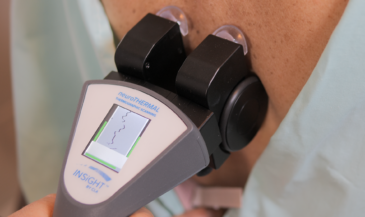
- neuroTHERMAL: A full spine nerve system scan analyzes paraspinal temperature patterns associated with autonomic regulation. Rather than relying solely on where the patient reports symptoms, you gain another objective view of nervous system status.
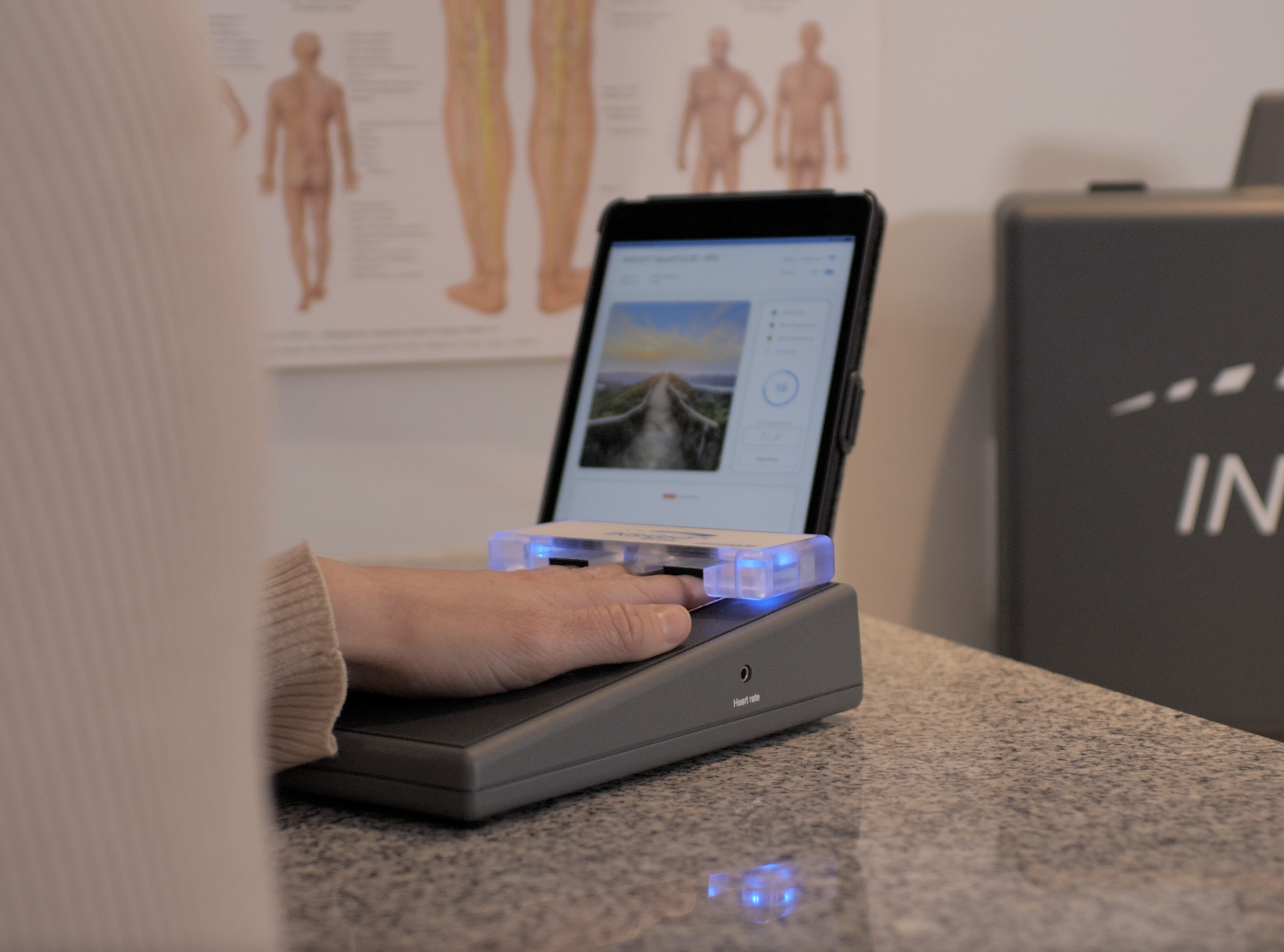
- neuroPULSE: Heart Rate Variability analyzes autonomic balance, adaptability, and reserve, broadening the conversation beyond the local neck complaint to how well the nervous system is adapting overall.
The scans do not tell you, “This patient has occipital neuralgia.” They do something different.
They help you see the nervous system story surrounding the presentation.
That is a much more responsible and useful role for neurological scanning.
From a Headache Complaint to Objective Neurological Findings
This is where a good report of findings can change the patient’s understanding of chiropractic.
The patient may have walked in thinking, “I need to get relief from this headache.” After a thorough examination, you can acknowledge that goal without allowing it to become the only metric that matters.
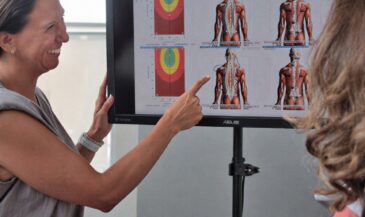
You can show the patient what you found.
If neuroCORE identifies substantial postural tension or inefficient motor patterns, show them. If neuroTHERMAL reveals autonomic patterns needing attention, explain what those scan views mean. If neuroPULSE suggests reduced adaptability, put that information into context.
Now the conversation becomes:
“You came in because of the headache, and of course we care about that. But I also want you to see what we found underneath the symptom. These scans give us a baseline of how your nervous system is performing. As we move through your care plan, we can come back and compare.”
That is a very different conversation from promising to make headaches disappear.
And Doc, patients understand the difference.
When you give them a shared reference point, they can understand why feeling different is important while still recognizing that symptoms alone do not tell the whole story.
Re-Scanning Helps Answer the Question Patients Eventually Ask
Eventually, every patient asks some version of the same question:
“How do we know?”
That is where baseline and progress scanning earn their place.
The initial scan gives you the starting point. A later scan lets you compare nervous system status instead of relying entirely on the patient’s memory of how they felt weeks ago.
Maybe their headache frequency has decreased. Good. Celebrate it.
But now look at the objective findings too. Is postural tension organizing differently? Are thermal patterns fluctuating? What is happening with adaptability and reserve? Is the broader neurological picture moving in a direction that makes sense alongside the patient’s experience?
The technology does not make that judgment for you. The chiropractor does.
INSiGHT scanning technology provides the objective analysis. You bring the examination, clinical reasoning, adjustment, interpretation, and care plan.
That is exactly how technology ought to fit into chiropractic.
Helping Patients See More Than the Headache
A headache at the base of the skull can have several explanations. It may be related to a tension-type pattern, cervicogenic headache, migraine, occipital neuralgia, or another situation entirely. The fact that two people point to the same spot does not mean the same thing is happening underneath.
That is why the examination matters.
When the presentation starts at the base of the head, involves the cervical region, or seems to radiate through the occipital distribution, chiropractors have an opportunity to look beyond the symptom without making promises the findings cannot support.
Listen to the patient’s story. Examine the cervical region. Recognize when medical referral is appropriate. Look at nervous system performance. Establish objective baseline data when neurological scanning is part of your practice. Then build the care plan from what you actually find.
Because the goal is not to convince a patient that every headache comes from the spine.
The goal is to help them understand their own neurological story more clearly.
When patients can see where they started, understand what you found, and compare that with what happens under care, chiropractic becomes about something much bigger than trying to find relief from the next headache.
It becomes a conversation about nerves, function, adaptability, and nervous system performance.