

And Doc, that is where the conversation gets interesting.
Because an upper cervical chiropractor does not simply look at the bones in the neck. This focused area of chiropractic opens a bigger conversation about the upper neck, the brainstem, the spinal cord, nerves and blood vessels, and the signals between the brain and the rest of the body. When a patient understands that, the conversation shifts from “Can you help my pain and headaches?” to “How well is my body communicating?”
What Does an Upper Cervical Chiropractor Do?
An upper cervical chiropractor is a doctor of chiropractic who pays special attention to the atlas and axis, also known as C1 and C2. These are the top two vertebrae of the spine, and they sit directly beneath the skull. The atlas is the first vertebra, the axis is the second, and together they form one of the most mobile and neurologically important areas of the body.
Upper cervical chiropractic is a focused type of chiropractic, not a separate profession. The doctor still evaluates the whole person, but places special attention on the upper cervical spine because of its relationship to posture, balance, movement, and nervous system function. That is why upper cervical care is often discussed differently than general spinal care.
The upper cervical chiropractor is not just trying to chase symptoms. The better goal is to focus on identifying and correcting tension, altered mechanics, and neurological interference that may be affecting the way the body adapts. Patients may come in asking about pain, but the chiropractor is looking for patterns.
Upper cervical chiropractic care is commonly described as precise, gentle, and highly specific. Some approaches use specialized imaging. Some use hand contacts. Others use instrument-assisted methods. The exact process depends on the doctor’s training, examination findings, and technique system.
For patients, the explanation can stay simple: an upper cervical chiropractor evaluates how the top two vertebrae may be influencing communication, posture, and overall function. For doctors, the opportunity is even bigger. Upper cervical work gives us a way to talk about chiropractic as a form of chiropractic care centered on function, not just symptoms.
Why the Upper Cervical Spine Matters to the Nervous System
The upper cervical spine sits right below the skull, close to the brainstem and spinal cord. That location alone makes it clinically important. The brain and the body communicate through pathways that travel through this region, and the nervous system is responsible for coordinating movement, posture, reflexes, adaptation, and regulation.
Here’s what most patients do not realize: the upper neck is not important only because it is close to the head. It matters because this area helps the body organize itself. The head rests on it. The spine moves from it. The body constantly gathers information from this region to help maintain balance and orientation.
The atlas and axis allow a remarkable amount of motion. That mobility is useful, but it also means the area can be influenced by injury, posture changes, sports impact, birth stress, repetitive strain, or years of accumulated neurological distress. When the upper cervical region loses normal motion or mechanical balance, compensation can show up through the shoulders, mid-back, pelvis, or even as lower back pain.
This is where chiropractors need careful language. A patient may talk about a misalignment. They may search online for misalignments in this area or misalignments in the upper cervical region. Those phrases help them describe what they feel, but the doctor understands the deeper issue is not simply a bone being “out.” It is the relationship between motion, tension, spinal alignment, neurological input, and adaptive capacity.
Proper alignment matters, but Neurologically-Focused Chiropractic Care goes further. It asks better questions. How is this person adapting? How much postural tension is present? How is the rest of the body compensating? How is the upper cervical region influencing the overall health conversation?
Learn more about INSiGHT scanning?
Fill this out and we’ll get in touch!
"*" indicates required fields
Common Reasons Patients Look for Upper Cervical Chiropractic Care
Patients usually do not walk in asking about autonomic balance or adaptive reserve. They come in with something they can name. They may say they have neck pain. They may talk about headache, migraine, vertigo, dizziness, back pain, tension headaches, jaw tightness, shoulder tension, or a sense that their body just feels off.
Some of these signs can debilitate a person’s routine. They may struggle to work, sleep, drive, exercise, or care for their family the way they want to. By the time someone searches for an upper cervical chiropractor, they are often looking for a more complete explanation than “just live with it.”
Common reasons patients ask about upper cervical care include:
- Neck pain: Stiffness, reduced mobility, or discomfort near the top of the neck.
- Headache and migraine: Recurring head symptoms that may involve the upper neck, posture, or neurological tension.
- Vertigo and dizziness: Balance-related concerns that may prompt a closer look at the upper cervical region.
- Postural tension: Forward head posture, shoulder tension, or upper back tightness.
- Back pain: Compensation patterns that may travel through the spine and affect movement.
- General health concerns: A desire for personalized care that looks at function, not just symptoms.
These concerns do not automatically mean the upper cervical region is the only cause of the problem. That would be too simplistic. But they do give the upper cervical chiropractor a good reason to evaluate the top of the neck, the full spine, and the patient’s functional patterns more carefully.
This is where the patient conversation needs to mature. Instead of saying, “We treat migraine,” a stronger chiropractic explanation is, “Let’s evaluate how your upper cervical region, posture, and nerve system are functioning, and see whether those patterns may be contributing to what you are experiencing.”
The old treatment plan conversation is not enough for today’s patient. They want to know what you found, why it matters, and how you will track progress. The care plan should come from the doctor’s examination, objective findings, patient goals, and response over time. That is how upper cervical chiropractic can support wellness, health and wellness, and better health without falling into symptom-chasing.
How Upper Cervical Chiropractic Techniques Differ From Traditional Chiropractic
Upper cervical chiropractic techniques are known for specificity. They often involve careful analysis, precise setup, and a low-force upper cervical adjustment. That is one reason many patients describe upper cervical care as gentle, focused, and surprisingly subtle.
That does not mean traditional chiropractic is less valuable. Traditional chiropractic has served millions of people through many different approaches. The distinction is that upper cervical methods place special emphasis on the atlas, axis, correction vectors, and the doctor’s analysis of the upper cervical region.
Some of the more recognized upper cervical methods include:
- NUCCA chiropractic: Often associated with mathematical analysis and a precise correction approach related to the alignment of the atlas.
- Blair Technique: Often associated with detailed evaluation of upper cervical joint structure and individualized correction.
- Atlas Orthogonal: Often associated with instrument-assisted correction using a light force.
Patients may describe this as a non-invasive approach or even a non-invasive treatment because it usually does not look or feel like forceful twisting. In more precise chiropractic language, the goal is not simply that the doctor focuses on aligning the neck. The goal is to evaluate tension, motion, compensation, and neurological interference, then deliver an adjustment that supports better function.
Patients may also search for the best chiropractor for this kind of work. That is understandable. Upper cervical correction requires training, attention to detail, and strong communication. A testimonial can help a patient feel more comfortable, but it should never replace a proper examination, objective findings, or the doctor’s clinical judgment.
The benefits of upper cervical care are best explained through function. The benefits of upper cervical chiropractic should not be reduced to “cracking the neck” or “putting a bone back.” The value is in the analysis, the adjustment, the follow-up, and the way chiropractic adjustments help the patient understand their body as an adaptive system.
Where INSiGHT Scanning Technology Fits Into Upper Cervical Chiropractic
An upper cervical chiropractor already understands why the upper neck matters. The bigger challenge is helping patients understand it without turning the report into a neurology lecture. That is where INSiGHT scanning technology fits beautifully.
Neurological scanning shifts the patient’s attention from bones and joints to nerves and performance. For upper cervical chiropractic, that shift is powerful. It supports the conversation that upper cervical care is not just about structure. It is about how the body is adapting, compensating, regulating, and communicating.
INSiGHT neuroTECH and Synapse software do not replace the doctor’s examination, imaging, upper cervical analysis, chiropractic techniques, or clinical judgment. They support the chiropractor with objective neurological data that helps make the invisible visible. That data gives the doctor a clearer way to explain why the upper cervical region may matter to overall well-being.
The INSiGHT neuroTECH brings three core technologies into the conversation:
- neuroCORE: Measures paraspinal muscle activity and helps reveal postural tension, asymmetry, energy expenditure, and compensation patterns.
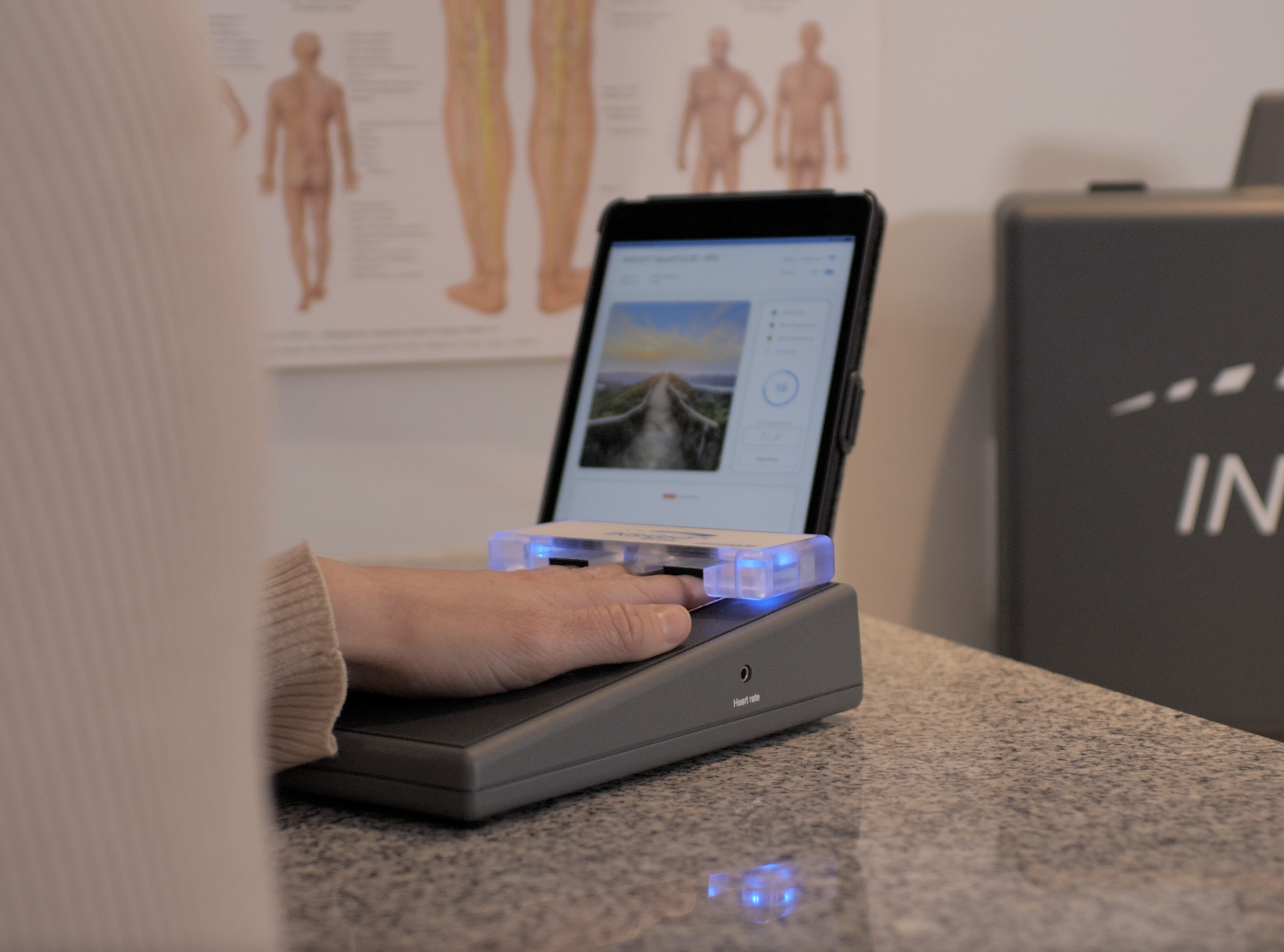
- neuroPULSE: Measures Heart Rate Variability to help analyze autonomic balance, adaptive reserve, and nervous system performance.
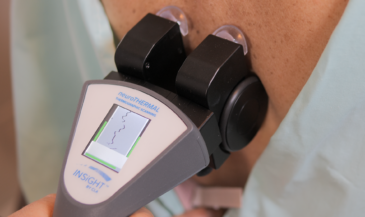
- neuroTHERMAL: Completes a full spine nerve system scan and analyzes thermal patterns connected to autonomic regulation.
- CORESCORE: Combines the findings into a simple neurological efficiency score patients can understand.
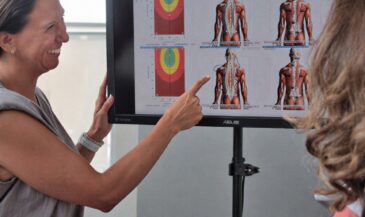
- Synapse software: Turns scan data into practical scan views and reports that support communication, re-exams, and care planning.
For an upper cervical chiropractor, this can strengthen the clinical conversation. A patient may understand an X-ray or posture photo, but they often need help seeing how their nerve system is responding. INSiGHT scanning can help show whether patterns appear local, compensatory, autonomic, postural, or full-spine.
That is especially helpful when patients feel better before the body has stabilized. Symptoms fluctuate. Motivation fluctuates. Understanding fluctuates. But when patients can see objective scan views, the conversation becomes less about guessing and more about tracking.
In practical terms, neurological scanning supports upper cervical care in three simple ways:
- Baseline: Establish the patient’s starting neurological profile before care begins.
- Progress: Re-scan to observe how patterns are changing under care.
- Communication: Use scan views to help patients understand why recommendations matter.
This is the bridge patients need. They may begin care because of symptoms, but they stay engaged when they understand the bigger neurological story. They stop asking only, “How do I feel today?” and begin asking, “How is my body adapting?”
Bringing Upper Cervical Chiropractic Back to the Nerve System
Upper cervical chiropractic carries a big idea: the top of the spine matters because the nerve system matters. The atlas, axis, upper cervical region, brainstem, spinal cord, and full spine are all part of a larger communication system that helps the body coordinate, adapt, and express life.
A patient may first search for an upper cervical chiropractor because they have symptoms. That is understandable. Symptoms get attention. But the deeper opportunity is helping that patient understand what is happening beneath the surface.
The future of chiropractic communication is not only telling patients that the upper cervical region matters. It is showing them how their body is functioning. It is helping them understand how posture, autonomic balance, compensation, and adaptive reserve fit together.
Upper cervical care can be a powerful form of care when it is precise, thoughtful, and connected to the whole person. INSiGHT scanning technology gives chiropractors a way to strengthen that care with objective neurological analysis, clearer reports, and a better patient experience.
When patients understand the why behind care, they stop counting visits and start valuing progress.
And Doc, that is exactly the kind of chiropractic conversation our profession needs more of.