

Most patients think migraine always means severe head pain. Many chiropractors were taught to expect the same familiar pattern: a throbbing headache, nausea, light sensitivity, and perhaps a visual aura. This presentation asks us to widen that picture. The dominant complaint may be vertigo, dizziness, motion sensitivity, or balance problems rather than a migraine headache.
That is what makes this presentation important for the chiropractic profession. The goal is not to label every dizzy patient with vestibular migraine. It is to recognize the pattern, refer appropriately, and examine how the nervous system organizes balance, posture, sensory input, and recovery. Objective neurological scanning can help reveal part of that functional story.
What Is Vestibular Migraine and Why Can It Make Patients Dizzy?
Vestibular migraine is a neurological condition that causes vertigo, dizziness, motion sensitivity, and balance problems. It is generally regarded as a type of migraine presentation, although researchers continue to study the mechanisms of migraine that connect head symptoms with vestibular function. Either way, there is a clear association of migraine disorders with altered balance and motion processing.
The word vestibular refers to the systems that help a person understand where they are in space. The inner ear supplies information about head movement and position, but the vestibular system depends on much more than the ear alone. The brain must combine signals from the inner ear, vision, proprioception, and other sensory pathways. When those signals are not being organized smoothly, a person may feel dizzy even while standing still.
The condition has also been described as migrainous vertigo, migraine-associated vertigo, migraine-related vestibulopathy, or migraine-associated vestibular symptoms. These names reflect a common clinical observation: migraine can affect the parts of the brain involved in balance, movement, and spatial orientation.
- Vertigo: The patient may feel as though the room is spinning or the body is moving.
- Imbalance: Walking in a straight line or turning the head may become difficult.
- Motion sensitivity: Cars, escalators, screens, crowds, or patterned floors may provoke symptoms.
- Migraine features: Light sensitivity, sound sensitivity, nausea, aura, or headache may occur.
One of the most useful facts for chiropractors to understand is that headache is not required. Some patients with migraine experience head pain during only part of their vestibular attacks. Others have a history of frequent migraine or migraine with aura but experience episodes of vertigo without a regular migraine headache.
The condition may tend to run in families, especially when there is a family history of migraine.
That is where the condition can be missed. A patient may assume the problem is coming entirely from the inner ear, neck, blood pressure, or vision. A careful history can reveal whether the dizziness is positional, visually triggered, spontaneous, or linked with other manifestations of migraine.
Neurological scanning does not diagnose vestibular migraine. Its value is in adding objective information about autonomic regulation, adaptive reserve, postural tension, and compensation. That helps the chiropractor move beyond a symptom-only conversation while keeping the clinical boundaries clear.
Vestibular Migraine Symptoms, Migraine Triggers, and Attack Patterns
The symptoms vary considerably. Even within the same patient, one episode may feel very different from the next. One migraine attack may involve obvious vertigo symptoms and nausea. Another may feel more like visual disorientation, imbalance, or a vague sense that the body is moving when it is not.
Vestibular migraine may occur before, during, or after other migraine symptoms. The relationship between the vestibular symptoms and the migraine features is often more useful than whether they happen at exactly the same moment.
Common Vestibular Symptoms
Patients may use several words for the same experience. They may say they feel dizzy, light-headed, off balance, unstable, or unable to trust their footing. Some episodes of vertigo interfere with driving, working, exercising, shopping, or travelling.
- Spinning or swaying: The patient may feel as if they or the environment are moving.
- Dizziness or balance problems: Standing and walking may feel uncertain.
- Motion sickness: A history of motion sensitivity may begin in childhood.
- Visual stimulation: Bright lights, flashing lights, traffic, screens, and busy patterns may aggravate the presentation.
- Associated symptoms: Nausea, vomiting, fatigue, brain fog, visual blurring, or difficulty finding words may occur.
- Ear complaints: Ear pressure or ringing in the ears may be reported, although meaningful hearing loss deserves closer evaluation.
The vertigo attacks may last from approximately five minutes to 72 hours under commonly used diagnostic criteria. In practical language, the attacks may last for minutes or days. Some patients experience repeated short bursts, while others have prolonged imbalance that continues after the most intense spinning settles.
Persistent postural perceptual dizziness is a separate condition involving ongoing unsteadiness, often worsened by movement or visually complex environments. It may coexist with migraine, but it is not the same situation.
Common Migraine Triggers
Migraine triggers are highly personal. One person may react strongly to sleep disruption, while another notices a relationship with skipped meals, hormones, or weather changes. Some attacks appear to be triggered by stress, while others follow the letdown after a demanding period.
- Sleep: Too little sleep, too much sleep, or an irregular schedule may become a trigger.
- Food and hydration: Skipping meals, dehydration, caffeine, chocolate, alcohol, or aged cheeses may contribute.
- Hormones: Menstrual cycles and other hormonal fluctuations may affect attack patterns.
- Environment: Bright light, flashing light, weather changes, and barometric pressure may play a role.
- Neurological distress: Fatigue, emotional demand, and poor recovery may lower tolerance.
Not every attack has an identifiable trigger. A headache journal can record what happened before the episode, which symptoms of vestibular disturbance appeared, how long the attack lasted, and whether aura, light sensitivity, nausea, or migraine pain occurred. Neurological scans add another layer by helping the chiropractor assess postural tension, autonomic balance, and adaptive reserve beyond one particular day.
Learn more about INSiGHT scanning?
Fill this out and we’ll get in touch!
"*" indicates required fields
Diagnosis and Treatment for Vestibular Migraine: Where Chiropractic Fits
Vestibular migraine is a clinical diagnosis. There is no single blood test, imaging study, or neurological scan that confirms it in isolation. Diagnosis and treatment depend on the history, attack pattern, migraine features, examination findings, and exclusion of other reasonable causes.
That distinction matters in chiropractic. A patient may arrive with neck tension, dizziness, and imbalance, but those signs do not automatically establish the diagnosis. They also do not prove that the presentation is being caused by neurological interference in one spinal region. The responsible chiropractor gathers the history, completes an appropriate examination, recognizes referral needs, and stays within the clinical lane.
Diagnostic Criteria and Differential Considerations
The International Classification of Headache Disorders and related diagnostic criteria generally describe at least five vestibular episodes, attacks lasting five minutes to 72 hours, a current or previous history of migraine, migraine features during at least half of the attacks, and no better explanation from another condition.
Several other conditions can cause vertigo. BPPV, or benign paroxysmal positional vertigo, commonly produces brief episodes linked to head position. Disorders such as Meniere’s disease may involve vertigo, ear pressure, ringing in the ears, and hearing loss. Other considerations include peripheral vestibular conditions, cardiovascular causes, medication effects, and other balance disorders.
Depending on the presentation, evaluation may include a neurological examination, hearing assessment, vestibular tests, videonystagmography, electronystagmography, CT, or MRI. Referral to a neurologist, headache specialist, otolaryngologist, or vestibular provider may be appropriate.
New, severe, progressive, or unfamiliar neurological signs deserve timely medical evaluation. The same is true for substantial hearing changes, repeated vomiting, severe loss of coordination, or symptoms that differ sharply from the patient’s usual pattern.
Options for Vestibular Migraine
The care approach is individualized because attack frequency, triggers, migraine features, and associated symptoms vary.
- Lifestyle strategies: Regular meals, hydration, consistent sleep, and gradual exercise may reduce avoidable triggers.
- Migraine prophylaxis: A medical provider may recommend a migraine preventive medication when attacks are frequent or disruptive.
- Acute care: Prescription options may be used during a migraine attack, depending on the patient’s medical history.
- Vestibular rehabilitation: Specialized exercises may support balance, gaze stability, motion tolerance, and sensory integration.
- Nutritional support: Some providers discuss magnesium, vitamin B2, or Coenzyme Q10 as part of a broader care plan.
Vestibular migraine treatment should not be reduced to chasing symptoms. The chiropractor’s role is not to replace the physician or promise that adjustments cure the condition. A Neurologically-Focused Chiropractor can still evaluate posture, cervical and spinal motion, proprioceptive input, postural tension, neurological interference, autonomic regulation, and adaptive reserve.
Medical diagnosis asks, “Which condition best explains these attacks?” Neurological scanning asks a different question: “What objective patterns can we observe in nervous system performance, compensation, and adaptability?” Both questions can be useful when they remain in the proper lane.
How INSiGHT Scanning Supports Vestibular Migraine Patients
This condition can be frustrating because the presentation fluctuates. A patient may feel intensely dizzy during one episode and steady at the next appointment. Some vestibular migraine patients begin to question their own experience because the attack has settled by the time they reach the office.
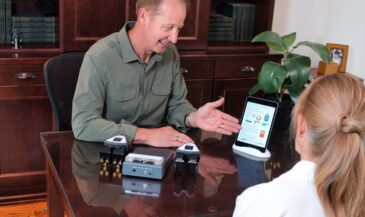
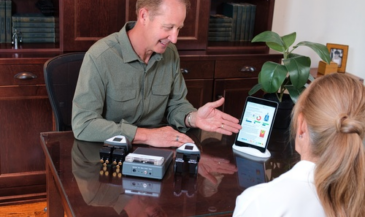
Objective neurological analysis can strengthen the chiropractic conversation. INSiGHT scanning technology does not diagnose vestibular migraine, BPPV, Meniere’s disease, or another vestibular condition. It provides objective exam data that helps the chiropractor assess and communicate nervous system performance.
neuroPULSE and Adaptive Reserve
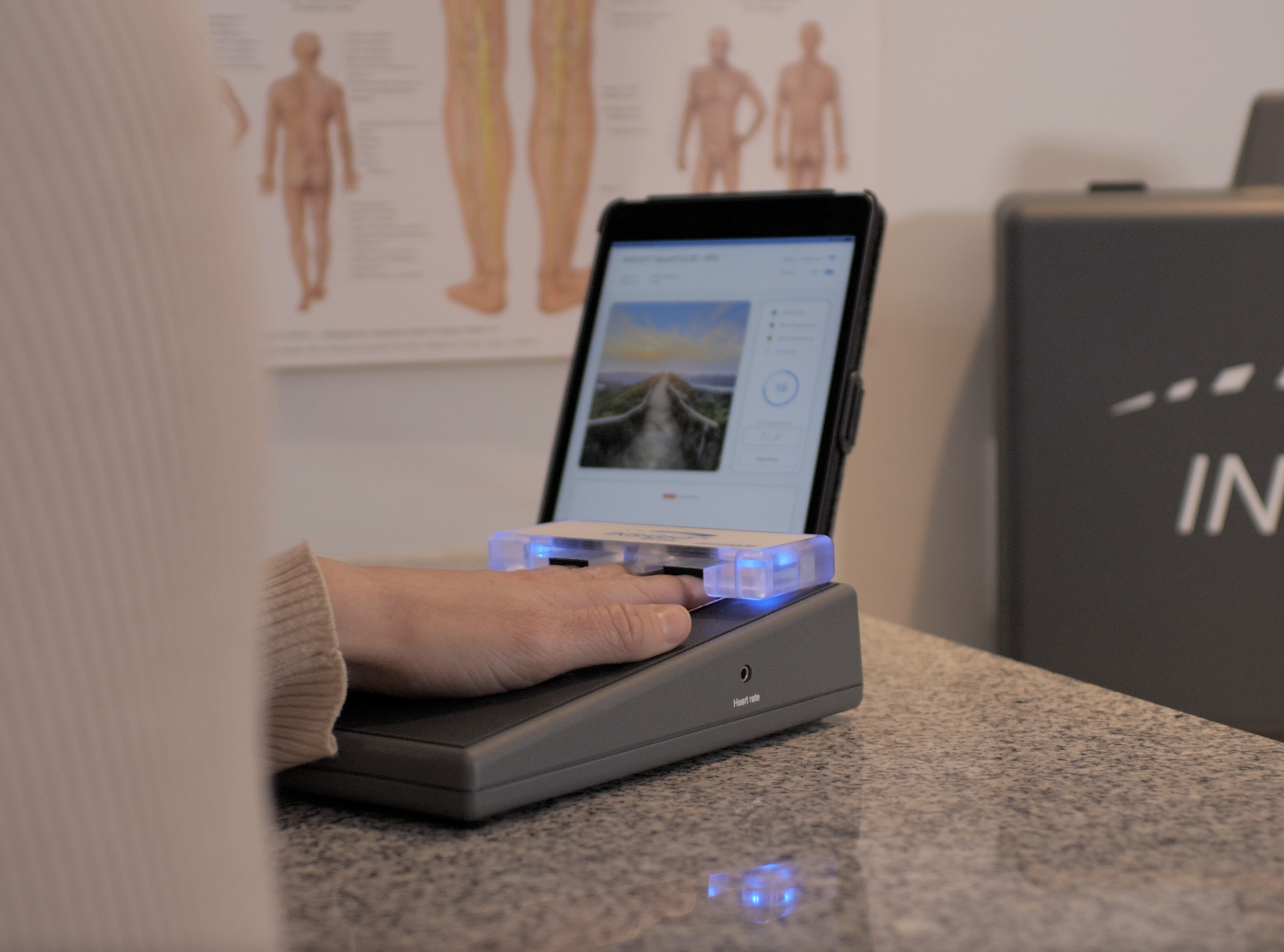
The neuroPULSE analyzes Heart Rate Variability, or HRV. Heart rate variability reflects the small beat-to-beat differences in heart pacing and provides information about autonomic activity, balance, and adaptability.
A resilient nervous system should increase output when demand rises and return toward recovery when it passes. The neuroPULSE helps the chiropractor analyze sympathetic and parasympathetic activity, adaptive reserve, and recovery capacity.
An HRV finding does not confirm the diagnosis. It gives the doctor another view of how the autonomic nervous system may be responding to life, recovery demands, and the circumstances surrounding the attacks.
neuroCORE and Postural Compensation
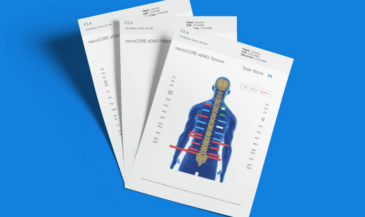
The neuroCORE analyzes surface electromyography in the paraspinal muscles. It helps the chiropractor examine postural tension, symmetry, motor tone reactions, and energy expenditure.
A dizzy patient may stiffen the neck, widen their stance, guard against head movement, or use excess muscular effort to feel stable. That does not mean postural tension causes vertigo. It means the body may be spending considerable energy to maintain orientation and balance.
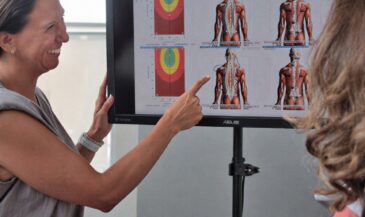
The scan views may reveal postural tension, asymmetrical muscle activity, motor compensation, inefficient energy use, or spinal regions needing attention. Patients understand this when it is explained simply: “Your body may be using more energy than it should just to stay steady.”
neuroTHERMAL, Synapse Software, and CORESCORE
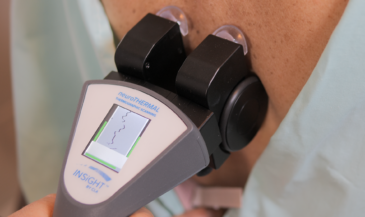
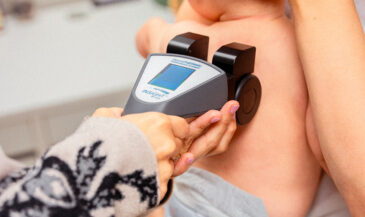
The neuroTHERMAL performs a full spine nerve system scan that analyzes paraspinal temperature patterns associated with autonomic regulation. Since autonomic activity influences blood vessel tone and temperature regulation, thermal findings offer another functional perspective.
INSiGHT neuroTECH and Synapse software bring the neuroPULSE, neuroCORE, and neuroTHERMAL perspectives together. Synapse organizes scan views, comparisons, and patient-friendly reports so the chiropractor can explain complex neurological findings without turning the report of findings into a lecture.
CORESCORE combines the three technologies into a single neurological efficiency score. It is not a migraine severity score. It is a communication metric that helps patients see how different parts of their nervous system profile fit together.
- Baseline: Establish the patient’s starting nervous system status.
- Response: Analyze how scan findings fluctuate under care.
- Trajectory: Compare progress over time rather than relying on one good or difficult day.
The technology does not create the care plan. The chiropractor does. INSiGHT scanning technology provides objective analysis and reporting that support the chiropractor’s interpretation, clinical judgment, and recommendations.
Helping the Dizzy Patient See the Bigger Neurological Story
The condition is more than a headache, and it is more than an inner ear complaint. It involves the relationship between migraine features, motion processing, visual input, proprioception, balance, autonomic regulation, and the parts of the brain responsible for organizing those signals.
That complexity is why the condition deserves thoughtful examination. A patient may have severe vertigo without headache. Another may experience light sensitivity, motion sickness, visual stimulation intolerance, and fatigue before recognizing the pattern as migraine-associated.
The chiropractor’s responsibility is not to force every presentation into a chiropractic explanation. It is to listen carefully, recognize when medical evaluation is needed, complete a strong neurological and chiropractic examination, and contribute useful functional information within scope.
The question is not only, “Are you dizzy today?” A better question is, “How well is your nervous system organizing sensory input, adapting to demand, and recovering between episodes?”
Neurologically-Focused Chiropractic Care has a meaningful place in that conversation because it looks beyond symptoms alone. The chiropractor can assess posture, proprioceptive input, neurological interference, autonomic regulation, and adaptive reserve while collaborating with the providers responsible for diagnosis and treatment.
INSiGHT scanning technology strengthens that process by giving the doctor objective exam data patients can see and understand. It does not label the condition. It does not replace vestibular tests or the judgment of a neurologist. It helps make nervous system performance visible.
When chiropractors combine responsible referral, thoughtful examination, and objective neurological scanning, patients gain a clearer view of what their nervous system may be expressing and why their care plan involves more than chasing the next dizzy spell.