
This is exactly why a thermography scan has become such an important part of modern chiropractic. A thermography scan gives chiropractors a way to see functional stress patterns that patients cannot feel and that hands alone cannot always confirm. It shifts the conversation away from guessing and toward measurable performance. Instead of relying on symptom reports that change from week to week, you can observe how the body is regulating itself in real time.
When patients see their own thermography scan results, something changes. They stop asking whether chiropractic works and start asking how their nervous system is adapting. That shift is powerful, not just clinically, but for long-term care, retention, and trust.
What a Thermography Scan Measures in Chiropractic Practice
A thermography scan is a functional scan that evaluates skin temperature patterns using infrared technology. In chiropractic, this matters because skin temperature is closely tied to autonomic regulation, particularly the sympathetic nervous system and its control over blood flow. When that control is balanced, temperature readings tend to be symmetrical from left to right. When the system is under neurological distress, measurable differences often appear.
This is why thermography is used in chiropractic as part of a neurological conversation rather than a structural one. Paraspinal thermography focuses on temperature readings along the spine, allowing the chiropractor to observe how well the nervous system is regulating vascular tone. A consistent temperature difference between the left and right side of the spine can suggest nerve interference and altered nerve function.
It is important to be clear about what a thermography scan is not. It is not an X-ray. It is not imaging bones or discs. It is not diagnosing disease. Thermographic imaging is functional, not structural. It is pattern analysis based on temperature data collected at the skin surface. That distinction helps patients understand why thermography can be repeated safely and why it complements, rather than replaces, other chiropractic analysis methods.
In the early days of chiropractic, chiropractors talked about tone, adaptability, and the neurological component of the vertebral system long before modern tools existed to visualize those ideas. Today, thermography allows chiropractors to observe the component of the vertebral subluxation that relates to autonomic regulation. By identifying temperature variations and thermal pattern consistency, chiropractors gain insight into physiological regulation along the spine.
When reviewing a thermography scan, chiropractors commonly evaluate:
- Asymmetry between left and right temperature readings
- Temperature changes across adjacent spinal segments
- Differences in skin and skin surface temperature over time
- Consistent temperature variations that repeat on follow-up scans
This approach keeps thermography grounded in chiropractic analysis rather than isolated data points.
How Chiropractors Use Thermography Scans to Assess Neurological Patterns
The true value of a thermography scan comes from how it is used over time. A single scan can be informative, but a series of scans tells a neurological story. Chiropractors typically integrate thermographic scanning during baseline exams, progress checks, and scheduled re-evaluations. This allows changes in temperature and pattern organization to be tracked in a repeatable way.
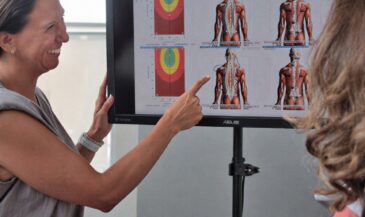
During an initial scan, chiropractors look for bilateral symmetry and clear temperature differentials. Healthy regulation tends to show relatively balanced readings, while neurological stress often appears as consistent left-right imbalance. Segmental patterns are especially meaningful. A single irregular reading may be insignificant, but a consistent paraspinal thermal pattern spanning multiple segments often points toward deeper neurological interference.
A proper scanning procedure supports repeatability and accuracy. Thermography can be used efficiently in busy chiropractic offices, but consistency matters. Controlling room conditions, allowing brief acclimation time, and performing the scan the same way each visit all contribute to reliable temperature measurement. When protocols are followed, thermographic scanning can accurately measure physiological regulation patterns and support meaningful comparisons over time.
Many chiropractors use a simple framework when interpreting a thermography scan:
- Location of the pattern along the spine, such as upper cervical or lumbar regions
- Laterality, noting whether imbalance is unilateral or bilateral
- Magnitude of the temperature difference
- Pattern shape and consistency across scans
- Change in temperature organization over time
This practical approach keeps thermography focused on function and neurology rather than chasing isolated numbers.
Learn more about INSiGHT scanning?
Fill this out and we’ll get in touch!
"*" indicates required fields
Why Thermography Scans Matter More Than Symptoms
Symptoms are an unreliable scoreboard. They fluctuate with sleep, stress, activity, and countless other factors. A patient can feel fine while their nervous system remains under strain, or feel uncomfortable while meaningful physiological changes are taking place. When chiropractic relies only on symptoms, care decisions become reactive and inconsistent.
A thermography scan provides objective insight into part of your nervous system that does not depend on how a patient feels that day. Thermography is used to assess skin temperature patterns along the spine, revealing differences in temperature that may reflect autonomic imbalance. These findings often appear before symptoms and can remain visible even after symptoms temporarily resolve.
Thermal scanning helps patients understand why chiropractic care continues beyond short-term relief. When patients see temperature changes organizing over time, they stop measuring progress solely by pain. They begin to understand chiropractic as a process of improving nerve function and adaptability. This is where certainty replaces guessing.
Thermography can be used alongside other assessments to reinforce this message. X-rays show structure. Thermographic imaging shows function. Infrared thermography is non-invasive, repeatable, and safe and effective for ongoing progress monitoring. This clarity builds trust and encourages long-term engagement.
The Role of Thermography Scans Within Neurological Scanning Systems
Thermography scanning becomes even more powerful when it is integrated into a comprehensive neurological scanning approach. Rather than viewing thermography in isolation, chiropractors increasingly use it alongside other neurological assessments to build a complete picture of nervous system performance.
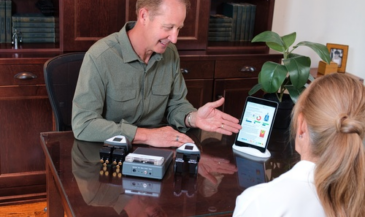
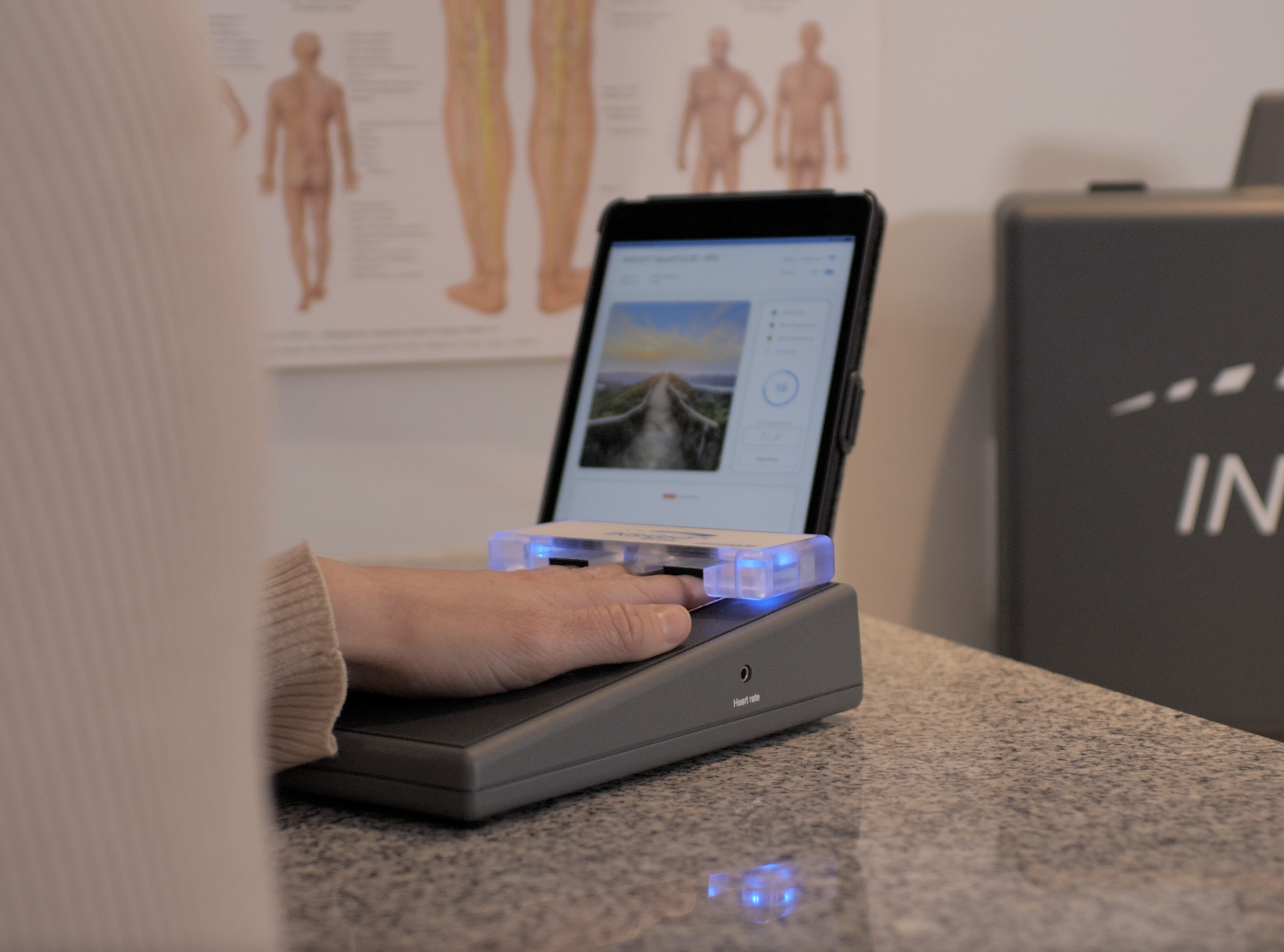
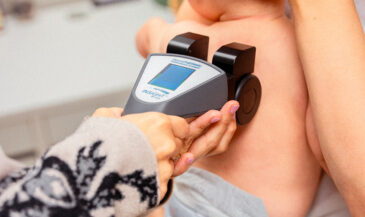
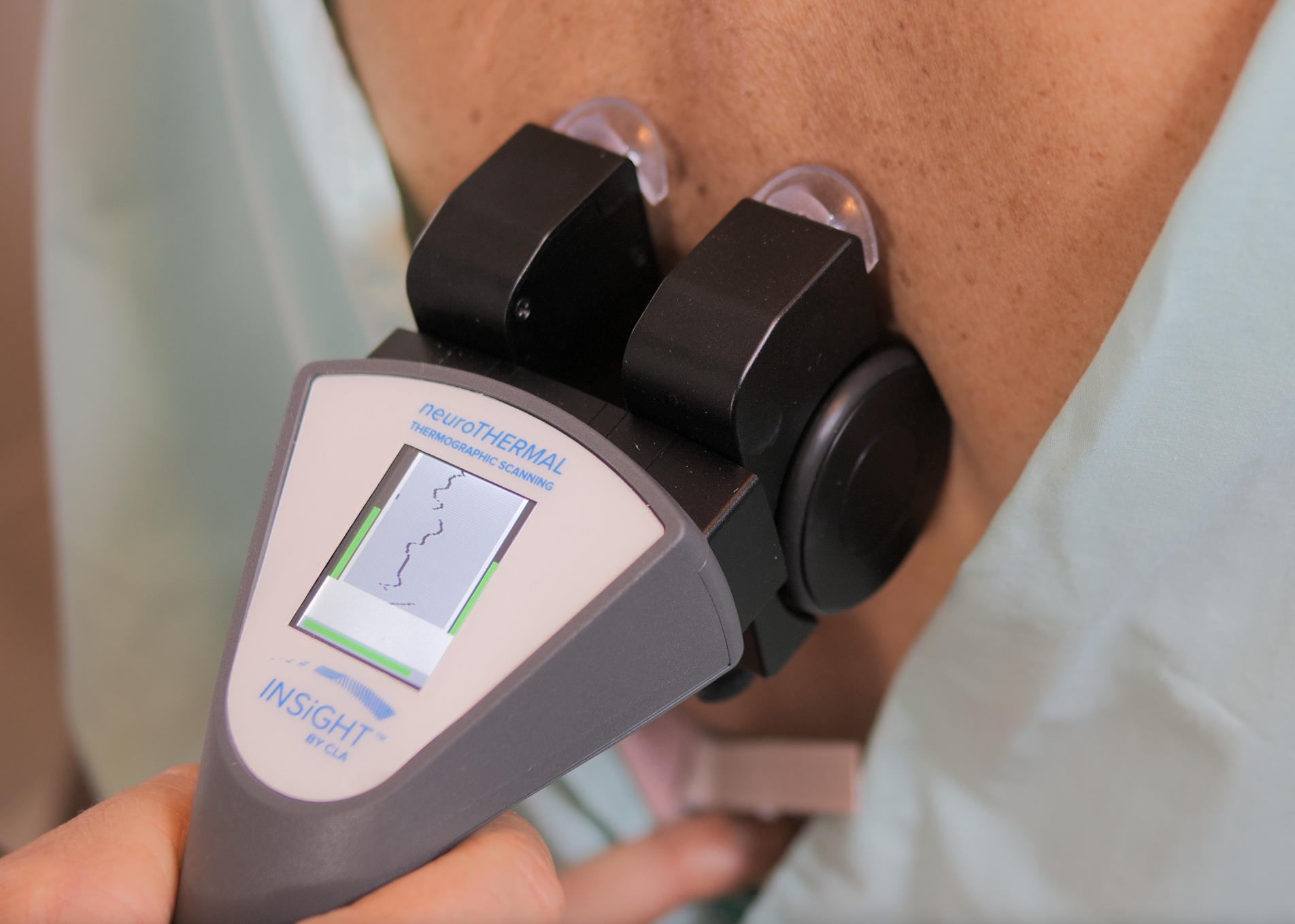
INSiGHT scanning technology brings this integration together. The INSiGHT neuroTHERMAL uses digital infrared imaging to capture paraspinal thermographic data with high precision. This paraspinal thermographic approach highlights asymmetry, thermal patterns, and temperature differentials along the spine in a way that is easy to repeat and easy to explain.
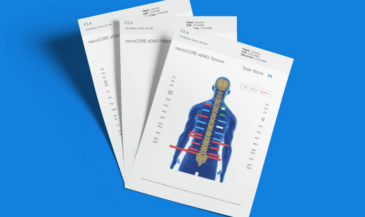
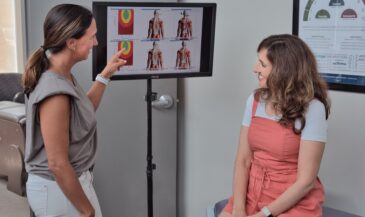
Within the INSiGHT neuroTECH and Synapse software ecosystem, thermography works alongside neuroCORE sEMG and neuroPULSE HRV. Together, these tools evaluate autonomic regulation, motor tone, adaptability, and physiological changes. Synapse organizes the scan data into visual reports that help patients understand what is happening without overwhelming them.
It is important to clarify that INSiGHT provides objective examination data. It does not generate care plans. Chiropractors interpret the findings and design care plans based on their clinical judgment. What INSiGHT scanning offers is clarity. It supports chiropractic theories with measurable data and helps chiropractors communicate why care continues even when symptoms fluctuate.
Safety, Reliability, and Practical Integration of Thermography Scans
One of the major benefits of thermography is safety. Thermography is used in chiropractic because it is non-invasive, involves no radiation, and can be repeated as often as needed. Infrared thermal technology simply observes skin surface temperature. Nothing is introduced into the body, making it appropriate for patients of all ages, including pediatric and family care settings.
The reliability of paraspinal thermography has been examined in available research and peer-reviewed journals. Studies commonly focus on test-retest reliability and reliability analyses, often reporting high reliability when protocols are followed. Measures such as the intraclass correlation coefficient, sometimes abbreviated as ICC, are used to quantify repeatability. This research supports thermography as an adjunctive assessment tool when used consistently.
Practical integration is straightforward. Many chiropractors incorporate thermographic scanning at baseline, during scheduled re-evaluations, and periodically throughout care. When patients understand that scans are monitoring physiological regulation rather than chasing symptoms, they become more engaged. The ability to accurately measure temperature variations and observe change over time strengthens both clinical decision-making and patient confidence.
Seeing the Nervous System Clearly Changes Everything
Chiropractic has always focused on the nervous system. The challenge has been helping patients see what chiropractors have understood all along. A thermography scan bridges that gap. It provides a functional, repeatable way to observe temperature data and understand neurological regulation along the spine.
When thermography scanning is combined with INSiGHT neurological scanning systems, chiropractic moves beyond explanation into demonstration. Patients see their own thermogram results, understand the significance of temperature differences, and recognize why ongoing chiropractic care supports long-term performance. That clarity builds trust, retention, and referrals naturally.
In a profession rooted in adaptability and function, the ability to visualize physiological patterns may be one of the most meaningful advancements chiropractic has embraced. A thermography scan does not replace hands-on care. It strengthens it by making the invisible visible.