

The challenge is that average hrv for women is not a one-number answer. Average hrv for women depends on the population being studied, the device being used, and whether the reading was taken overnight, during rest, or with an app that measures your hrv in a different way. Average hrv for women also changes across age, and a published average does not always reflect what is considered a normal value for the woman sitting in front of you. In chiropractic, that matters because heart rate variability is most useful when it is interpreted as a window into adaptability and autonomic function, not as a random score to compare online.
That is why average hrv for women belongs in the chiropractic conversation. When a chiropractor understands average hrv for women in context, the discussion moves beyond symptoms and into nervous system performance, reserve, and recovery. A patient may ask about average hrv for women because she saw a number on her ring or strap. A chiropractor should be ready to answer what that number may mean, what could influence hrv, and why tracking trends over time matters more than chasing a perfect benchmark.
What Heart Rate Variability Really Measures
Heart rate variability is the variation in time between one heartbeat and the next. It is not simply the number of times your heart beats per minute, and it is not the same as average heart rate, normal heart rate, or resting heart rate. A woman can have a healthy heart rate, a normal heart rate, and a steady heart rhythm while still showing very different HRV values depending on how her autonomic nervous system is functioning in that moment.
That distinction is important because many patients think HRV and pulse are the same thing. They are not. HRV is a highly responsive metric because it reflects the shifting balance between the sympathetic branch and the parasympathetic nervous system. Since hrv is a highly individualized measure, it can fluctuate from person to person and from day to day. One woman may show higher hrv after a week of quality sleep and steady recovery. Another may show lower hrv after travel, illness, stress, or hormonal shifts.
In simple terms, higher hrv is associated with greater flexibility and recovery capacity, while low hrv is often associated with a system carrying more load. High hrv often suggests stronger adaptability. Lower hrv does not automatically mean disease, but it may reflect reduced reserve. That is where chiropractors can help patients understand your HRV in a more useful way.
- Heart rate variability reflects changes between heart beats, not just pulse.
- HRV is generally more meaningful when viewed as part of a broader autonomic story.
- HRV can help explain how a woman is adapting to stress, recovery, and life demand.
Average HRV for Women and What Counts as Normal
When patients ask about average hrv for women, they are usually hoping for a simple target. The reality is more nuanced. Reported datasets often place average hrv for women somewhere in the mid-30s to low-60s milliseconds depending on platform and method. Some published consumer data show average hrv for women in the low 40s, while more performance-focused populations may show higher numbers. That is why average hrv for women should be presented as helpful context, not as a universal pass or fail line.
It also helps to separate average hrv from normal hrv. A published average is a statistical midpoint. A normal hrv or normal hrv range is broader and should be interpreted more carefully. There is a range of normal hrv scores that may be appropriate depending on the woman’s age, recovery status, and recording conditions. A woman can sit below a quoted average hrv and still be within her own normal range. Another can land in a published normal hrv range and still show a meaningful decline in hrv relative to her own baseline hrv.
This is where wearables have changed the conversation. Oura has discussed normal hrv scores across Oura members and hrv scores across Oura members in ways that show interesting trends across age. Those trends across age and gender are useful, and WHOOP has also published community averages. Still, these platforms are looking at specific user populations, often using hrv while sleeping or hrv in a controlled setting. That means chiropractors should be careful not to treat every online chart by age and gender as the final word.
A heart rate variability chart can be useful, and a chart by age and gender can help frame expectations. Still, a good hrv is not simply the average. A healthy hrv is one that fits the individual and remains steady enough to reflect resilience. That is why average hrv for women should lead to a deeper conversation, not a shorter one.
- Average HRV for women is a reference point, not a diagnosis.
- Normal heart rate variability is better understood within context.
- HRV score interpretation improves when you compare it to a patient’s own hrv baseline.
Learn more about INSiGHT scanning?
Fill this out and we’ll get in touch!
"*" indicates required fields
How HRV Changes in Women by Age
One of the clearest findings in the literature and consumer datasets is that hrv tends to decrease with age. That means hrv by age matters, and average hrv by age matters as well. Younger women often show higher values, while older age groups usually show lower ones. If you look at women by age, the pattern is clear across age even if the exact numbers vary from platform to platform.
That does not mean every woman follows the same curve. HRV varies person to person, and age and gender only explain part of the story. Factors like age, fitness, recovery status, and stress load all influence hrv. So do age or genetics, current life demand, and the overall impact on hrv from poor sleep or illness. This is why a range by age is useful, but it never replaces clinical interpretation.
Female physiology adds another layer. Hormonal shifts can affect hrv, cycle phases can influence hrv, and post-menopausal women may show different autonomic patterns than younger women. In addition, hrv tends to move with life load. A temporary decrease in hrv after poor sleep, travel, or illness may be expected. A consistently low hrv or abnormally low hrv deserves more thoughtful interpretation because it may reflect a system that is struggling to adapt.
For chiropractors, the best way to explain this is simple: the average hrv for women changes across age, but the more important question is whether the patient’s score makes sense for her physiology and whether her hrv trends are stable, improving, or slipping over time.
- Average HRV by age helps frame expectations without creating false certainty.
- Age groups matter, but they never tell the whole story.
- Decline in HRV should be interpreted alongside lifestyle, stress, and examination findings.
What Raises or Lowers HRV in Women
If a chiropractor is going to explain average hrv for women well, there also has to be a clear explanation for why one reading may look very different from another. Stress can decrease hrv. Poor sleep quality can decrease hrv. Illness, alcohol, under-recovery, and overload can all have an impact on hrv. On the other hand, consistent exercise, better breathing patterns, regular routines, and quality sleep may improve hrv over time.
Sleep is especially important because many devices use hrv while sleeping to reduce daytime noise. That is why hrv at home is often tracked overnight. Overnight data may offer a cleaner comparison point because movement, meals, meetings, and emotional swings are less likely to distort the reading. Since hrv is highly responsive to recovery, a woman’s best comparison is usually her own baseline and her own recent hrv trends.
Patients also need help understanding what low hrv may and may not mean. Low hrv can signal heart strain in some settings, and some papers have discussed rate variability as a predictor for broader outcomes. It is also fair to say that hrv can signal heart issues in certain populations. But chiropractors should stay responsible here. HRV or heart conversations should not become alarmist. Low hrv can signal heart stress in some cases, but HRV may also reflect temporary overload, poor recovery, or an autonomic shift that has nothing to do with a diagnosed heart condition. It should not be used as a stand-alone answer for heart conditions.
That is the clinical value of context. If a patient has a good heart, normal pulse findings, and no obvious warning signs, a lower reading may simply tell you the system is under more load. If another patient shows a healthy heart and average lifestyle markers yet her HRV remains suppressed, that may prompt better questions. In either case, monitoring your hrv and tracking your hrv over time will tell you more than reacting to one isolated number.
- Improve HRV by supporting sleep, recovery, and steady routines.
- Increase HRV by reducing repeated stressors and improving adaptability.
- Improve your HRV by focusing on consistency instead of chasing a one-day spike.
Why Chiropractors Should Look Beyond Consumer Averages
The real value in discussing average hrv for women is not simply answering a search term. It is helping patients understand what the number represents. A wearable can show a score. It can measure hrv. It can even point out hrv for men, female averages, and heart rate variability in healthy user groups. But it does not always translate that number into a meaningful neurological conversation.
That is where chiropractic has an advantage. HRV could be seen as a reflection of reserve, adaptability, and the ability to shift between sympathetic demand and parasympathetic recovery. When a chiropractor speaks that language well, the discussion becomes more clinically useful. The patient stops asking only whether her score matches the average hrv for women and starts asking whether her system is adapting well for her.
This is also where you can answer questions like these in a grounded way:
- Considered a normal score for whom, under what conditions, and compared to what baseline?
- HRV can indicate strain, reduced reserve, or recovery challenges, but not by itself a diagnosis.
- HRV exist within a larger story that includes sleep, stress, physiology, and adaptation.
That shift in language helps patients stop fixating on whether they have high heart rate readings, whether their number beats a public average, or whether every low day is a crisis. Instead, they begin to see HRV as one part of a bigger picture of nervous system performance and heart health.
How INSiGHT neuroPULSE Brings Meaning to the HRV Conversation
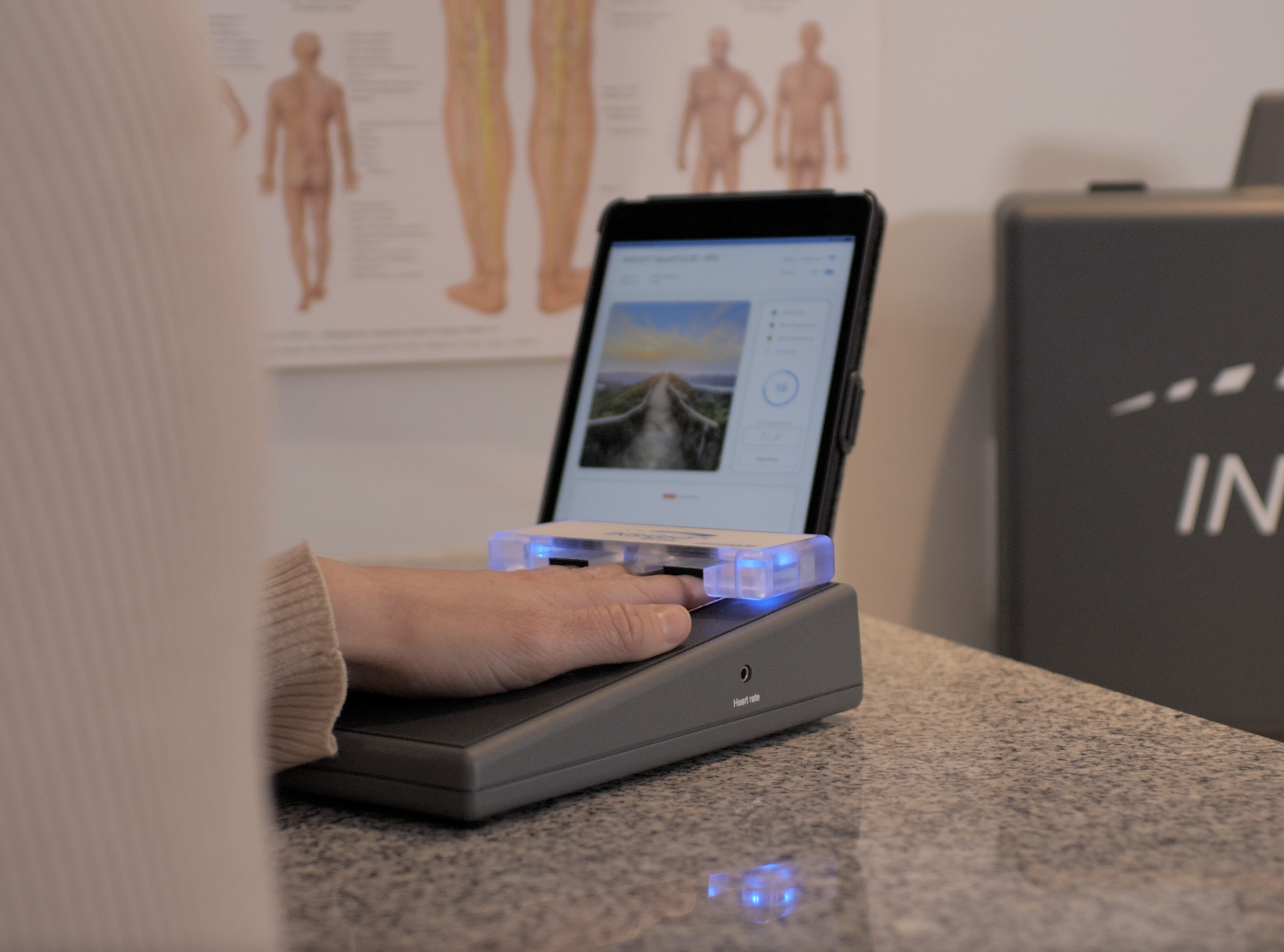
This is where the discussion comes back to objective neurological analysis. Consumer platforms have made average hrv for women a popular topic, but INSiGHT scanning technology helps chiropractors make better clinical sense of it. CLA’s neuroPULSE does not simply generate a lifestyle score. It provides objective exam data about autonomic balance, reserve, and adaptability, giving the doctor a stronger basis for interpretation.
That matters because heart rate variability becomes much more useful when it is part of a broader neurological picture. Through INSiGHT neuroTECH and Synapse software, the chiropractor can analyze patterns over time, establish a stronger hrv baseline, and communicate whether the system appears more adaptable or more strained. The technology does not diagnose disease, and it does not replace clinical reasoning. It supports the chiropractor with clearer analysis and reports.
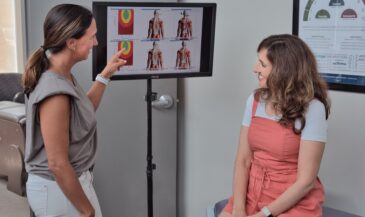
For women asking about average hrv for women, that is a much better conversation than simply quoting a chart. Instead of saying, “Here is the average,” the chiropractor can say, “Here is how your autonomic nervous system is responding, here is how your score compares to your own baseline, and here is whether your trends suggest better reserve or more stress load.” That is why INSiGHT scanning technology matters. It turns a popular search topic into a meaningful clinical discussion.
In the end, average hrv for women is useful, but it is not the final answer. The better question is whether the woman in front of you is showing a healthy heart, resilient adaptability, and improving trends over time. That is the kind of insight chiropractors are uniquely positioned to provide, especially when HRV is interpreted through neurological scanning rather than through averages alone.