
These scores can make complex physiology feel simple. They can also create a level of certainty that the underlying data may not support.
A new study published in JMIR Cardio on July 17, 2026, offers one of the most comprehensive examinations of this issue to date. Titled “Mobile Apps for Heart Rate Variability: App Store Search and Content Analysis”, the study reviewed how consumer apps collect, analyze, interpret, and communicate HRV.
Its findings reinforce an important principle for chiropractors using HRV clinically: the value of an HRV measurement depends heavily on how consistently it is collected and how carefully it is interpreted.
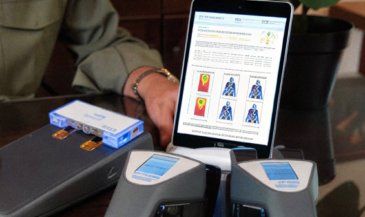
That principle is central to the highly controlled approach used by the neuroPULSE.
A Polished Score Does Not Guarantee A Transparent Process
The researchers initially identified 746 apps and ultimately found 206 that met the eligibility criteria for recording, analyzing, or providing feedback on HRV.
However, sufficiently complete information about HRV measurement and analysis could be obtained for only 93 apps. That represents just 45.1% of the eligible market.
In other words, the researchers could not adequately determine how more than half of the apps measured HRV, processed the data, or produced the feedback shown to users.
The contrast became even more significant when the researchers looked at the guidance these apps provided. Among the 93 apps with enough information for content analysis:
- 86% offered contextual guidance such as readiness, recovery, or stress scores.
- Many of those scores were produced using proprietary algorithms.
- The derivation and validation of those algorithms were frequently undisclosed.
- Only 31.2% described standardized measurement conditions.
The result is a considerable transparency gap. A user may see a highly polished score presented with impressive charts and confident language while knowing very little about the measurement protocol, metric selection, signal processing, or evidence supporting the final interpretation.
Raw HRV Metrics And App-Generated Labels Are Different Things
HRV refers to the variation in time between consecutive heartbeats. Raw HRV analysis may include established measurements such as:
- RMSSD, or the root mean square of successive differences
- SDNN, or the standard deviation of normal-to-normal intervals
- Frequency-domain measurements such as low-frequency and high-frequency power
The study found that RMSSD and SDNN were the most frequently reported metrics among the apps reviewed.
These established metrics should be distinguished from branded labels such as:
- Readiness
- Recovery
- Stress
- Body battery
- Coherence
- Resilience
Those labels may combine HRV with sleep, activity, heart rate, respiratory data, temperature, and other information. The app then applies its own weighting and algorithm to produce a simplified score.
That score may be useful for general self-monitoring, but its meaning depends on what was measured, when it was measured, how the information was processed, and whether the algorithm has been independently validated.
A “readiness” score is therefore an interpretation layered on top of the underlying data. It is not the same thing as the raw HRV measurement itself.
Learn more about INSiGHT scanning?
Fill this out and we’ll get in touch!
"*" indicates required fields
PPG Can Be Useful When The Conditions Are Controlled
Electrocardiography remains the gold standard for HRV measurement. Consumer devices commonly use photoplethysmography, or PPG, to estimate the timing between pulse waves by detecting changes in blood volume through the skin.
The study offers a balanced view of PPG. It does not dismiss the technology. In fact, previous research cited in the paper suggests that PPG-derived measurements can demonstrate reasonable agreement with ECG under resting or sleeping conditions.
The challenge emerges when PPG is used during active, uncontrolled, real-world conditions.
Movement, posture, sensor contact, environmental conditions, breathing, and the timing of the recording can all influence the signal. A measurement collected while a person is seated quietly may not be directly comparable with one collected while they are moving, working, exercising, talking, or recovering from physical activity.
The paper also notes that automatically collected measurements during random daily activities may not carry the same validation as measurements deliberately initiated under defined conditions.
This leads to a critical distinction:
PPG is not inherently the problem. Measurement variability becomes the problem when the collection process is inconsistent.
Why Standardization Changes The Value Of An HRV Measurement
HRV is sensitive to context. Two readings from the same person may differ because of changes in:
- Body position
- Breathing pattern
- Recent exercise
- Sleep quality
- Illness
- Hydration
- Caffeine or alcohol intake
- Medication use
- Emotional stress
- Recording duration
- Movement during measurement
- Sensor type and placement
When these variables change from one reading to the next, it becomes harder to know whether a difference reflects a meaningful physiological trend or simply a different collection environment.
This is why repeatability matters.
A reliable HRV assessment process attempts to reduce avoidable variability by collecting measurements under similar conditions each time. The patient’s posture, level of movement, sensor placement, recording procedure, and surrounding environment should remain as consistent as practical.
Without this consistency, a score may still be interesting, but its value for comparison becomes limited.
How The neuroPULSE Creates A More Controlled HRV Assessment
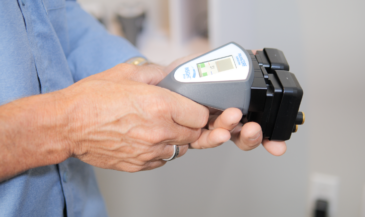
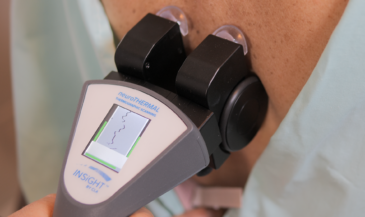
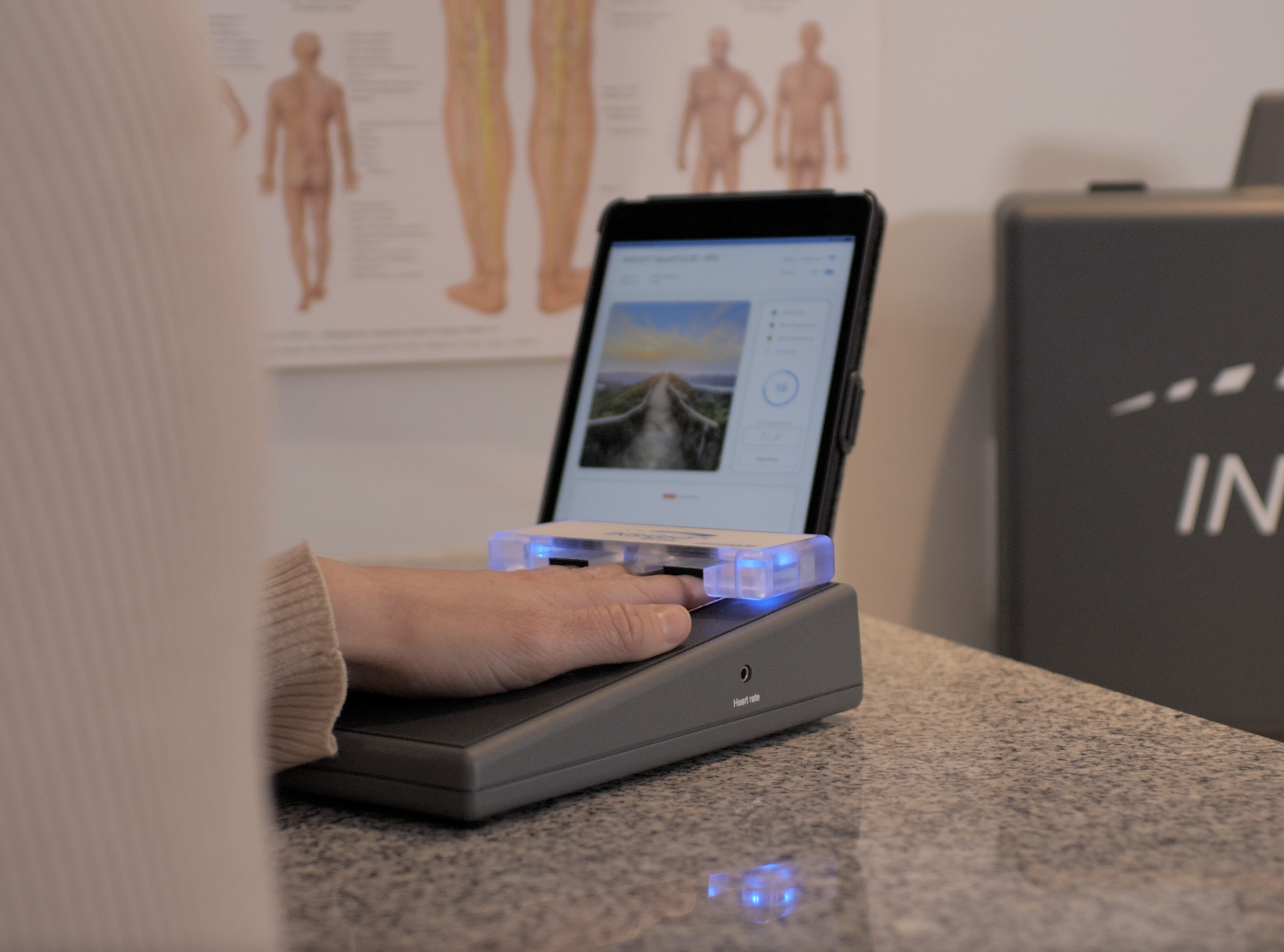
The neuroPULSE also uses PPG technology, although its purpose and collection process differ from passive consumer monitoring.
During a neuroPULSE examination:
- The patient remains seated.
- The hand is supported throughout the recording.
- The hand is stabilized to reduce movement.
- The arm is maintained near heart level.
- ElectroDermal Activity and temperature are recorded to assure arousal limits are controlled
- A standardized procedure is followed for each assessment.
- The recording is collected intentionally rather than incidentally during unrelated daily activity.
These controls help reduce some of the variables that can affect PPG-derived HRV.
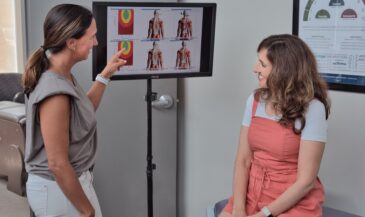
The goal is to create a repeatable clinical assessment that can be compared more meaningfully with previous scans. When the same patient is measured under similar conditions over time, changes in the data can be discussed within a clearer context.
This does not turn HRV into a standalone diagnosis. It creates a more disciplined framework for using HRV as one part of an objective neurological assessment.
Personal Trends Are More Meaningful Than Isolated Scores
One of the strongest findings from the study was that 81.7% of the transparent apps presented HRV as a personal trend or individualized range.
This reflects an important feature of HRV: there is substantial variation between individuals.
A number that is typical for one patient may be unusual for another. Age, fitness, physiology, health status, sleep, medications, and many other factors can influence an individual’s HRV range.
For that reason, an isolated reading should be interpreted carefully. The stronger clinical conversation usually comes from observing how a patient’s measurements change across repeated assessments performed under similar conditions.
This is where the neuroPULSE approach becomes especially valuable. Establishing a baseline and repeating the scan using the same procedures allows the chiropractor to examine the patient’s developing pattern.
The conversation can then focus on questions such as:
- Is the patient’s pattern becoming more stable?
- Is their HRV moving within or away from their established range?
- Do changes correspond with sleep, stress, illness, physical demands, or reported symptoms?
- Do the HRV findings align with the other objective findings collected during the examination?
The emphasis remains on context and progression rather than assigning too much meaning to one number.
A Useful Patient Explanation
Patients increasingly arrive in practice already familiar with wearable scores. Some may be concerned because their watch says they are “stressed,” “poorly recovered,” or “not ready.”
A simple explanation can help place that information in perspective:
“Your HRV score is more like a daily weather report than a medical grade. We watch your personal pattern over time and interpret it alongside adjustments, stress, symptoms, and other clinical findings.”
This language respects the information provided by the patient’s wearable while setting appropriate expectations.
Consumer devices can encourage people to pay closer attention to sleep, recovery, and daily habits. Their data can contribute to a useful conversation. The chiropractor’s role is to help the patient understand the limits of the score and avoid turning a single reading into a definitive conclusion about autonomic function.
Extra Care Is Needed During Pregnancy And Postpartum Recovery
HRV interpretation requires additional context during pregnancy and the postpartum period.
Normal physiological changes, disrupted sleep, shifting recovery demands, changing resting heart rate, emotional stress, feeding schedules, and physical recovery can all influence HRV. A wearable may identify these changes and translate them into a low readiness or high stress score.
That result should be discussed carefully.
A mother should not be told that one consumer score proves she is “stuck in sympathetic mode.” The reading may reflect several overlapping factors, and its meaning depends on the conditions under which it was collected.
A more responsible conversation would acknowledge the score, ask about sleep and current demands, review the broader clinical picture, and observe how the patient’s pattern develops over time.
The same principle applies throughout clinical practice: HRV offers information about autonomic regulation, while interpretation requires context.
What This Study Does (And Doesn’t) Establish
This paper deserves attention because it provides a rigorous framework for discussing the strengths and limitations of consumer HRV technology.
However, it is important to represent its findings accurately.
The study was an app store review and content analysis. It did not:
- Evaluate chiropractic outcomes
- Study the neuroPULSE directly
- Validate HRV as evidence of subluxation
- Demonstrate that an adjustment caused a change in HRV
- Establish HRV as a diagnostic test for a specific condition
- Validate proprietary readiness or recovery scores
Its relevance to the neuroPULSE lies in the measurement principles it highlights.
The research shows that posture, timing, recording duration, standardization, sensor conditions, metric selection, and algorithm transparency matter. It also shows that PPG performs more dependably in controlled resting environments than during active, uncontrolled use.
These findings strengthen the rationale for collecting HRV intentionally, consistently, and under repeatable conditions.
A Practical HRV Communication And Measurement Standard
For chiropractors using HRV, the study supports four practical standards.
Favor repeatable measurements
Collect HRV under similar conditions whenever possible. Consistent posture, sensor placement, movement control, recording procedures, and environmental conditions make comparisons more meaningful.
Emphasize personal patterns
Use the patient’s baseline and developing trend as the primary reference. Population averages may provide background, but they do not replace individualized interpretation.
Separate measurements from labels
Distinguish established metrics such as RMSSD from proprietary scores such as readiness, recovery, body battery, or stress. The label may reflect an undisclosed combination of several variables.
Keep HRV within the complete clinical picture
Present HRV as one window into autonomic regulation. Interpret it alongside the patient’s history, sleep, stress, symptoms, medications, exercise, current health status, and other objective findings.
What To Use For Clinical Data
Consumer HRV apps have made autonomic monitoring widely accessible. That accessibility can encourage useful conversations about stress, sleep, adaptability, and recovery.
The 2026 JMIR Cardio study also makes clear that the sophistication of an app’s presentation may exceed the transparency of its measurement and interpretation process. Of the 206 eligible apps reviewed, complete information was available for fewer than half. Most of the transparent apps offered contextual scores, while many did not adequately disclose how those scores were derived or validated.
For clinical use, the strongest response is greater measurement discipline.
The neuroPULSE applies PPG within a controlled, standardized examination designed to reduce movement and improve consistency between recordings. This approach gives chiropractors a stronger foundation for observing personal trends and discussing HRV alongside the patient’s complete neurological and clinical picture.
HRV becomes most valuable when the measurement is repeatable, the interpretation is responsible, and the conversation remains grounded in context.