

That is the practical promise of neural efficiency. In neuroscience, the term describes the relationship between performance and the neural resources used to achieve it. A more efficient brain may solve the same cognitive task with lower brain activation, more focused recruitment, or less metabolic demand. For a Neurologically-Focused Chiropractor, the concept opens a broader conversation about reserve, energy expenditure, regulation, and the nervous system’s ability to meet demand without spending every resource it has.
The point is not that less activity is always better. Activity should match the job. Neural efficiency asks whether the nervous system is organizing the right response, at the right intensity, with enough reserve left for what comes next.
What Neural Efficiency Means in Neuroscience and Chiropractic
At its simplest, neural efficiency is the ability to produce an appropriate result with an economical use of neural resources. Researchers study this by comparing task performance with electrical activity, blood flow, or metabolism. When two people solve the same problem equally well but one requires lower or more focused activation, neural efficiency may be higher. The concept links a behavioral result to the neural cost of producing it.
The word “may” matters. Lower brain activity by itself does not prove efficient brain functioning. A person who shows lower activation because they are disengaged, confused, or performing poorly is not necessarily efficient. The pattern must be interpreted alongside task difficulty, accuracy, strategy, and the brain regions involved. The better question is not simply, “How active was the brain?” It is, “What did that activity accomplish?”
The Difference Between Activity and Efficiency
Think of two people carrying the same box across a room. One moves smoothly and finishes with energy to spare. The other braces every muscle and uses far more effort to reach the same destination. The outcome looks similar, but the efficiency is not. Cognitive neuroscience applies that same logic to brain function.
This distinction belongs in chiropractic too. A patient may maintain posture while the spinal motor system shows postural tension or inefficient energy distribution. Another may appear calm while autonomic analysis suggests low adaptive reserve. The body is functioning, but it may be paying too much for that function.
- Performance: What result did the nervous system produce?
- Effort: How much neural effort was required?
- Demand: How difficult was the task?
- Reserve: How much capacity remained afterward?
Chiropractic neurological scanning does not measure human intelligence, cortical activation, or the neural correlates of cognitive performance. EEG, PET, fMRI, and fNIRS answer different questions. Chiropractic scanning looks at autonomic adaptability, paraspinal motor activity, energy expenditure, and temperature regulation patterns along the spinal region.
For chiropractors, the concept becomes useful when it sharpens the exam. Is the response coordinated or compensatory? Is the system adaptable or stuck in sympathetic overdrive? Is ordinary function requiring excessive effort? Neurological scanning gives the doctor objective analysis to explore those questions rather than relying on symptoms or impressions alone.
The Neural Efficiency Hypothesis as a Function of Task Demands
The neural efficiency hypothesis grew from research on intelligence and brain activation. Broadly stated, it proposes that individuals with higher intelligence may require fewer neural resources than individuals with lower intelligence to complete the same cognitive task successfully. Early PET research associated with Haier examined brain glucose metabolism levels, while later functional brain imaging studies explored electrical activity, cortical activation, and functional connectivity.
Haier et al helped draw attention to the relationship between intelligence and brain activity. Later studies by Neubauer, Fink, Grabner, Benedek, and others showed that the neural efficiency phenomenon is more complicated than “smarter brains always work less.” A systematic review by Neubauer and Fink considered the influence of task content, task content and sex, brain region, and research method.
Why Task Difficulty Changes the Pattern
The neural efficiency hypothesis is best understood as a function of task demands. When a task is extremely easy, people at different levels of intelligence may all complete it with little cognitive effort. There may be no meaningful differences in activation because neither group needs to recruit much power.
Moderately difficult tasks are often where intelligence related differences become easiest to see. The task requires real neural processing, but it is not so difficult that everyone reaches their limit. Under those conditions, intelligent individuals may achieve comparable or better performance with lower levels of activation or more focused activity in relevant regions.
A very difficult task may require strong neural activation from everyone, including individuals with higher intelligence. The difference between lower and higher intelligence can narrow when task complexity reaches the limits of current ability. This is why whether neural efficiency appears in a study often depends on how well the task was matched to the participants.
Elsbeth Stern used a helpful car analogy. At low speed, both an efficient and less efficient car use little fuel. At maximum speed, both burn a great deal. At moderate speed, the difference becomes obvious. The analogy suggests that neural efficiency is easiest to see when a cognitive task is challenging but manageable.
Why Performance Must Be Considered With Activation
Research using functional near-infrared spectroscopy, or fNIRS, makes this point well. During laboratory executive-function tasks and flight simulation, oxygenated hemoglobin in the prefrontal cortex increased as tasks became more complex. Yet activation intensity did not clearly predict who performed best. It offered more insight into how hard the participant was working.
That distinction matters in chiropractic. A high or low activity level should not be labeled efficient without context. The doctor must consider baseline, workload, sleep, recovery, neurological distress, stage of care, and trajectory across repeated exams. One scan identifies a pattern. A sequence helps show whether that pattern is becoming more adaptable and organized.
Learn more about INSiGHT scanning?
Fill this out and we’ll get in touch!
"*" indicates required fields
Working Memory, Expertise, and a Systematic Review of Neural Processing
Working memory is one of the clearest settings in which researchers have examined neural efficiency. It allows a person to hold information temporarily, connect it with new information, adjust to changing goals, and filter out what is no longer relevant. These higher cognitive abilities depend on coordinated activity in the frontal cortex and related brain networks.
In research described by Elsbeth Stern and Daniela Nussbaumer, university students completed letter and facial-memory tasks while EEG recorded their brain activity. Participants also completed a conventional intelligence test and were grouped by intelligence scores. The clearest differences in brain activity appeared during moderately difficult working memory tasks, where both groups could succeed but individuals with higher intelligence required fewer resources.
Formal Testing and Research Tools Ask Different Questions
This finding does not turn EEG into an intelligence test. Conventional testing remains the more reliable way to assess individual differences in cognitive abilities. EEG can reveal event-related electrical patterns and timing, but those neural markers are not precise enough to label one person as having high intelligence, superior intelligence, or lower intelligence.
The same caution applies across imaging methods:
- EEG: Records electrical brain activity and event-related responses during a cognitive task.
- PET: Analyzes regional energy use, which was important in early Haier research.
- Functional magnetic resonance imaging: Examines blood-oxygen-related activity and functional connectivity.
- fNIRS: Analyzes oxygenated and deoxygenated hemoglobin in the cortex, offering insight into mental effort.
Haier, Nuechterlein, and colleagues contributed to early work on intelligence and brain activation. Later work by Neubauer, Fink, Grabner, and Benedek explored differences in intelligence, the influence of task content, creativity, sex on the brain–IQ relationship, and connections between brain regions. These studies of neural performance show why brain activation and intelligence cannot be reduced to one rule.
Expertise Can Make Neural Processing More Focused
Training can influence how the functional brain recruits resources. As a person practises a mental skill or gains experience performing a sport-specific task, the brain may rely more heavily on task-related pathways while reducing activity in areas that are not needed.
The result can be more focused neural processing, better coordination within a brain network, and less conscious effort. That does not mean expertise shuts the brain down. It means experience can refine which connections between brain regions are recruited and when.
Practice effects may remain specific to the trained activity. Someone can improve at one working memory exercise without showing the same advantage on a new, similar task. Higher neural efficiency in one setting does not prove universal efficiency across every cognitive challenge.
Applying Neural Efficiency Through INSiGHT Neurological Scanning
The neuroscience definition of neural efficiency focuses largely on cognitive performance relative to cortical effort. Chiropractic uses the phrase in a different but related functional context. The chiropractic question is not, “How intelligent is this brain?” It is, “How efficiently is this nervous system using energy, maintaining posture, regulating autonomic activity, and preserving enough reserve to adapt?”
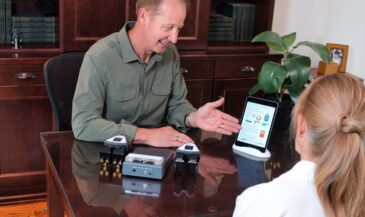
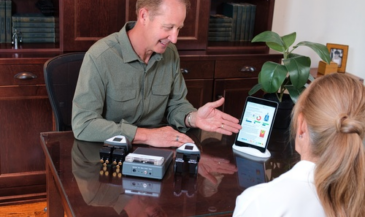
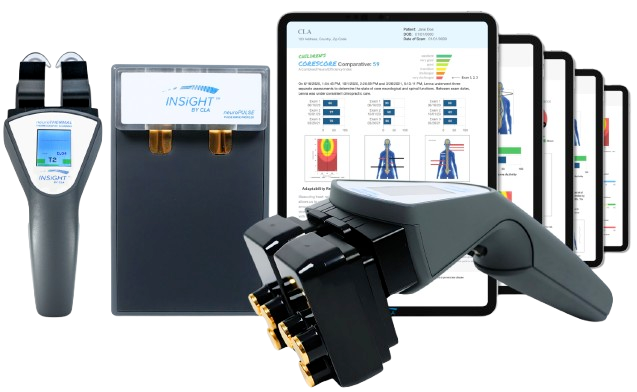
INSiGHT scanning technology does not analyze IQ, the sensory and motor cortex, or cerebral metabolism. INSiGHT neuroTECH and Synapse software provide objective exam data about Reserve, Energy, and Depth, then bring those findings together in a patient-friendly neural efficiency index.
neuroPULSE Shows Reserve and Adaptability
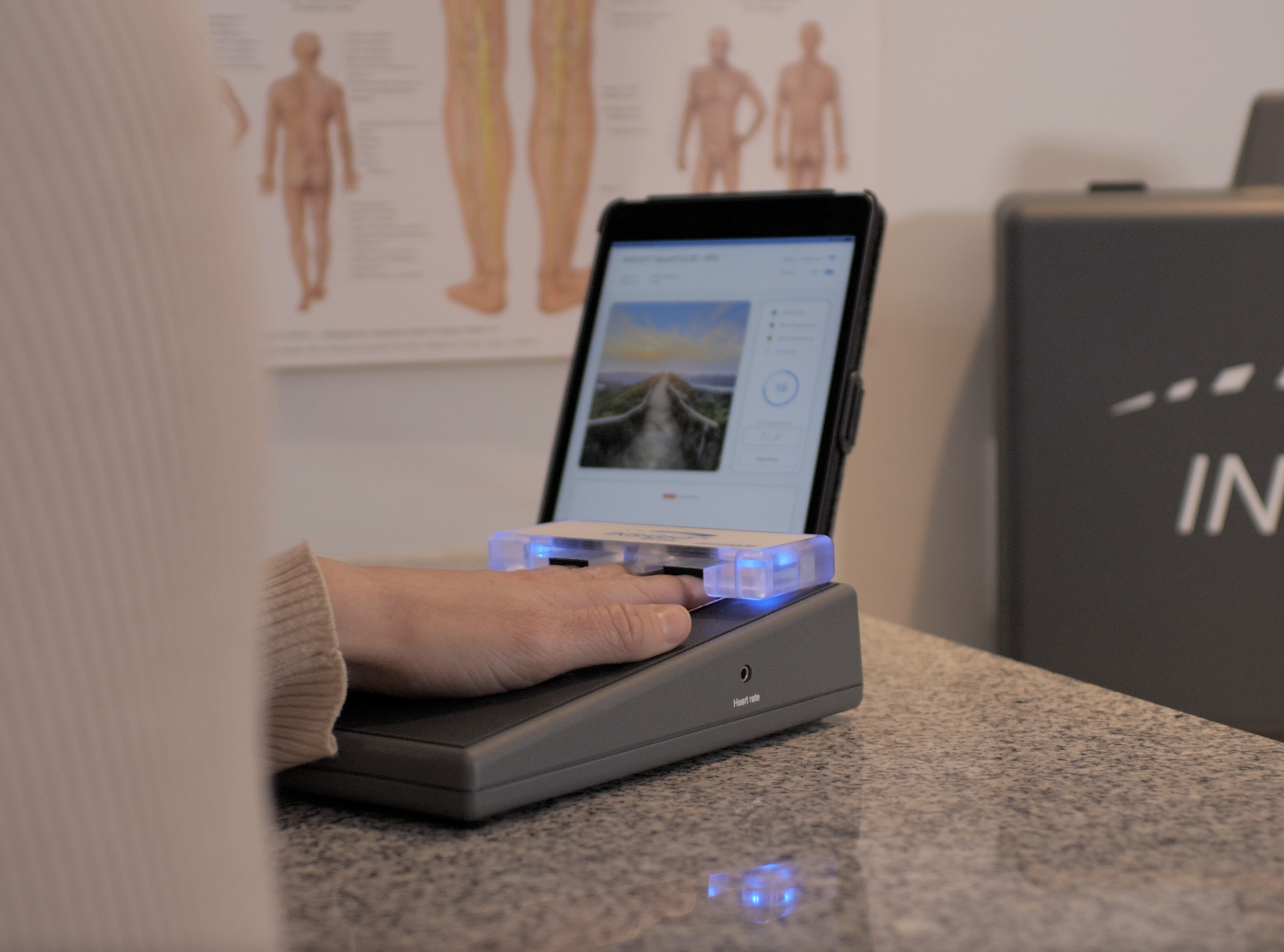
The neuroPULSE analyzes Heart Rate Variability, giving the chiropractor a practical view of autonomic balance, activity, adaptability, and reserve. A resilient nervous system should be able to increase output when demand rises and recover when the demand passes. In the RED framework, neuroPULSE represents Reserve.
neuroCORE Reveals the Energy Cost of Compensation
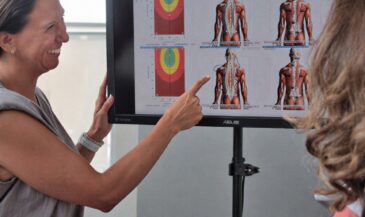
The neuroCORE uses surface electromyography to analyze paraspinal muscle activity, symmetry, pattern efficiency, and energy expenditure. The motor system may use excessive energy simply to maintain posture against gravity, or it may show low activity where better organization is needed. In the RED framework, neuroCORE represents Energy.
Its scan views help the doctor see whether the spinal motor system appears organized, exhausted, asymmetrical, or compensatory. Higher activity is not automatically worse, just as lower activity is not automatically better. The chiropractor interprets the pattern in context.
neuroTHERMAL Adds Depth to the Autonomic Picture
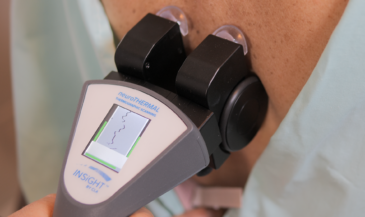
The neuroTHERMAL performs a full spine nerve system scan in under 30 seconds and analyzes bilateral temperature patterns connected to autonomic regulation. In the RED framework, neuroTHERMAL represents Depth. It does not diagnose disease from a thermal pattern. It gives the chiropractor a reproducible view of regional autonomic patterns needing attention.
CORESCORE Turns Complex Neurology Into a Clear Report
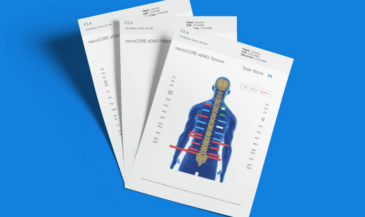
Synapse software combines the three analyses into CORESCORE, a 0–100 neurological efficiency score patients can understand. CORESCORE is not an intelligence score, cortical analysis, or diagnosis. It is a report-card-style summary that supports a clearer discussion of overall neural efficiency from a chiropractic perspective.
- Initial: Establishes the patient’s baseline nervous system status.
- Progress: Analyzes whether early patterns are changing under the sequence of adjustments.
- Comparative: Examines the developing trend across multiple exams.
- Continuation: Tracks ongoing stability and adaptation using recent scans.
The technology does not create the care plan. The chiropractor does. INSiGHT scanning technology provides objective analysis and scan views that the doctor combines with history, examination, goals, and clinical judgment.
A More Precise Way to Think About Nervous System Performance
Efficient nervous system performance is not the absence of activity. It is the appropriate use of neural resources for the demand at hand. A resilient nervous system should be able to increase output for a difficult task, reduce unnecessary effort when the task is easier, and recover with enough reserve for the next challenge.
The tools and conclusions differ between cognitive neuroscience and chiropractic analysis, but the discipline is similar: never interpret activity without context. A single scan, one score, or one day cannot describe the whole nervous system.
From Symptoms to Performance
For the chiropractor, the better questions are practical. Is this nervous system becoming more organized? Is it using energy more economically? Can it respond when demand rises and recover when the demand passes? Is there enough reserve to meet life without remaining in sympathetic overdrive?
Neurological scanning gives chiropractors an objective way to explore those questions. With INSiGHT scanning technology, patients can see Reserve through neuroPULSE, Energy through neuroCORE, Depth through neuroTHERMAL, and the combined pattern through CORESCORE.
When patients see their nervous system status in living color, they stop thinking only about symptoms and begin seeing the bigger story of regulation, adaptability, and performance. The nervous system is always working. Neural efficiency asks whether it is working harder than necessary or organizing its resources well enough to meet life with greater adaptability and reserve.