
Heart rate variability is not just a “heart metric” for athletes and wellness apps. In chiropractic, an HRV scan is a practical way to evaluate nervous system performance and how well someone can respond and recover. You are not counting heart beats. You are looking at the timing between beats, and that rhythm reveals whether the autonomic nervous system is flexible or stuck.
When you bring HRV into your scan process, the care plan conversation changes. Patients stop chasing symptoms and start seeing nervous system function. Your recommendations feel clearer. Your re-exams feel more meaningful. Patient reporting improves because progress becomes visible. And that is exactly where modern chiropractic thrives.
Why an HRV Scan Belongs in Today’s Chiropractic
Chiropractic has always been strongest when it is grounded in measurable findings. Symptoms can be loud, but they are not always reliable markers of progress. A patient can have less neck pain this week and still show signs of tension within your nervous system. Another patient can feel “about the same” yet show meaningful improvements in resilience and regulation. An HRV scan helps you see the difference and communicate it with confidence.
In the chiropractic office, you are not simply trying to reduce discomfort. You are trying to help the person adapt to life’s demands with more capacity. That is what chiropractic care is really protecting. When the nervous system is overloaded, the system can get biased toward fight or flight. When recovery is weak, small stressors hit harder. You may see exhaustion, irritability, poor sleep, and decreased recovery long before the patient connects the dots. An HRV scan gives you a consistent way to measure that adaptive reserve.
This is also where subluxation conversations become more grounded. When a chiropractor identifies spinal stress and a subluxation pattern, the goal is not to create fear. The goal is to improve neurological efficiency. A vertebral subluxation is one piece of a larger story about stress, compensation, and regulation. HRV does not diagnose a subluxation, but it can support your clinical picture by reflecting imbalance and reduced adaptability. That is especially helpful when the patient is not sure why they feel “off,” or when symptoms fluctuate.
- It gives a baseline that is not dependent on mood, pain level, or the day’s symptom report.
- It supports clearer conversations about resilience, recovery, and overall ability to adapt.
- It helps the clinician explain why care continues even when symptoms temporarily improve.
- It anchors your recommendations in objective data rather than guesswork.
What HRV Actually Measures
Heart rate variability, sometimes shortened as HRV, is the variation in time between each heartbeat. It is not your average heart rate. It is not how fast the heart is beating. It is the tiny fluctuation in milliseconds between one beat and the next. In an HRV scan, you are looking at the timing. More specifically, you are looking at the timing of your pulse as it changes from beat to beat, and that change reflects how the nervous system is regulating in real time.
This regulation lives in the autonomic nervous system, also called the ANS. The ans is the automatic control system that manages breathing, circulation, digestion, and countless internal functions. It has two primary branches. The sympathetic branch is activation. Think gas pedal. It is the part associated with fight or flight. The parasympathetic branch is recovery. It is rest and digest. Together, these two branches create a living rhythm that speeds up and slows down based on demand. HRV reflects how well the sympathetic and parasympathetic systems coordinate. When that coordination is flexible, HRV is typically higher. When the system is rigid or stuck, HRV tends to be lower.
For chiropractors, this is the key point. Heart rate variability is an adaptability marker. It gives a window into reserve, regulation, and nervous system performance. A person can look calm and still show a rigid rhythm. Another person can have a demanding life and still show a resilient pattern that recovers well. That is why a chiropractor should never treat a single number like a verdict. Instead, interpret your HRV based on baseline and trend. You are looking for a nervous system that can shift gears smoothly, not a nervous system chasing a perfect score.
- HRV reflects how the autonomic nervous system is balancing activation and recovery.
- It helps you observe the balance between the sympathetic system and parasympathetic regulation.
- It offers a practical view of nervous system function without relying on symptoms alone.
- It supports conversations about adaptability, resilience, and overall health in a way patients can understand.
Learn more about INSiGHT scanning?
Fill this out and we’ll get in touch!
"*" indicates required fields
Interpreting an HRV Scan in Chiropractic
In chiropractic, the most useful interpretation lens is not “high equals good” and “low equals bad.” The most useful lens is responsiveness and trend. An HRV scan becomes clinically meaningful when you can compare scans taken under similar conditions and see whether the system is becoming more adaptable. That is the story patients care about and the story chiropractic is built to support.
When HRV is persistently low, it can suggest reduced reserve and a system leaning toward sympathetic dominance. That can show up as tension within your nervous system, slower recovery, and a reduced ability to adapt to daily stress. In real life that might look like irritability, sleep disruption, or feeling depleted even when life seems “normal.” In some cases, when combined with the rest of your neurological exam and other objective findings, a low HRV pattern may align with dysautonomia. The scan does not diagnose. It provides objective data that helps a clinician explain what they are seeing and why it matters.
When HRV improves over time, that can reflect a system becoming more resilient and better regulated. You may see increased parasympathetic response, improved vagal tone, and a more flexible rhythm. This is where the chiropractic conversation gets easier. Instead of debating symptoms, you can show improved adaptability and resilience. Patients often connect this to practical outcomes such as better sleep, steadier energy, improved digestion, and a calmer response to stress. Again, these are not promises. They are common correlations when regulation improves and the parasympathetic nervous system is showing up more consistently.
Context matters. Heart rate variability is influenced by lifestyle and environment. Ask better questions and your interpretation becomes clearer. Sleep, hydration, healthy habits, chronic stress, and exercise and constant emotional aggravation can all impact HRV. Spinal tension matters too. A stressed cervical region can be a meaningful neurological input, especially when paired with other findings. In a neurologically-focused chiropractic practice, you are not reducing the person to a number. You are using an HRV scan to support determining the balance and tension in the system, then using your clinical judgment to guide the next steps.
- Start with baseline, then re-scan to measure trend.
- Look for fluctuation that reflects adaptive capacity rather than rigid patterns.
- Consider the balance and tension within the system and the patient’s real life stress load.
- Use the scan to support communication, not to replace clinical reasoning.
HRV Scanning vs Wearables
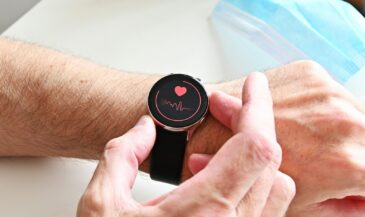
Patients arrive with wearable data more than ever. That can be useful for general awareness, but it often creates confusion in the chiropractic office. A watch or ring may show HRV, but it usually measures in uncontrolled conditions. Movement, posture, talking, travel, and emotional swings can change the reading. Different devices also use different algorithms. The result is inconsistent data that is hard to compare and easy to misinterpret. A patient may think they are in poor health because their wearable showed a low number after a bad night of sleep.
A clinical HRV scan is different because it is designed for reproducibility. In the chiropractic practice, you measure in a stable resting condition so the scan reflects true autonomic performance. This is where HRV becomes actionable. You can track trend. You can connect changes to care, recovery, and lifestyle choices. You can help the patient understand the concept of tone, meaning whether their system looks tense and reactive or flexible and regulated. Wearables can support wellness habits, but clinical scanning supports clinical interpretation.
Here is a clean way to position it for patients. Your wearable is measuring you while you live your life. Our in office HRV scan measures you at rest under consistent conditions, so we can monitor nervous system performance and your overall ability to adapt over time. That keeps the conversation grounded, keeps patients from obsessing over daily noise, and keeps chiropractic care focused on measurable progress.
The INSiGHT Approach to HRV Scanning and Neurological Reporting
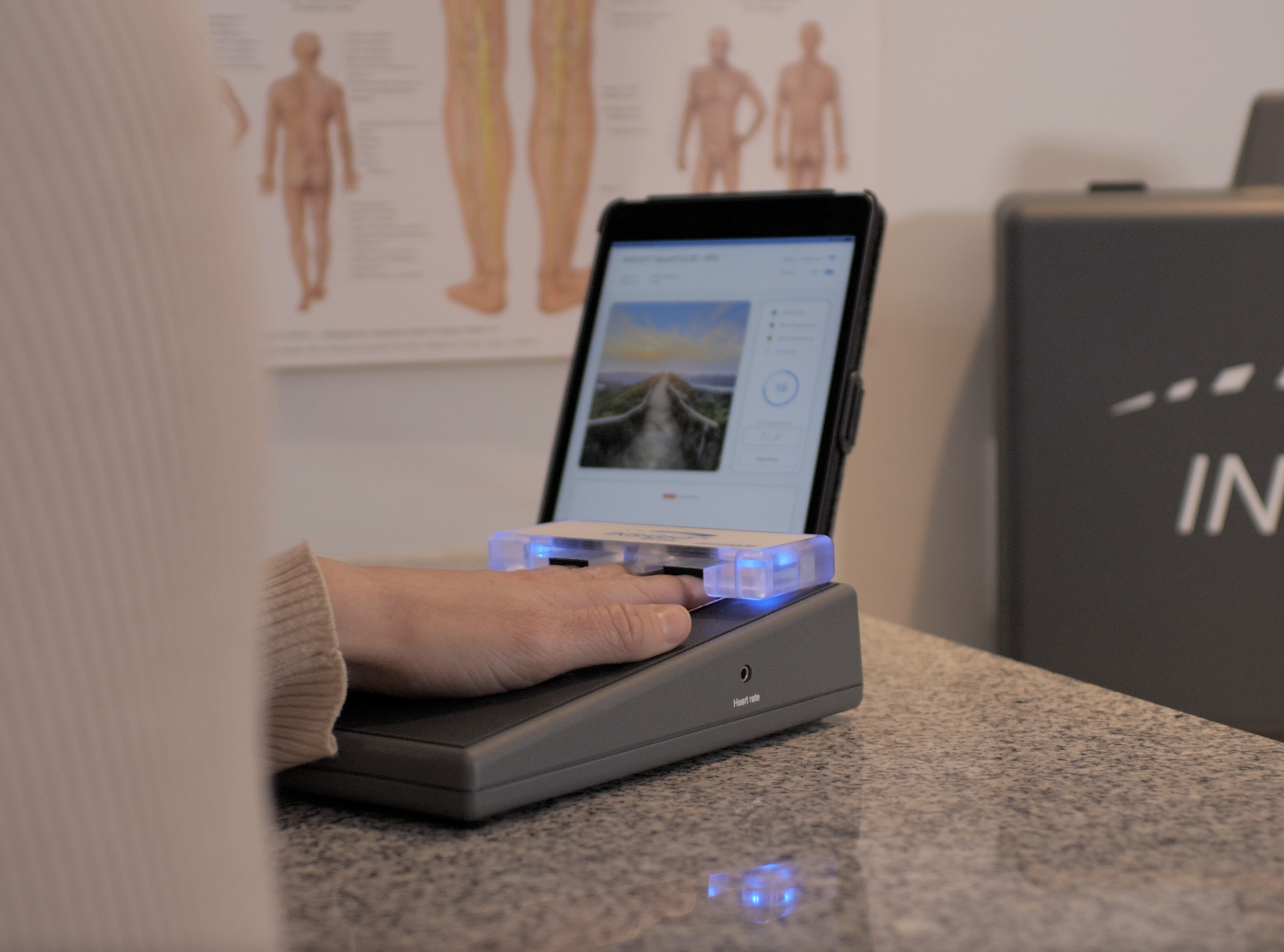
This is where HRV becomes part of a complete neurological scanning strategy. The INSiGHT HRV scan is delivered through the neuroPULSE, a system designed for chiropractors who want clarity, consistency, and patient friendly reporting. The neuroPULSE measures heart rate variability by capturing the timing of your pulse in a controlled resting state. That creates reliable HRV data you can compare over time. It also supports a clearer explanation of pulse and determining the balance between activation and recovery.
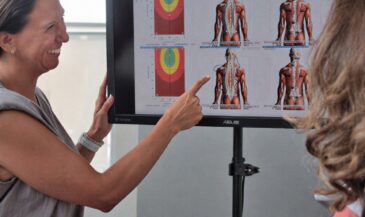
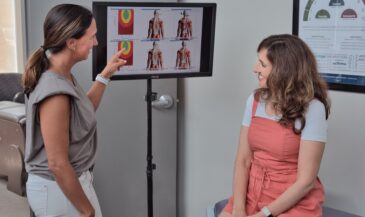
What makes the INSiGHT approach stick in real chiropractic conversations is the rainbow graph. The rainbow graph translates the scan into a visual story that patients understand quickly. It helps the clinician explain balance between the sympathetic and parasympathetic systems without drowning the patient in numbers. It shows where the patient is trending, whether the system looks stuck in gas pedal mode, whether recovery is blunted, and whether the overall ability to adapt is returning. That is patient reporting done right because the patient sees the progress, not just hears about it.
- Zone 1 Revving Engine: sympathetic dominant with high reserve
- Zone 2 Parking Brake On: parasympathetic dominant patterns that can reflect low response
- Zone 3 Distressed: sympathetic dominance with reduced reserve
- Zone 4 Weakened: depleted reserve and limited responsiveness
- Zone 5 Green Zone: balanced, responsive, and moving toward optimal health
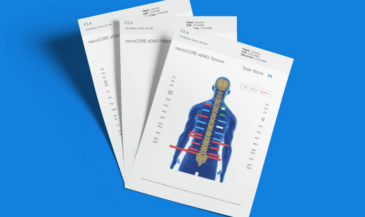
INSiGHT also reinforces a principle every chiropractor should follow. Do not interpret HRV alone. HRV is powerful, but a clinical practice builds certainty by stacking findings. The neuroTHERMAL scan uses thermography to identify thermal asymmetries that reflect neurological stress trends along the spinal regions. The neuroCORE sEMG scan evaluates muscle activity and postural tension that can reflect how the spinal system is compensating. When you combine neuroPULSE HRV scanning with neuroTHERMAL and neuroCORE sEMG, you are not guessing about overall health. You are building a more complete picture of nervous system performance and adaptability across the body. This matters in family chiropractic and pediatric settings too, where symptoms are not always a clear guide and objective data helps parents understand what is being measured and why.
One important clarity point for every chiropractor and every team. INSiGHT scanning technologies provide objective data and reporting. They do not produce care plans. The clinician interprets the findings, integrates them with the chiropractic examination, and designs recommendations. That is where chiropractic adjustments help. They support improved regulation, improved ability to adapt, and a clearer path toward good health through measurable progress rather than guesswork.
Let the Scan Lead the Conversation
An HRV scan gives chiropractic something it has always needed in the modern era: a simple, repeatable way to measure adaptability. Heart rate variability lets you see how the autonomic nervous system is coordinating sympathetic activation and parasympathetic recovery. It helps you explain why a person feels stuck, why draining of a person’s reserves matters, and why the goal is not just symptom relief but improved nervous system performance. It also helps you explain why we re-scan and why consistency matters, because adapt to life’s demands is not a mindset, it is a measurable neurological capacity.
When you use an HRV scan as part of scan based chiropractic care, your conversations get clearer and your recommendations feel more grounded. Patients understand the rhythm of progress. They see that improvement is not always linear. They stop chasing daily spikes and start trusting trends. And when you tie HRV to INSiGHT scanning through neuroPULSE, supported by neuroTHERMAL thermography and neuroCORE sEMG, you give patients a complete, understandable picture of their nervous system performance and their path toward optimal health. That is how a chiropractor leads with certainty and helps patients build resilience that lasts.