

Here is where the conversation gets interesting. A lot of people can repeat the term SDNN, but far fewer understand what it actually measures, how it differs from RMSSD, or why short wrist-based HRV readings should not be interpreted the same way as a longer clinical recording. For a Neurologically-Focused Chiropractor, that distinction matters. When you understand what is SDNN through a chiropractic lens, you can move the conversation beyond heart rates alone and into adaptability, autonomic nervous system function, and nervous system performance.
What SDNN actually measures in heart rate variability
SDNN stands for standard deviation of normal-to-normal intervals. Put simply, it is the standard deviation of nn intervals, meaning the normal timing between consecutive heartbeats. In heart rate variability analysis, that timing data is used to calculate HRV and understand how much interval variability exists from one heartbeat to the next. This is why SDNN is often described as a measure of HRV that reflects the overall HRV present during the recording.
That point is worth slowing down for. A steady heartbeat is not supposed to be perfectly uniform. Healthy variability in heart rate means the body can speed up and slow down appropriately in response to demands. That variability in heart rate is part of how the autonomic nervous system stays adaptive. SDNN captures that broader fluctuation. It is not just about a single heartbeat or a single moment. It reflects the spread of nn interval values across a recording, which makes it a useful HRV metric when you want to look at overall HRV rather than one narrow slice of function.
In practical terms, SDNN captures both short-term and long-term variability. That is one reason it has been so important in HRV measurements for decades. It reflects different aspects of HRV that occur across the recording period, including beat-to-beat variability, respiratory influences, slower physiological rhythms, and changes throughout the day when the recording is long enough. In longer monitoring, SDNN can tell you more about the body’s total adaptive behavior than a simple heart rate number ever could.
For chiropractors, this matters because we are not just looking at the heart. We are looking at what heart rate and HRV can reveal about autonomic nervous system function, sympathetic and parasympathetic balance, and the patient’s capacity to adapt. A patient may have normal heart rates and still show poor interval variability. That is why heart rate and HRV should never be treated as the same thing. Heart rate data tells you how fast the system is running. HRV using nn interval timing tells you how flexibly that system is adapting.
- SDNN Reflects overall HRV across the recording period
- NN interval Refers to the time between consecutive normal heartbeats
- Measure of HRV Gives a broader view of autonomic nervous system function than heart rate alone
How SDNN is calculated and what the numbers mean
To understand SDNN, it helps to understand the math without getting lost in the weeds. HRV calculations begin with a string of normal beat intervals. The software identifies each nn interval, looks at how those intervals fluctuate, and then calculates the standard deviation of n-n intervals across the recording. That is SDNN. It sounds technical because it is technical, but the idea is straightforward: how spread out are the normal heartbeat intervals over time?
This is why SDNN is one of the most widely recognized time and frequency domain companion concepts in HRV analysis, even though SDNN itself is a time-domain value. It reflects all cyclic influences active during the recording period.
When people ask about normal SDNN, the answer is always context first. Normal ranges depend on the length of the recording, the method used, the age of the patient, and the quality of the data. In long-term cardiovascular literature, SDNN values below 50 ms have been associated with increased inflammatory responses and lowered immune reactivity while higher values generally reflect better overall HRV. That benchmark has real value, but it does not mean every 1minute wearable reading belongs in the same reference frame.
That is one of the most important takeaways for chiropractors. A value may look low or high HRV on a screen, but that does not automatically mean that your body is in one fixed category. It may mean that your body was recorded under a different method, during a different state, with a different instrument, and over a different length of time. SDNN values need interpretation, not reaction.
Several factors can influence SDNN and overall HRV:
- Age HRV over time tends to decline with age
- Physical activity Training load and recovery status can shift HRV readings
- Resting heart rate Often influences how heart rate variability is expressed
- Sympathetic activity Ongoing sympathetic overdrive can compress variability
- Parasympathetic activity Healthy vagal responsiveness helps support variability in heart rate
- Recording conditions Time of day, position, signal quality, and respiratory pattern all matter
For the chiropractor, SDNN is best viewed as one objective metric within a broader analysis. It is helpful. It is meaningful. But it is not a diagnosis by itself. It is part of a larger story about autonomic nervous system function, stress adaptation, and nervous system performance.
Learn more about INSiGHT scanning?
Fill this out and we’ll get in touch!
"*" indicates required fields
SDNN vs RMSSD and why the distinction matters in practice
If you want to explain HRV metrics explained in a way that actually helps a patient, the clearest place to start is SDNN vs RMSSD. Both are time-domain HRV metrics. Both are derived from the same nn interval data. Both are used to measure HRV. But they are not measuring the same thing.
SDNN reflects overall HRV across the recording session. RMSSD, which stands for root mean square of successive differences, focuses on short-term changes between one interval and the next. More specifically, RMSSD is based on the mean square of successive differences between adjacent normal intervals. You will also hear it described as the root mean square of successive interval changes. That makes RMSSD more sensitive to short-term, parasympathetic nervous system activity, especially the rapid fluctuations tied to breathing and vagal control.
So when clinicians talk about SDNN and RMSSD, they are talking about two lenses on the same autonomic picture. SDNN is influenced by both parasympathetic and sympathetic inputs and captures broader short-term and long-term variability. RMSSD leans more toward parasympathetic activity and short-term variability. That is why RMSSD may be common in recovery apps and fitness wearables, while SDNN is more established in clinical heart rate variability analysis and long-term variability research.
This matters in practice because patients often come in with numbers and assumptions. They may know they have low RMSSD, or they may say their apple watch reported HRV based on SDNN. If you do not know which metric they are using, it becomes very easy to overread or misread the meaning of the number. Better interpretation creates better communication.
- SDNN vs RMSSD SDNN reflects overall HRV, while RMSSD focuses on short-term parasympathetic nervous system activity
- Use SDNN When the goal is understanding broader overall HRV across the recording period
- Use RMSSD When the focus is short-term recovery trends and vagal responsiveness
There is also a practical reason chiropractors should understand RMSSD and SDNN together. When you compare SDNN and RMSSD, you begin to see different aspects of HRV instead of collapsing everything into a single score. That helps you discuss parasympathetic and sympathetic relationships more intelligently, especially when patients are tracking HRV with consumer wearables.
Why recording quality and clinical context matter for SDNN interpretation
One of the biggest mistakes in modern HRV conversations is assuming all recordings are equal. They are not. Some devices use ecg. Many consumer wearables use ppg. Both can estimate interval timing, but the quality of that signal changes everything. If the underlying heart rate monitoring is noisy, then the HRV metric built from it can be noisy too. That includes both RMSSD and SDNN.
This is where the clinical conversation needs maturity. Consumer wearables may be useful for a snapshot of trends, but they sit in a different reference frame. Contact pressure, motion artifact, poor sensor fit, sleep position, respiratory pattern, and weak pulse detection can all distort the heart rate data. When that happens, the interval values used to calculate HRV become less trustworthy. The result is that a number may look precise while still being built on variable input.
That distinction becomes even more important when patients ask what their HRV can tell them. HRV can tell you a lot, but only when the recording, context, and analysis are respected. A low SDNN on a long-term recording can carry different implications than the same number from a short wrist reading. In the cardiovascular world, standards such as those referenced by the european society of cardiology were built around specific recording conditions. That context should stay attached to the number.
For chiropractors, the better approach is not to dismiss wearables, but to interpret them carefully. Consumer wearables have helped patients care more about heart health, overall health, and the autonomic nervous system. That is a good thing. But chiropractors should help patients understand that beat-to-beat data, interval variability, and HRV trends only make sense when signal quality and recording method are considered.
Here is the practical principle: HRV over time is often more meaningful than a single reading. Whether you are looking at SDNN, RMSSD, or another HRV metric, repeated analysis under consistent conditions tells you more than one isolated number. That is especially true when you are trying to understand how the body is adapting to stress, recovery, and changes in heart rate across real life.
How INSiGHT neuroPULSE and neurological scanning strengthen the SDNN conversation
This is where the topic comes back home to chiropractic. If you are going to talk about what is SDNN in a meaningful way inside practice, you need more than generic wearable curiosity. You need objective examination data, consistent collection, and a framework that ties heart rate variability to the broader function of the nervous system. That is exactly why neurological scanning matters.
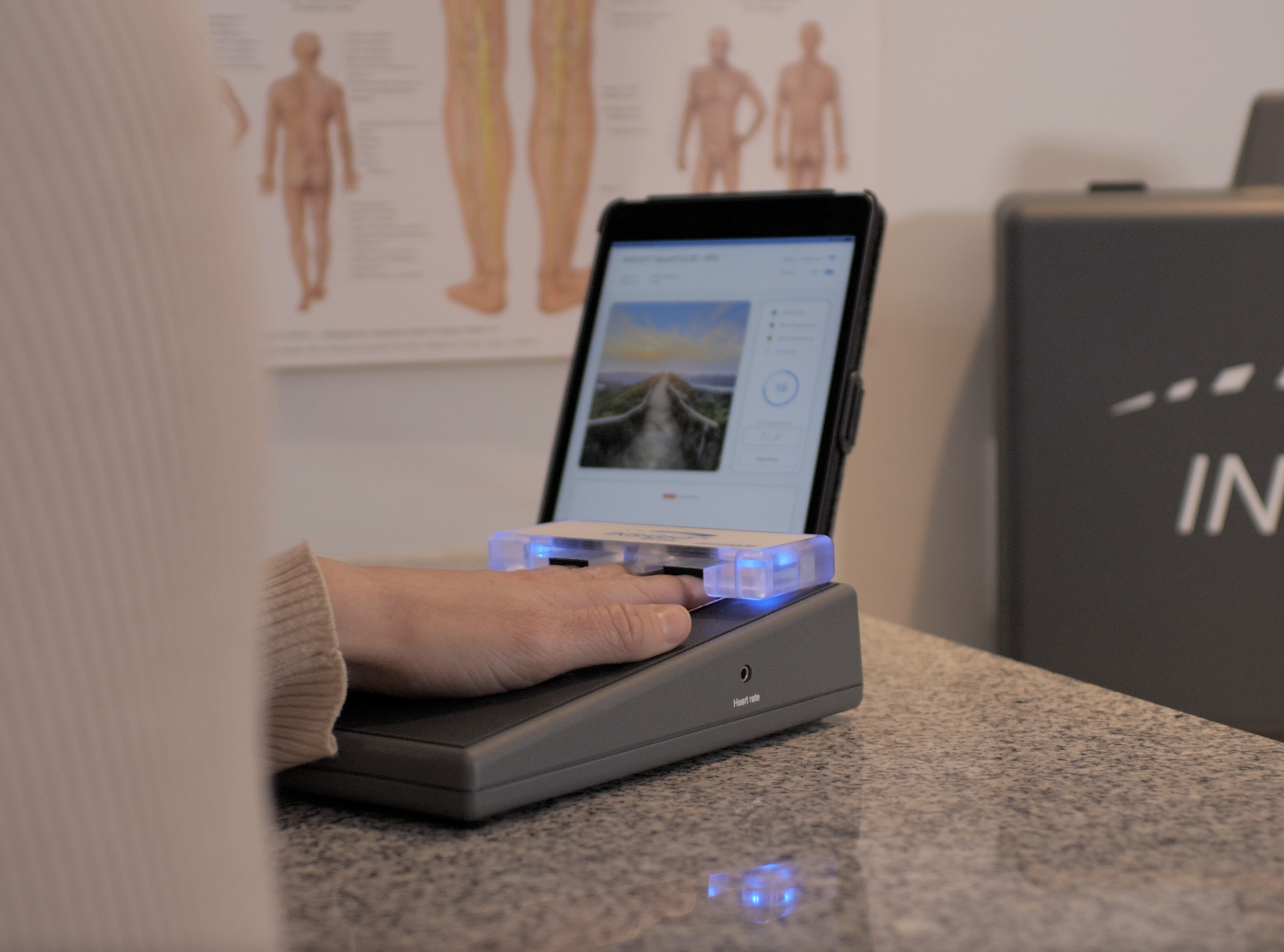
INSiGHT scanning technology gives chiropractors a way to move beyond casual HRV talk and into structured clinical interpretation. Within that model, neuroPULSE supports heart rate variability analysis by giving objective data related to autonomic balance and activity. It is not just a random wellness score. It is part of a more complete look at how well the patient is adapting. That matters because SDNN captures overall HRV, but no single number should be isolated from the rest of the neurological picture.
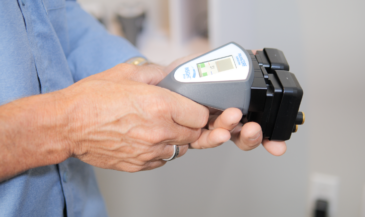
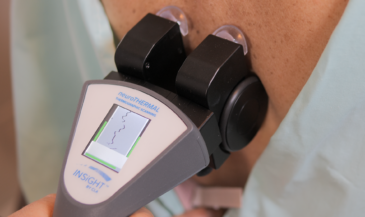
That is why INSiGHT’s approach is so useful for chiropractors. NeuroPULSE can be interpreted alongside neuroCORE and neuroTHERMAL to help create a fuller view of nervous system performance. Instead of asking only whether heart rate variability is up or down, the doctor can look at adaptability, postural tension patterns, autonomic shifts, and changes over time. That is a far more meaningful conversation than simply reacting to a wearable app summary.
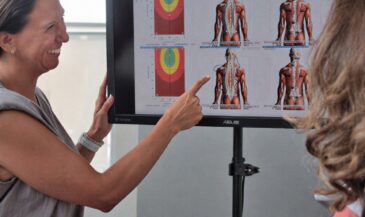
Just as important, this kind of scanning helps patients understand what the number means. When patients can see objective data and follow progress from one recording to the next, the conversation shifts away from symptoms alone and toward function. That does not mean INSiGHT creates the care plan. It does not. INSiGHT scanning technology provides the objective exam data and reports. The chiropractor interprets that information and uses it to design the care plan. That distinction matters.
When a patient asks whether their SDNN, RMSSD, or HRV score means they are improving, neurological scanning helps you answer with greater certainty. It lets you connect heart rate variability to a larger analysis of adaptability and nervous system function. For a profession that wants to lead with clarity, that is a powerful step forward.
What SDNN is really telling us in chiropractic
So, what is SDNN in the chiropractic profession? It is the standard deviation of nn intervals, a broad measure of HRV that reflects overall variability during the recording period. It helps us understand how the autonomic nervous system is behaving, how adaptable the body appears to be, and whether the system is showing signs of better reserve or reduced flexibility.
But the deeper value of SDNN is not in the acronym. It is in what the metric teaches us. It reminds us that heart rate variability is not just about heart rates. It is about adaptability. It is about changes in heart rate and interval timing that mean that your body is actively responding to life. It is about recognizing that SDNN vs RMSSD is not a battle of better or worse, but a matter of understanding what each metric reveals. And it is about knowing that recording context, from wearable to ecg, from 5 minutes to 24-hour monitoring, shapes interpretation.
For chiropractors, that is where the opportunity is. When you understand SDNN, RMSSD, and the broader language of HRV, you can help patients make sense of the flood of heart rate variability data they are already seeing. Better yet, when you pair that understanding with INSiGHT scanning technology, you can bring the conversation back where it belongs: to objective neurological assessment, clearer communication, and a stronger understanding of nervous system performance over time.