
For people living with Postural Orthostatic Tachycardia Syndrome, commonly known as POTS, or other forms of dysautonomia, this struggle can feel especially frustrating. The symptoms can be intense. The fatigue can be crushing. The heart palpitations, dizziness, brain fog, panic-like sensations, temperature changes, and exhaustion can affect nearly every part of daily life.
And yet, for many people, the search for answers is not simple.
Former Bachelorette Michelle Young has recently brought more public awareness to this experience by sharing her personal journey with dysautonomia and POTS. Her story resonates with so many people because it reflects something patients with invisible symptoms often know well: it can take a long time to understand what is happening inside the body.
Michelle has shared that a number of tests came back normal. At first, she thought her symptoms could have been related to stress or anxiety around her wedding. But the symptoms continued, and over time, she discovered that something much deeper was going on.
That experience is familiar to many patients.
Something feels wrong. The body does not feel like itself. Energy disappears. The nervous system feels overwhelmed. The heart races. The body feels reactive, unstable, or exhausted. But when testing does not clearly explain the pattern, patients can feel stuck between what they are experiencing and what can be objectively shown.
That is where the conversation around POTS, dysautonomia, and invisible illness becomes so important.
When symptoms are real but answers are hard to find
POTS is commonly associated with dysfunction in the autonomic nervous system. The autonomic nervous system controls many of the body’s automatic functions, including heart rate, blood pressure, temperature regulation, digestion, and the body’s response to stress.
When those automatic functions are not regulating properly, patients may experience symptoms that are difficult to predict and hard to explain. One day may look different from the next. A person may look fine on the outside while feeling completely depleted on the inside.
That is one of the most difficult parts of invisible illness.
Patients often know their body is struggling, but they may not have the words, the visuals, or the objective data to explain what is happening. They may hear that their symptoms could be stress, anxiety, hormones, lack of sleep, or simply “normal” test results.
For some patients, that creates a painful cycle.
They feel symptoms. They seek answers. They are told everything looks normal. They begin to question themselves. Then the symptoms continue.
Michelle’s story has struck a chord because she openly describes that kind of search. She has talked about debilitating symptoms, frustration, skepticism, and the need to understand what was happening in her nervous system.
That is why so many people are paying attention.
The emotional weight of invisible illness
Invisible illness carries a unique emotional burden.
When symptoms are not obvious to others, patients may feel like they have to prove that what they are experiencing is real. They may feel misunderstood by friends, family members, coworkers, or even healthcare providers. They may start to explain less because explaining becomes exhausting.
For many people, the hardest part is not only the symptoms themselves. It is the uncertainty.
Why am I so tired?
Why does my heart race?
Why do I feel stuck in fight or flight?
Why do normal activities feel impossible?
Why does my body feel like it cannot adapt?
These are deeply personal questions. They affect confidence, relationships, work, daily routines, and emotional well-being.
This is why Michelle’s comment about validation matters so much. In one of her reels, she shares that seeing how her body is doing in real time is validating when it comes to invisible illness.
That word, validation, is powerful.
Patients with chronic symptoms often do not need someone to exaggerate their experience or make promises. They need to be seen. They need clarity. They need a way to better understand what their body is expressing.
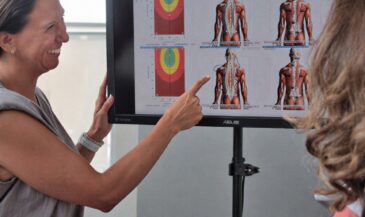
Objective scan visuals can help shift the conversation from, “I feel this,” to, “We can see patterns worth paying attention to.”
Learn more about INSiGHT scanning?
Fill this out and we’ll get in touch!
"*" indicates required fields
Why the autonomic nervous system matters in POTS and dysautonomia conversations
Michelle repeatedly points back to the autonomic nervous system in her story. She talks about dysautonomia, POTS, fight-or-flight, temperature regulation, heart rate, blood pressure, adaptability, and nervous system regulation.
That is important because these are not separate conversations. They are connected through the way the nervous system helps the body respond, adapt, and regulate.
The autonomic nervous system has two primary branches that are often discussed in this context: the sympathetic and parasympathetic systems.
The sympathetic system is commonly associated with fight-or-flight responses. It helps the body activate, respond, and mobilize energy.
The parasympathetic system is commonly associated with rest, recovery, regulation, and repair.
A well-regulated nervous system needs both systems to communicate and adapt appropriately. The goal is not simply to turn one system off and the other on. The goal is adaptability. The body needs the ability to respond when necessary and recover when appropriate.
When people describe feeling stuck in fight or flight, exhausted, reactive, or unable to recover, they are often describing the lived experience of poor adaptability.
That is why objective nervous system data can be such an important part of the conversation.
Why objective data can change the conversation
Michelle has shared that she was skeptical when she first began care because she had already tried many things that were not working. That skepticism is understandable.
Many patients with chronic symptoms have already tried multiple approaches. They have researched. They have changed routines. They have followed recommendations. They have tracked symptoms. They have hoped something would finally create clarity.
When a patient has tried many things without clear answers, words alone may not be enough.
Objective data creates a different kind of conversation.
Instead of beginning with assumptions, the doctor can begin with a baseline. A baseline gives the patient and provider a clearer starting point. It shows measurable patterns that can be reviewed, interpreted, and compared over time.
This is where INSiGHT scanning technology becomes meaningful for nervous system-based chiropractors.
INSiGHT scans do not diagnose POTS or dysautonomia. They provide objective neurological data that chiropractors can interpret in the context of a patient’s history, exam, and clinical picture.
That distinction matters.
The scans are not a replacement for clinical expertise. They support the doctor by creating objective examination data that can help communicate patterns in nervous system performance more clearly.
How INSiGHT scans help visualize nervous system patterns
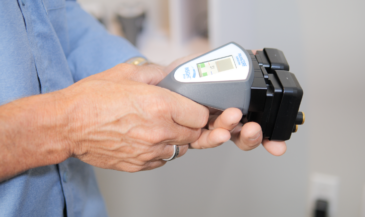
INSiGHT scanning technology includes three core technologies: neuroPULSE, neuroTHERMAL, and neuroCORE. Each one helps measure a different aspect of nervous system performance.
neuroPULSE
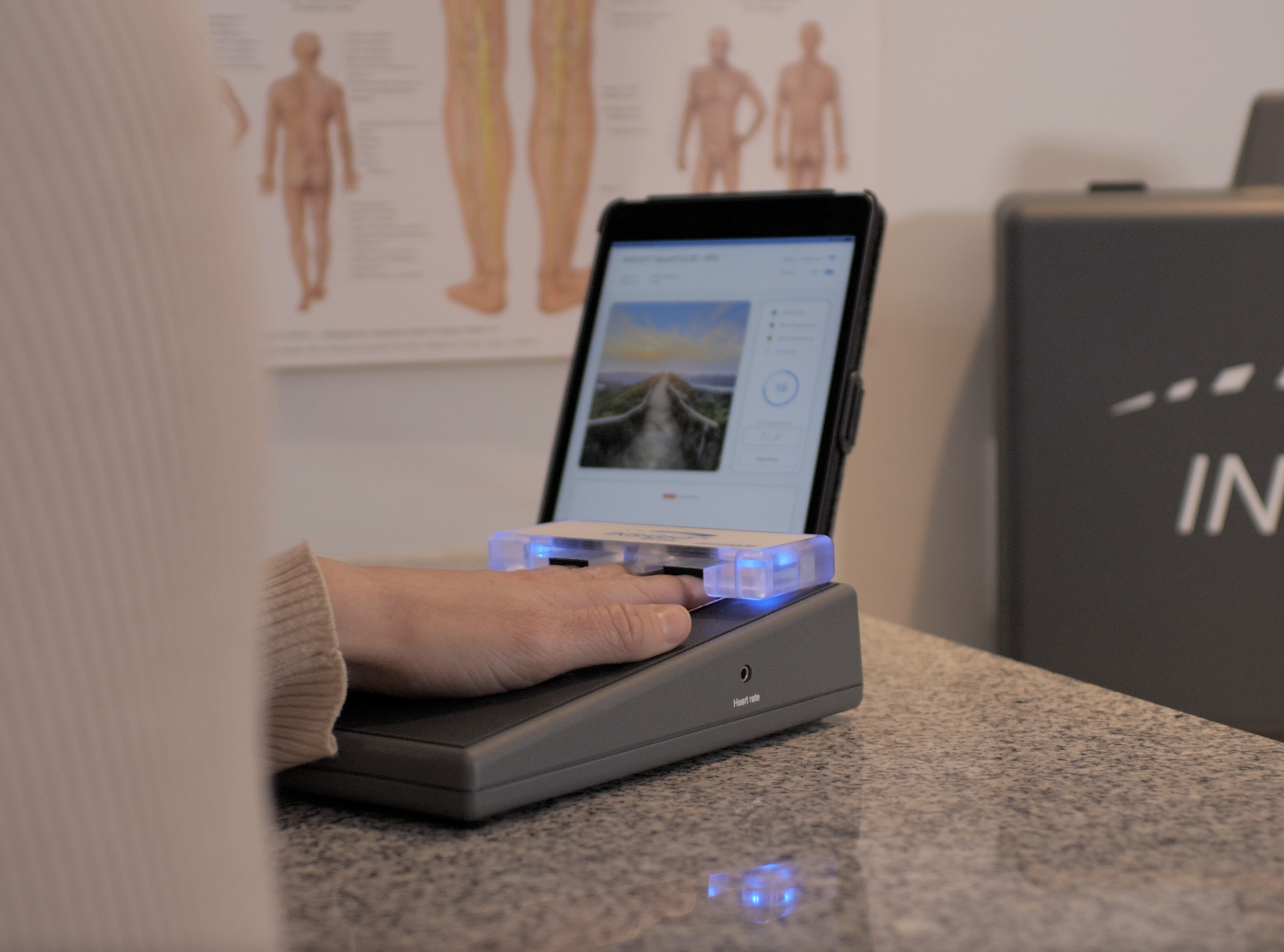
neuroPULSE measures Heart Rate Variability, commonly known as HRV, in a clinical-grade scan. HRV helps provide insight into autonomic balance, autonomic activity, adaptability, and stress response.
For patients who feel stuck in fight or flight, neuroPULSE can help create a clearer conversation around how the body is adapting to stress and how the autonomic nervous system is responding.
This is especially important because HRV is often discussed casually through consumer wearables. neuroPULSE gives chiropractors a clinical-grade way to examine HRV patterns in the context of nervous system performance.
neuroTHERMAL
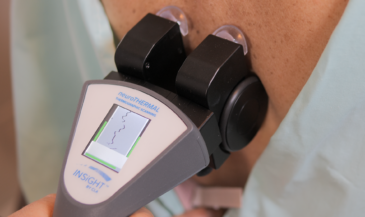
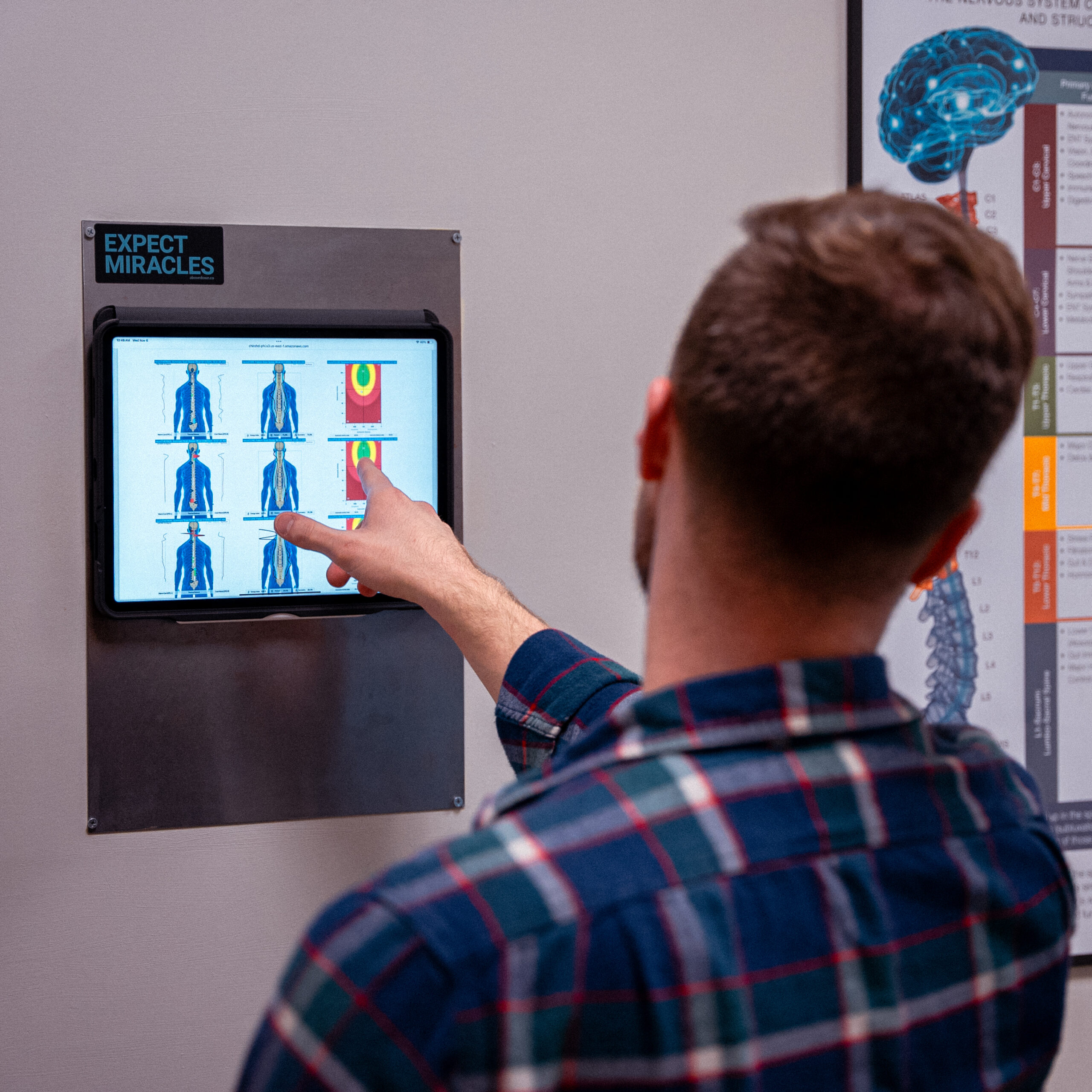
neuroTHERMAL helps identify temperature regulation and segmental stress patterns along the spine.
Temperature regulation is connected to autonomic nervous system activity, which makes this scan valuable for helping chiropractors visualize patterns that may not be obvious from symptoms alone.
For a patient who feels dysregulated, reactive, overheated, chilled, or inconsistent from day to day, the ability to visualize temperature regulation patterns can support a more objective conversation.
neuroCORE
neuroCORE uses surface electromyography, or sEMG, to measure energy and motor tone reactions. It helps show how muscle activity patterns are expressing through the spine and nervous system.
Many patients describe feeling tense, exhausted, weak, or physically drained. neuroCORE helps doctors communicate how stress and nervous system patterns may be showing up through muscle activity and motor tone reactions.
Together, these three scans help create a more complete picture of nervous system performance.
Why baseline and progress scans matter
One of the most valuable parts of Michelle’s second reel is that she shows the idea of a baseline scan compared to a more recent scan.
That matters because patients with invisible symptoms often want proof of progress.
They want to know whether anything is changing. They want to understand whether their body is adapting differently over time. They want to see more than a vague sense of improvement or decline.
A baseline scan gives the patient and doctor a starting point. A re-scan gives them a way to compare.
That comparison can make the care conversation more meaningful.
Instead of asking only, “How do you feel today?” the doctor can also ask, “What patterns are changing?”
Instead of relying only on memory, the doctor can review objective scan data.
Instead of leaving progress as a guess, the doctor can use re-scan comparisons to communicate change over time.
This is one of the core values of INSiGHT scanning technology. It helps chiropractors measure the baseline, re-scan over time, and communicate patterns of change in a way patients can see and understand.
Finding the right kind of provider
One of the clearest responses to Michelle’s reels is that people want to know where to find doctors who offer INSiGHT scans.
They are asking what kind of doctor does this. They are asking how to find a nervous system-based chiropractor. They are asking whether these scans are available near them.
That response reveals something important.
Patients are not only interested in the story. They are looking for access.
They want a provider who understands the nervous system. They want someone who can help them interpret what is happening beneath the surface. They want objective data that helps make invisible symptoms easier to discuss.
For nervous system-based chiropractors, this is a meaningful opportunity.
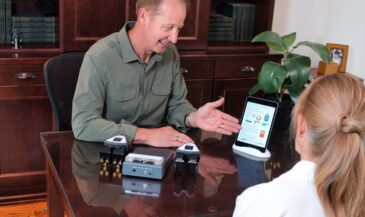
When a practice uses INSiGHT scanning technology, it is equipped to have a different kind of conversation. The doctor can show patients objective scan data. The doctor can explain nervous system patterns more clearly. The doctor can track change over time and help patients understand what their scans reveal.
That type of clarity matters deeply to patients who have spent months or years trying to make sense of what they feel.
Patients deserve clarity, not guesswork
POTS and dysautonomia can be deeply challenging conditions to live with. Invisible illness can be lonely, confusing, and exhausting. Patients may feel like they are constantly trying to explain something that others cannot see.
Michelle Young’s story has brought more attention to that reality.
It has also opened a larger conversation about the importance of objective nervous system data.
When patients can see patterns in their nervous system, the conversation changes. They can better understand what their body is expressing. Doctors can communicate with greater clarity. Re-scans can help show how patterns change over time.
For chiropractors, INSiGHT scanning technology provides a way to measure, communicate, and track nervous system performance using objective examination data.
For patients, that can mean something very simple and very powerful:
They can finally see patterns worth paying attention to.
Learn more about INSiGHT scanning technology
INSiGHT scanning technology helps chiropractors gather objective neurological data through neuroPULSE, neuroTHERMAL, and neuroCORE.
These scans help doctors create clearer conversations around stress response, adaptability, temperature regulation, motor tone reactions, and progress over time.
If you are a chiropractor who wants to bring objective nervous system scanning into your practice, contact us to learn more about INSiGHT scanning technology.
If you’re looking for chiropractors in your area that use INSiGHT technology, visit our directory.