
The real opportunity is simple. When a chiropractor can explain HRV clearly, patients understand why their nervous system matters, why objective scan data matters, and why the care conversation should go beyond how they feel that day. So, how do you explain HRV to patients in chiropractic in a way that feels simple, accurate, and meaningful? Start with adaptability.
Patients don’t need a lecture on physiology. They need a clear explanation of what their heart beats are showing about the nervous system, how their body is responding to life, and how chiropractic care may support better function over time.
Start With the Simple Explanation of HRV
Begin with a plain definition. HRV stands for heart rate variability. Heart rate variability is the variation in time between heart beats. It’s not the same thing as beats per minute, and it’s not simply a number from a fitness tracker.
A healthy heart does not beat like a rigid metronome. A healthy heart rhythm has slight variation from beat to beat because the nervous system is constantly adjusting to what the body needs. That variation in time gives us insight into how responsive the nervous system is.
A simple patient explanation could sound like this:
“HRV helps us understand how flexible your nervous system is. Your heart rate should change slightly from beat to beat because your nervous system is always adjusting. When HRV is more balanced, it often means your body has a better ability to adapt, recover, and regulate.”
That explanation works because it makes HRV practical. It helps patients understand that HRV reflects how well the nervous system responds to physical, emotional, and daily demands. It also helps them understand that HRV is controlled by the autonomic nervous system, the part of your nervous system that controls automatic functions like heart rate, blood flow, breathing rhythm, digestion, and recovery.
From there, you can explain that HRV is connected to two major branches of the nervous system:
- Sympathetic: This branch helps the body respond to activity, challenge, alertness, and fight or flight demands. It can increase your heart rate when your body needs action.
- Parasympathetic: This branch helps the body recover, regulate, and settle. It supports rest and digest function, recovery, and restoration.
The goal is not to make the sympathetic branch sound bad or the parasympathetic branch sound good. The goal is to help patients understand that good hrv reflects flexibility. The nervous system should respond when needed and recover when appropriate.
When patients ask about heart rate variability or hrv, keep the first explanation short. You can always go deeper later. The first goal is helping them understand that HRV is not just about a healthy heart. It’s about the heart and body responding to the signals of the nervous system.
Connect HRV to the Chiropractic Conversation
Most patients still think chiropractic is mostly about vertebra, posture, or immediate relief. HRV gives you a way to shift the conversation toward nervous system function.
Chiropractic has always centered on the relationship between the spine and nervous system. A vertebral subluxation is not merely a structural finding. It involves neurological interference that may affect how the nervous system communicates, regulates, and adapts. HRV gives the chiropractor one way to assess autonomic nervous system function and communicate that information in a way patients can understand.
You might explain it this way:
“Your spine has a close relationship with your nervous system. Chiropractic care focuses on reducing neurological interference so your body can communicate and adapt more efficiently. HRV gives us one way to see how your patient’s nervous system is responding.”
This keeps the chiropractic message clear. You’re not using HRV as a standalone wellness score. You’re using HRV as part of a broader neurological conversation. In a neurologically-focused chiropractic practice, that matters because the patient needs to understand why their nervous system is the central focus of care.
To make this even simpler, explain the balance between the sympathetic and parasympathetic branches. The sympathetic branch helps the body respond to demand. The parasympathetic nervous system helps the body recover. The parasympathetic branch is important, but it’s not the only goal. A nervous system is functioning well when it can move between those branches appropriately.
A helpful phrase is:
“We want your nervous system to respond when life demands it and recover when the demand is over. HRV helps us see whether your body can shift between those two modes.”
That’s the heart of adaptability. A patient with low hrv may be showing reduced reserve, sympathetic overdrive, chronic stress patterns, or difficulty recovering. A patient with higher hrv may have a stronger ability to adapt. But the number always needs context.
This is also where research can support the conversation. A multisite clinical study involving different chiropractors to measure HRV explored the effect of chiropractic care on heart rate variability. Research in this area has looked at chiropractic care and heart rate, care and heart rate variability, and how patients undergoing chiropractic may show changes in hrv over time.
That does not mean you promise every patient a specific HRV result. Instead, you can say that chiropractic care appears to increase certain HRV-related markers in some research and that HRV data helps track how the nervous system responds under care. That’s an honest, clinically grounded way to talk about the effect of chiropractic care.
Learn more about INSiGHT scanning?
Fill this out and we’ll get in touch!
"*" indicates required fields
Teach Patients How to Interpret HRV Without Chasing a Perfect Number
Patients often want to know whether their number is good or bad. They may compare their HRV to a friend, a wearable app, or an online chart. That can quickly turn HRV into a scorecard instead of a clinical conversation.
The better explanation is that HRV is a pattern. One hrv scan gives you a baseline. HRV over time helps you understand whether the nervous system is becoming more responsive, more depleted, more balanced, or better able to adapt. That’s why a single scan is helpful, but repeated scan comparisons are even more valuable.
You can say:
“One HRV score does not tell the whole story. We’re looking at your pattern. We want to see how your nervous system responds, whether it has enough reserve, and how that changes as you move through care.”
This helps the patient understand that HRV can increase or decrease based on sleep, hydration, illness, training load, emotional demand, work pressure, nutrition, recovery, and other life factors. A lower reading on one day does not mean failure. A higher reading on one day does not mean the patient is finished with care.
Here’s a simple way to explain common HRV patterns:
- Higher HRV usually reflects better recovery, reserve, and nervous system responsiveness.
- Low HRV may reflect reduced reserve, neurological distress, chronic stress patterns, or difficulty recovering.
- Balanced HRV suggests the nervous system can shift between sympathetic and parasympathetic activity more appropriately.
- Changes in HRV help the chiropractor understand how the nervous system responds over time.
It also helps to explain the difference between heart rate and HRV. Beats per minute tells you how fast the heart is beating. HRV reflects the timing variation between those beats. A healthy heart rate is important, but HRV gives a different layer of insight into the function of your nervous system.
This is especially helpful when patients say, “But my resting heart rate is normal.” You can explain that a normal resting heart rate does not always mean the nervous system is responsive. HRV gives a deeper look at autonomic regulation, especially when interpreted alongside the full chiropractic exam.
A clear patient phrase is:
“Your resting heart rate tells us one thing. HRV tells us something different. It helps us see how responsive your nervous system is behind the scenes.”
This keeps HRV from becoming intimidating. It also helps patients understand that heart rate variability in patients is not about labeling them as healthy or unhealthy. It’s about seeing how the nervous system responds and whether the body has enough reserve for daily life.
Use the HRV Rainbow Graph and INSiGHT neuroPULSE to Make HRV Visual
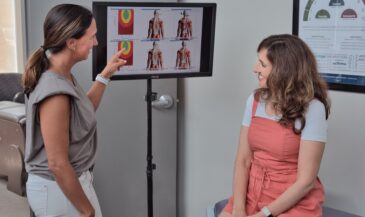
Make it visual. Patients may not fully understand autonomic balance from words alone. But when they see their nervous system status on a clear scan view, the conversation changes.
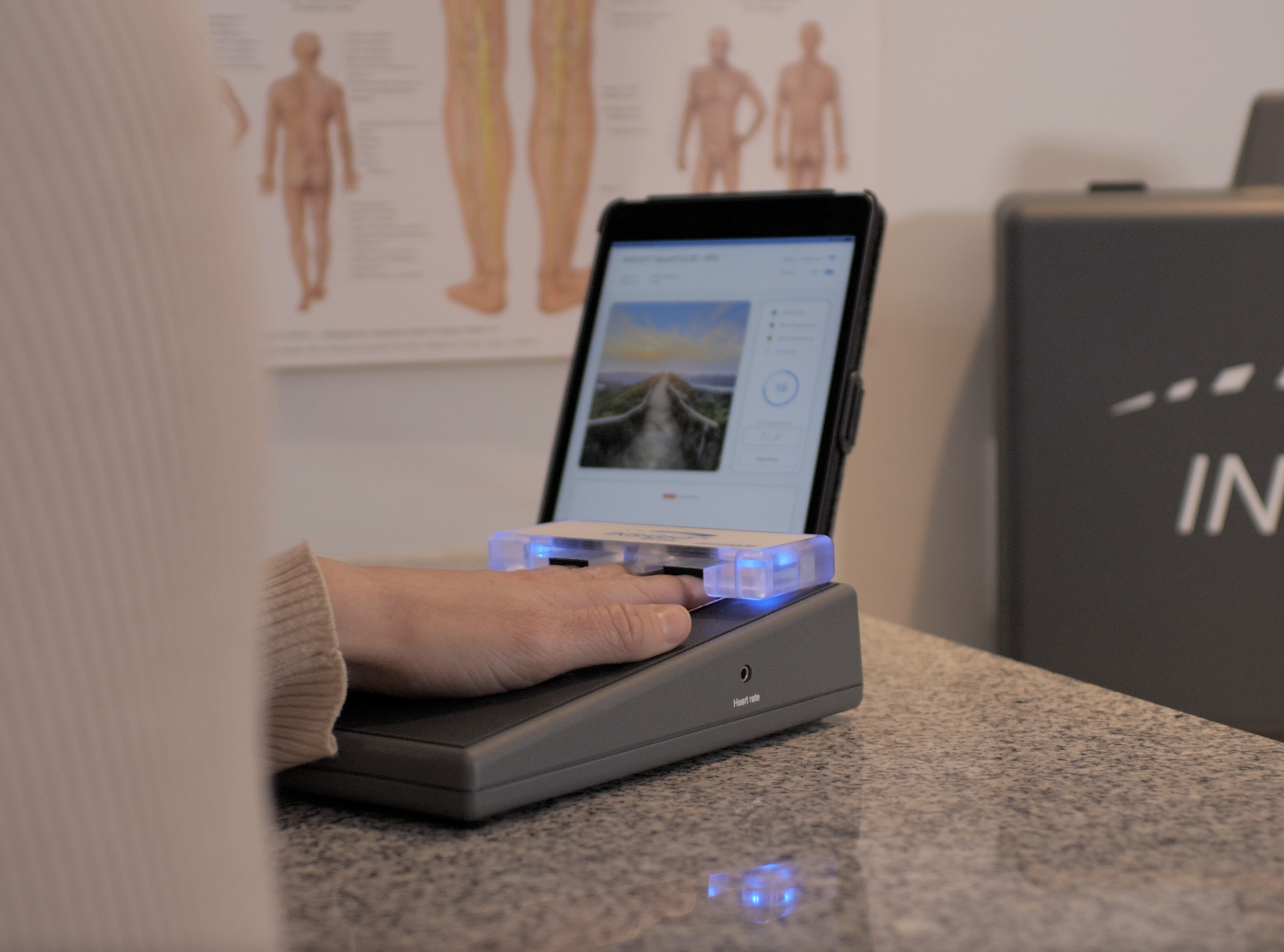
INSiGHT neuroPULSE provides objective HRV scan data designed for chiropractic clinical practice. It helps the chiropractor assess autonomic balance, autonomic activity, reserve, and adaptability. Instead of asking patients to imagine what’s happening inside the nervous system, neuroPULSE gives them a visual way to understand it.
The hrv rainbow graph is one of the most helpful communication tools for this conversation. The rainbow graph plots autonomic balance and autonomic activity. The X-axis reflects the balance between the sympathetic and parasympathetic branches. The Y-axis reflects activity, reserve, and the nervous system’s ability to respond. The patient’s white dot shows where they plot during that scan.
You can explain the zones simply:
- Zone 1: Sympathetic dominant with higher reserve. The nervous system may be revved up but still has energy available.
- Zone 2: Parasympathetic dominant with reduced sympathetic responsiveness. This may reflect an exhausted or underpowered pattern.
- Zone 3: Sympathetic dominant with low reserve. This is common when the nervous system is carrying neurological distress and poor recovery patterns.
- Zone 4: Low reserve and reduced responsiveness. This pattern deserves careful clinical interpretation and, when appropriate, collaboration with other healthcare providers.
- Zone 5: The green zone. This reflects a more balanced and responsive nervous system.
You do not need to begin with SDNN, RMSSD, low frequency, high frequency, or the LF/HF ratio when explaining HRV to most patients. Those details may matter clinically, but patients usually need a simple picture first.
You can say:
“This white dot shows where your nervous system is plotting today. We want to understand whether your system is balanced, whether it has enough reserve, and whether it can respond and recover the way it should.”
This is where INSiGHT scanning technology supports the chiropractor beautifully. INSiGHT neuroPULSE does not replace clinical judgment. It provides objective HRV data and scan views that help the chiropractor interpret the patient’s nervous system status and create personalized care plans with greater clarity.
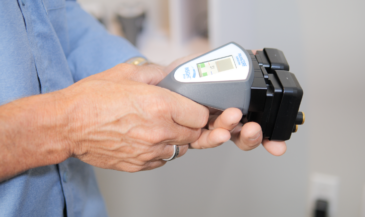
The broader INSiGHT neuroTECH and Synapse software also support the neurological scanning conversation:
- neuroPULSE helps assess HRV, autonomic balance, activity, reserve, and adaptability.
- neuroCORE helps assess postural tension, motor tone reactions, and energy patterns.
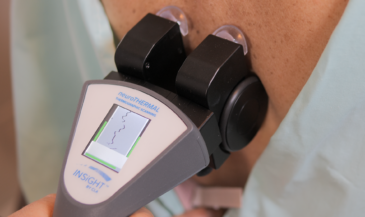
- neuroTHERMAL helps assess segmental autonomic stress patterns along the spine.
- Synapse software helps organize scan views and reporting so patients can better understand what their chiropractor is explaining.
This is why every HRV conversation should come back to neurological scanning. When patients see the nervous system in living color, HRV is no longer an abstract number. It becomes a practical way to understand how their nervous system responds, recovers, and changes under chiropractic care.
Make HRV Part of the Report of Findings and Progress Conversation
Make HRV part of the ongoing care conversation. HRV should not be a one-time scan that gets mentioned once and forgotten. It should support the baseline exam, report of findings, progress exams, and care plans.
During the first report, HRV helps patients understand where their nervous system is starting. During progress exams, HRV helps them understand what is changing. This allows you to explain chiropractic care beyond symptoms and connect the patient’s progress to nervous system performance.
A strong report of findings explanation is:
“This HRV scan gives us a baseline of how your nervous system is adapting right now. As we move through care, we’ll compare future scans to this starting point so we can see whether your nervous system is becoming more responsive and resilient.”
For a progress exam, you might say:
“We’re not only asking how you feel. We’re also looking at how your nervous system responds. These progress scans help us see whether your body is gaining reserve and responsiveness over time.”
This matters because patients may feel better before their nervous system is fully responsive. Another patient may show improvements in their HRV measurements before they can clearly describe what feels different in daily life. Objective scan data helps you explain both situations with more certainty.
Weeks of chiropractic care may be needed before meaningful nervous system trends become clear. That does not mean every patient follows the same timeline. It means you use HRV data, scan findings, history, and clinical judgment to communicate expectations honestly.
Here are practical phrases chiropractors can use:
- “HRV helps us see how your nervous system responds to life.”
- “This scan gives us a baseline.”
- “We’re watching patterns, not chasing one perfect number.”
- “Your heart beats are giving us information about your nervous system.”
- “The goal is a nervous system that can respond when needed and recover when appropriate.”
- “As your chiropractic adjustments help reduce neurological interference, we want to see whether your nervous system becomes more responsive over time.”
Those phrases keep the conversation grounded. They help patients understand the impact HRV can have on the care conversation without making HRV sound like a diagnosis or a promise. They also help explain how chiropractic care on heart rate variability may be discussed in a responsible, evidence-informed way.
In a family chiropractic setting, this can be especially helpful. Parents may not understand every detail of the autonomic nervous system, but they can understand whether their child’s nervous system is responsive, whether reserve is improving, and whether scan patterns are changing over time.
Help Patients See the Why Behind Their Care
So, how do you explain HRV to chiropractic patients in the simplest way possible? Tell them HRV shows how well the nervous system can adapt. Then show them the scan. That combination is powerful because it brings the conversation out of theory and into something they can see.
Patients do not need to memorize autonomic terminology. They need to understand that the nervous system responds to life, recovers from challenge, and coordinates the body’s internal rhythms. HRV helps reveal whether the nervous system is responsive or stuck in a pattern that needs attention.
That’s why INSiGHT scanning technology is such a natural fit for this conversation. It gives chiropractors a clear way to measure HRV, explain the scan, track changes, and communicate the value of chiropractic care with objective data. It helps patients see why symptoms are not the only marker that matters.
When patients understand what their nervous system is doing, they better understand the value of chiropractic. That’s where the power of chiropractic becomes easier to communicate, easier to trust, and easier for patients to see.