
That question belongs in the chiropractic conversation. Not because chiropractic replaces mental health care, therapy, or medical support, but because chiropractic has always centered on the relationship between the spine, the nervous system, and the body’s ability to adapt. When the nervous system is dysregulated, the conversation should move beyond how the patient feels today and toward how their nervous system is communicating, regulating, and recovering over time.
For the Neurologically-Focused Chiropractor, nervous system dysregulation creates a powerful opportunity. It gives us language patients already recognize, but it also gives us a chance to bring clarity to a topic that can otherwise feel vague and emotional. The real question is not simply whether a patient feels stressed. The question is whether their nervous system has the adaptability, reserve, and organization needed to respond to life without staying stuck in protection.
What Nervous System Dysregulation Means in Chiropractic
Nervous system dysregulation describes a situation where the nervous system has difficulty regulating internal functions and responses. The nervous system is your body’s control and coordination center. The system is your body’s communication pathway between the brain, spine, organs, muscles, and tissues.
The nervous system is the body’s built-in coordinator. It helps regulate heart rate, breathing, digestion, temperature, posture, movement, sleep, recovery, and emotional responses. When that communication is efficient, the body can respond to a challenge, adapt to it, and return to a more settled rhythm. When a dysregulated nervous system is present, the body may remain in high alert, drift into shutdown, or swing between the two without finding stability.
The body’s communication network depends on clear signaling between the brain and body. The peripheral nervous system carries information between the central nervous system and the rest of the body. That network of nerves helps the body interpret what is happening, respond to perceived threats, and coordinate the physical and mental resources needed to adapt.
The Autonomic Nervous System and Regulation
The autonomic nervous system regulates many involuntary functions, including heart rate, breathing, sweating, temperature regulation, blood pressure, and digestion. The nervous system has two major branches that patients often recognize from online education: the sympathetic nervous system and the parasympathetic nervous system.
The sympathetic nervous system is commonly associated with “fight or flight.” It prepares the body for action when there is a challenge, a demand, or a perceived threat. The parasympathetic nervous system is often called “rest and digest.” It supports recovery, repair, calm, and digestive function.
In a resilient system, the sympathetic and parasympathetic systems work together in a dynamic rhythm. The trouble begins when there is an imbalance between the sympathetic and parasympathetic sides of regulation. The sympathetic system may dominate, keeping the patient in a state of alert even when no real danger is present. Dysregulation can also appear as shutdown, low energy, disengagement, or difficulty mobilizing. Both patterns can reflect nervous system dysregulation.
The Chiropractic Lens
Chiropractic brings a unique and necessary lens to nervous system dysregulation. The spine is not just a structural frame. It houses, protects, and influences key neurological pathways. Somatic pathways influence posture, movement, tone, and energy expenditure. Autonomic pathways influence internal regulation, including heart rate, digestion, temperature, and stress adaptation.
When subluxation, nerve tension, or neurological interference are present, the body may not coordinate these systems as efficiently as it should. That does not mean every symptom is caused by a chiropractic issue. Responsible chiropractors do not make that leap. But it does mean nervous system dysregulation belongs in the chiropractic conversation because Neurologically-Focused Chiropractic Care is concerned with how the body adapts, organizes, and communicates.
Signs and Symptoms of a Dysregulated Nervous System
The signs and symptoms of nervous system dysregulation can look different from one patient to another. Some patients look stuck in sympathetic overdrive. They are tense, reactive, restless, and feeling anxious. Others look depleted. They may feel foggy, disconnected, fatigued, or unable to engage with life the way they used to.
When patients search for signs of a dysregulated nervous system, they often find long lists of physical symptoms, emotional symptoms, and cognitive signs. Those lists can be helpful, but chiropractors need to look for patterns, not isolated complaints. One poor night of sleep does not tell the whole story. One anxious day does not prove the nervous system is dysregulated. What matters is whether the body repeatedly struggles to regulate, recover, and restore balance.
This is why the intake conversation matters. A patient may come in for headaches, sleep changes, digestion challenges, postural tension, or muscle tension, but the deeper clinical picture may reveal nervous system dysregulation. The patient may not connect their symptoms to one regulatory pattern, but the chiropractor can help them see the bigger picture.
Physical Signs
A dysregulated nervous system may show up through physical signs that seem unrelated at first. The patient may simply feel like their body is working harder than it should.
- Fatigue: Persistent tiredness, low energy, or poor recovery after normal daily activity.
- Sleep disruption: Trouble falling asleep, staying asleep, or waking unrefreshed.
- Digestive changes: Nausea, bloating, irritable bowel patterns, or other digestion challenges.
- Heart rate changes: Racing heart, palpitations, or feeling physically keyed up.
- Postural tension: Guarding, stiffness, shallow breathing, or difficulty relaxing.
- Sensory sensitivity: Overreaction to noise, light, touch, or busy environments.
From a chiropractic perspective, these signs invite a better question. Instead of asking only, “What symptom are we trying to reduce?” we should also ask, “How is this patient’s nervous system adapting to load?” That shift moves the conversation from symptom chasing to nervous system performance.
Emotional and Cognitive Signs
Dysregulation can significantly impact physical and mental health. Patients may describe stress and anxiety, irritability, anxiety or overwhelm, racing thoughts, brain fog, difficulty concentrating, or trouble staying present in the moment. Some may describe a sense of calm as something they cannot access, even when life appears safe from the outside.
In more complex situations, patients may also describe dissociation, shutdown, or difficulty shifting out of negative thought patterns. Mental health conditions such as anxiety, depression, post-traumatic stress disorder, and trauma-related responses can involve many factors and should be supported by the appropriate licensed professionals. Chiropractic does not replace mental health care, therapy, trauma therapy, EMDR, or medical guidance.
At the same time, the mind and body are not separate. The brain and body are in constant communication through nerves, chemical signals, posture, breath, and autonomic nervous system function. When a patient is stuck in high alert, the body and emotions often reflect that pattern together.
The Pattern Matters More Than One Sign
One of the biggest mistakes in this conversation is reducing nervous system dysregulation to a checklist. A checklist may help patients recognize what they are experiencing, but it does not explain what is happening.
A patient who is tired after a long week may simply need rest. A patient who repeatedly cannot recover after normal life demands may be showing a deeper regulation challenge. A patient who reacts strongly to minor triggers may be living in a protective pattern that no longer matches the present in the moment.
That is why chiropractors should look for repeated patterns across the history, exam, neurological scan data, and re-examinations. Nervous system dysregulation is best understood as a pattern of adaptation, not one isolated complaint.
Learn more about INSiGHT scanning?
Fill this out and we’ll get in touch!
"*" indicates required fields
Why the Nervous System Can Become Dysregulated
The nervous system is always listening. It listens to the outside world, the inside world, posture, breath, sleep, physical demand, emotional tone, and the pace of life. In many ways, it is constantly asking, “Am I safe enough to adapt, recover, connect, and grow?”
When the answer repeatedly feels like no, the body may shift into protection. That protective response is not a failure. It is an intelligent response from a system designed to help the body survive. The problem comes when that protection pattern stays turned on too long or becomes too easily activated.
Many factors can contribute to nervous system dysregulation. Chronic stress, traumatic events, childhood trauma, inadequate recovery, poor sleep, overtraining, under-movement, psychological or physical strain, and ongoing emotional load can all influence how the nervous system responds to daily life. Dysregulation may emerge when the body’s recovery capacity cannot keep up with the load being placed on it.
Chronic Stress and Sympathetic Overdrive
Chronic stress can keep the body in a repeated stress response. The sympathetic system prepares the body for action, and that action response can be useful in the right moment. The challenge comes when the body remains in sympathetic overdrive after the challenge has passed.
In that pattern, the release of hormones such as cortisol may remain elevated or poorly timed. The patient may feel wired and tired, alert but exhausted, reactive but depleted. They may wake at night, struggle with digestion, feel tense through the spinal region, or describe a constant sense that something is off.
This is where chiropractors can help patients understand the difference between normal activation and ongoing neurological distress. The goal is not to make patients afraid of challenge. Life requires challenge. The goal is to understand whether the nervous system can meet a challenge and then return to a regulated rhythm.
Trauma, Perceived Threats, and Shutdown Patterns
Trauma-informed care has helped many patients understand why the body may continue reacting after a difficult experience. Traumatic events, childhood trauma, long-term strain, and repeated perceived threats can shape the way the nervous system responds to the present. The body may act as though danger is still near, even when there is no real danger in the moment.
Some patients move toward a fight-or-flight response. They become alert, guarded, reactive, or unable to feel safe. Others move toward shutdown. They may feel low energy, disconnected, disengaged, or numb. These patterns are often discussed in somatic therapy, EMDR, trauma therapy, and polyvagal conversations.
Polyvagal theory, associated with Stephen Porges, has helped bring the science of safety into broader public awareness. It gives patients language for connection, threat, shutdown, and regulation. Chiropractic should respect that conversation without trying to become psychotherapy. Our role is to bring the spinal-neural and functional assessment perspective to the table.
Lifestyle, Environment, and Recovery Capacity
The nervous system does not live in isolation. Sleep, nutrition, movement, breath, relationships, workload, screen exposure, and daily rhythms all influence nervous system regulation. A patient may be doing everything they can to keep going, yet their system may still be under more demand than it can adapt to efficiently.
Lifestyle and environmental factors that may influence nervous system dysregulation include poor sleep, lack of movement, overtraining, under-recovery, unstable routines, insufficient rest, and too little time in a true rest and digest rhythm. Physical conditions and mental and physical strain can also influence how much adaptive reserve a patient has available.
For chiropractors, this creates an important responsibility. We should not reduce nervous system dysregulation to one cause or one answer. A care plan should be designed by the chiropractor using objective exam data, scan findings, clinical expertise, patient history, and appropriate referrals when needed. Nervous system dysregulation may be multi-factorial, and that is exactly why objective neurological scanning becomes so valuable.
Why Neurological Scanning Matters for Nervous System Dysregulation
Patients can describe what they feel, but they cannot always explain what their nervous system is doing. That is why objective neurological scanning matters. Nervous system dysregulation is often discussed through feelings, signs, and self-reported experiences. Those reports matter, but they do not give the chiropractor the complete picture.
A patient may say, “I feel anxious,” “I cannot sleep,” “My digestion is off,” or “I never feel settled.” Those statements provide important context. But the chiropractor also needs to know how the nervous system is organizing. Is there evidence of altered autonomic nervous system function? Is the patient showing low reserve? Are there patterns of postural tension or energy inefficiency? Are thermal patterns suggesting dysautonomia along the spine?
INSiGHT scanning technology helps bring objectivity to nervous system dysregulation. It shifts the patient’s focus from vertebra and joints alone to nerves, adaptability, and performance. With INSiGHT neuroTECH and Synapse software, chiropractors can collect objective exam data and turn complex neurological information into scan views and reports that patients can understand.
neuroPULSE and Heart Rate Variability
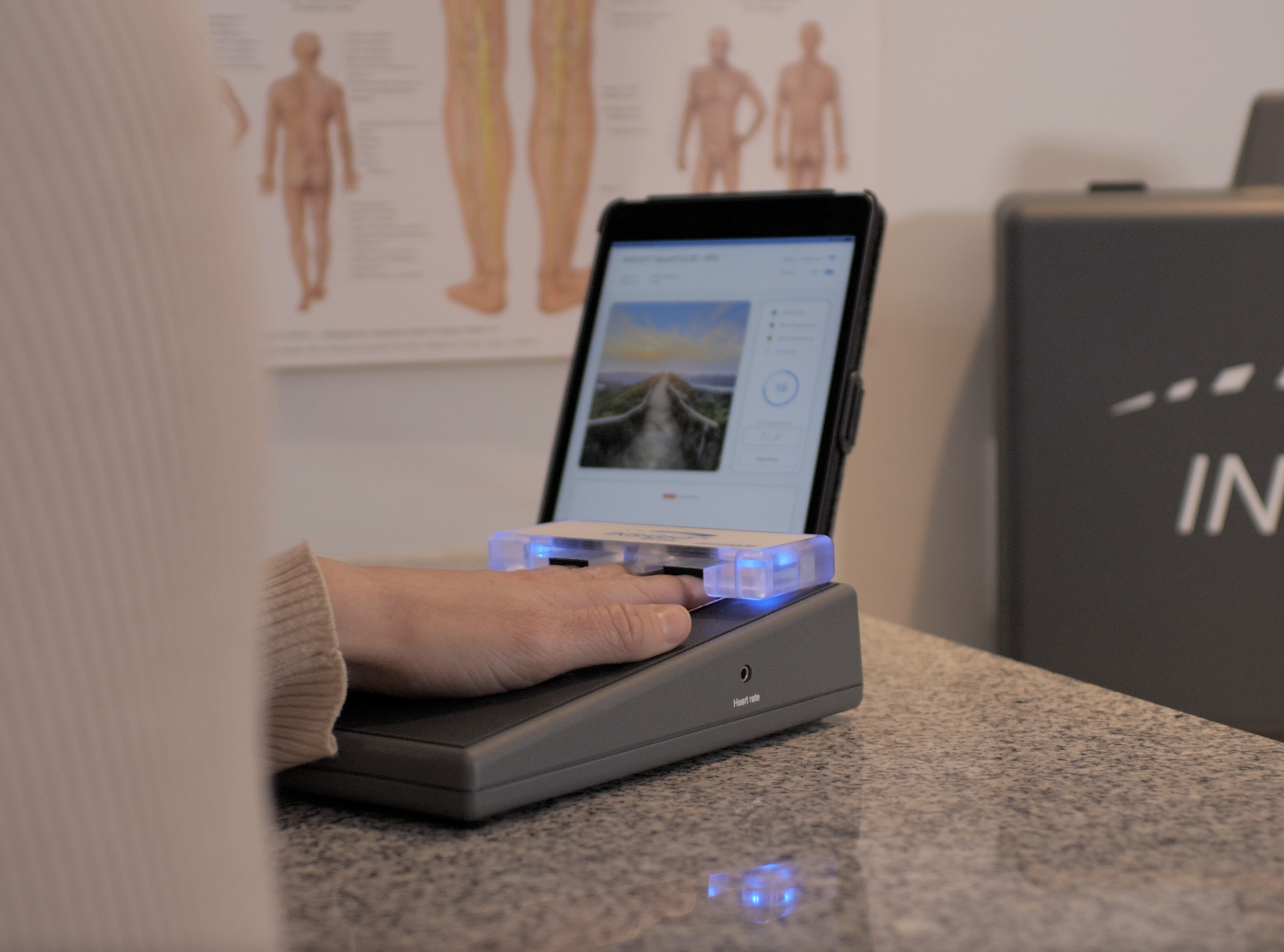
The neuroPULSE assesses Heart Rate Variability, which offers insight into autonomic balance, activity, adaptability, and reserve. Heart Rate Variability helps the chiropractor evaluate how the autonomic nervous system responds to and recovers from neurological distress. It is especially relevant when discussing sympathetic and parasympathetic activity, stress and anxiety, heart rate, and nervous system regulation.
When patients see their HRV data, the conversation changes. They can begin to understand whether their system appears more sympathetic dominant, low in reserve, or better able to adapt. The Rainbow Graph helps make that information visual, which matters because patients often need to see the pattern before they can value the recommendation.
neuroPULSE does not diagnose mental health conditions. It gives the chiropractor objective autonomic data that can support clinical interpretation. The technology provides information, and the chiropractor uses that information with skill, history, exam findings, and judgment.
neuroCORE and Somatic Motor Patterns
The neuroCORE uses surface EMG to assess electrical activity in the spinal region. It helps chiropractors see patterns of postural tension, energy expenditure, symmetry, and motor tone reactions. This gives a clearer view of the somatic side of nervous system performance.
In the context of nervous system dysregulation, neuroCORE can help connect physical signs such as tension, fatigue, guarding, altered posture, and energy drain to objective exam data. A patient may feel exhausted but not understand how much energy their nervous system is using just to keep the body upright and organized.
When those patterns become visible, the chiropractor can explain the findings in a way that makes sense. The conversation becomes less about chasing physical symptoms and more about understanding how efficiently the nervous system is coordinating the body.
neuroTHERMAL and Autonomic Regulation Along the Spine
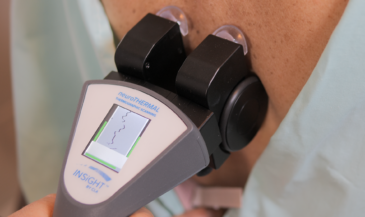
The neuroTHERMAL analyzes thermal patterns along the spine. Temperature regulation is connected to autonomic control, and thermal patterns can help the chiropractor identify areas where autonomic regulation may be under strain.
With a full spine nerve system scan, chiropractors can assess thermal patterns efficiently and compare those patterns over time. This matters because nervous system dysregulation is not always obvious in the first conversation. Patients may normalize their neurological distress because they have lived with it for so long.
When thermal scan views show where patterns are building, breaking, or shifting, the chiropractor has a stronger way to explain what is happening. It gives the patient a visual connection between their lived experience and the nervous system status being analyzed.
Synapse Software, Scan Views, and Patient Communication
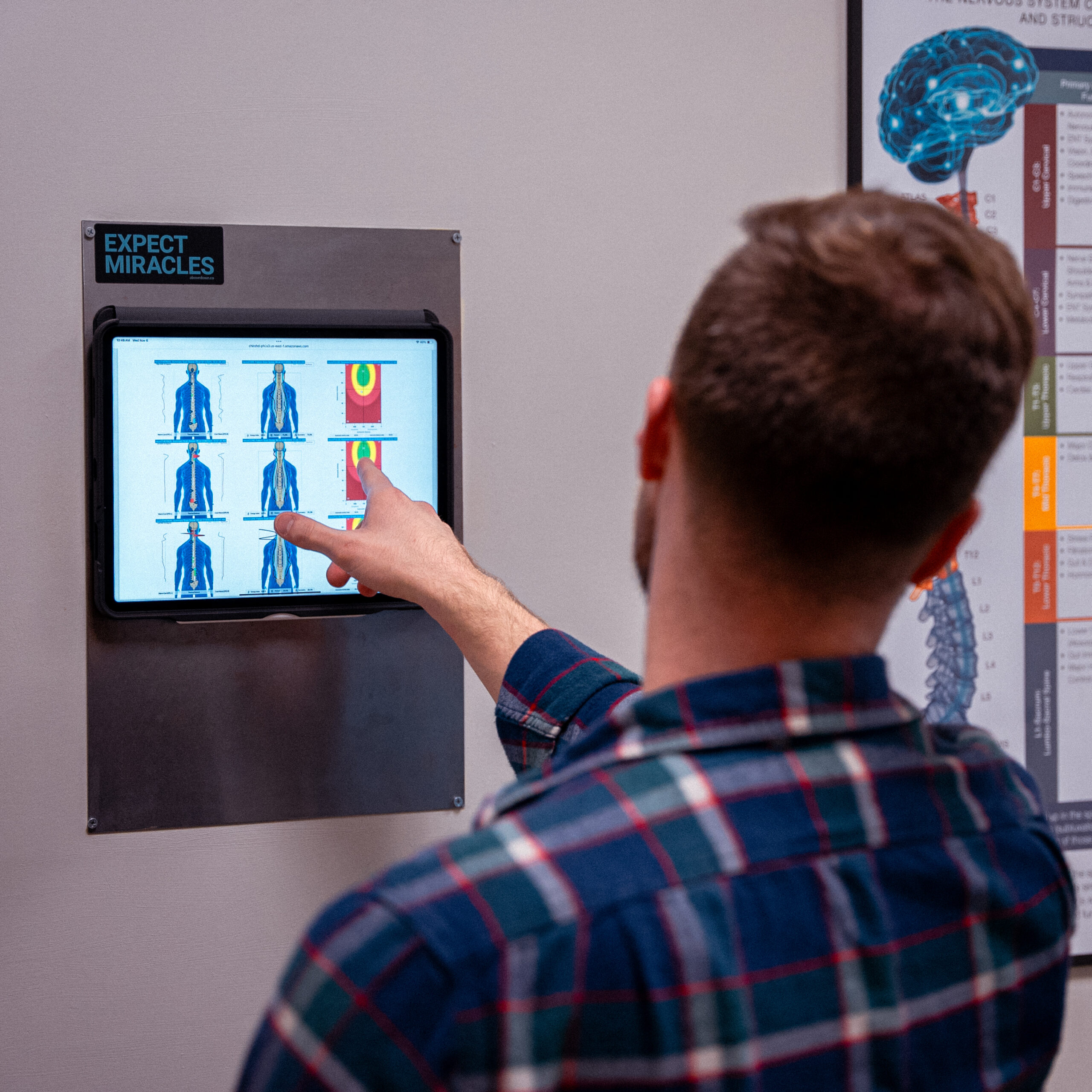
Synapse software helps organize exam data into clear scan views and reports. This is where INSiGHT scanning technology becomes especially powerful for communication. Complex neurology becomes something simple, visual, and easier for the patient to understand.
Baseline scans help establish where the patient starts. Progress scans help show whether the care plan is making a difference. Comparative reports help the chiropractor and patient look at patterns over time. That matters because nervous system dysregulation is not always improved by one calming technique, one adjustment, or one good week. Patterns need to be tracked.
INSiGHT does not generate the care plan. INSiGHT scanning technology provides objective exam data and reporting. The chiropractor interprets that information, combines it with clinical expertise, and uses it to create or refine the patient’s care plan.
Helping Patients Move From Symptoms to Nervous System Performance
Nervous system dysregulation gives chiropractors a powerful language bridge. Patients already understand that stress, fatigue, sleep, digestion, anxiety, emotional symptoms, and physical and mental health are connected. What they often do not understand is that the nervous system is the coordinating system behind those experiences.
The goal is not to promise that chiropractic will magically heal a dysregulated nervous system. That kind of language oversimplifies a complex topic. The better message is that Neurologically-Focused Chiropractic Care, guided by objective exam data, can help support nervous system performance and give patients a clearer understanding of what their body is communicating.
This is where chiropractic can lead with both compassion and certainty. We can respect therapy, medical support, trauma-informed care, lifestyle changes, and self-regulation tools while still bringing something vital to the table: objective analysis of spinal-neural function. Patients do not need more confusion. They need clarity.
How to Talk About This With Patients
Most patients do not need a neurology lecture. They need language that helps them understand what is happening in their body without making them feel broken. The best communication is simple, visual, and connected to their lived experience.
Here are a few patient-friendly ways to explain nervous system dysregulation in a chiropractic setting:
- “Your nervous system is built to adapt. What we’re looking at is whether it’s adapting efficiently or staying stuck in protection.”
- “These scans help us see patterns your symptoms alone may not show.”
- “We’re not just looking at how you feel today. We’re looking at how your nervous system is organizing over time.”
- “The goal is to help your body regulate with more clarity, adaptability, and resilience.”
- “When we re-scan, we can compare where you started with where your nervous system is now.”
This kind of language helps patients understand that regulating your nervous system is not only about calming techniques. Breathwork, movement, grounding, and therapy may help regulate the system, but chiropractic adds another layer by examining how the spinal-neural system is functioning and adapting over time.
The Clinical Takeaway for Chiropractors
Nervous system dysregulation is a timely topic, but chiropractic should not follow the trend passively. The profession has a unique opportunity to lead this conversation through objective neurological assessment, clearer communication, and a deeper understanding of nervous system performance.
What gets analyzed can be better understood. What patients can see, they can value. What chiropractors can track, they can communicate with greater certainty. That is why INSiGHT scanning technology fits so naturally into this conversation.
When patients see where tension is building, how well they are adapting, and how their care is making a difference, nervous system dysregulation stops being a confusing phrase. It becomes a measurable pattern the chiropractor can help them understand.
That is where Neurologically-Focused Chiropractic Care gets exciting. We are not simply reacting to symptoms. We are helping patients see the bigger story of their nervous system, their adaptability, and their potential for better regulation. When that story becomes visible, patients start to understand why chiropractic matters in a whole new way.