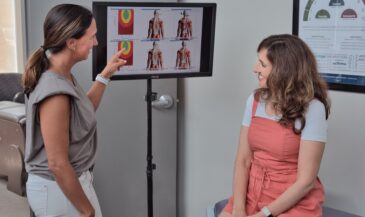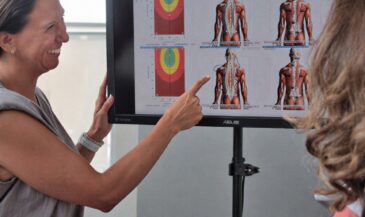

A patient may walk in thinking the visit is only about a sore neck, a tight low back, or symptoms that keep coming and going. Then you show them a thermal scan, and suddenly the conversation moves from “where do I feel it?” to “what is my nervous system showing us?” That shift matters in today’s chiropractic landscape because patients want clarity, objectivity, and a reason to trust the process beyond how they feel that day.
So if you’ve ever asked yourself how best to explain thermal scans to your chiropractic patients without making it too technical, the answer is to keep it focused on function, not fear. Keep it connected to the nervous system. Keep it clear enough that the patient can repeat it to their spouse when they get home.
Start With the Simple Explanation Patients Actually Need
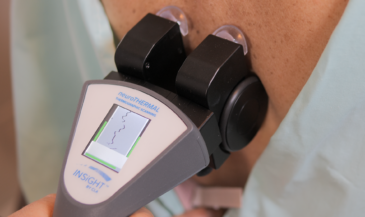
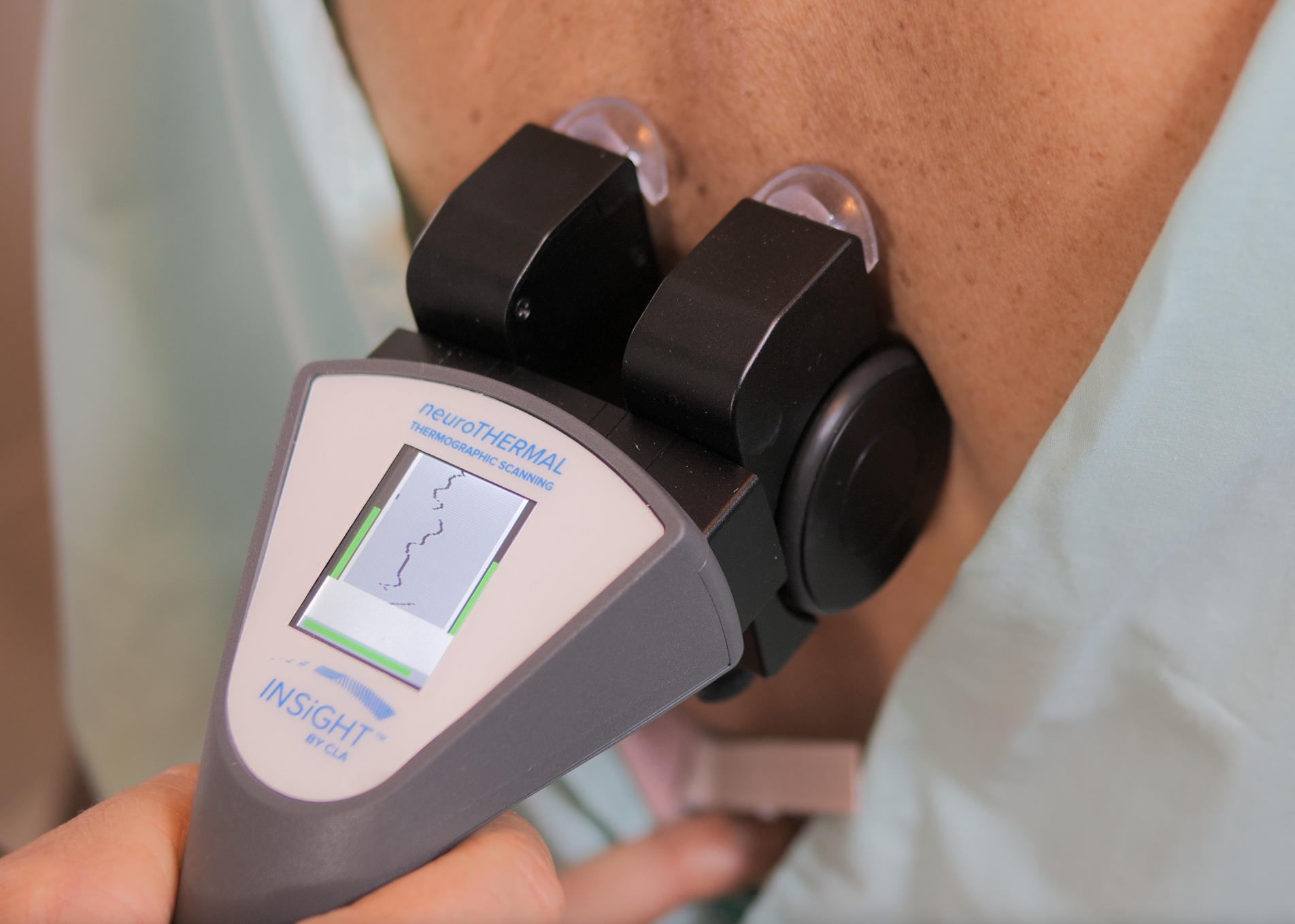
Begin with what the scan actually measures. A thermal scan measures skin temperature patterns along the spine. It uses infrared technology to compare heat on the left and right sides of the spinal region. When one side shows a different temperature pattern than the other, that temperature difference may give the chiropractor a window into how the nervous system is functioning.
Patients do not need a lecture on thermography, autonomic pathways, or vascular tone in the first 30 seconds. They need one clear sentence. You might say, “This thermal scan measures temperature patterns on both sides of your spine. Your nervous system controls blood flow and skin temperature, so when we see uneven patterns, it gives us information about how well your nervous system is regulating.”
That explanation is simple, but it is not watered down. It respects the patient’s intelligence without burying them in terminology. It also keeps the conversation where it belongs, on nervous system function. Most patients still think chiropractic care is about bones, joints, and symptoms. Thermal scans help shift that focus toward nerves, regulation, and nervous system performance.
A helpful analogy is to call the thermal scan a “nervous system thermometer.” A thermometer does not tell the whole story of a person’s overall health, but it gives a useful reading. In the same way, a thermal scan does not diagnose from a picture. It gives the chiropractor objective scan data that can be interpreted alongside the rest of the exam.
When patients ask what the scan is doing, keep the main points clear:
- It is quick and non-invasive.
- It uses infrared imaging, not radiation.
- It measures skin temperature along the spine.
- It compares temperature patterns from left to right.
- It helps show how the nervous system is functioning in real time.
- It gives the chiropractor information to support the full chiropractic analysis.
That is usually enough to get the patient oriented. Once they understand that the scan is about function, you can begin connecting what they see on the screen to the bigger story of the spine, spinal nerves, and regulation.
Explain Function Before Structure
Help your patients understand the difference between function and structure. Most patients understand an x-ray because it shows structure. It helps reveal the shape, position, and condition of vertebra and skeletal structures. A thermal scan is different. It is not structural imaging. It is functional information.
You might explain it this way: “An x-ray helps us see structure. A thermal scan helps us observe function. It shows temperature along the spine, which may reflect how your autonomic nervous system is regulating blood flow in that region.”
That distinction matters. Patients often assume that if you are scanning the spine, you are “looking at bones.” But thermal imaging does not look through the body. It reads infrared heat patterns from the surface of the skin. Those temperature patterns may reflect activity from the autonomic nervous system, which helps regulate automatic body functions like blood vessel tone, organ activity, and temperature control.
The autonomic nervous system is the part of the nervous system your patient does not consciously manage. They do not tell their blood vessels when to tighten or relax. They do not consciously control every shift in skin temperature. The body’s regulation handles those processes automatically. When thermal scans show temperature differences along comparable points on the spine, that can suggest uneven regulation in the paraspinal region.
This is where many chiropractic conversations become clearer. A patient may come in focused on a sore area. The scan may show patterns along the spine that suggest the nervous system’s output is uneven in a different region. That gives the chiropractor a better way to explain why care is not always about chasing the sore spot.
This also helps patients understand that long-term health are more important than short-term symptom changes alone. Feeling better is valuable. But within chiropractic, the bigger conversation is about how well the nervous system is adapting, regulating, and stabilizing over time.
Learn more about INSiGHT scanning?
Fill this out and we’ll get in touch!
"*" indicates required fields
Teach Patients What Temperature Differences Can Suggest
A temperature difference is an observation. It is not a diagnosis by itself. In chiropractic, thermography is used to observe paraspinal temperature patterns that may suggest altered autonomic regulation, nerve interference, inflammation or increased physiological activity, or other functional shifts along the spine.
The safest and clearest way to explain this to patients is to focus on balance. You might say, “What we are looking for here is balance. When one side of the spine shows a different temperature pattern than the other, it tells us your nervous system may be regulating unevenly in that area. We do not use this scan by itself. We use it with the rest of your exam to better understand where your nervous system may need attention.”
That explanation does several things well. It makes the scan understandable. It avoids overclaiming. It keeps the chiropractor in the role of interpreter. And it helps the patient understand that the thermal scan is part of chiropractic assessment, not a standalone verdict.
In practical terms, the scan compares temperature from side to side. Symmetry is generally a useful sign of balanced regulation. Asymmetry may suggest uneven autonomic activity. A warmer region may indicate inflammation or increased physiological activity when interpreted carefully. A cooler region may suggest altered regulation or another functional change that deserves closer attention.
Chiropractors use thermal scans because the spinal nerves and autonomic nervous system influence far more than whether someone feels sore. The nervous system controls blood flow, temperature regulation, and other automatic processes that affect the body’s ability to adapt. If those systems are under neurological distress, temperature differences along the spine may appear as part of the body’s functional output.
A helpful analogy is the “check engine light.” You can tell a patient, “This scan does not tell us everything by itself, but it gives us an objective signal that something in regulation may deserve a closer look.” Most patients understand that a check engine light is not the entire diagnosis. It is a signal. It tells you to investigate. Thermal scans can work in a similar way in clinical practice.
It is also helpful to clarify the language around subluxation. Some patients may use the word misalignment, but in a neurologically-focused chiropractic practice, it is more accurate to talk about tension, nerve interference, and neurological interference that may affect function. That keeps the conversation connected to the nervous system instead of reducing chiropractic to bones being “out.”
This is also where chiropractic research and vertebral subluxation research matter. There is a body of evidence exploring how skin temperature, sEMG, HRV, and other objective tools may support the assessment of nervous system function. But the scan itself is not declaring a condition. It is giving you measurable information that must be interpreted in context.
Use Thermal Scans to Make Reports and Progress Checks Easier
Show your patients why regular scans matter. Thermal scans are especially valuable because they give you a baseline. That baseline gives the patient a starting point they can see, and it gives the chiropractor an objective reference for future comparison.
You might tell a patient, “Today’s scan gives us your baseline. As we move through your care plan, we will repeat the scan at meaningful checkpoints so we can see whether your nervous system is adapting and whether these thermal patterns are becoming more balanced.”
That kind of language helps patients understand why progress scans matter. A first scan gives you the starting picture. A progress scan helps show whether the nervous system is adapting. A comparative scan helps the patient see change over time. This matters because symptoms can fluctuate. They can improve quickly, return unexpectedly, or change based on sleep, travel, physical load, emotional strain, or daily habits.
Thermal scans help anchor the conversation in something more objective. They give you a repeatable way to talk about nervous system patterns rather than relying only on how the patient feels in the moment. That is not dismissing symptoms. It is putting them in context.
Thermal scans help answer questions patients are already asking silently:
- What does this mean for me?
- Why are you adjusting that spinal region?
- How will we know if this is changing?
- Why do I need a progress scan?
- What if I feel better before the scan improves?
Those questions are at the heart of patient communication. If a patient does not understand why specialized care is being recommended, they will naturally measure progress only by symptoms. If they feel better, they may assume the work is done. If they feel worse after a difficult week, they may assume care is not helping. Thermal scans give the chiropractor a clearer way to explain that the goal is not only symptom relief. The goal is better regulation and stronger nervous system performance over time.
This is why scans give the chiropractor a stronger foundation for explaining chiropractic adjustments. You can show the patient what you are observing, explain why a specific area may need attention, and help them understand that the nervous system can improve even when symptoms do not move in a straight line.
A simple workflow can look like this:
- Start with a baseline thermal scan during the initial exam.
- Explain the scan in one clear sentence before showing details.
- Connect the findings to the patient’s exam and goals.
- Re-scan at meaningful milestones to track change over time.
- Use the comparison to discuss stability, not perfection.
- Keep the conversation focused on nervous system function.
When used this way, thermal scans can aid in spinal decision-making, support better care, and lead to better results in communication. The patient is not just being told what to believe. They are seeing measurable information, hearing a clear explanation, and understanding how the scan fits into their care.
Where INSiGHT neuroTHERMAL Fits Into Neurological Scanning
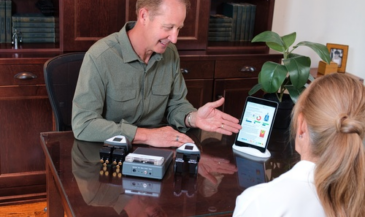
Help your patients understand that thermal scanning is one part of chiropractic neurological scanning. Thermal scans are powerful, but they are strongest when they are part of a complete neurological scan workflow. That is where INSiGHT™ scanning technologies and CLA’s products fit naturally into this conversation.
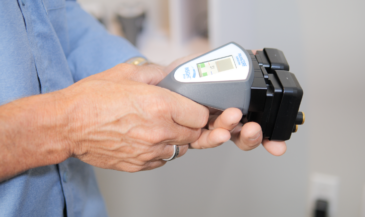
INSiGHT neuroTHERMAL gives chiropractors a fast, non-invasive way to analyze temperature patterns and patterns along the spine. The thermal scan measures paraspinal skin temperature and compares left-right findings to help identify thermal patterns that may suggest uneven autonomic regulation. This gives the doctor objective scan data that can be used alongside the patient history, exam findings, and clinical judgment.
But neuroTHERMAL should not be asked to tell the whole story by itself. One window is useful. Multiple windows create greater clarity. INSiGHT neuroCORE sEMG adds information about neuromuscular output, postural tension, energy expenditure, and symmetry. sEMG scanning is a non-invasive diagnostic instrument that records electrical signals from the body. More specifically, it is a diagnostic instrument that records electrical activity from muscles, an instrument that records electrical signals produced by the neuromuscular system. In simple terms, it records electrical signals produced as the body manages posture and tone.
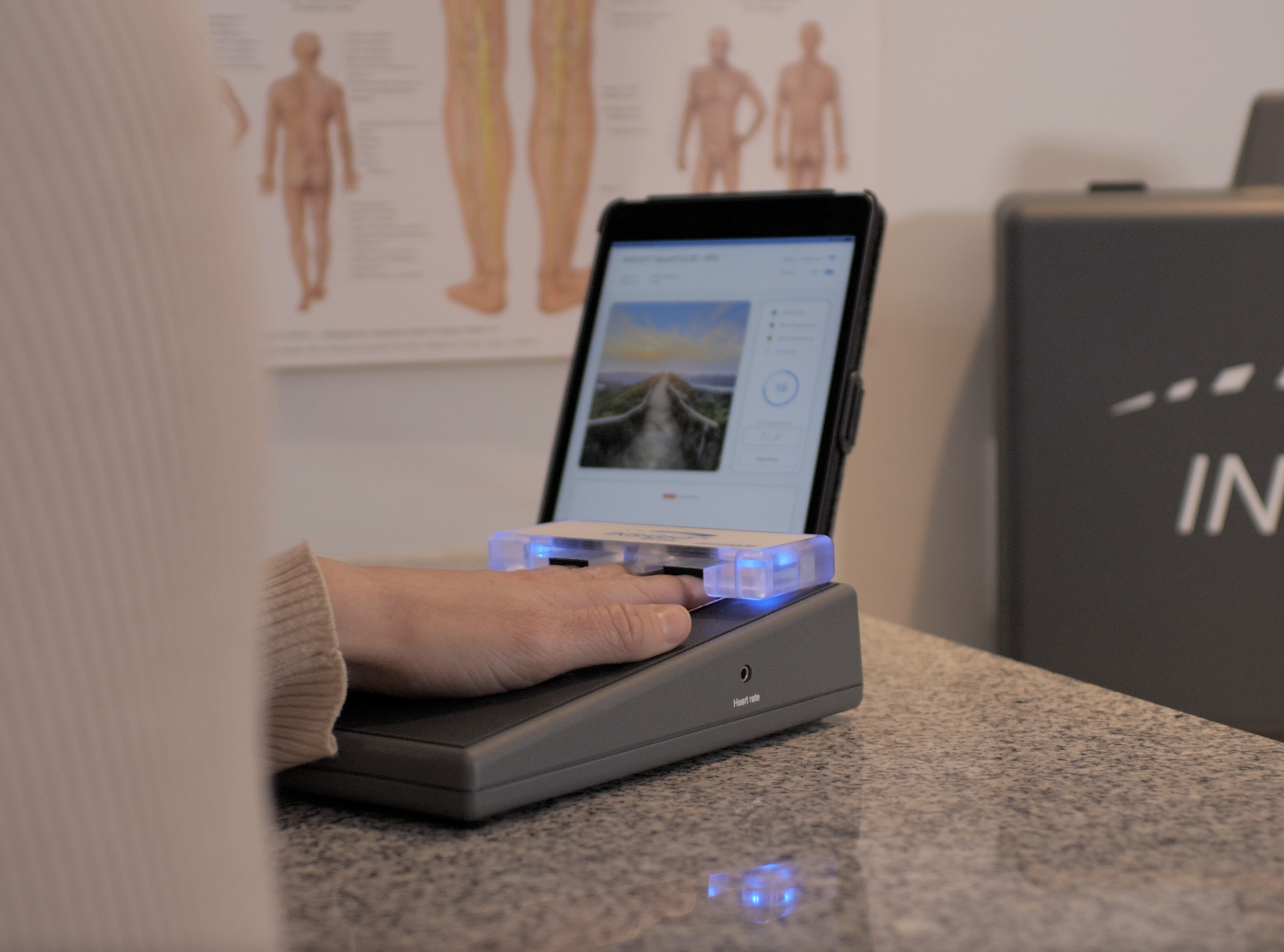
INSiGHT neuroPULSE HRV adds another layer by evaluating adaptability, autonomic balance, and reserve. Heart Rate Variability helps chiropractors communicate how well your nervous system responds to neurological distress and daily demands. When neuroTHERMAL, neuroCORE, and neuroPULSE are used together, the chiropractor can explain the window into how your nervous system is adapting with greater clarity.
Synapse software brings these scan views together into reports that patients can understand. That is important because the goal is not to overwhelm the patient with raw data. The goal is to transform complex neurology into something visual, organized, and useful. When patients see their scan views together, the conversation becomes simpler. They can see thermal regulation, neuromuscular activity, and adaptability as part of one bigger nervous system story.
This is also where we need to be precise. INSiGHT scanning technology does not generate the care plan. It provides objective exam data and scan reports. The chiropractor interprets that information, considers the full exam, and uses their expertise to recommend care.
In practice, that means a chiropractor can use thermal scanning, sEMG scanning, and HRV data to support creating care plans that foster clearer patient understanding. These care plans that foster long-term commitment are still created by the doctor, not the technology. The same is true for plans that foster long-term health through chiropractic care. The scan report helps patients see what is happening. The doctor explains what it means. The recommendation comes from clinical judgment.
That is one reason many chiropractic teams use thermography as part of chiropractic reporting. It helps your chiropractor communicate the power of chiropractic with confidence. It gives patients a clearer way to understand the nervous system’s function, the body’s adaptation, and why nervous system health is worth tracking before symptoms even show up.
Help Patients See What You See
A thermal scan measures temperature patterns along the spine. Those patterns may reflect how the autonomic nervous system is regulating blood flow and skin temperature. When the patterns are uneven, the chiropractor can use that information, alongside the full exam, to better understand nervous system function.
That is clear. That is responsible. And that is enough for most patients to begin understanding the part of chiropractic that goes beyond symptoms.
Thermal scans are not about flashy technology. They are about clarity. They help patients see that nervous system function is not always obvious from symptoms alone. They help chiropractors explain why the location of a symptom is not always the same as the area needing attention. They also help patients understand why progress should be tracked over time, not guessed from one good day or one difficult week.
If you are wondering how to explain thermal scans to patients in a way that feels natural, keep coming back to three simple ideas:
- Thermal scans show function, not structure.
- Temperature differences can suggest uneven regulation.
- Regular scans help track change over time.
When patients can see what you see, they stop guessing. They understand why the scan matters, why the care plan is being recommended, and why nervous system performance is worth tracking. Technology like thermography helps make that possible. It gives the patient a visual way to understand what the chiropractor has been talking about all along.