

But you and I both know the better question is not only, “Where does it hurt?” The better question is, “How well is this nervous system communicating, adapting, and regulating?” That is why the question how do chiropractors test the nervous system matters so much in chiropractic care.
When patients understand how do chiropractors test the nervous system, they begin to see chiropractic differently. It is no longer only about joints, posture, or temporary relief. It becomes a clearer conversation about the spine and nervous system, neurological performance, nerve function, and the body’s ability to adapt.
Why Chiropractors Test the Nervous System
Chiropractic has always had a bigger vision than chasing symptoms. The spine matters deeply, but not because it exists in isolation. It matters because it protects key neural pathways and because the brain and nervous system coordinate movement, posture, balance, recovery, digestion, sleep, energy, and daily performance.
So, how do chiropractors test the nervous system in a way that honors that bigger chiropractic picture? They look for signs that communication within the body may be under tension. They look at how the body moves, how it responds, how it regulates, and how it adapts.
A chiropractor is not only trying to find what is sore today. The goal is to evaluate whether the nervous system is functioning efficiently or whether nerve interference is changing the way the body is organizing itself. When the spine and spinal nerves are under tension, the body may compensate through posture, muscle tone, reflexes, autonomic patterns, or reduced adaptability.
This is where subluxations become so important in a neurologically focused model. A subluxation is not simply a bone “out of place.” That explanation is too small for what chiropractors are actually assessing. In chiropractic, vertebral subluxations are involved when a spinal region is not moving or functioning properly and is associated with changes in neurological function.
The nervous system is bigger than symptoms
Symptoms often bring patients through the door, and there is nothing wrong with acknowledging that. A patient may come in with headaches, tightness, back pain, fatigue, or limited motion. But symptoms do not always tell the full story.
A patient may feel better before the nervous system has reorganized. Another patient may feel “fine” while their body is still using too much energy to stand, recover, regulate, or adapt. That is why how do chiropractors test the nervous system is such an important question. The answer goes far beyond asking a patient how they feel.
Testing helps chiropractors identify areas of the spine that may be under tension and needing attention. It helps reveal whether the body is showing signs of neurological distress, even when the patient cannot fully describe what is happening.
Chiropractic is concerned with function, not just structure
Structure matters. Motion matters. Spinal position matters. But function is the deeper conversation.
The spine and spinal nerves are part of the nervous system story, not the whole story. A structural finding may tell you where a spinal region deserves attention. A neurological finding helps you understand how the body is responding.
That is why how do chiropractors test the nervous system should always include both structure and function. The goal is not to reduce chiropractic to a posture check or a symptom survey. The goal is to understand the body’s communication network more clearly.
Traditional Ways Chiropractors Evaluate Nervous System Function
Before we talk about scanning technology, it is important to honor the examination process chiropractors have used for years. A thorough neurofunctional and structural examination can include several layers of assessment, each giving useful clinical information.
So, how do chiropractors test the nervous system during a traditional exam? They may use a neurological examination, postural analysis, range of motion testing, palpation, muscle testing, balance observations, and spinal evaluation. These findings help chiropractors identify potential issues in communication between the body, spinal nerves, and central neural function.
No single test tells the whole story. A strong exam gathers information from several angles. The chiropractor is building a clinical picture, not checking one box.
Reflex testing
Reflex responses give the chiropractor a window into communication between the nervous system and the body. A reflex hammer may be used to test specific tendon responses, such as those at the knee, ankle, elbow, or wrist.
These reflexes help evaluate how well a specific nerve pathway is responding. A response that is diminished, exaggerated, or different from side to side may encourage the chiropractor to look more closely at a spinal region or neurological pathway.
This does not mean a reflex test alone diagnoses a condition. It means the chiropractor is gathering information about nerve function and how the body is responding.
Sensory testing
Sensory testing helps evaluate how information travels from the body back to the brain. A chiropractor may use light touch, vibration, temperature, or gentle pinprick comparison to see whether sensation is balanced and appropriate from side to side.
This matters because sensory input helps the brain understand the body’s position, movement, and environment. When that communication is altered, the body may compensate through posture, guarding, restricted motion, or poor coordination.
How do chiropractors test the nervous system with sensory findings? They compare patterns, look for differences, and use those findings alongside the broader neurological exam.
Muscle strength, tone, and coordination
Muscle testing is not only about strength. It is also about communication. Muscles respond to neurological input. If the system is not coordinating well, the body may show altered muscle tone and balance, weakness, guarding, asymmetry, or inefficient movement.
A chiropractor may test resistance, observe posture, evaluate balance, or assess coordination. In some cases, vestibular observations may also be relevant because balance and spatial awareness are closely tied to neurological function.
These findings help the chiropractor understand whether the body is organizing movement efficiently or compensating under neurological distress.
Posture, range of motion, and movement analysis
Posture is the nervous system expressed through the body against gravity. That is why chiropractors pay close attention to head position, shoulder height, pelvic balance, gait, spinal motion, and restricted movement.
Range of motion testing helps identify where the body is moving freely and where motion is limited. Movement analysis can reveal guarding, asymmetry, stiffness, and compensation patterns along the spine.
These traditional findings are valuable. They help guide the chiropractic analysis. But when the conversation is about how do chiropractors test the nervous system, traditional examination alone can still leave a gap.
Learn more about INSiGHT scanning?
Fill this out and we’ll get in touch!
"*" indicates required fields
Why Structure Alone Does Not Tell the Whole Story
Many patients understand pictures. That is why X-rays can be helpful when structural information is clinically necessary. They show posture, spinal curves, degeneration, instability, and other structural findings.
But structure alone does not measure nerve function. That distinction matters for both chiropractors and patients. An X-ray may show the shape or position of the spine, but it does not show how the autonomic nervous system is regulating, how much electrical activity the paraspinal muscles are using, or how well the body is adapting to neurological distress.
Palpation, posture checks, orthopedic testing, and motion analysis all matter. They give the chiropractor important information. But they are not the same as objective neurofunctional data that can be measured and graphed over time.
This is where many chiropractors feel the communication gap. You may understand why a patient still needs attention. You may feel the restricted motion. You may observe the compensation. But the patient may still be asking, “Can you show me what you mean?”
Structure shows position, function shows performance
A structural analysis can tell you what something looks like. A functional analysis helps show how the system is performing.
That difference matters. A spinal region may look ordinary structurally but still show altered muscle activity, autonomic imbalance, or poor adaptability. Another patient may have long-standing structural changes, but the key question is how their nervous system is responding now.
Patients may use words like misaligned because that is the language they have heard. But in Neurologically-Focused Chiropractic Care, the more complete conversation is about motion, tension, neurological interference, and performance.
Patients understand care better when they can see the data
Patients often come into the office with a symptom-based mindset. If symptoms improve, they may assume the problem is done. That is where objective testing helps shift the conversation.
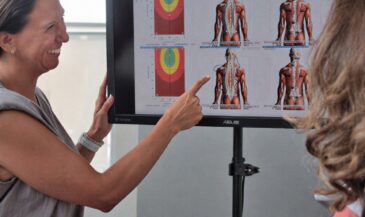
When patients can see scan views that show postural tension, autonomic imbalance, or low adaptability, they begin to understand that chiropractic care is about more than how they felt when they walked in. They can see that the nervous system may still be under tension, even when symptoms fluctuate.
Many patients search online for a diagnostic tool, effective treatment, targeted treatment, or treatment plans because they are trying to understand what will help them. In chiropractic, the stronger conversation is about exam findings, objective data, and a care plan prepared by the chiropractor using clinical judgment.
That is why how do chiropractors test the nervous system should never stop at structure alone. The deeper opportunity is to connect structural findings with functional neurological data.
How INSiGHT Scanning Technology Tests Nervous System Performance
This is where INSiGHT scanning technology gives the Neurologically-Focused Chiropractor a tremendous advantage. It does not replace the doctor’s hands, eyes, training, or clinical judgment. It strengthens the exam by adding objective data about nervous system performance.
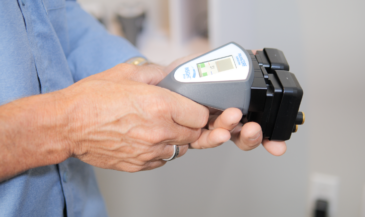
INSiGHT neuroTECH and Synapse software help chiropractors analyze the nervous system through three technologies: neuroCORE, neuroTHERMAL, and neuroPULSE. Together, they provide a deeper look at motor activity, autonomic regulation, and adaptability.
This is the kind of information patients can see, chiropractors can interpret, and teams can communicate with confidence. It takes complex neurological information and makes it visual without watering it down.
A nervous system scan is non-invasive, efficient, and designed to help evaluate function. So when someone asks how do chiropractors test the nervous system, INSiGHT scanning technology gives a very clear answer: by using reliable and validated instruments to analyze how the system is performing.
neuroCORE sEMG analyzes motor activity and postural tension
neuroCORE uses surface electromyography, or sEMG, to analyze electrical activity in the paraspinal muscles. EMG is the broader category of electromyography, while sEMG uses surface sensors rather than needles.
This matters because the paraspinal muscles respond to neurological input. When the body is under distress, those muscles may overwork, underwork, or fire asymmetrically. The scan measures the electrical activity related to postural control and motor organization.
neuroCORE helps reveal patterns such as:
- Postural tension: Areas where the body may be working harder than expected to stay upright
- Asymmetry: Left-right differences that suggest altered motor organization
- Energy expenditure: How much effort the system is using to maintain posture
- Low activity patterns: Findings that may suggest exhaustion or reduced motor engagement
- Compensation: Patterns that help the chiropractor understand how the body is adapting
In simple terms, neuroCORE helps the chiropractor see how hard the body is working. That is powerful because a patient may think they are relaxed while their scan shows their system is burning energy just to maintain posture.
neuroTHERMAL analyzes autonomic regulation along the spine
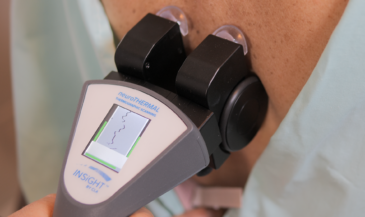
neuroTHERMAL uses infrared sensors to assess temperature differences along the spine. Temperature regulation is influenced by autonomic control of blood flow, which makes thermal analysis a valuable window into regional regulation.
The autonomic nervous system helps regulate organs and glands, blood vessels, temperature, and many automatic functions the patient does not consciously control. When a spinal region is under neurological tension, thermal patterns may reveal changes in regulation.
This is where the chiropractor can begin to see a different layer of function. A posture check may show how the body is positioned. A thermal scan helps analyze autonomic nervous patterns related to regulation, including the way a gland or organ-related pathway may be influenced by spinal nerve communication.
neuroTHERMAL helps quantify what areas are showing imbalance and gives the chiropractor scan views that can be compared over time.
neuroPULSE HRV analyzes adaptability and autonomic balance
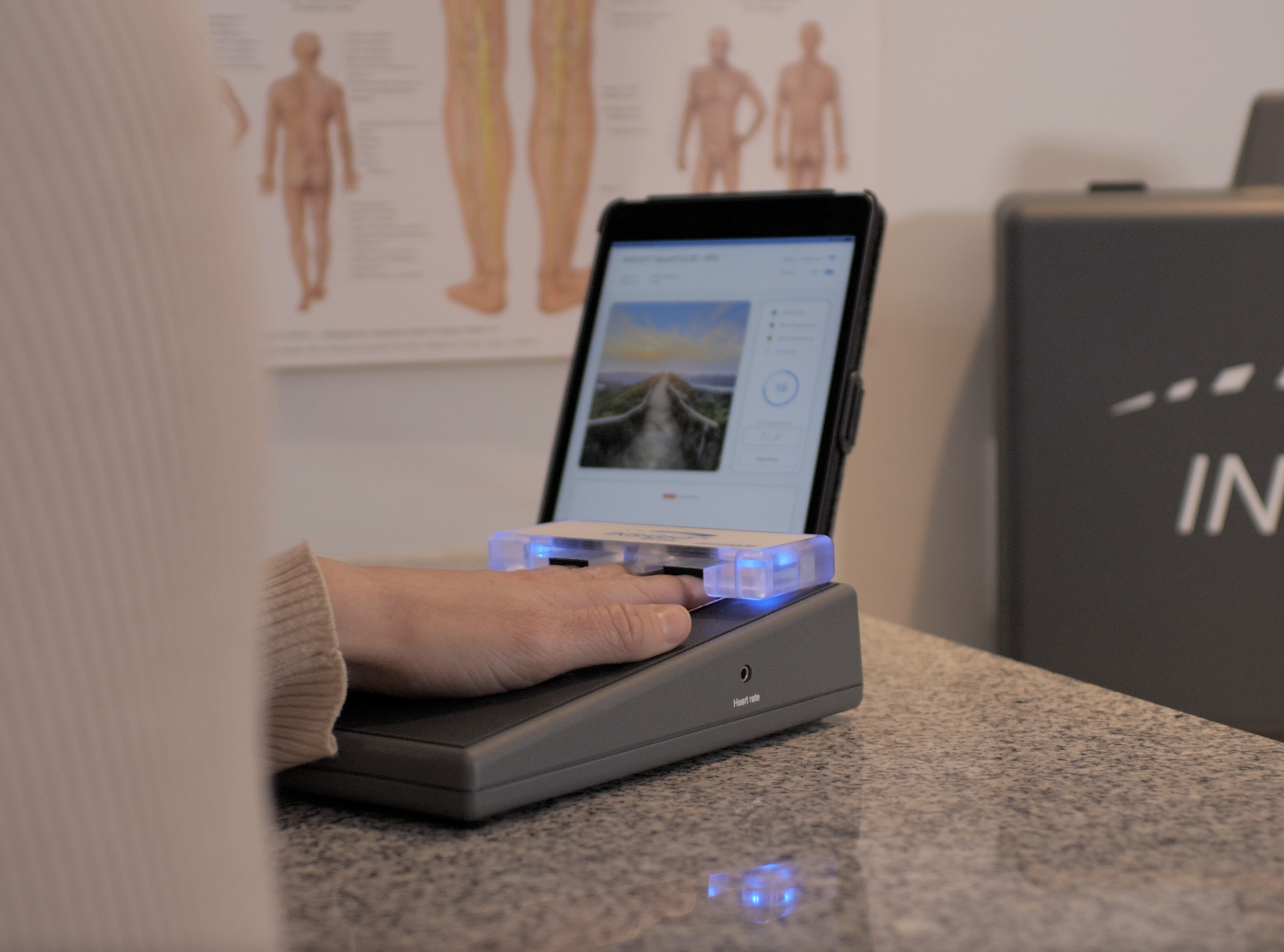
Heart rate variability measures the variation in time between heartbeats. That variation gives insight into how the autonomic system is balancing and adapting.
neuroPULSE uses HRV to help evaluate the relationship between sympathetic and parasympathetic activity. In the language of the ANS, that means looking at how well the patient can shift between activation, recovery, and regulation.
This is not simply about heart rate. It is about adaptability. A patient with stronger adaptability can respond to challenge and recover efficiently. A patient with lower adaptability may be stuck in sympathetic overdrive or have limited reserve for daily demands.
For chiropractors, this is a vital part of the neural functional picture. It helps answer the question: how much reserve does this patient have, and how well is the system responding?
Synapse software helps turn scan data into understandable reporting
Synapse software brings scan data into reports that help the chiropractor communicate clearly. The data can be measured and graphed, allowing initial scans and progress scans to be compared over time.
This is an important distinction: INSiGHT scanning technology does not create the care plan. The chiropractor interprets the objective data alongside the consultation, neurological examination, structural findings, patient history, and clinical expertise.
That is how an objective care plan can be prepared. The technology provides the information. The doctor provides the interpretation. That combination gives the chiropractor a stronger way to explain why care is recommended, what the scans suggest, and how changes can be tracked.
How Objective Nervous System Testing Strengthens Chiropractic Care
When chiropractors test the nervous system well, the entire patient conversation changes. The patient no longer has to rely only on memory, feelings, or a brief explanation of what the chiropractor found.
They can see a baseline. They can understand patterns. They can watch changes over time. That is one of the greatest values of objective neurological scanning.
This supports the chiropractor clinically, but it also supports the patient emotionally and intellectually. People tend to value what they understand. They are more likely to stay engaged when the “why” behind care is clear.
This is especially important in family chiropractic, pediatric chiropractic, wellness-oriented practices, and offices that want to build long-term relationships around nervous system performance. A quick symptom conversation may get a patient started. A clear neurological conversation helps them understand the bigger picture.
Baseline scans make the first report clearer
A baseline scan gives the chiropractor and patient a starting point. It helps answer, “What is happening right now?”
That starting point matters. Without it, the first report may depend heavily on symptoms, posture, palpation, and verbal explanation. Those findings matter, but objective scan data gives the chiropractor another level of clarity.
When patients see their baseline, the care plan conversation becomes easier to understand. They can see where their body is showing signs of tension, imbalance, or reduced adaptability. They can connect the chiropractor’s recommendations to objective findings.
Progress scans make changes easier to understand
Patients forget where they started. That is human nature.
They may forget how limited their motion was, how much postural tension they carried, how poorly they were adapting, or how much their system was struggling to recover. Progress scans help bring that story back into view.
Re-scanning helps show whether patterns are improving, worsening, or fluctuating. It gives the chiropractor and patient a way to talk about progress that goes beyond, “How do you feel today?”
That does not mean every scan must look perfect. The nervous system is dynamic. It changes. But when changes are measured and graphed, the care conversation becomes more grounded, more honest, and more useful.
Objective data supports chiropractic certainty
Certainty matters in practice. Not arrogance. Not pressure. Certainty.
When a chiropractor has objective findings, clinical exam results, and a clear understanding of the patient’s goals, recommendations become easier to communicate. The patient can see that the care plan is not random. It is based on what the chiropractor found.
This is also where a chiro can communicate with more confidence when patients ask whether spinal nerves are subluxated, whether there is disruption in communication, or whether there may be concern about nerve damage. Those are serious questions, and the chiropractor’s role is to evaluate appropriately, refer to a neurologist when needed, and use objective findings responsibly.
That is why how do chiropractors test the nervous system is more than an exam question. It is a practice communication question. It is a certainty question. It is a patient understanding question.
Testing the Nervous System Moves Chiropractic Forward
So, how do chiropractors test the nervous system?
They do it by combining clinical observation, neurological examination, reflex responses, sensory testing, muscle testing, posture, motion analysis, and objective neurological scanning. They evaluate how the body communicates, adapts, regulates, and performs.
The hands still matter. The exam still matters. The doctor’s judgment still matters. But when you add objective scan data through INSiGHT scanning technology, the conversation becomes clearer.
You are no longer only telling patients that their nervous system is under tension. You are showing them.
That is where chiropractic becomes easier to understand and more valuable to the patient. It moves from a sore-spot conversation to a nervous system performance conversation. It helps patients see that care is not only about what they feel today. It is about how their body is functioning, adapting, and expressing life over time.
And when someone asks how do chiropractors test the nervous system, the strongest answer is this: they use skilled examination, objective technology, and clinical judgment to understand the nervous system with greater clarity.
That is the kind of chiropractic conversation worth leading.