

That little one may arrive beautifully, loudly, and right on time, but the process of getting here is still a major transition for the body. A newborn has spent months curled, rotated, compressed, and positioned in the womb. Then comes labor, delivery, feeding, sleeping, turning the head, breathing, digestion, and adapting to a brand-new world. That is why chiropractic for infants deserves a better conversation than the one most people have heard.
Many parents hear the words chiropractic for infants and imagine adult-style adjusting. That is not what pediatric chiropractic care is meant to be. In the chiropractic profession, chiropractic for infants is gentle, specific, and focused on how the spine and nervous system are functioning during one of the most important developmental windows of life.
What Chiropractic for Infants Really Means
Chiropractic for infants begins with one simple idea: babies are not little adults. Their joints, muscles, ligaments, reflexes, and nervous system are still developing. A pediatric chiropractor does not evaluate an infant the same way they would evaluate an adult with back pain, and they should not adjust a newborn with the same force, speed, or intent used in adult care.
Infant chiropractic is centered on gentle analysis and careful touch. The chiropractor is looking for areas of tension, restricted movement, altered tone, or neurological interference that may affect how the baby feeds, turns, rests, moves, or settles. This is where understanding pediatric chiropractic becomes so important. The work is precise, but it should never be forceful.
When people hear words like spinal manipulation, chiropractic manipulations, cervical manipulations, or manipulation in general, they often picture quick thrusts and cracking sounds. That picture does not belong in a conversation about chiropractic for infants. Gentle chiropractic adjustments for babies often use pressure comparable to checking the ripeness of a tomato. Many adjustments for babies are touch-and-hold, light mobilization, soft tissue work, or gentle positional support.
Infant care is not adult chiropractic scaled down
The best pediatric chiropractic care honors the child’s unique needs. An infant has a delicate spine, open joints, developing motor tone, and a body that is constantly learning how to coordinate. The goal is not to forcefully realign anything. In fact, when parents say “misalignment,” a more accurate chiropractic conversation often centers on tension, altered motion, or neurological interference.
A chiropractor may use gentle chiropractic techniques to help improve motion in the neck, spine, pelvis, jaw, or shoulders. This can support more comfortable movement and better system function as the baby adapts to feeding, sleeping, digestion, and early development.
What a pediatric chiropractor evaluates
A good infant exam is not a quick look and an adjustment. It should be a careful head-to-toe evaluation. A pediatric chiropractor may evaluate:
- How well the baby turns the head to both sides
- Whether the baby consistently favors one side
- Jaw motion and feeding posture
- Tension in the neck, shoulders, pelvis, or spinal region
- Reflexes and early movement patterns
- Hip motion and body symmetry
- Comfort when lying on the back, belly, or side
- Signs your baby may be uncomfortable during feeding or sleep
This is also where good clinical judgment matters. Safe chiropractic care for infants requires appropriate pediatric training, experience, and a clear understanding of when to refer. Some doctors pursue formal postgraduate education in pediatric chiropractic, while others build pediatric competence through additional training, mentorship, and focused clinical experience.
A chiropractor caring for infants should be comfortable working alongside a pediatrician, lactation consultant, occupational therapist, physiotherapist, or pediatric orthopedic specialists when the child’s condition calls for it. That collaborative mindset gives parents confidence that chiropractic care for infants is being delivered with the baby’s best interests first.
Why Parents Bring Infants to a Chiropractor
Parents rarely walk into a chiropractic office using the same words a chiropractor would use. They do not usually say, “I think my infant has altered spinal motion and nervous system tension.” They say, “My baby won’t turn her head to one side,” or “He struggles to breastfeed,” or “She cries every night and nothing seems to help.”
That is where the chiropractor has to listen closely. Many parents seek chiropractic care because they notice a pattern. Their little one may seem tense, uncomfortable, unsettled, or unable to relax. The chiropractor’s job is not to turn every concern into a spinal issue. The job is to evaluate whether musculoskeletal tension, restricted motion, or neurological interference may be contributing to what the family is seeing.
In-utero positioning, a fast delivery, long labor, breech positioning, twin positioning, C-section delivery, vacuum assistance, forceps, or even a typical vaginal birth can place rotational and compressive forces on the newborn’s neck, jaw, shoulders, and spine. That does not mean every baby is injured. It means that from the moment they are born, babies deserve thoughtful observation and careful functional assessment.
Feeding and breastfeeding difficulties
Breastfeeding is beautifully natural, but it is not mechanically simple. A newborn must coordinate sucking, swallowing, breathing, jaw movement, tongue motion, neck position, cranial nerve activity, and whole-body tone. If the baby has tension in the jaw, neck, upper spine, or shoulders, it may affect comfort and coordination during feeding.
This is one reason many parents ask whether chiropractic care may help when their baby struggles to latch, pulls away, arches, favors one side, or seems uncomfortable while trying to breastfeed. Specialized chiropractic care can help by addressing tension patterns that may interfere with comfortable positioning and jaw or neck motion. That can make the process easier for the baby and less stressful for the parent.
Torticollis and head preference
Torticollis is another common reason parents see a chiropractor. A baby with torticollis may tilt the head to one side and rotate the head to the other. Some babies simply prefer one side and resist turning the other way. Parents may say, “My baby consistently looks right,” or “She always sleeps with her head to one side.”
That matters because head preference can affect feeding position, sleep posture, shoulder tension, and skull pressure patterns. When one position is used over and over, some babies may develop flattening in one area of the head. Chiropractic care focuses on evaluating the affected joints, soft tissue tension, and neck motion so the baby can move more evenly.
Colic, reflux, and digestive issues
Colic is one of the hardest experiences for parents to navigate. Infantile colic is commonly described as crying for more than 3 hours per day, more than 3 days per week, for more than 3 weeks. Colic symptoms can leave parents exhausted, discouraged, and searching for answers.
Here is where we need to be both hopeful and responsible. Colic, reflux, and digestive issues can have many contributing factors, including feeding mechanics, milk transfer, latch, gut maturity, overstimulation, and musculoskeletal tension. Chiropractic care may help some babies by reducing tension and supporting nervous system function, but severe, worsening, or unusual signs should always involve the baby’s pediatrician.
The chiropractor should not promise that chiropractic care can help every case of colic. A better approach is to examine the infant carefully, consider the whole picture, and determine whether gentle adjustments may support comfort, movement, digestion, and settling.
Sleep and settling
Many parents report that their little one sleeps more comfortably after receiving chiropractic care. That does not mean sleep is guaranteed to improve after every visit. It means that when a baby’s body feels more relaxed and less tense, parents may observe changes in settling, rest, bowel movements, or overall comfort.
This is why communication matters. Chiropractors should help parents understand that sleep is influenced by many factors, including feeding, digestion, growth, stimulation, temperament, and environment. Chiropractic care offers many families one practical way to support the baby’s body as it learns to adapt.
Learn more about INSiGHT scanning?
Fill this out and we’ll get in touch!
"*" indicates required fields
How Chiropractors Understand Infant Care Through the Spine and Nervous System
For neurologically-focused chiropractors, the spine is never just a structure. The spine protects and interacts with the nervous system, and the nervous system coordinates how the body moves, digests, feeds, sleeps, adapts, and responds to the world.
This is the deeper reason chiropractic for infants matters. We are not simply asking whether a baby has tension in the neck or restriction in the spine. We are asking how that tension may be influencing the baby’s ability to function comfortably. That is a very different conversation from chasing symptoms.
A newborn cannot explain what feels tight. An infant cannot say, “I turn better to the right,” or “My jaw feels restricted when I latch.” But the body gives us signs. The baby’s posture, tone, head preference, feeding habits, cry patterns, and movement symmetry can all give the chiropractor valuable information.
Why the nervous system matters in early development
The nervous system is the communication network that helps the brain and body coordinate. During the first months of life, that communication is developing rapidly. The infant is learning how to lift the head, turn both ways, settle after stimulation, digest food, coordinate feeding, and regulate sleep-wake rhythms.
When a spinal region is under tension, or when subluxations are present, the body may not adapt as efficiently as it could. In chiropractic language, subluxation refers to altered spinal function with neurological interference. For infant care, the language should stay gentle and accurate. We are not frightening parents. We are helping them understand how the spine and nervous system work together.
What chiropractors are really looking for
Chiropractors who care for infants and children are trained to see patterns. The concern is rarely one isolated sign. It is the combination of findings that tells a clearer story.
A chiropractor may look for:
- Restricted head rotation
- Uneven postural tone
- Arching during feeding or lying down
- Difficulty relaxing into certain positions
- Tension in the neck, jaw, shoulders, pelvis, or spine
- Asymmetrical movement
- Feeding discomfort or latch challenges
- Changes in comfort when positioned on one side
This is where chiropractic care can improve the quality of the conversation. Instead of telling parents their baby simply “needs an adjustment,” the chiropractor can explain what was found, why it matters, and how gentle chiropractic care may support better function.
Chiropractic care can support function without replacing medical care
Chiropractic care can help support spinal motion, comfort, posture, and nervous system function. Chiropractic care may help a baby move more freely, settle more comfortably, or feed with less tension when those concerns are related to neuromusculoskeletal patterns.
But chiropractic care does not replace emergency care, pediatric evaluation, lactation support, or medical diagnosis. If a baby has fever, failure to thrive, breathing difficulty, dehydration, severe vomiting, unusual lethargy, or signs that concern the parent or doctor, the pediatrician must be involved. The best family chiropractor is confident enough to collaborate.
That kind of maturity strengthens the profession. It shows that chiropractic for infants can be part of a thoughtful, nonsurgical, drug-free, family-centered model that respects the baby’s needs and the parent’s concerns.
Safety, Scope, and the Right Conversation With Parents
One of the most important parts of chiropractic for infants is knowing how to talk about it responsibly. Parents may arrive hopeful, nervous, skeptical, or overwhelmed. They may have read strong opinions online. They may have heard that it’s safe from one parent and concerning from another. The chiropractor has to bring the conversation back to clarity.
First, chiropractic treatment language should be handled carefully. In a chiropractic office, the better conversation is about assessment, care, and appropriate adjustment, not about promising to fix every concern. Parents need to understand what you are evaluating, why it matters, and what reasonable goals look like.
Second, it is helpful to explain that pediatric chiropractic is not the same thing as aggressive manipulation. Gentle chiropractic care for infants should not involve forceful thrusts. It should involve age-appropriate analysis, gentle contact, and specific care that respects the baby’s developing body.
Third, chiropractors should stay in their lane while still practicing with confidence. Parents may ask about chiropractic for sleep, colic, reflux, latch, constipation, asthma, ear concerns, or even manual therapy for asthma. A thoughtful chiropractor can explain that chiropractic care is focused on the spine, nervous system, movement, tone, and adaptability, while medical diagnosis and disease management remain with the appropriate medical provider.
Parents may also ask about alternative therapies. This is a good opportunity to position chiropractic care as distinct. It is not a random wellness add-on. It is a specific, hands-on, neurologically-focused approach that evaluates how the body is adapting and where tension may be affecting function.
Where INSiGHT Scanning Technology Fits in Infant and Pediatric Chiropractic
Here is one of the biggest challenges in pediatric chiropractic: babies cannot tell you what they feel. Parents can describe feeding, sleep, crying, reflux, digestion, and movement patterns, and those observations matter. But the chiropractor also needs objective ways to evaluate how the child’s nervous system is adapting.
That is where INSiGHT scanning technology brings a powerful layer of clarity. Neurological scanning instantly shifts the conversation from spinal regions alone to nerves, function, and performance. In pediatric chiropractic care, that shift matters because parents are trying to understand the why behind care. They want to know what the chiropractor is seeing and how it connects to their little one’s day-to-day patterns.
INSiGHT scanning technology does not create the care plan. It provides objective exam data and scan reports. The chiropractor then interprets that data alongside history, exam findings, clinical experience, and the child’s unique needs to design the care plan. That distinction is important, and it keeps the technology in its proper role.
Why objective data matters when babies cannot explain what they feel
With infants, so much of the conversation starts with parent observation. A parent may notice the baby consistently turns one way, struggles to breastfeed on one side, seems tense through the shoulders, or has difficulty settling. Those observations are important, but they are still subjective.
Objective scan data gives the chiropractor another way to analyze nervous system status. It helps create a baseline. It helps communicate findings more clearly. It helps track how the baby’s nervous system performance fluctuates over time.
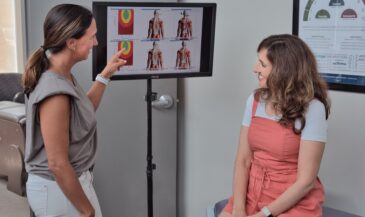
For parents, scan views can make a complex neurological conversation simple. When they can see patterns in living color, they begin to understand that chiropractic care is about more than symptoms. It is about function, adaptability, and the body’s innate ability to organize and respond.
neuroTHERMAL for newborns and children
The INSiGHT neuroTHERMAL can complete a full spine nerve system scan quickly, making it especially valuable in pediatric and family chiropractic. The technology analyzes thermal patterns along the spine that are connected to autonomic regulation and regional nerve tension.
With a neuroTHERMAL scan, the chiropractor can analyze neurological distress patterns on an exam or compare how those patterns fluctuate under care. For newborns, infants and children, this can provide an ideal spinal-neural checkup because it is efficient, gentle, and visual.
The goal is not to label a baby with a condition based on one scan. The goal is to help the chiropractor better understand where patterns may be showing up, where the system may be needing attention, and how those patterns relate to the broader clinical picture.
neuroPULSE and pediatric adaptability
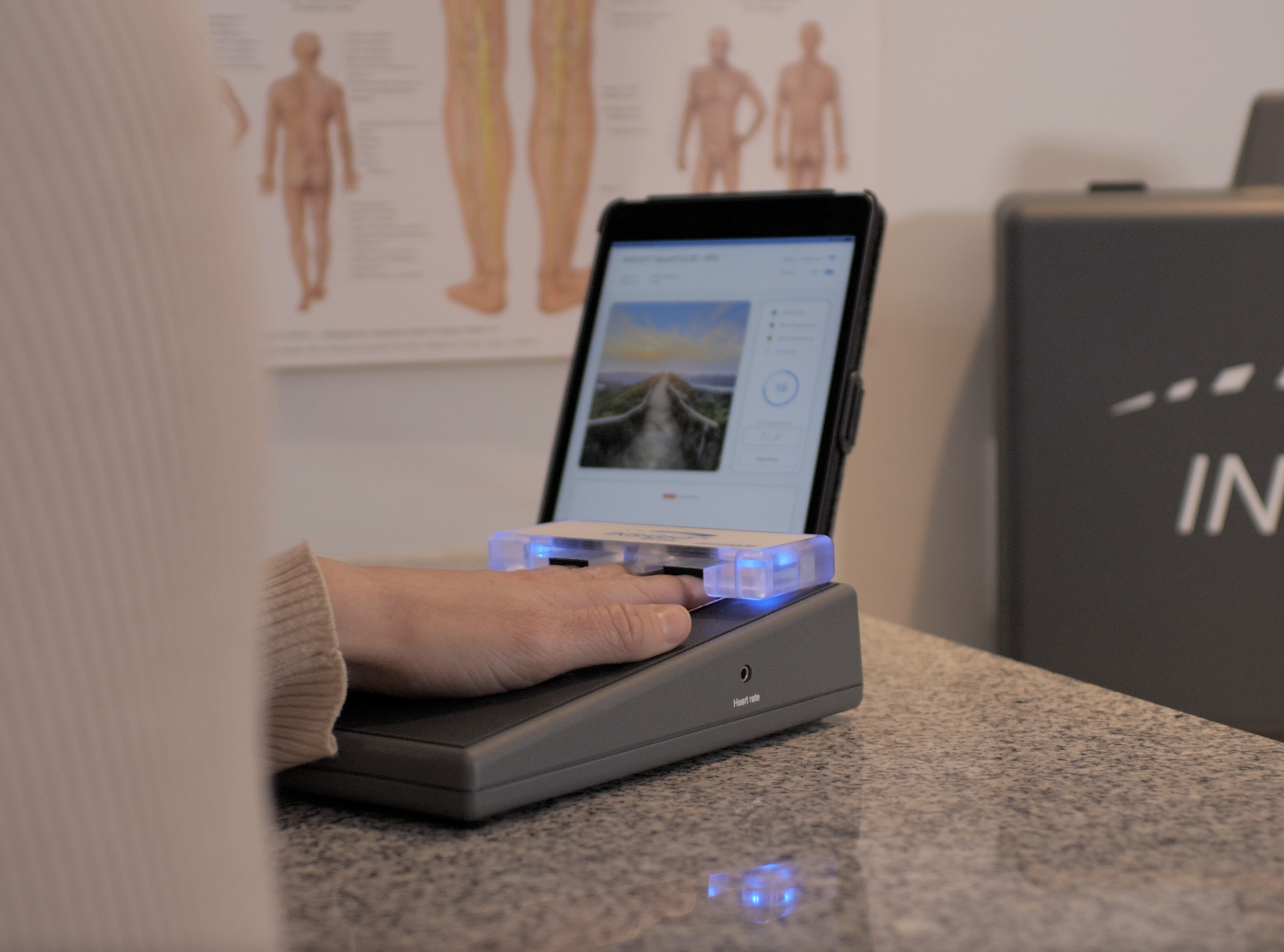
The INSiGHT neuroPULSE evaluates Heart Rate Variability, which gives insight into autonomic balance, activity, adaptability, and reserve. In simple terms, it helps the chiropractor understand how well the nervous system is responding and recovering.
For pediatric use, neuroPULSE includes child-friendly adaptations such as ear clip and finger sleeve options. Modified scanning protocols may be used for infants and young children because pediatric care should always match the child’s age, development, and comfort.
This becomes especially useful for chiropractors caring for families. A baby, a toddler, a school-age child, a parent, and a grandparent will not present the same way. But neurological scanning gives the family chiropractor a consistent, objective way to evaluate nervous system performance across children of all ages.
Synapse software helps parents understand the why
With INSiGHT’s Synapse software, complex neurology becomes easier to communicate. The chiropractor can use scan reports and scan views to help parents understand what is being analyzed, what has shifted, and why continued observation may matter.
This strengthens reports, reassessments, and parent conversations. Instead of relying only on “Your baby seems better,” the chiropractor can show parents baseline scan data and progress scan data. That gives the parent a clearer way to understand how chiropractic care may be making a difference.
For chiropractic practices that care for infants and children, INSiGHT neuroTECH and Synapse software support a higher standard of communication. They help the doctor connect the dots between the spine, nervous system, adaptability, and care recommendations. That is how objective data supports family chiropractic without replacing the chiropractor’s hands, heart, or clinical judgment.
A Better Conversation About Babies, Function, and Chiropractic
Chiropractic for infants deserves to be talked about with clarity. It is not about aggressive manipulation. It is not about forcing the spine. It is not about making big promises to worried parents. It is about careful evaluation, gentle adjustments, and a deeper respect for the developing spine and nervous system.
When parents ask whether they should bring their child to a chiropractor, the best answer begins with education. Explain what you assess. Explain how gentle chiropractic care works. Explain when you would refer. Explain why the baby’s movement, feeding, settling, posture, and comfort all matter.
The benefits of chiropractic should be framed around function. Chiropractic adjustments can help ensure the chiropractor is addressing tension patterns with specificity. Regular chiropractic adjustments, when appropriate, can support a broader care plan focused on adaptability, comfort, and nervous system performance.
This is where the profession has such a beautiful opportunity. Parents are already watching their babies closely. They notice every turn of the head, every feeding struggle, every restless night, and every new milestone. When chiropractors bring skilled hands, sound judgment, and objective neurological scanning into that conversation, parents can finally see a bigger picture.
That is the real value of chiropractic care for infants. It helps move the conversation from “Does my baby need an adjustment?” to “How well is my baby adapting?”
And once parents understand that, they begin to see chiropractic care differently. They see it as part of helping their little one grow, move, feed, rest, and develop with greater ease. Now that is a conversation worth having.