

A well-delivered chiropractic adjustment is a precise clinical event that helps restore normal motion, improve communication through the body, and give the body a better opportunity to organize itself.
That is why this conversation matters so much in the chiropractic profession. If patients only understand the adjustment as pain relief, they may value it only until the symptoms calm down. When they understand the adjustment through motion, adaptability, and objective neurological change, the whole conversation shifts.
What Is a Chiropractic Adjustment?
A chiropractic adjustment is a procedure where a licensed doctor applies a controlled force to help a restricted area move better. Most often, that area is a spinal joint, but chiropractors may also work with the shoulders, hips, wrists, ankles, jaw, and other regions when clinically appropriate.
In public health language, the adjustment is often described as spinal manipulation or, chiropractic manipulation, or spinal manipulative therapy. That does not mean chiropractors randomly manipulate joints. Those definitions are useful, but they do not fully explain what the chiropractor is trained to accomplish.
At its best, a chiropractic adjustment is not about chasing a popping noise from the spine. It is about addressing a change in neurological tension, improving motion, and helping the body function with better organization and control. The adjustment may help reduce pain, improve mobility, and support better range of motion, but the deeper value is found in how the spine and nervous system respond together and how the entire nervous system, including the brain operate more efficently.
The Common Definition Patients Already Know
Most patients come in with a simple picture. They think the chiropractor uses their hands to move a stuck spinal area. They may expect the doctor to use their hands or special instruments, apply pressure, and help “realign” something that feels off.
That description is not entirely wrong. The doctor uses careful positioning, analysis, and skill to perform the adjustment. But if we leave the explanation there, we teach patients to think of chiropractic as a mechanical fix instead of a nerve system-centered approach to better performance.

How Chiropractic Adjustments Work in the Body
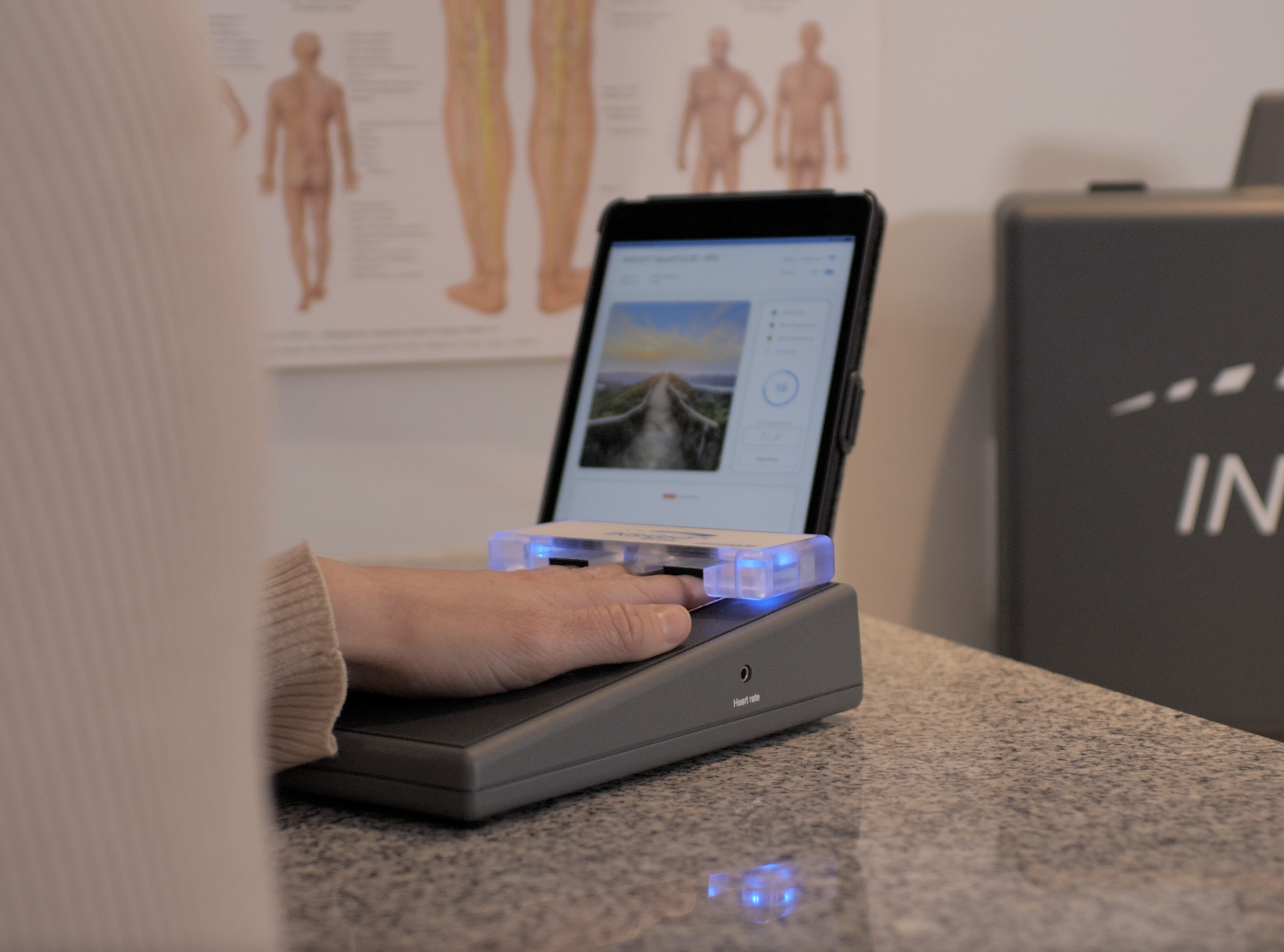
Before a chiropractor adjusts, they need to understand the person in front of them. That begins with a health history, a spinal and postural exam, and a thoughtful look at movement, structure, and clinical findings. Depending on the case, an x-ray may be appropriate to understand structure, safety, or long-standing patterns.Most importantly , in a neurocentric office, the chiropractor will look deeper than the spine and use INSiGHT scanning technologies to identify neurological interference and patterns of embedded change.
A patient may come in asking you to adjust the spine where it hurts, but you know the painful area is not always the root cause. The body compensates. One spinal region may lose normal motion, another area may overwork, and the surrounding muscles may tighten to protect the patient. That is why proper chiropractic analysis matters before any thrust is delivered.
During the visit, the patient is often placed in a proper position on a chiropractic table. The doctor may use gentle pressure, a manual thrust, or special instruments to a specific area. In many manual methods, the chiropractor applies a quick thrust to move the restricted area slightly beyond its restricted barrier. Some people casually describe this as a thrust to the misaligned vertebra, but a better explanation is that the chiropractor is helping a restricted region move and communicate more clearly.
Learn more about INSiGHT scanning?
Fill this out and we’ll get in touch!
"*" indicates required fields
Why Patients Seek Chiropractic Adjustments
The common reasons people seek chiropractic are not mysterious. They want to move, work, sleep, train, and live without being distracted by neck pain, lower back pain, low back pain, neck and back pain, headaches, or joint pain. Some come after sitting too long. Some come after an injury. Some come because posture has changed and the body no longer feels easy to use.
According to patient-facing resources, including the American Chiropractic Association and major medical websites, chiropractic services are often discussed in relation to back pain, musculoskeletal concerns, headaches, mobility, and function. That is the public doorway into chiropractic, and we should respect it.
But here is the issue: if patients only seek chiropractic when they hurt, they may assume they only need chiropractic when the symptom is loud. That is why the chiropractor has to bridge the gap between relief and function.
Relief Is Valuable, But It Is Not the Chiropractic Story
Relief matters. No chiropractor needs to apologize for helping a patient feel better. The benefits of chiropractic adjustments may include better motion, improved comfort, less guarding, and a stronger sense that the body is moving the way it should.
Still, pain relief is not the only goal. A patient may feel better before their mechanics, adaptive reserve, or nerve system patterns have stabilized. That is why chiropractic adjustments might need to be part of a broader care plan rather than a one-visit event.
Chiropractic treatment can also complement traditional medical care. A patient receiving chiropractic may still need medical evaluation, imaging, exercise guidance, nutrition support, or referral when appropriate. A good candidate for chiropractic care should be screened carefully, and not every person is a good candidate for every method.

The Neurological Side of the Chiropractic Adjustment
The body is not just a stack of parts. It is a living communication structure. Each spinal joint, ligament, and muscle sends input to the brain about position, movement, pressure, and load. When a joint loses normal motion, the quality of that input can change.
That is why the phrase “realign” is helpful for patients but too small for chiropractors. The adjustment is not simply about regaining joint motion. It is about helping the body organize around better motion, cleaner neurological input, and less protective tension.
When a region is restricted, the body may respond with postural guarding, altered movement, or tension in the connective tissues. Over time, that may influence mobility, musculoskeletal pain, fatigue, and how the patient experiences load on the body. This is where Neurologically-Focused Chiropractic Care brings a richer explanation.
Motion Feeds the Brain
Healthy motion gives the brain better information. Restricted motion commonly in the spine can distort proprioceptive input, which is the body’s sense of position and movement. If the brain receives poor input, the body may create protective output: tighter muscles, altered posture, less fluid motion, or more energy spent just trying to stay upright.
That is why spinal adjustments are not only mechanical. They are part of a neurological conversation. Adjustments help restore motion, and that improved motion may support clearer communication through the spine and reduce pain for certain patients.
This is also why spinal manipulation in the treatment of certain types of lower back problems continues to be discussed in healthcare research. Spinal manipulation and chiropractic are often studied around mechanical and musculoskeletal outcomes, but the chiropractic profession has always had a bigger nerve system story to tell.
Safety, Screening, and Clinical Judgment
Chiropractic adjustment can help many patients, but no procedure is right for everyone. A patient with severe osteoporosis, cancer in the spine, progressive numbness, unexplained weakness, or certain vascular risk factors needs careful evaluation before any chiropractic treatment is considered.
That kind of screening builds trust. It also reminds patients that chiropractic is not random force. The doctor must choose the technique, force, direction, and frequency based on the person in front of them.
Common chiropractic adjustment techniques such as Diversified, Gonstead, instrument-assisted methods, drop table work, and Chiropractic BioPhysics all have their own clinical logic. The chiropractic techniques are important, but the bigger question is whether the adjustment is guided by good analysis and a clear purpose.
How INSiGHT Scanning Technology Brings Objectivity to the Adjustment
Here is where the conversation gets exciting. The adjustment is hands-on, but the modern patient also wants to see what is changing. They want clarity. They want to know why care matters once the first wave of symptoms settles down.
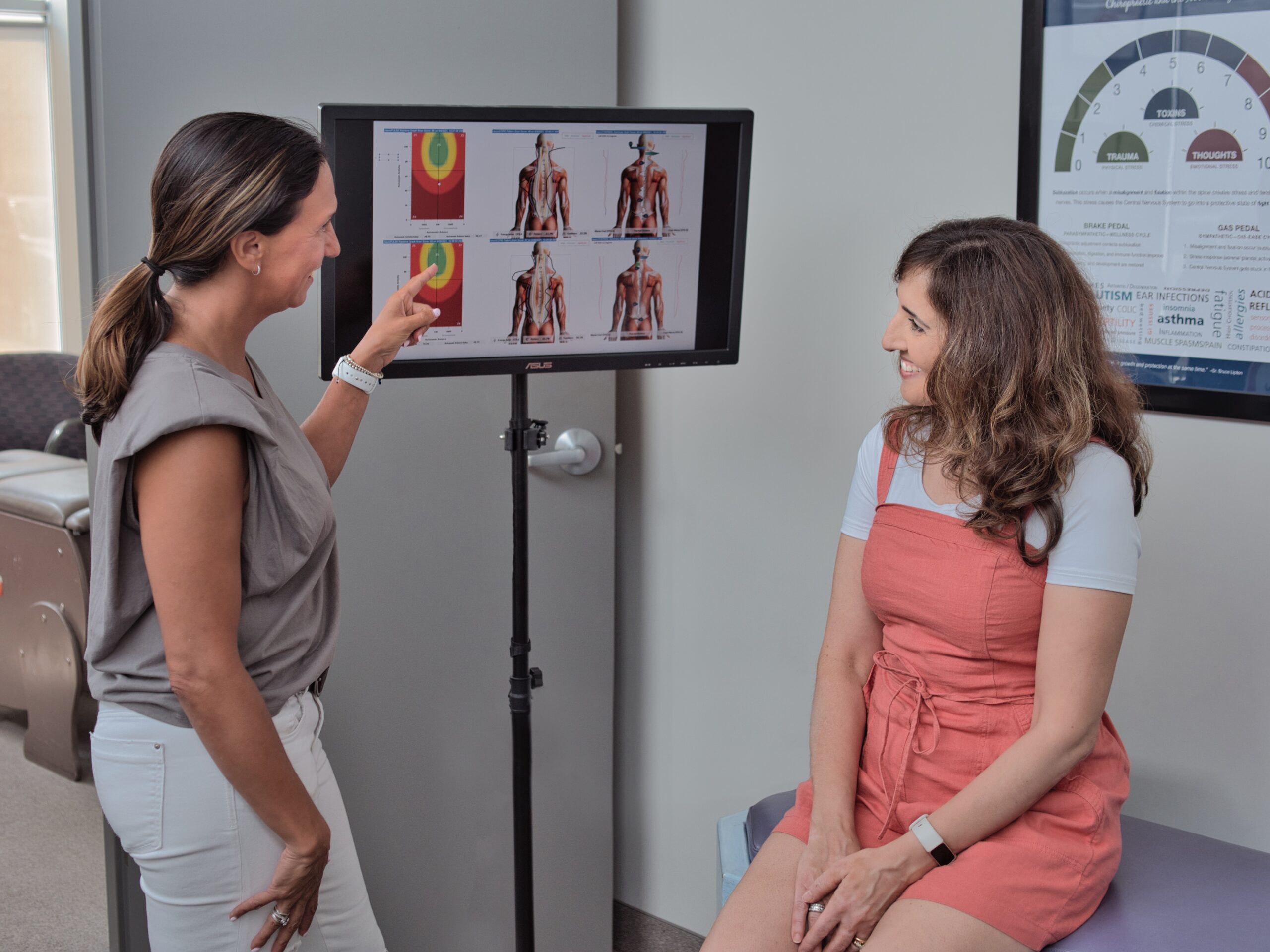
That is where INSiGHT scanning technology becomes such a powerful partner to the adjustment. INSiGHT neuroTECH and Synapse software help the chiropractor analyze nerve system patterns so the patient can see more than how they feel on a given day. The technology does not replace the chiropractor’s exam, judgment, or care plan. It strengthens the conversation with objective data.
When a patient sees their scan views, the conversation moves from “Did it help?” to “What changed?” That is a much stronger question. It helps the patient understand that care is not simply about trying to reduce inflammation or ease the latest flare-up. It is about watching how the body adapts, where tension is building, and whether progress is showing up over time.
The RED Framework
INSiGHT’s RED framework gives chiropractors a simple way to explore how chiropractic care is affecting the patient’s function:
- Reserve with neuroPULSE: Heart Rate Variability shows adaptive capacity and how well the patient can recover from neurological distress.
- Energy with neuroCORE: Surface Electromyography shows postural tension and energy expenditure along the back.
- Depth with neuroTHERMAL: Paraspinal thermal scanning shows autonomic temperature patterns through a quick full spine nerve system scan.
Then CORESCORE brings those findings into one simple neural efficiency score. Patients do not need a complicated lecture. They need a clear report card they can understand.
Why This Changes the Value of the Adjustment
Without scanning, patients may judge care by soreness, comfort, or whether they “feel fixed.” With objective scanning, the chiropractor can show patterns before care, track progress during care, and help patients understand why continued care may support better function.
That is how you turn the adjustment from a quick fix into a measurable part of a bigger performance conversation. Patients see where tension is building. They see how the body responds. They see proof their care is making a difference.
And when patients see it, they understand it.
The Adjustment Deserves a Bigger Conversation
A chiropractic adjustment may begin with a joint, but it should never be reduced to a joint. Yes, motion matters. Yes, comfort matters. Yes, helping a patient with back pain, neck pain, stiffness, or mobility matters. Those are meaningful parts of care.
But the bigger opportunity is helping patients understand that the adjustment supports a living, adapting body. When chiropractors explain chiropractic only as symptom relief, patients think short term. When chiropractors explain the adjustment through motion, nerve tension, posture, and objective scan data, patients begin to value the deeper purpose of care.
That is where INSiGHT CLA fits so naturally. Skilled hands deliver the adjustment. Objective scanning helps show the story behind it. And once patients can see what is changing, they stop thinking of chiropractic as something they need only when something hurts.
They begin to understand chiropractic as part of a better way to live, adapt, and perform.