

Here’s what chiropractors understand. Sciatica is not simply a leg problem. It is often a nerve communication problem. The sciatic nerve is being irritated, compressed, inflamed, or stressed somewhere along its pathway, and the symptoms are the part of the story the patient can feel.
So, can chiropractic help sciatica? In many cases, chiropractic care may help when the issue is connected to spinal region dysfunction, disc irritation, postural tension, tight muscles, or pressure on the sciatic nerve. But the better chiropractic conversation goes deeper than asking where it hurts. It asks what is driving the irritation and what the nervous system is trying to tell us.
Understanding Sciatica Through a Chiropractic Lens
Can chiropractic help sciatica when the symptoms seem to travel down the leg? That starts with understanding what sciatica actually is. Sciatica refers to symptoms that follow the pathway of the sciatic nerve. The sciatic nerve is the largest nerve in the body, and it travels from your lower back, through the hips and gluteal region, and down each leg.
When that nerve or the nerve roots feeding into it become irritated, symptoms may radiate into the buttock, thigh, calf, foot, or toes. Sciatica often affects one side of the body, although the level of discomfort can vary widely. Some patients experience pain that feels sharp and electric. Others describe a deep ache, burning, pulling, or pain and discomfort that seems to move through the leg.
From the patient’s perspective, the question is simple: “Can chiropractic help sciatica so I can get relief?” From the chiropractor’s perspective, the question is more complete: “What is irritating the sciatic nerve, how is the spine adapting, and what does this tell us about the patient’s nervous system performance?”
That distinction matters because the place where a patient feels symptoms is not always the place where the pattern began. Sciatic nerve pain may be felt in the leg, but the irritation may start in the lower back, pelvis, spinal region, disc, or soft tissue structures around the nerve pathway.
Common sciatica symptoms may include:
- Shooting pain: A sharp, electric sensation that may travel from the lower back into the buttock, thigh, calf, or foot.
- Numbness: A reduced or altered sensation along the sciatic pathway.
- Tingling: A pins-and-needles feeling that may come and go.
- Weakness: A feeling that the leg or foot is not responding normally.
- Lower back pain: Symptoms that begin around the lower back and move into one leg.
This is why can chiropractic help sciatica deserves more than a quick yes or no. The answer depends on the cause of sciatica, the patient’s exam findings, the duration of symptoms, and how the body is adapting. A neurologically-focused chiropractor is not just chasing pain. They are looking at the whole pattern.
What Causes Sciatica and Why Symptoms Alone Don’t Tell the Whole Story
Can chiropractic help sciatica when a disc is involved? Sometimes, yes, depending on the case. A herniated disc or bulging disc is one of the most common reasons people develop sciatica. When a disc changes shape or becomes irritated, it may put pressure on the sciatic pathway or the nerve roots that help form it.
Pressure on the nerve can lead to pain, tingling, weakness, and altered sensation. A herniated disc may also create inflammation around the nerve root, which can make sciatica pain more intense. In some cases, spinal narrowing, arthritic changes, bone spurs, or degenerative disc changes can also contribute to compression.
But not every sciatica nerve complaint is only a disc problem. Chiropractors also look at the lower back, hips, pelvis, posture, gait, soft tissue tension, and how the body loads weight from side to side. A person may sit rotated at a desk all day, stand with more pressure on one leg, or move in a way that repeatedly strains the same spinal regions.
Over time, those patterns can aggravate sciatica. Tight muscles in the glutes, hips, or lower back may contribute to irritation along the sciatic pathway. Postural tension may change how force moves through the spine and pelvis. Neurological interference may alter how muscles coordinate, stabilize, and protect the body.
This is where symptoms alone can be misleading. A patient may ask, “Can chiropractic help sciatica?” because they feel symptoms in the leg. But the chiropractor is asking whether the lower back, pelvis, vertebra, disc, or surrounding tissue is creating the irritation that continues causing sciatica pain.
Common contributors may include:
- Disc changes: A bulging or herniated disc can put pressure on the sciatic nerve pathway.
- Spinal narrowing: Reduced space in the spinal canal can contribute to nerve irritation.
- Postural tension: Uneven loading through the lower back, pelvis, or hips may aggravate sciatica.
- Soft tissue irritation: Tight muscles can create tension around the sciatic pathway.
- Compression: Compression of the sciatic nerve or related nerve roots can lead to pain and nerve symptoms.
- Movement habits: Repetitive lifting, prolonged sitting, and poor ergonomics may lead to pain over time.
Patients may think the root cause is simply “a bad leg,” but chiropractors understand that the sciatic nerve is part of a much larger communication network. When symptoms travel, the body is telling us to look beyond the obvious location.
Learn more about INSiGHT scanning?
Fill this out and we’ll get in touch!
"*" indicates required fields
How Chiropractic Care May Help With Sciatica
Can chiropractic help sciatica in a practical, real-world way? For many patients, chiropractic care may help relieve irritation by addressing mechanical and neurological factors around the spine, lower back, pelvis, and sciatic pathway. The goal is not to force every patient into the same protocol. The goal is to understand what their body is doing and provide personalized recommendations.
At the first visit, the chiropractor will ask about the patient’s history, symptom pattern, previous injuries, aggravating activities, work habits, and whether symptoms radiate down one leg. The chiropractor will ask about weakness, changes in sensation, walking tolerance, sitting tolerance, and whether the pain may be connected to a disc, posture, or movement pattern.
The exam may include orthopedic checks, neurological findings, posture, gait, range of motion, reflexes, strength testing, and lower back assessment. If the chiropractor sees signs of severe pain, progressive weakness, loss of bowel or bladder control, or major neurological concern, the patient should seek chiropractic guidance with appropriate referral or urgent medical evaluation when needed.
When chiropractic care is appropriate, the care plan may include several treatment options. Chiropractic adjustments may be used to improve motion and reduce joint fixation in spinal regions. Manual therapy may address soft tissue tension. Trigger point work may help ease muscular guarding. Decompression may be considered when clinically appropriate, especially in certain disc-related cases.
A chiropractor for sciatica pain may also recommend stretches, strengthening exercises, hip mobility work, nerve glides, and ergonomic coaching. These therapies to help the body move better can reduce pain triggers and improve the way the lower back and pelvis manage load.
Chiropractic treatment involves more than one technique. Depending on the patient, chiropractic treatments for sciatica may include:
- Chiropractic adjustments: Adjustments are designed to help restore proper spinal region motion and reduce irritation that may be contributing to pressure on the nerve.
- Manual therapy: Hands-on soft tissue work may help ease postural tension and guarding.
- Decompression: This may be used when appropriate to help reduce pressure around irritated disc and nerve structures.
- Exercise guidance: Mobility and strengthening work may help stabilize the lower back, hips, and pelvis.
- Postural coaching: Small changes to sitting, lifting, walking, and sleeping positions may help relieve sciatica.
This is why patients often see a chiropractor when they want pain relief without relying only on medication. Chiropractic care is designed to help relieve pain by improving function, motion, and communication through the nervous system. It may also help relieve sciatica by reducing mechanical irritation and helping the body adapt better.
Can chiropractic help sciatica for every person? No responsible chiropractor should promise that. Some cases require imaging, medical co-management, or surgical review. But chiropractors can help many patients find relief when the symptoms are connected to lower back mechanics, postural compensation, disc irritation, nerve tension, or pressure on the sciatic nerve.
Some patients get relief quickly. Others need consistent care over several weeks, especially if sciatica has been present for a long time. The patient’s ability to get relief depends on the cause, severity, lifestyle factors, and how long the nervous system has been adapting to the problem.
That’s why treatment from a chiropractor should not be reduced to a quick adjustment and a generic stretch sheet. A good chiropractor evaluates the person, identifies contributing patterns, and builds a care plan designed to help the patient experience less pain, better movement, and clearer understanding.
Why Neurological Scanning Changes the Sciatica Conversation
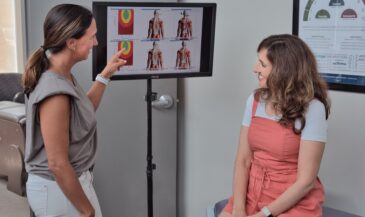
Can chiropractic help sciatica if the patient only understands their care through symptoms? Sometimes, but the conversation becomes much stronger when the patient can see objective data. A patient with sciatica pain usually wants fast relief. That is understandable. But chiropractors know symptoms are only one part of the story.
A patient may feel less pain before the underlying neurological pattern has fully improved. They may experience less leg discomfort while still showing guarding, postural tension, reduced adaptability, or signs of neurological distress. Without objective scan views, it can be difficult to explain why continued care may matter after the most obvious symptoms begin to ease.
This is where INSiGHT scanning technology becomes so valuable for the chiropractic profession. INSiGHT scanning technology does not diagnose sciatica. It does not create the care plan. The chiropractor interprets the scan data alongside the patient’s history, exam findings, and professional judgment.
What INSiGHT provides is objective exam data and visual reporting that help chiropractors communicate nervous system performance. That matters because can chiropractic help sciatica should not only be answered by how a patient feels on a single visit. It should also be supported by what the chiropractor can observe, evaluate, and track over time.
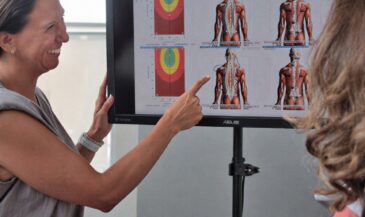
The neuroCORE assesses paraspinal muscle activity and postural tension patterns. For sciatica patients, this can be important because the body often guards, compensates, and shifts load when the lower back, pelvis, or leg is irritated. neuroCORE scan views may help reveal patterns of energy expenditure, asymmetry, and postural tension that support the chiropractor’s examination findings.
The neuroTHERMAL completes a full spine nerve system scan that analyzes temperature regulation patterns connected to autonomic function. For a patient experiencing sciatic pain, neuroTHERMAL does not say, “This is sciatica.” Instead, it helps show how the nervous system is regulating across spinal regions, which can help the chiropractor explain areas of neurological interference or nerve tension needing attention.
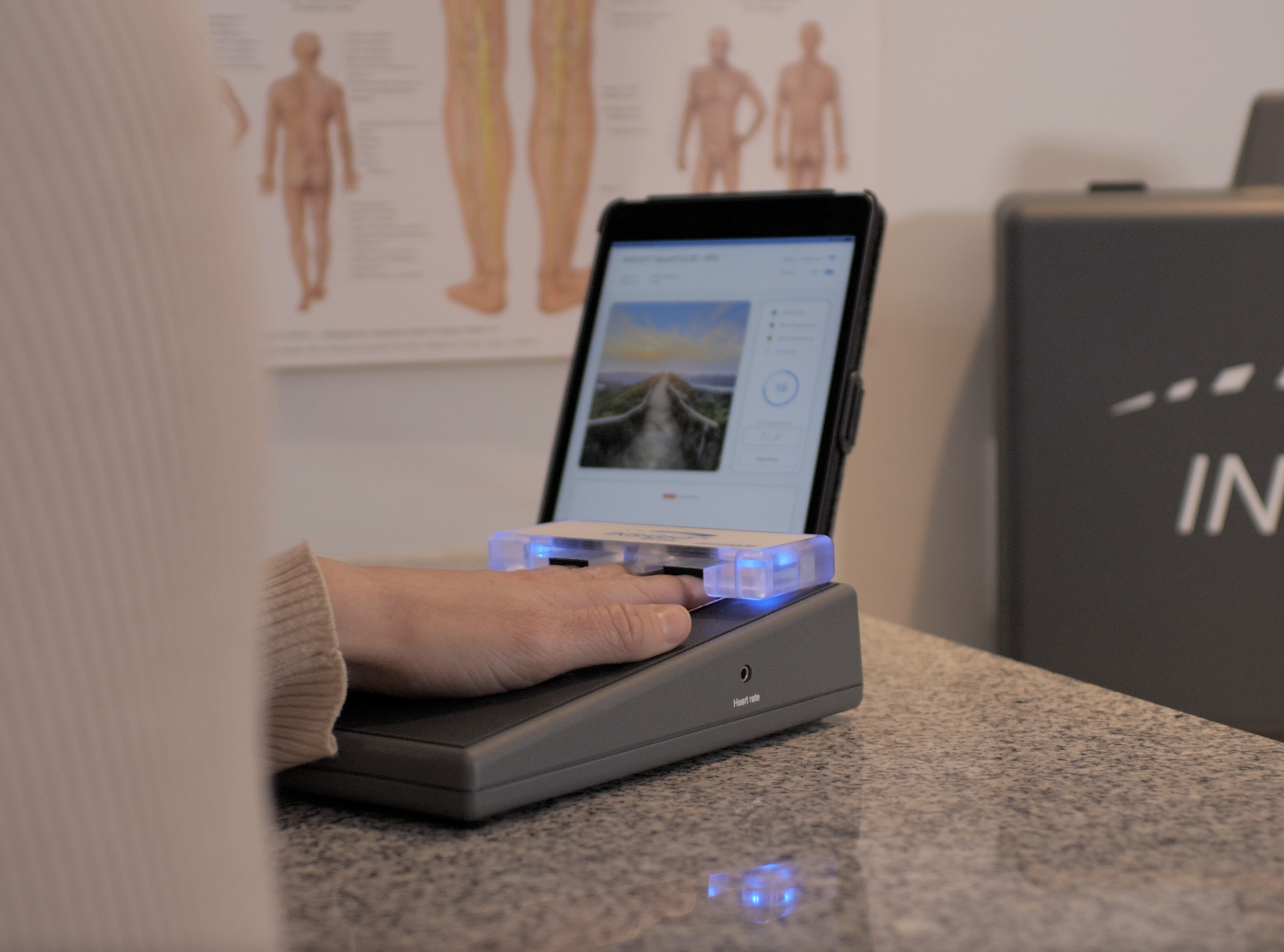
The neuroPULSE assesses Heart Rate Variability and adaptive reserve. This is especially helpful when a patient has been dealing with symptoms for weeks or months. Ongoing nerve pain can be physically and emotionally draining. neuroPULSE helps the chiropractor evaluate how well the autonomic nervous system is adapting, recovering, and responding.
With INSiGHT neuroTECH and Synapse software, complex neurology becomes easier to explain. Synapse helps turn scan data into clear reports patients can understand. That supports initial exams, progress exams, comparative exams, and continuation exams.
For the patient, this shifts the conversation. Instead of hearing, “You need more visits because you still have sciatica,” they can see objective patterns that explain why the care plan makes sense. Instead of thinking only about sciatica pain treatment, they begin to understand nervous system performance.
That’s a powerful change. It helps chiropractors move the patient from “Can chiropractic help sciatica?” to “Now I understand why my chiropractor is looking at my spine, posture, nerve pathways, and nervous system together.”
Helping Patients See the Bigger Chiropractic Opportunity
So, can chiropractic help sciatica? For many patients, yes, chiropractic care may help when sciatica is connected to spinal region dysfunction, disc irritation, postural compensation, tight muscles, misalignment patterns, misalignments in the spine, or pressure on the sciatic nerve. The right care may help reduce pain, improve movement, and provide relief from sciatica when the patient is a good candidate.
But the bigger opportunity is not only alleviating pain. The bigger opportunity is helping patients understand why the symptoms appeared and what their nervous system may need to function better. Sciatica may bring the patient into the office, but it does not have to define the whole conversation.
Many people will experience pain at some point in their lives. Some will visit a local chiropractor only after they have tried to treat sciatica pain with rest, stretching, medication, or other options. Others begin visiting a chiropractor because they want pain without medication as their only strategy. Some are simply looking for the relief you need to get back to work, family, exercise, and daily life.
That is a natural starting point. But once the patient is in front of you, chiropractors can treat the conversation differently. You can explain that sciatica often reflects irritation along a nerve pathway. You can show how symptoms may start in the lower back and travel into the leg. You can help them understand how the disc, spine, pelvis, posture, blood flow, muscle tone, and nervous system all work together.
You can also explain that the body is connected from the upper back to the lower spinal regions. When one area compensates, another area may carry more load. When one region is irritated, the nervous system may shift posture, movement, and muscle tone to protect the body. Over time, those patterns can lead to pain as well.
That is why can chiropractic help sciatica is such an important question for the profession. It gives chiropractors an opportunity to meet the patient where they are, then lead them into a better understanding of the nerve system. It gives you the chance to move from symptom-chasing to objective assessment, from temporary relief to better performance, and from guessing to clarity.
When a chiropractor combines clinical skill with INSiGHT scanning technology, the patient can see more than the symptom. They can see patterns. They can see progress. They can see why care matters even after symptoms begin to change.
That is the heart of Neurologically-Focused Chiropractic Care. Can chiropractic help sciatica? It can often help the right patient, at the right time, with the right evaluation. But more importantly, chiropractic can help patients understand that the sciatic nerve is part of a larger story about the spine, the nervous system, and the body’s ability to adapt.
And when patients understand that, they stop seeing chiropractic as a quick fix for sciatica pain and start seeing it as a vitalistic, drug-free way to support nervous system performance. That is a better conversation for the patient, a better standard for the chiropractor, and a better future for the profession.