
For chiropractors who want more than symptom-based conversations, a chiropractic thermal scanning instrument offers a practical way to assess function. It helps measure temperature differences along your spine, giving the doctor a better look at how the autonomic nervous system may be adapting under stress. Instead of relying only on history, palpation, or structural findings, the chiropractor can use a scan to add visible data to the examination and the report of findings.
That matters because chiropractic has always centered on the relationship between the spine and the nervous system. A chiropractic thermal scan does not replace clinical skill. It strengthens it. It gives the chiropractor another way to look at spinal function, nerve function, and the body’s regulatory responses. In a profession that has often had to explain the invisible, this is one of the clearest forms of chiropractic technology available today.
What a Chiropractic Thermal Scanning Instrument Measures and Why It Matters
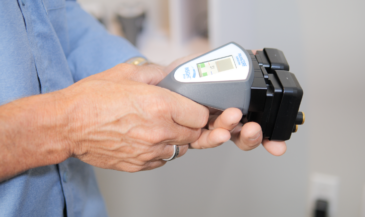
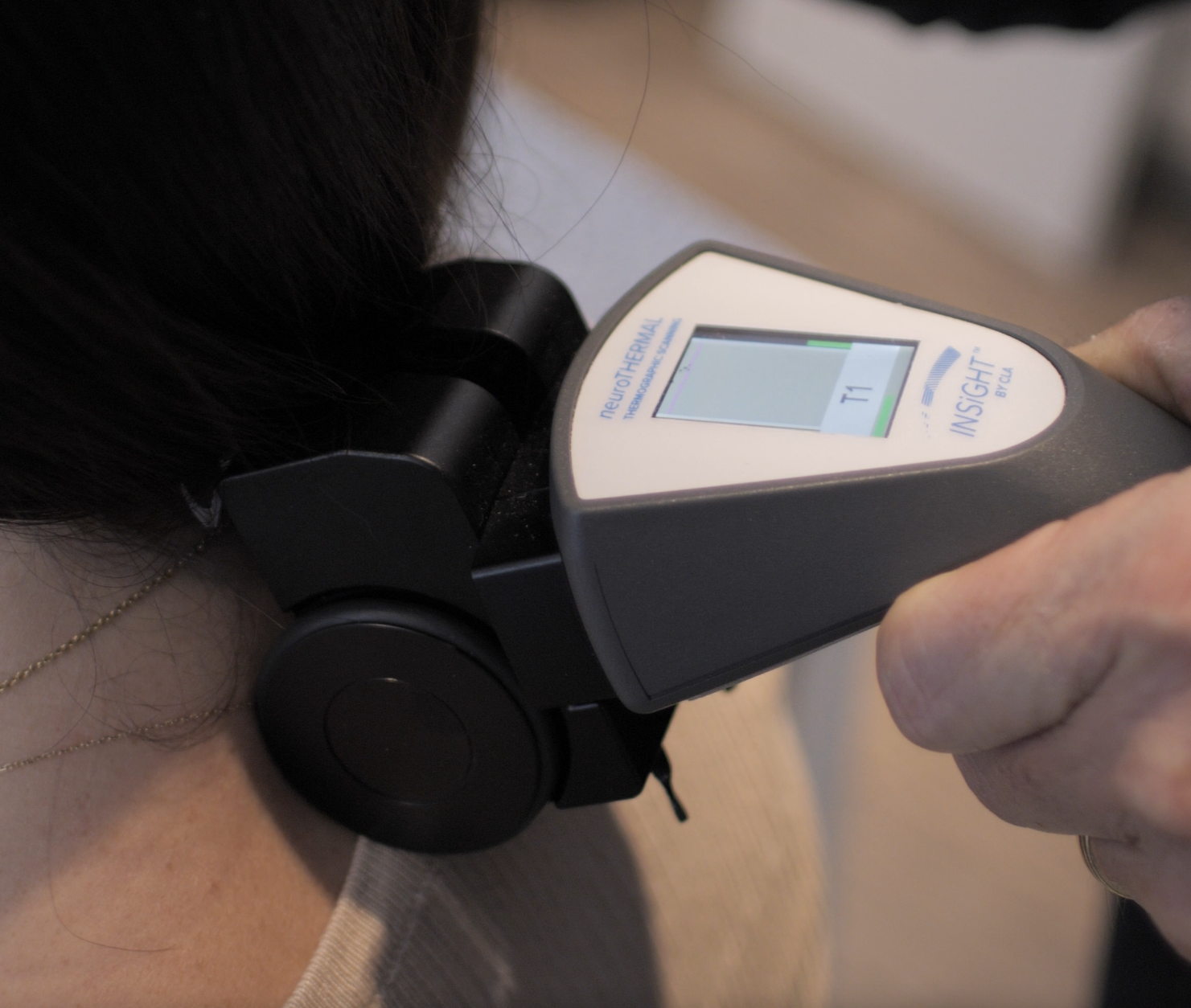
A chiropractic thermal scanner (more commonly referred to as a thermography instrument or thermal scanning instrument) is a handheld instrument designed to detect temperature differences along the spine, especially from one side of your spine to the other. It is not the same as general thermal imaging used in other settings. In chiropractic thermal scanning, the goal is to assess temperature variations in the paraspinal tissues and evaluate whether there may be signs of imbalance, autonomic dysregulation, or areas of nerve interference.
This kind of analysis matters because skin temperature is influenced by the autonomic nervous system. When the autonomic nervous system is functioning well, regulation tends to be more balanced. When there is disturbance, stress, or altered regulation, the scan may detect temperature differences along the spine that suggest the body is not adapting evenly. A chiropractic thermal scan measures temperature in a way that helps the doctor analyze function rather than just structure.
In the chiropractic profession, thermography has been valued because it offers an objective, non-invasive, and painless view of how the body is responding in real time. Rather than asking only how a person feels, the chiropractor can look at measurable findings. This can be especially helpful when discussing spinal health, nervous system function, and overall health with patients who need something more concrete than words alone.
What the scan is looking for
At the most practical level, a chiropractic thermal scan measures temperature differences along the paraspinal tissues. Those readings can reflect how the autonomic nervous system is regulating blood flow and tissue activity near the spine. When the doctor sees asymmetry from one side of your spine to the other, it may suggest altered autonomic activity, spinal nerve irritation, or areas of nerve interference and inflammation.
- Temperature differences can reflect altered regulation
- Paraspinal findings help the chiropractor assess function
- Skin temperature can reveal an underlying imbalance
- Scans detect changes that may not be obvious through observation alone
- A chiropractic thermography instrument gives a practical way to detect temperature patterns objectively
That is why many chiropractors see a chiropractic thermal scan as more than a visual extra. It is a diagnostic tool within a broader chiropractic assessment. It helps the doctor analyze whether the nervous system is functioning in a balanced way and whether there may be subluxation patterns or subluxations affecting adaptation. Used well, it supports a more informed care plan rather than guesswork.
Why Functional Scanning Adds Something That Structure Alone Cannot
One of the best ways to understand the value of thermal scanning technology is to compare it with structural tools. An x-ray has an important role when structural imaging is needed. It can show alignment, degeneration, fracture, anomaly, and other bony findings. But x-ray does not show the living physiology of the patient in the moment. It does not show how well the autonomic nervous system is regulating temperature along the spine.
A chiropractic thermal scan offers something different. It gives the chiropractor a functional look at what is happening now. It shows whether there are temperature differences along the spine that may reflect neurological stress, altered regulation, or nerve interference. That is a different question than structure alone can answer, and it is one reason thermography still matters in modern chiropractic practice.
This is where many doctors find fresh clarity. A patient may have a certain structural picture for years, but nervous system function can still fluctuate from week to week or even day to day. Travel, sleep loss, emotional strain, inflammation, postural demand, and physical load can all affect how the nervous system is functioning. A chiropractic thermal scan helps the chiropractor see that current response rather than only a static image.
Function matters because adaptation matters
Chiropractic has never been only about what the body looks like. It has always been about what the body is doing. A thermal scan helps the doctor look at function, especially the way the nervous system controlling local blood flow may be responding along the spine. This gives the chiropractor another layer of analysis when deciding how to explain findings, recommend chiropractic care, and monitor change over time.
- Imaging shows structure
- A scan shows current physiological response
- Thermography may reveal areas of nerve interference
- Temperature variations can reflect altered autonomic regulation
- A chiropractic thermal scan helps bridge structure and function in a practical way
That is why many clinicians consider a chiropractic thermal scan part of the latest in chiropractic. It does not replace examination procedures or clinical reasoning. It adds objective findings to them. For the chiropractor who wants to understand nerve function and nervous system health more clearly, that added perspective can be extremely valuable.
Learn more about INSiGHT scanning?
Fill this out and we’ll get in touch!
"*" indicates required fields
How Chiropractors Use a Chiropractic Thermal Scan in Daily Practice
A chiropractic thermal scan is most effective when it fits naturally into the workflow of a real office. It should not feel like a novelty. It should support the exam, strengthen the report of findings, and help track progress over time. In many offices, it begins with the new patient, where a baseline scan can show whether there are temperature differences along your spine that suggest altered regulation or stress.
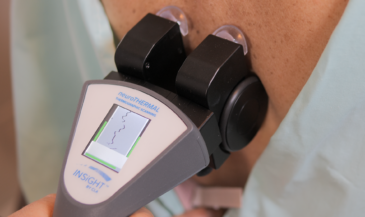
The process is simple for the patient. The instrument glides along your spine while sensors to measure thermal changes collect data quickly. The experience is radiation-free, painless, and fast. Because the scan is non-invasive and the scan is non-invasive for all ages, it works well in family chiropractic settings, including scans for children, adults, and pregnant women. That makes a chiropractic thermography instrument easy to use across the lifespan of the patient.
From there, follow-up scans help the chiropractor monitor progress. If the first scan showed asymmetry and later scans show more balanced findings, that gives the doctor a better way to discuss change. Scans help track whether the body is adapting differently under care. That is powerful in a report of findings because it gives patients something they can see instead of asking them to rely only on symptoms.
Common ways chiropractors use this technology
In a typical chiropractic practice, a chiropractic thermal scanning instrument may be used in several ways:
- During a new patient examination to establish a baseline
- At re-exams to track progress and monitor progress
- Before or after chiropractic adjustments in selected workflows
- As part of specialized care when objective findings are important
- To support communication during the report of findings
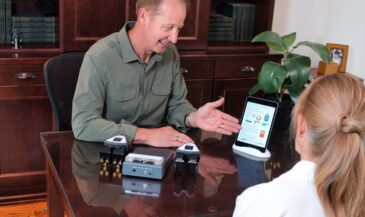
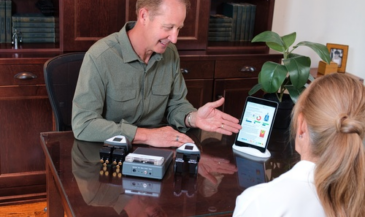
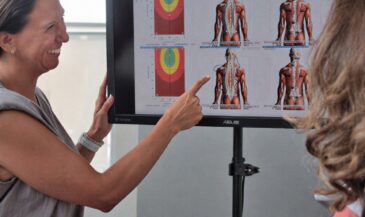
The real strength here is communication. Patients often do not understand invisible stress patterns unless they can see them. A chiropractic thermal scan helps translate complex physiology into something visible and easier to understand. It can help the doctor explain why the body may not be adapting well, why the nervous system is functioning unevenly, and why continued chiropractic care may still be needed even when symptoms fluctuate.
There is also a practical side to consistency. Good chiropractic thermal scanning depends on a repeatable process, proper room conditions, and a reliable instrument. When the doctor can computerize the scan process and keep the analysis consistent, the data becomes more meaningful. That is one reason many offices choose systems built specifically for chiropractic rather than generic thermal devices.
Why One Thermal Scan Is Helpful but Broader Neurological Scanning Is Better
A chiropractic thermal scanning instrument is valuable on its own, but it becomes even more useful when it is part of a complete neurological assessment. Thermal findings tell the chiropractor something important about autonomic regulation and temperature differences. But the nervous system is too important to evaluate from only one angle. The more complete the picture, the more confidence the doctor can have in the clinical conversation.
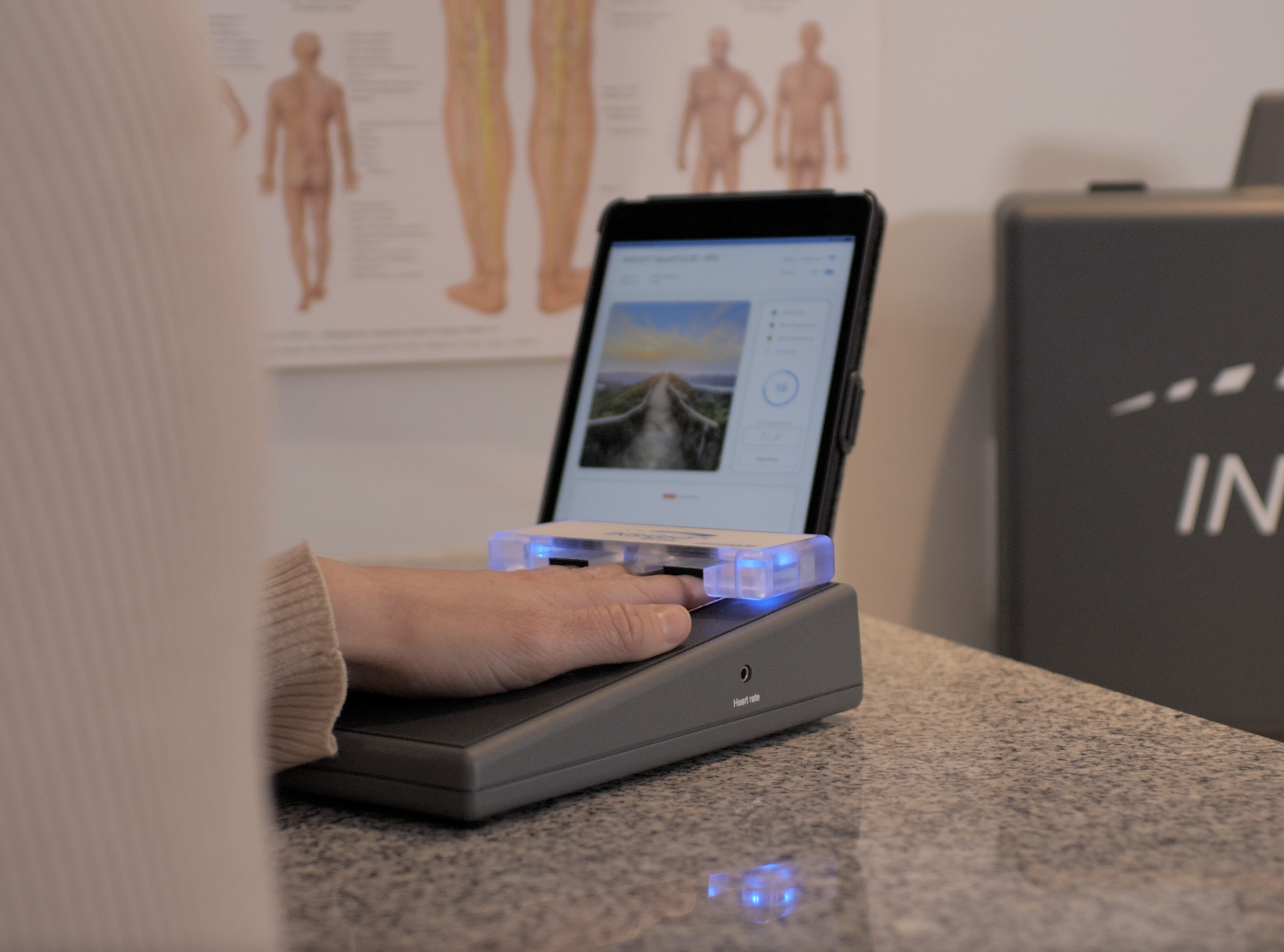
This is why many neurologically focused chiropractors combine a chiropractic thermal scanning instrument with heart rate variability and surface electromyography. Heart rate variability, or HRV, gives insight into adaptability and reserve. Surface EMG, also called sEMG, looks at electrical activity in the paraspinal muscles and can reflect postural load, muscle tension, and altered motor responses. A chiropractic thermal scanning instrument adds the autonomic side of the picture through thermal findings.
When those pieces are brought together, the doctor gets a more meaningful view of nervous system function. One scan may show altered temperature patterns. Another may show reduced adaptability. Another may show excess postural tension. Together, those findings help the chiropractor understand how well your nervous system is adapting, whether there may be areas of nerve stress, and what kind of changes may need attention over time.
What broader neurological scanning can add
- Heart rate variability helps assess adaptability and autonomic reserve
- Surface electromyography adds information about muscle tone and electrical activity
- A chiropractic thermal scanning instrument adds insight into autonomic patterns along the spine
- Combined scans give a broader picture of nervous system function
- More complete findings can help restore balance through better-informed decisions
This is where a chiropractor can move beyond isolated findings and see how the nervous system is functioning as a whole. The goal is not to overwhelm the patient with data. The goal is to use this technology to help explain what matters clearly. That kind of objective scanning can support stronger retention, clearer communication, and more confidence in the care plan as the patient moves forward.
How INSiGHT Scanning and CLA Bring Thermal Analysis Into a Modern Chiropractic Model
This is where the conversation comes directly back to INSiGHT scanning and CLA. A chiropractic thermal scanning instrument is helpful in general, but INSiGHT scanning takes the subject further by building thermal analysis into a broader neurological model. With insight™ scanning, the doctor is not just collecting a single reading. The doctor is using scanning technology designed to make nervous system patterns easier to analyze, communicate, and follow over time.
The INSiGHT neuroTHERMAL is a chiropractic thermal scanning instrument built specifically for spinal analysis. It uses infrared technology and measures temperature differences along the spine quickly and consistently. Rather than acting like generic thermal imaging, it is designed for chiropractic thermal scanning and focuses on clinically meaningful findings in the paraspinal region. That gives the chiropractor a better way to assess autonomic nervous system responses, areas of nerve interference, and thermal changes along the spine.
What makes this even stronger is how the insight scan fits with other tools in the INSiGHT system. The neuroPULSE adds heart rate variability data. The neuroCORE adds surface EMG findings. Together, these technologies help the chiropractor look at autonomic activity, adaptability, and motor tone in one integrated workflow. That is where insight technology becomes more than a device. It becomes technology to help chiropractors examine more clearly and communicate more effectively.
Why chiropractors are drawn to this model
- INSiGHT supports a full neurological scanning process
- A chiropractic thermal scanning instrument becomes more valuable when paired with HRV and sEMG
- Thermography to help patients understand findings can improve communication
- Objective scans help track changes across time
- This kind of chiropractic technology supports better conversations in modern practice
For many offices, that is the real advantage. Patients are not just told what the doctor suspects. They are shown what the scans reveal. They can see areas of nerve interference, signs of autonomic stress, and measurable changes over time. That does not replace clinical judgment. It strengthens it. And in a modern chiropractic setting, that kind of visible objectivity can make the entire care process easier to understand and easier to value.
Where This Technology Fits in the Future of Chiropractic
A chiropractic thermal scanning instrument matters because it helps the chiropractor assess function, not just structure. It offers a non-invasive scan that can detect temperature patterns, highlight possible nerve interference, and support more objective conversations about spinal and nervous system performance. That is valuable for the doctor, but it is also valuable for the patient, because clearer findings often lead to clearer understanding.
When a chiropractic thermal scanning instrument is used well, it supports better communication, stronger re-exams, and more confidence in the care process. It helps the doctor explain why the body may not be adapting well, what the scan reveals along the spine, and why objective follow-up matters. In that sense, it is not just about data. It is about making chiropractic easier to explain.
And when that thermal analysis is tied back to INSiGHT scanning, the picture becomes even more complete. The chiropractor gains a broader neurological view. The patient sees visible findings instead of abstract concepts. That is why a chiropractic thermal scanning instrument continues to hold an important place in a profession centered on the spine, the nervous system, and the body’s ability to adapt. Used with skill and good judgment, it remains one of the clearest tools available for helping chiropractors see more, explain more, and practice with greater certainty.