

That is why spinal balance matters so much in chiropractic. It is not simply about whether the spine looks straight or whether someone feels relief for a day or two. It is about how the spinal system distributes stress, how the body manages gravity, how the nervous system coordinates postural tone, and how well a patient can adapt over time. When chiropractors reduce spinal balance to a cosmetic alignment conversation, they miss the deeper clinical value. When they understand spinal balance through a neurological lens, the whole conversation changes.
And that matters in practice. Patients do not just want a quick answer for back pain or lower back pain. They want to know what is really going on, why things keep coming back, and whether the care they receive is actually making a difference. The chiropractors who communicate spinal balance well are the ones who move beyond vague explanations and begin measuring function with greater certainty.
What Spinal Balance Means in Chiropractic
In chiropractic, spinal balance usually refers to the way the spinal column manages posture, movement, stability, and load. That includes how the vertebra move segment by segment, how supporting muscles coordinate around them, and how the nervous system organizes that whole process. So yes, spinal balance has a structural side. But it also has a functional side, and that is where the conversation gets much more useful.
A balanced spinal system is not necessarily a perfectly still one. Good spinal balance depends on healthy motion, proper muscular support, and the ability to respond to changing physical demands. A patient can look fairly symmetrical while standing and still have poor spinal balance under movement, fatigue, or stress. That is why chiropractors do not rely on appearance alone. They look at motion, compensation, posture, muscle tone, and the way a person carries themselves through space.
What Chiropractors Usually Mean by Spinal Balance
Patients often use the word balance in a simple way. They may say they feel crooked, tight, jammed, or off. They may report neck pain after work, back pain after sitting, or repeated flare-ups with exercise. Some connect spinal balance with mobility. Others connect it with comfort. Many are asking the same question: why does my body no longer feel like it is working the way it should?
That is where chiropractic adds value. A chiropractor can interpret those traits within a broader framework. What looks like a local complaint may actually reflect a larger spinal compensation pattern. A disc finding may be part of the picture, but not always the whole picture. A postural shift may be protective rather than primary. Balance chiropractic, when done well, is about making sense of these layers rather than reacting to the loudest symptom.
- Posture can matter, but posture alone does not define spinal balance.
- Motion can matter, but mobility alone does not explain function.
- Symptoms can matter, but symptoms alone do not tell the whole story.
If spinal balance is understood only as alignment, the conversation stays shallow. If it is understood as the coordinated performance of the spine, muscles, and nervous system, chiropractic becomes much more precise and much more meaningful.
Why Spinal Balance Matters for Function, Symptoms, and Daily Life
When spinal balance starts to break down, the body rarely stays neutral. It compensates. One area stiffens while another overworks. One region loses motion while another region becomes unstable. A patient may start with mild tension and end up with recurring back pain, neck pain, reduced endurance, or loss of confidence in normal activity. Sometimes the issue appears after a clear event. Other times it builds slowly from repetition, poor movement habits, work posture, or old injury.
This is why chiropractors talk about spinal balance so often. Poor distribution of mechanical stress may increase strain on joints, ligaments, discs, and surrounding soft tissues. Over time, the body adapts to those stresses, but not always in an efficient way. The result may be stiffness in one spinal region, excess postural tension in another, or a pattern of guarding that makes movement less effective.
How Imbalance May Show Up in Practice
Disc-related cases are a good example. A disc bulge or herniated disc may contribute to lower back pain, radiating symptoms, or reduced tolerance for flexion and load. In some offices, spinal decompression therapy may be considered as part of a broader care strategy for those cases. That may help in the right setting. But even then, no single therapy explains the full picture. A chiropractor still has to evaluate how the spinal system is moving, compensating, protecting, and adapting around that disc stress.
That is also why short-term relief should never be the only goal. Yes, patients want to feel better. Of course they do. But the bigger goal is to improve the way the system functions over time. When spinal balance improves, patients often notice more than symptom change. They may move more freely, stand with less effort, and handle daily life with more confidence.
- Back pain may reflect load imbalance, guarding, or poor movement timing.
- Neck pain may relate to posture, stress, and altered spinal mechanics.
- Disc irritation may involve a bulge, herniated tissue, or repeated compression.
- Relief is important, but function is what tends to hold over time.
For chiropractors, that is the practical value of spinal balance. It is not a decorative concept. It affects how a patient moves, adapts, and performs through the demands of work, exercise, parenting, travel, and normal daily life.
Learn more about INSiGHT scanning?
Fill this out and we’ll get in touch!
"*" indicates required fields
How Chiropractors Assess Spinal Balance in Practice
A strong spinal balance evaluation starts before the first adjustment. Chiropractors begin with history because patterns matter. When did the problem begin. What aggravates it. What provides relief. Has there been prior trauma, repetitive load, a medical diagnosis, or previous treatment. Has the patient already tried exercise, therapy, or a home program they found on the internet. These details help shape the clinical picture before any hands-on exam begins.
From there, chiropractors usually combine several layers of assessment. Posture matters. Movement matters. Palpation matters. Orthopedic and neurological testing may matter. In some cases, imaging or a medical referral is appropriate, especially when red flags or more complex disc findings are present. The point is not to gather random data. The point is to determine whether the imbalance is local, regional, compensatory, protective, or systemic.
What a Spinal Balance Evaluation Usually Includes
Clinical observation helps the chiropractor see how the person stands, bends, rotates, and manages load. Segmental assessment helps identify restriction, altered motion, and areas of excess tension. In certain cases, soft tissue therapy, a guided stretch, ergonomic advice, or a simple home program may support the process between visits. Some patients may receive care one or two times a week at the start, while others need a different frequency depending on severity, stability, and goals.
Technique choice also varies by case. Some chiropractors use more traditional manual methods. Others use instrument-assisted approaches or table-assisted methods. In certain disc-related cases, a chiropractor may consider spinal decompression or flexion-based therapy as part of a non-surgical approach. The type of technique is always shaped by the patient, the findings, and the clinical judgment of the doctor.
- History helps identify load, repetition, prior damage, and adaptation patterns.
- Physical examination helps locate motion changes, guarding, and stress points.
- Periodic reassessment helps show whether the body is actually changing.
Still, every experienced chiropractor knows the limitation of observation alone. You can see posture. You can feel restriction. You can detect tension. But that still leaves an important question unanswered: what is the nervous system doing inside that spinal pattern? That is the question that takes spinal balance from a useful concept to an objective one.
Why Spinal Balance Is Really a Nervous System Conversation
This is the part of the discussion that changes everything. Spinal balance is not only about the position of spinal structures. It is also about how the brain and body coordinate posture, tone, movement, and adaptation through the nervous system. Every adjustment changes input. Every restriction alters sensory information. Every protective pattern reflects a body trying to manage stress with the options it has available.
That is why the best chiropractors do not stop at what they can see with the eye or feel with the hand. They ask a deeper question. What does this spinal pattern mean neurologically? Because two people can present with similar back pain and very different nervous system status. One may still have good reserve. Another may be operating with high guarding and poor recovery. Structurally they may look similar. Functionally they can be very different.
Why the Neurological View Matters
This is also where neuroplasticity becomes relevant. A spinal adjustment is not simply a structural event. It changes sensory input to the central nervous system. That matters because motor control, coordination, tone, and adaptation all depend on the quality of that input. In other words, spinal balance is not just something you line up. It is something the body learns, organizes, and expresses through the nervous system over time.
For a neurologically focused chiropractor, this makes perfect sense. The spine houses and protects the nervous system, but the deeper question is always performance. How well is the body managing load? How efficiently is it organizing movement? How resilient is it under stress? That is why spinal balance should never be reduced to a simple structural talking point. It is a functional neurological conversation from start to finish.
When chiropractors communicate spinal balance this way, patients understand their care differently. They stop thinking only in terms of quick treatment for back pain. They begin to understand why repeated patterns return, why consistency may be needed, and why better function is often the real marker of progress.
How INSiGHT Scanning Technology Brings Spinal Balance Into Focus
If spinal balance is truly a functional neurological issue, then it deserves objective analysis. That is exactly where INSiGHT scanning technology becomes so valuable. CLA’s tools help chiropractors move beyond impression and into measurement, which creates greater certainty when discussing spinal balance, adaptation, and progress over time.
The neuroCORE evaluates surface EMG activity in the spinal region. That matters because it gives chiropractors a window into postural tone, energy output, and symmetry under gravitational load. A patient may say they just feel tight, but the scan may show a very different story about how much neurological energy the motor system is using to hold that pattern together. When you are talking about spinal balance, that kind of objective analysis can help tremendously.
How CLA Instrumentation Supports the Conversation
The neuroTHERMAL adds another layer by analyzing thermal asymmetry along the spine. This full spine nerve system scan can reveal stress responses that are not obvious through posture alone. It moves the discussion beyond whether a patient looks crooked and into how the nervous system is regulating across the spinal system. In practical terms, it helps the doctor see whether a spinal pattern is primarily mechanical or whether deeper neurological tension is also involved.
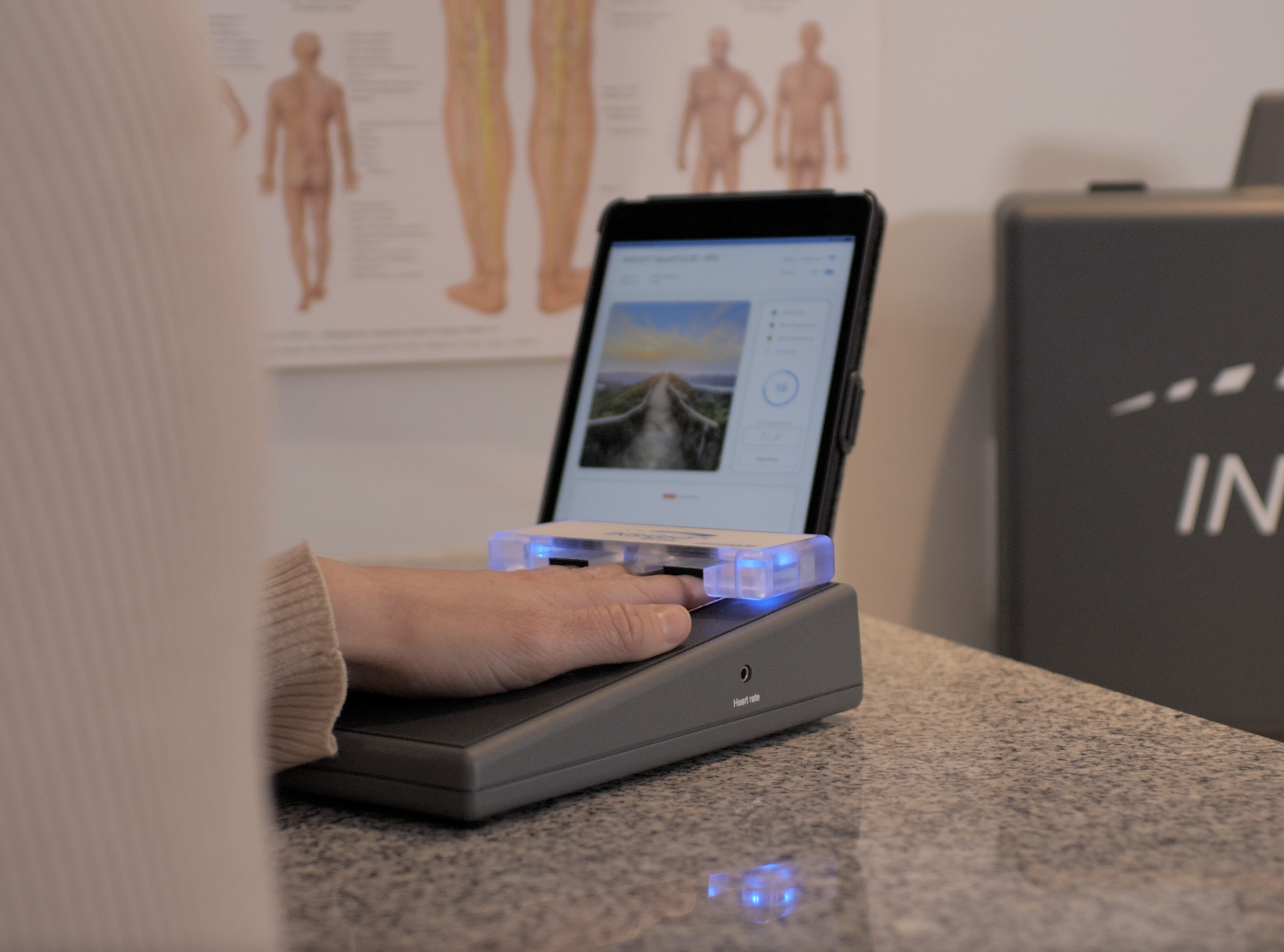
Then there is neuroPULSE, which assesses heart rate variability and gives insight into adaptability, reserve, and autonomic balance. This matters because a patient with back pain, neck pain, or recurring disc irritation may not just be dealing with local mechanics. They may also be struggling with reduced adaptability. neuroPULSE helps provide that missing piece in a way the chiropractor can interpret and the patient can understand.
Synapse software brings those findings together into clear reports and scan views that support communication. INSiGHT does not create a care plan for the chiropractor. It provides objective exam data and reports that help the doctor interpret findings, explain recommendations, and show whether care is making a difference over time. That is a powerful shift. Instead of guessing, the chiropractor can measure. Instead of speaking in abstractions, the chiropractor can show the patient what is happening.
- Baseline scans help establish where the patient starts.
- Re-scans help track whether spinal balance is improving over time.
- Reports help provide visual proof that care is making a difference.
- Objective analysis can offer a stronger reason to stay consistent than symptoms alone.
That is one of the greatest strengths of INSiGHT neuroTECH and Synapse software. They help chiropractors connect what they observe clinically with what the nervous system is actually doing. And when patients can see that for themselves, spinal balance stops being an abstract phrase and becomes something measurable, practical, and motivating.
A Better Way to Think About Spinal Balance
Spinal balance is too important to leave in vague language. It is not just a phrase a patient uses when they feel off. It is not just a marketing term. And it is certainly not a concept that should be reduced to whether the spine appears aligned at one moment in time. For chiropractors, spinal balance is a clinical expression of how the spinal system moves, supports, compensates, and adapts under real demand.
That is why chiropractic is strongest when it blends skilled hands with objective analysis. Observation still matters. Palpation still matters. Technique still matters. Whether you use a manual adjustment, instrument-assisted methods, spinal decompression therapy, or another conservative treatment, your clinical reasoning matters. But the chiropractors who lead this conversation well are the ones who also measure function and track change with confidence.
A patient may come in seeking help for lower back pain, a disc bulge, neck pain, or recurring tension. They may want relief. They may want to avoid a more invasive medical path. They may simply need someone to explain the larger picture clearly. That is your role. To interpret the pattern, to consider what is driving it, and to take the conversation beyond symptoms alone.
That is where balance chiropractic becomes much more than a structural discussion. It becomes a functional conversation about movement, adaptation, resilience, and nervous system performance. When you combine that perspective with INSiGHT scanning, spinal balance becomes easier to explain, easier to track, and much more meaningful for the people you serve.