
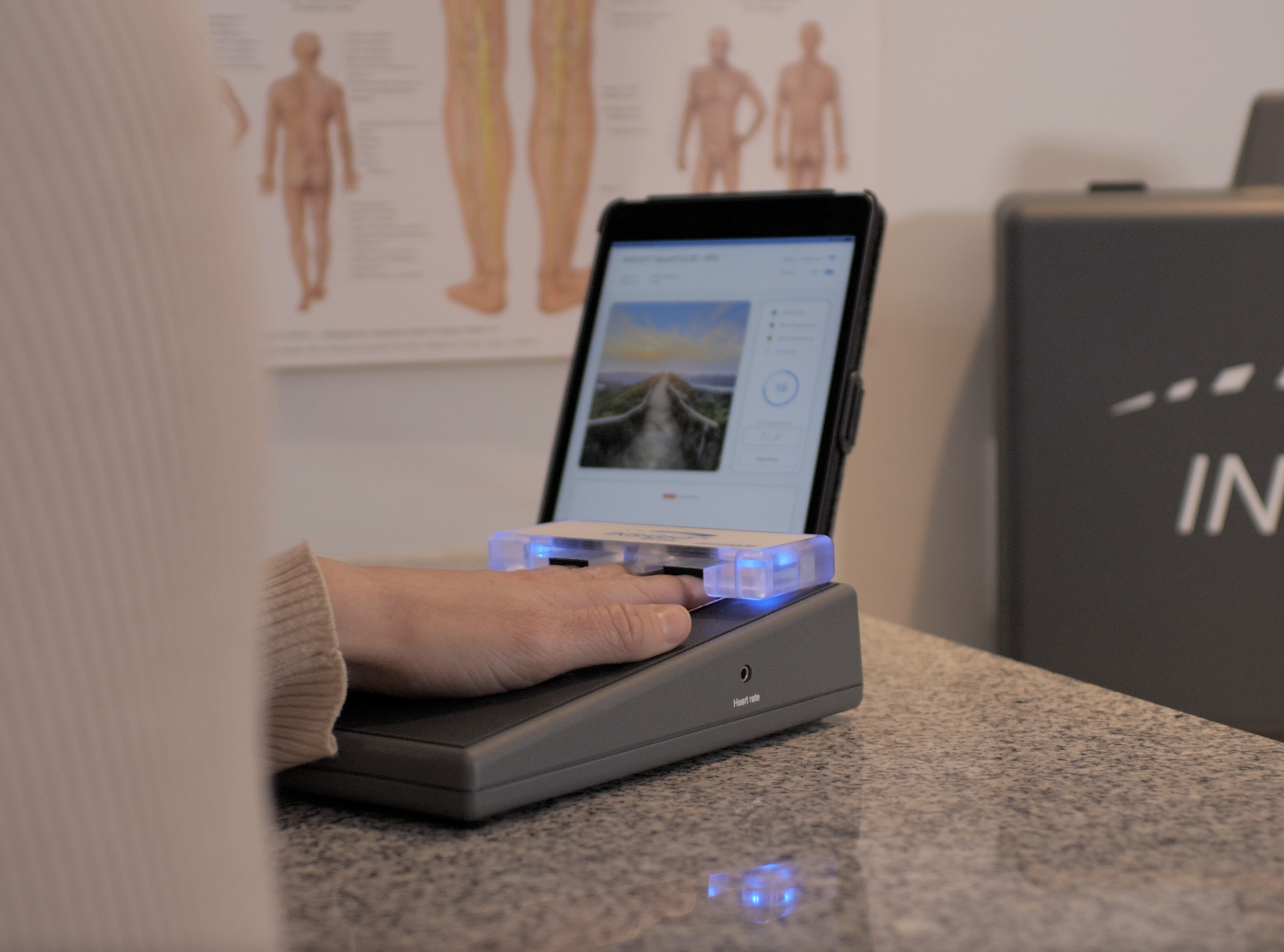
ECG and PPG.
Some people claim ECG is the only accurate way to measure HRV.
Others argue that modern wearable devices using PPG are just as good.
So who’s right?
The truth is that both technologies are capable of measuring Heart Rate Variability, but they do so in different ways. Each has unique strengths, limitations, and ideal use cases.
Understanding how they work—and why collection conditions matter just as much as the technology itself—can help you better interpret your HRV data.
What Is ECG?
ECG stands for Electrocardiography.
An ECG measures the electrical activity generated by your heart each time it beats.
Every heartbeat produces a characteristic electrical signal that can be recorded through electrodes placed on the skin.
Because ECG measures the heart’s electrical impulses directly, it has long been considered the gold standard for cardiac rhythm analysis.
When researchers conduct HRV studies, ECG has traditionally been the reference technology against which other measurement methods are compared.
How ECG Measures HRV
Each heartbeat produces a recognizable electrical spike called the R-wave.
HRV software measures the time between successive R-waves, often referred to as R-R intervals.
These intervals become the foundation for calculating HRV metrics such as:
- SDNN
- RMSSD
- LF
- HF
- Total Power
Because ECG records the heart’s electrical activity directly, it provides extremely precise timing information.
Learn more about INSiGHT scanning?
Fill this out and we’ll get in touch!
"*" indicates required fields
What Is PPG?
PPG stands for Photoplethysmography.
Rather than measuring electrical activity, PPG measures changes in blood volume that occur as each heartbeat pushes blood through the body’s arteries.
Small light-emitting diodes (LEDs) shine light into the skin while optical sensors detect tiny changes in reflected light caused by blood flow.
Each pulse wave corresponds to a heartbeat.
By measuring the timing between pulse waves, software can calculate HRV.
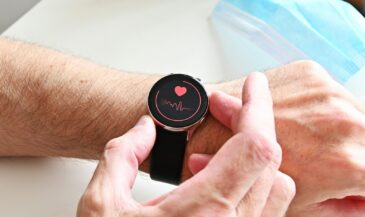
Today, PPG is used in many familiar devices, including:
- Oura Ring
- WHOOP
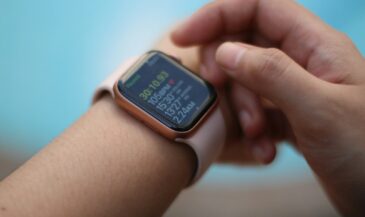
- Apple Watch
- Garmin watches
- Fitbit devices
- Many smartphone HRV apps
- Clinical assessment technologies such as neuroPULSE
PPG has become one of the most widely used methods for non-invasive HRV assessment.
Does PPG Work?
Yes.
Over the past two decades, numerous validation studies have shown that high-quality PPG recordings can produce HRV measurements that closely agree with ECG under appropriate conditions.
This has helped make HRV accessible to millions of people without requiring medical-grade ECG equipment.
The technology itself is well established.
The challenge lies in obtaining a clean pulse signal.
The Biggest Difference Isn’t the Technology
Many discussions compare ECG and PPG as though one technology is inherently superior.
In reality, the more important factor is often signal quality.
A perfectly collected PPG recording may provide excellent HRV information.
A poor-quality ECG recording with excessive noise may not.
Both technologies rely on detecting the timing of heartbeats accurately.
Anything that interferes with that timing can reduce the quality of the resulting HRV calculation.
What Can Affect PPG Measurements?
Because PPG measures blood flow rather than electrical activity, it is particularly sensitive to factors that influence the pulse wave.
These include:
- Hand movement
- Wrist movement
- Poor sensor contact
- Cold hands
- Reduced circulation
- Muscle contraction
- Changes in body position
- Ambient light (in some systems)
Modern software uses sophisticated filtering algorithms to recognize and compensate for many of these artifacts.
However, no software can completely eliminate every source of signal disturbance.
This is why stable recording conditions remain so important.
Advantages of ECG
ECG offers several strengths:
- Direct measurement of cardiac electrical activity
- Extremely precise heartbeat timing
- Extensive research history
- Widely accepted clinical reference standard
- Excellent performance for cardiac rhythm analysis
These characteristics make ECG indispensable in cardiology and cardiovascular research.
Advantages of PPG
PPG also offers significant advantages.
It is:
- Comfortable
- Non-invasive
- Easy to use
- Suitable for repeated measurements
- Easily integrated into wearable technology
- Practical for routine wellness monitoring
Without PPG, consumer HRV tracking would likely never have become mainstream.
Its convenience has helped millions of people become more aware of stress, recovery, and nervous system health.
Why Collection Conditions Matter More Than Many People Realize
Imagine taking a perfectly sharp photograph.
Now imagine taking the same photograph while jogging.
The camera hasn’t changed.
The subject hasn’t changed.
Only the conditions have changed.
The same principle applies to HRV.
Movement, posture, sensor stability, and signal quality can all influence the measurement regardless of whether ECG or PPG is being used.
This is why standardized collection procedures are so important in clinical environments.
Rather than relying solely on sophisticated algorithms to correct noisy data afterward, clinicians attempt to reduce sources of variability before the recording even begins.
How neuroPULSE Uses PPG in a Clinical Environment
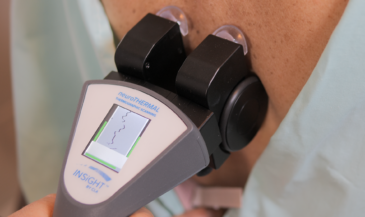
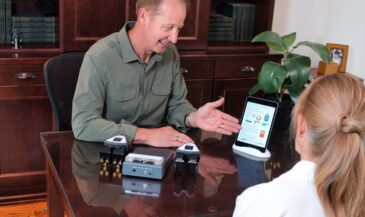
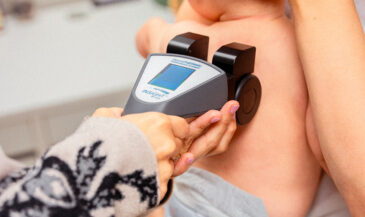
The neuroPULSE technology within the INSiGHT scanning technology uses photoplethysmography (PPG) to measure Heart Rate Variability.
Unlike consumer wearables designed for everyday activity, neuroPULSE collects PPG data under standardized clinical conditions.
During the assessment:
- The patient remains seated.
- The hand is supported throughout the recording.
- The hand is stabilized to minimize movement.
- The arm is maintained near heart level.
- Standardized procedures are followed for every examination.
- State of Arousal (GSR readings) and Temperature are monitored during scan
These controlled conditions help produce a stable pulse wave while minimizing many of the variables that can affect PPG measurements during daily life.
The result is a reproducible HRV assessment that supports objective neurological evaluation and progress tracking within chiropractic practice.
Which Technology Is Better?
This is actually the wrong question.
A better question is:
Which technology is better for the purpose you’re trying to achieve?
If you’re monitoring stress, recovery, sleep, and wellness every day, PPG-based wearables provide remarkable convenience and valuable long-term trend information.
If you’re conducting cardiac rhythm analysis or advanced cardiovascular diagnostics, ECG remains the clinical reference standard.
If you’re performing standardized neurological assessments where reproducibility between visits is essential, the testing environment and collection protocol become just as important as the underlying sensor technology.
Purpose determines which approach is most appropriate.
Wearables and Clinical Assessments Aren’t Competing
Sometimes people assume that wearable devices and clinical assessment systems are trying to accomplish the same thing.
They aren’t.
Consumer wearables are designed to answer questions like:
- How well did I recover overnight?
- How did yesterday’s workout affect me?
- Am I managing stress effectively?
- How are my long-term trends changing?
Clinical HRV assessments answer different questions.
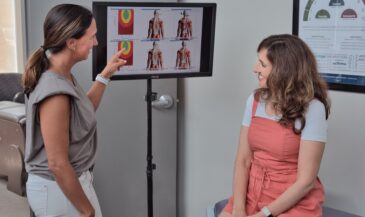
They help healthcare providers evaluate nervous system function under standardized conditions that allow meaningful comparison between examinations.
Understanding the strengths of both approaches allows us to appreciate that they are complementary tools that help us better understand the remarkable adaptability of the human nervous system.