
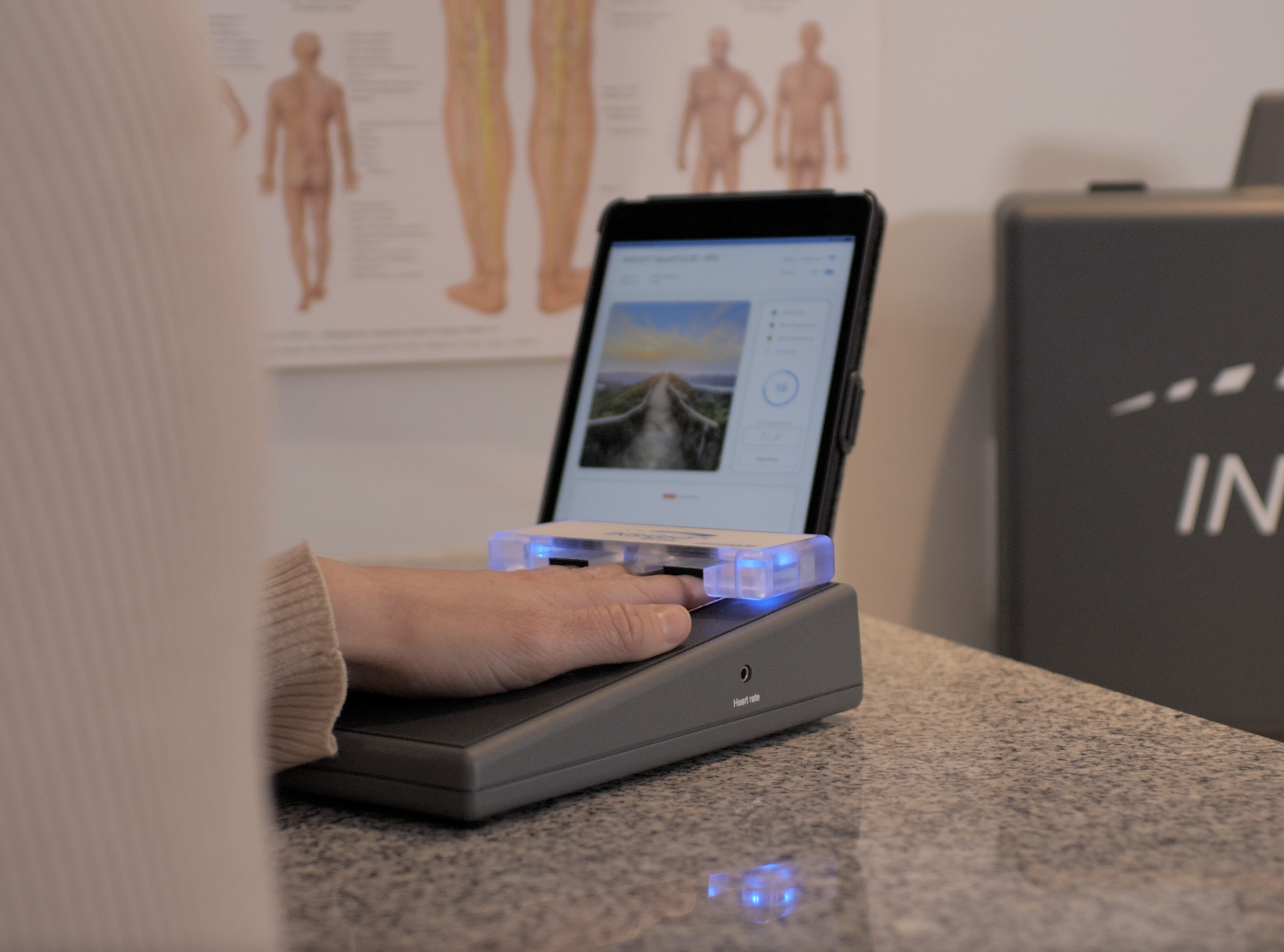
Heart rate variability, or HRV, looks at the tiny variations in time between each heartbeat. Those subtle changes reflect how the autonomic nervous system balances activation and recovery. When you measure HRV, you are measuring the adaptability of the person sitting in front of you. That makes HRV one of the most practical ways to evaluate nervous system performance.
For chiropractors who want to shift conversations away from symptoms and toward nervous system adaptability, HRV becomes an essential tool. It helps patients understand that how they feel is only one part of the picture. What matters more is how well they can regulate, recover, and respond to neurological distress. With HRV, you can show them that story in living color.
In this article, we will walk through what heart rate variability really measures, how instruments work, why consumer devices are not enough for chiropractic, and how clinical-grade HRV scanning changes the way you build care plans. By the end, you will see why HRV belongs at the center of every nerve-first practice.
What Heart Rate Variability Actually Measures
Most devices track heart rate. They count how many times the heart beats in a minute and help patients check heart rate during activity or rest. HRV is different. A heart rate variability monitor tracks the pattern between beats, not just the number of beats. It studies the variation in timing between each heartbeat and calculates a measure of HRV from those intervals.
Those timing shifts come from the electrical activity of your heart and the way it interacts with the autonomic nervous system. When you measure heart rate variability, you are looking at how the sympathetic and parasympathetic branches coordinate. One speeds the heart up. The other slows it down. HRV shows how easily the system can move between these states.
Healthy heart rhythms are naturally variable. When a patient has good adaptability, you see a more flexible pattern in the timing of heartbeats. When interpreted appropriately, these patterns reveal the degree of coherence within the ANS. When the system is under neurological distress or stuck in sympathetic overdrive, the variability becomes more rigid. This describes an incoherent state. In simple terms, a high measure of HRV suggests resilience. A low HRV measurement suggests the body is using more of its reserve just to keep up.
For chiropractors, HRV gives you a window into nervous system performance without relying on symptoms. A single measurement of heart rate variability can reveal whether the system is biased toward activation, struggling to recover, or settling into a balanced state. It is no surprise that HRV has become a gold standard in cardiology, psychology, sports science, and now chiropractic.
- Shows how the autonomic nervous system is balancing activation and recovery
- Reveals the level of adaptive reserve a patient has available
- Tracks changes that occur under chiropractic care
- Helps patients understand the purpose of their care plan through objective findings
How a Heart Rate Variability Instrument Works
Every heart rate variability monitor captures the electrical or optical signature of each heartbeat. Some use ECG-style sensors. Others use photoplethysmography, where a light source tracks subtle changes in blood flow. What matters is the instrument’s ability to accurately capture the time between each heartbeat and calculate HRV without interference.
To measure HRV correctly, the body must be in a stable resting state. That is why clinical HRV testing uses controlled conditions. A seated, quiet three-minute period often gives the most reliable reading. In that short time, the instrument gathers enough data points to analyze heart rhythm patterns and calculate HRV metrics.
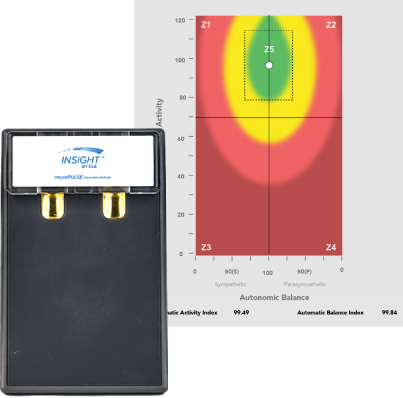
These metrics include the Autonomic Balance Index, the Autonomic Activity Index, the measure of HRV itself, and the relationship between sympathetic and parasympathetic activity. When plotted over time, these readings reveal how well the nervous system adapts to daily stressors and how chiropractic care influences autonomic performance.
Learn more about INSiGHT scanning?
Fill this out and we’ll get in touch!
"*" indicates required fields
HRV and the Autonomic Nervous System: The Story Beneath the Heartbeat
The autonomic nervous system keeps the body regulated. It manages heart rhythm, breathing rate, digestion, glandular activity, and countless other internal processes. HRV gives chiropractors a direct view into how well this system is performing.
The sympathetic nervous system provides activation. It prepares the body for movement, focus, and quick responses. The parasympathetic nervous system provides regulation and recovery. It supports healing, sleep, digestion, and immune function. HRV reveals how these two branches negotiate balance.
High HRV occurs when the system can shift easily between activation and recovery. Low HRV occurs when the system becomes locked in a single pattern, often sympathetic dominance. Chronic neurological distress can suppress variability and make recovery slower.
Because the vagal nerve plays a major role in parasympathetic tone, HRV is one of the best indirect measures of vagal health. This is why HRV has become such a powerful tool for chiropractors who want to speak more clearly about nervous system performance.
High HRV, Low HRV, and What Adaptability Really Means
HRV is an adaptability metric. It tells you how much reserve the system has available. A high HRV reading means the nervous system has room to respond to challenges. A low HRV reading suggests the patient is already using more of their energy just to maintain rhythm.
High HRV often reflects:
- Good parasympathetic tone
- Flexible nervous system responses
- Better emotional and physical recovery
- Healthy adaptability patterns
Low HRV often reflects:
- Reduced reserve and adaptability
- Chronic sympathetic dominance
- Blunted parasympathetic responses
- Greater vulnerability to neurological distress
Because HRV changes over time, repeated measurements give a more complete picture than a single reading. This allows chiropractors to track the effects of adjustments and monitor how well the nervous system reorganizes, even before symptoms change.
Types of HRV Monitors: Wearables, Chest Straps, Apps, and Clinical Systems
There are many devices that track heart rate and HRV, but they differ greatly in accuracy and usefulness in clinical settings.
Wearables
Devices like Apple Watch, Garmin watches, and smart wearable devices can track heart rate and breathing rate and provide basic HRV estimates. These are excellent for lifestyle tracking but limited for clinical accuracy.
Chest Straps
Chest straps such as the Polar H10 heart rate monitor offer good sampling quality for athletic HRV monitoring. They are popular because they capture clean pulse signals, but they are not designed for resting-state neurological interpretation.
Apps and Smartphone Tools
Apps like Elite HRV and the Welltory app use smartphone cameras or paired sensors. While helpful for general awareness, they lack environmental control and validated filtering methods.
Clinical HRV Instruments
A clinical heart rate variability monitor is purpose-built. It offers stable testing conditions, artifact filtering, controlled breathing parameters, and validated reporting that translates HRV readings into meaningful autonomic insights. This is essential for chiropractors who want accurate data to guide their care plans.
Why Chiropractors Need More than a Consumer Tracker
Consumer trackers measure HRV during everyday life, including movement, talking, and emotional shifts. These uncontrolled conditions create inconsistent data. Chiropractors need reproducible, resting-state measurements that reflect true autonomic performance.
A neurologically focused chiropractor needs a heart rate variability monitor that:
- Provides accurate resting-state HRV measurements
- Filters out noise and artifacts
- Includes anxiety and temperature checks for data consistency
- Translates data into nervous system patterns and adaptability insights
- Supports progress tracking over time
Consumer devices are not built for this level of precision. They are excellent for lifestyle awareness but not for clinical evaluation. A chiropractic office requires something that matches the seriousness of the work and the specificity of the nervous system.
Using HRV in a Neurologically Focused Chiropractic Practice
HRV is one of the clearest ways to shift patients from a symptom-first mindset to a nervous system-first understanding. It gives you an objective baseline that shows how adaptable or depleted they are when they begin care.
Most new patients enter with low HRV. They are often in a distressed or exhausted state, even if they cannot articulate why they feel off. With consistent chiropractic adjustments, many patients show improved parasympathetic activity, increased reserve, and more balanced autonomic patterns.
HRV helps you:
- Establish a baseline during initial examinations
- Build stronger care plans backed by objective findings
- Track changes as the nervous system reorganizes
- Show progress in ways that symptoms alone cannot
Patients may forget how they felt when they first arrived, but they will never forget what they see on their scans. HRV gives them a clear picture of how their nervous system is learning to adapt again.
The INSiGHT Advantage: neuroPULSE and the Rainbow Graph
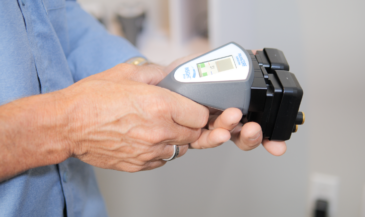
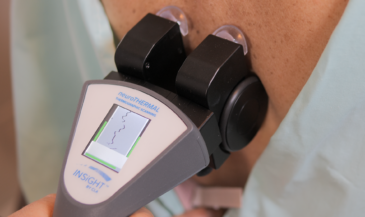
Many devices can track HRV, but only one system is purpose-built for neurologically focused chiropractors. The neuroPULSE is a research-grade heart rate variability monitor designed to make autonomic assessment simple, reproducible, and clinically meaningful.
The neuroPULSE uses pulse wave profiling to measure HRV with precision. It includes Galvanic Skin Response and temperature quality controls to ensure the patient is calm and ready for accurate data collection. A three-minute resting measurement captures enough inter-beat intervals to calculate key indices including the Autonomic Activity Index and Autonomic Balance Index.
Additionally, two peripheral sensors can be used in a pediatric- family practice. An ear clip sensor is styled to be used with newborns and infants while a finger sleeve sensor can be applied to toddlers and young children. These sensor additions open up the availability of asymptomatic assessments to the entire family.
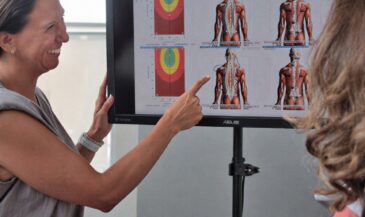
What truly elevates the neuroPULSE is its integration with Synapse software. Synapse transforms complex HRV data into visual stories that patients instantly understand. The familiar Rainbow Graph plots autonomic balance on one axis and activity on the other, showing whether a patient is in an uptight, exhausted, distressed, weakened, or optimal zone.
HRV results then feed into the CORESCORE and the RED framework. These systems allow chiropractors to see Reserve, Energy, and Dysregulation together. While INSiGHT scanning technology provides detailed findings, it does not produce care plans. The chiropractor interprets the data and designs the plan that best supports each patient’s goals.
This combination of precise hardware, insightful software, and clear visual reporting makes the neuroPULSE a powerful clinical tool for any chiropractor who wants to anchor their care in objective nervous system findings.
Bringing HRV to Life for Patients
Patients do not always know how to describe how their body feels. They do know when their energy is low, their sleep is off, or their resilience is fading. HRV helps them connect those experiences to their nervous system performance.
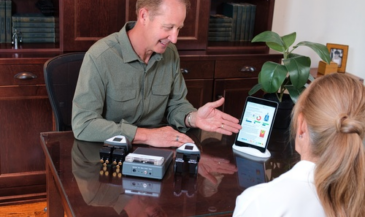
A heart rate variability monitor gives you a simple way to explain adaptability. You can tell patients that HRV is like the breathing room in their nervous system, or the space their body has to respond before becoming overwhelmed. Once they see their nervous system status in color on the screen, they begin to understand why adjustments matter.
Comparing baseline scans to later visits lets patients see the difference for themselves. Progress becomes visual. Adaptability becomes measurable. Care becomes something they value, not something they count.