

Not symptoms. Not just how someone feels after their last adjustment. What we’re really looking for is a nervous system that can respond and recover.
That rhythm is exactly what heart rate variability (HRV) reveals.
Now, don’t let the word “heart” fool you. Healthy heart rate variability isn’t just about cardiac performance. It’s a trackable expression of how well the autonomic nervous system is working. HRV tells us whether a patient is stuck in fight-or-flight, or if their nervous system is adaptable, calm, and coordinated. It’s a measurement of resilience.
In this article, we’re going to unpack the science and clinical meaning behind HRV, explore the factors affecting HRV, and walk through how this one number can transform your care plans. If you’re ready to make adaptability visible—HRV is where it starts.
What Is Heart Rate Variability, Really?
Heart rate variability (HRV) is the variation in time between each heartbeat. Not the number of beats per minute—but the milliseconds between one beat and the next. These fluctuations in heart rate tell us how the nervous system is managing the constant shift between demand and recovery.
This rhythm is regulated by the autonomic nervous system, which controls everything from breathing to digestion to heart function. It has two branches:
- The Sympathetic Nervous System (fight-or-flight)
- The Parasympathetic Nervous System (rest-digest-repair)
A higher heart rate variability generally indicates better adaptability. A low HRV, especially when persistent, may suggest the nervous system is stuck in overdrive.
HRV isn’t just about the number of times your heart beats—it’s about how that rhythm fluctuates, and how quickly your system can adapt. In chiropractic, that adaptability is the key to long-term outcomes.
A Good HRV Is a Responsive HRV—Not Just a High One
Wearables and apps often say a “high HRV” is always good. But what matters most is responsiveness.
HRV tends to decrease with age, but that doesn’t mean an older patient is unhealthy. A good heart rate variability is one that reflects the person’s baseline, environment, and adaptability.
This is why tracking HRV over time is far more useful than comparing a patient to global averages. If the patient’s HRV is low but improving, that’s real progress.
So instead of fixating on “high or low HRV,” we look at whether HRV is becoming more responsive. That’s the mark of adaptability—and the true definition of healthy heart rate variability.
Learn more about INSiGHT scanning?
Fill this out and we’ll get in touch!
"*" indicates required fields
What Influences Heart Rate Variability?
HRV is influenced by both short-term and long-term inputs. Chiropractors should be watching for the following:
- Vertebral subluxations: Incoherence in the nervous system limits adaptability
- Sleep quality: Poor sleep leads to reduced HRV.
- Physical activity: Regular movement can increase HRV, while overtraining can lower it.
- Heart rate and blood pressure: Patients with high blood pressure often show lower HRV.
- Healthy diet and hydration: These support vagal tone; poor diet undermines it.
- Emotional distress: Drives sympathetic overactivity.
- Structural tension: Postural distortion influences HRV via autonomic nervous system changes.
Remember, HRV naturally decreases with age. So when reviewing results, consider factors like age, mean heart rate, and individual trends.
How HRV Tells the Story of Your Nervous System’s Adaptability
In a chiropractic setting, HRV helps answer one critical question: How well is this person adapting to life?
The Parasympathetic Nervous System is responsible for recovery. If vagal tone is weak, even small stressors can disrupt regulation. That shows up as lower HRV.
Look for:
- High resting heart rate paired with low variability
- Average heart rate variability stuck in a narrow range
- HRV changes that correlate with lifestyle or care updates
Variability reflects resilience. A flexible nervous system can shift gears smoothly. That’s what we’re trying to restore.
The Rainbow Graph: Turning Data into a Nervous System Story
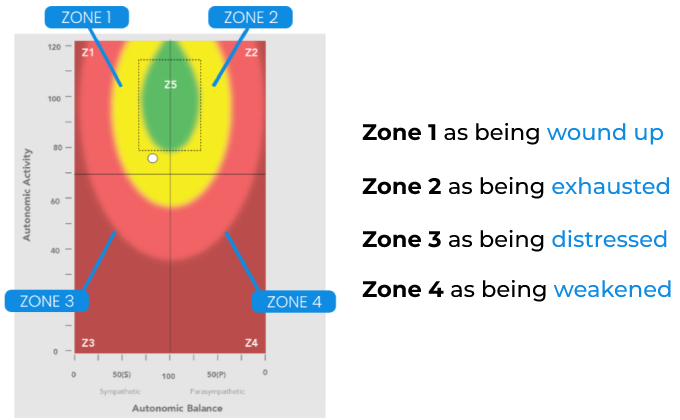
The Rainbow Graph from INSiGHT’s neuroPULSE scan maps HRV scores on an easy-to-understand grid.
- Zone 1: Revving Engine — Sympathetic dominant, high reserve
- Zone 2: Parking Brake On — Parasympathetic dominant, low response
- Zone 3: Distressed — Sympathetic dominance, low reserve
- Zone 4: Weakened — Depleted adaptability, little responsiveness
- Zone 5: Green Zone — Balanced, responsive, and thriving
With this graph, patients can check heart rate variability visually and understand where they are in their journey.
Using HRV to Build Better Chiropractic Care Plans
When you use heart rate variability to plan, you’re no longer relying on symptoms alone.
HRV helps identify:
- Consistently low HRV before traits appear
- When to shift frequency of care
- How a patient is responding neurologically over time
When HRV improves over time, you know their system is regulating better—evidence of sustained improvement in HRV. That’s powerful clinical data.
Why the neuroPULSE Belongs in Every Chiropractor’s Scan Suite
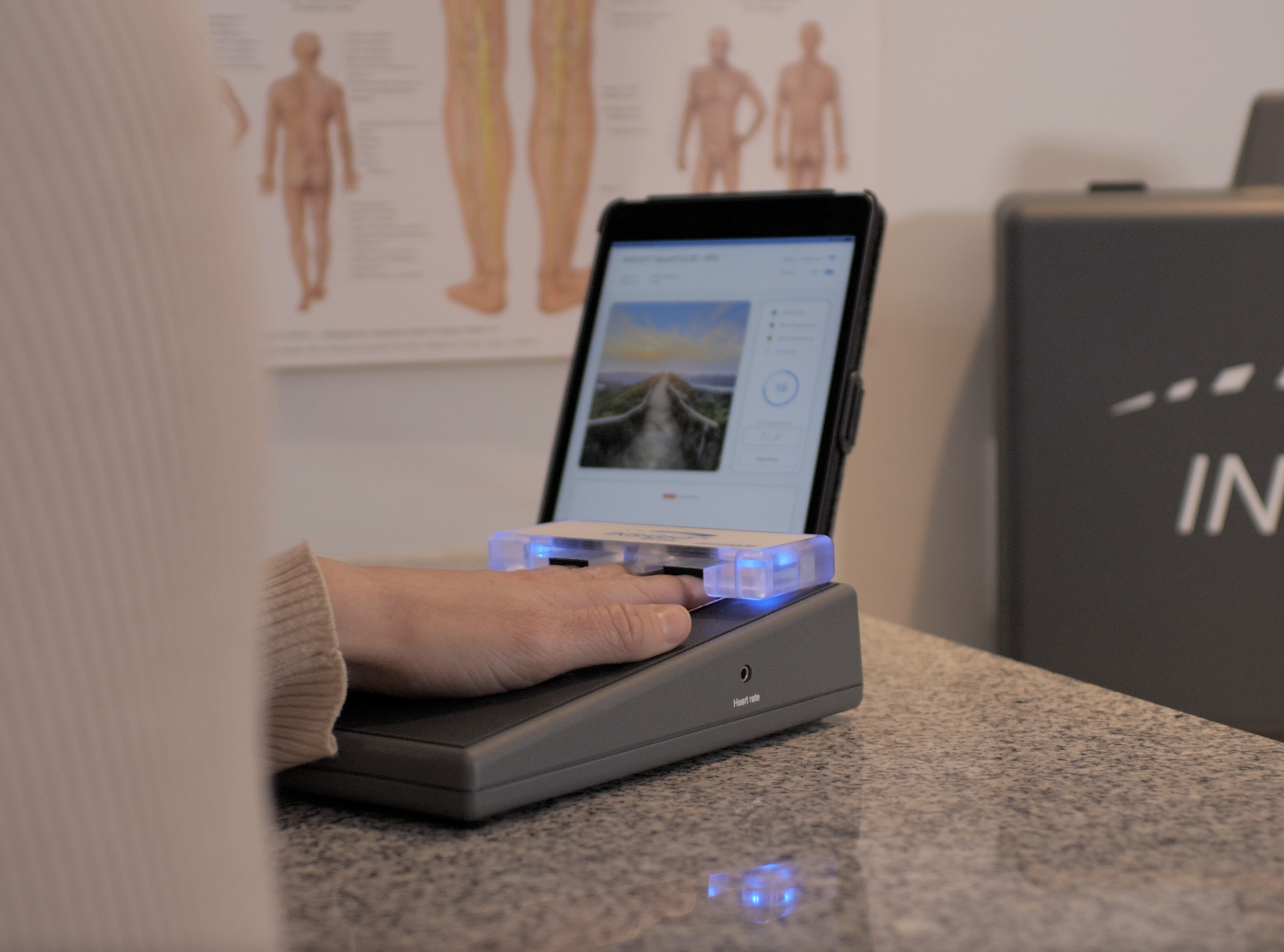
The neuroPULSE is your instrument for measuring HRV with clarity. It works alongside the full INSiGHT suite:
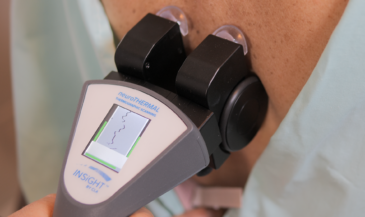
- neuroTHERMAL: Detects thermal asymmetries
- neuroCORE: Assesses postural tension
- neuroPULSE: Tracks adaptability reserve
These three scans come together in Synapse to generate a CORESCORE. With it, patients get the complete picture—and you gain confidence in how you adjust and plan care.
This is where HRV analysis becomes reality. Clinical research documents the effect of chiropractic care on HRV. You’re helping patients see their adaptability improve, visit by visit.
Your Practice Is Wired for This
Healthy heart rate variability is about potential. When you track HRV, you’re giving your patients more than a number—you’re giving them proof. You’re helping them see how their system is bouncing back, recalibrating, and handling more of life with less friction.
The chiropractic profession has always been centered around helping people adapt better. HRV gives us the tools to track that mission, guide it, and communicate it.
It’s not about adding more to your plate. It’s about turning what you already know—that the nervous system runs the show—into something visible, practical, and transformative.
Let HRV show you what the nervous system is saying. And let it show your patients what’s possible.