

Most of the world passes these moments off as stress or fatigue. But here’s what I want every chiropractor to know: when you spot subtle, involuntary eye movements—what we call resting nystagmus—you’re seeing the nervous system in real time. That’s a visible clue that adaptation is being tested (Kent JVSR).
The textbooks will tell you nystagmus is rare, something for neurologists to worry about. But as you’ll see, these findings are often a window into your patient’s real struggles with neurological regulation and resilience.
Understanding Nystagmus: Types and Why They Matter
Let’s get down to basics. Nystagmus is an involuntary, rhythmic movement of the eyes—not just a twitch, but a pattern: side-to-side (horizontal), sometimes up-and-down or rotary. In practice, spotting it for the first time makes you realize: the eyes are truly windows to the nervous system.
Resting nystagmus means these movements show up when the patient isn’t tracking anything—just looking straight ahead. That’s a big clinical clue, because it usually signals something deeper in the central nervous system (UpToDate review).
Some of the different types include:
- Congenital nystagmus: Seen in kids, usually from birth—can mean there’s been a developmental “bump in the road” with the optic nerve or brainstem (AAO: infantile).
- Acquired nystagmus: Pops up later—think trauma, neurological illness, medications (PubMed clinical review).
- Horizontal gaze nystagmus: Often seen in field sobriety testing, reflects the brain’s ability to hold a steady gaze.
- Jerk nystagmus: Slow drift one way, quick snap back. Pendular? Just back-and-forth, like a metronome.
Why does this matter? Because nystagmus, especially at rest, is often an early sign your patient is struggling to adapt. It shows up with dizziness, balance trouble, even those vague “I just don’t feel right” complaints. It’s not just a curiosity—it’s a call to look deeper.
Some clinical scenarios where nystagmus may appear:
- Unexplained dizziness or vertigo
- Child with balance problems or late milestones
- Post-concussion, chronic neck issues, or hard-to-pin-down symptoms
Spotting nystagmus is like finding a trailhead—you might not see the whole path, but you know there’s a journey ahead.
The Neurological Foundation: Why Does Resting Nystagmus Occur?
Here’s where the science gets interesting. The brainstem, cerebellum, and vestibular system work together, second by second, to keep our eyes stable. Your inner ear tells your brain where your head is. The brainstem relays the message. The cerebellum “fine-tunes” it, and the muscles around your eyes keep everything in line.
But throw a wrench into any part of this circuit—inflammation, injury, chronic tension, you name it—and the eyes can’t hold steady. That’s where you get nystagmus, especially at rest (PubMed: central nystagmus).
A true resting nystagmus often means a central origin: brainstem or cerebellum. Think strokes, demyelinating diseases, chronic stress load, or even persistent “compensation” patterns (PubMed clinical review). Sometimes it’s congenital; sometimes acquired. But always, it tells us adaptation is running up against its limits.
So when you see that flicker in the eyes, remember—it’s your opportunity to assess the entire circuit, not just the endpoint.
Learn more about INSiGHT scanning?
Fill this out and we’ll get in touch!
"*" indicates required fields
Common Causes and Patterns of Resting Nystagmus
When you see resting nystagmus, what’s usually at play?
- Central causes: Brainstem or cerebellum problems like strokes, MS, tumors, or neurodegeneration.
- Peripheral causes: Inner ear (vestibular) issues—like vestibular neuritis, labyrinthitis.
- Congenital cases: Genetic/developmental hiccups. Sometimes go unnoticed until a child’s milestones lag.
- Acquired in adults: Trauma (concussion, whiplash), chronic neurological tension, metabolic changes, medications.
Symptoms rarely show up alone. Patients may also report dizziness, vertigo, gait imbalance, blurred vision, cognitive fatigue, or delayed milestones.
Red flags? Sudden onset, additional neurological changes, severe headache—these call for immediate referral.
But remember, even “benign” nystagmus isn’t meaningless. Every flicker is a prompt to ask: “How well is this nervous system really adapting?”
Assessment of Nystagmus: Conventional vs. Neurological Approaches
The classic approach? Track the finger, watch the eyes, maybe run the HINTS exam or field sobriety test. If it looks bad enough, off to imaging or neurology they go. That’s all necessary—especially for acute or worrisome cases.
But here’s the rub: most of those tools are designed to find what’s broken, not what’s compensating or struggling to adapt.
At INSiGHT CLA, we flip the script. Instead of asking, “Where’s the lesion?” we ask, “How is this nervous system performing, right now, under real-life stress?” We’re not only looking for nystagmus—we’re searching for patterns that reveal adaptive reserve and resilience.
Classic tools focus on diagnosis and disease. Objective scanning focuses on adaptation, energy, and progress over time.
With objective scans, you move from a one-time “snapshot” to a movie—watching trends, progress, and resilience grow.
INSiGHT Scanning Technology: Making the Invisible Visible
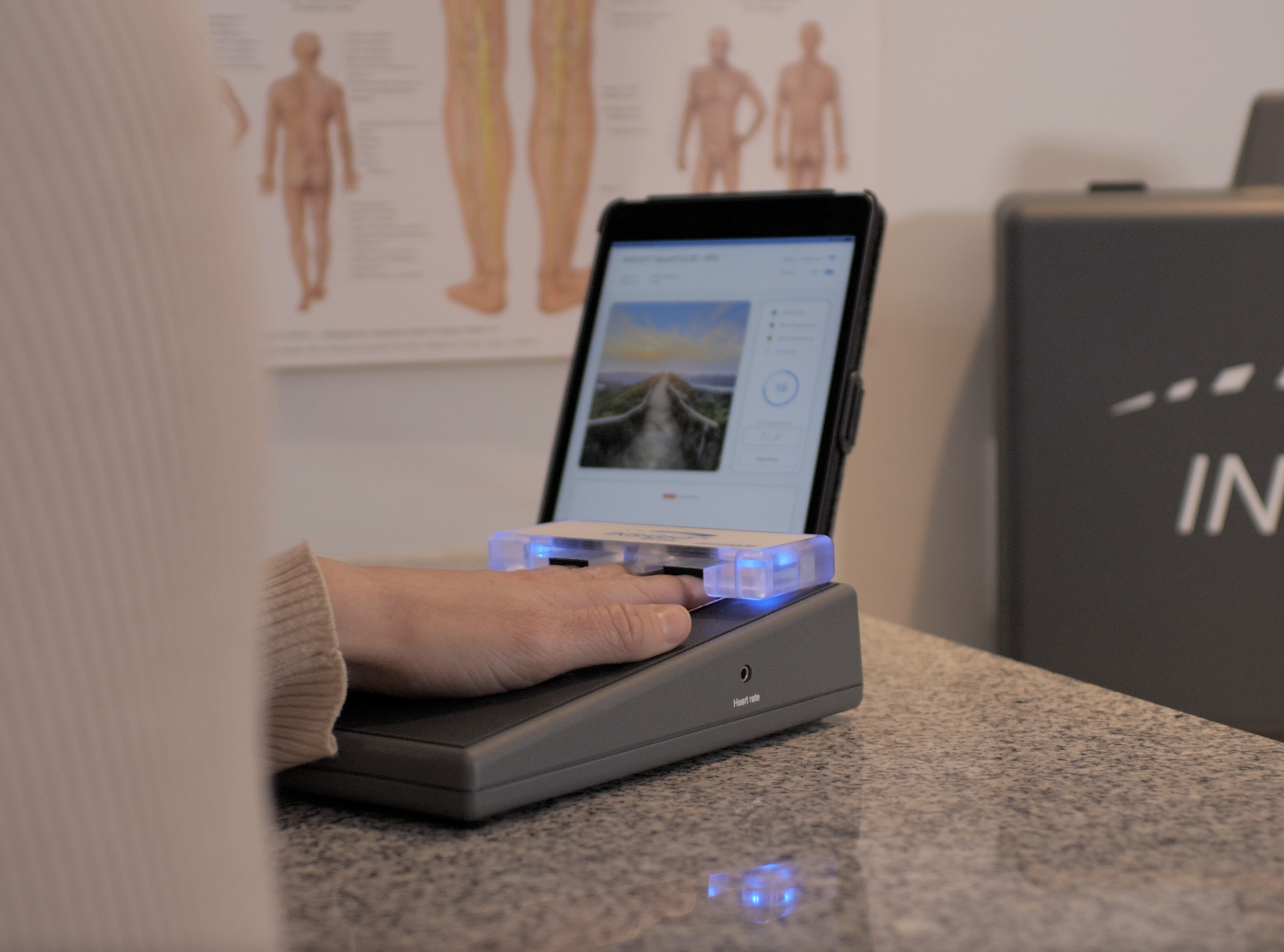
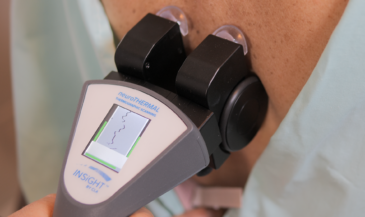
For years, nystagmus was something you noticed, maybe referred out, but rarely measured. INSiGHT scanning technology brings the neurological story to life. To determine the presence of vertebral subluxation, a comprehensive suite of neurofunctional scans has been created:
- neuroCORE (sEMG) reveals postural tension and muscle compensation, letting you see the nervous system’s larger compensation patterns.
- neuroTHERMAL measures autonomic balance, detecting dysautonomia or chronic stress that impacts balance and eye movement regulation.
- neuroPULSE (HRV) quantifies adaptive reserve; lower scores reflect less resilience, often mirrored in chronic neurological findings like nystagmus.
What sets this suite apart? It all comes together in the CORESCORE—a one-number, color-coded “report card” that both you and your patient can use.
- Set objective baselines for each patient.
- Track trends and improvements over time.
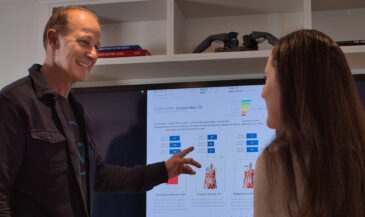
- Use scan visuals to transform patient conversations—showing, not just telling, how care is building resilience.
This is where modern chiropractic shines: not by chasing pain, but by guiding adaptability.
Traditional vs. Neurologically-Focused Chiropractic: See the Shift
| Approach | Traditional Model | INSiGHT Nerve-First Model |
| Focus | Symptoms, Diagnosis | Adaptability, Performance |
| Assessment | Observation, Imaging, Referral | Objective Scan Data, Progress Tracking |
| Goal | Rule Out Disease | Build Resilience and Adaptability |
| Patient Conversation | “Are you better yet?” | “Here’s how your nervous system is adapting.” |
Elevate Your Practice with a Nerve-First Mindset
Resting nystagmus isn’t just an “eye sign.” It’s a signal flare from the nervous system—one you can see, measure, and guide. In a world of chronic stress and adaptation overload, chiropractors who measure, not just guess, will lead the way in true neurological health.
Imagine showing patients—families, kids, seniors—proof that their nervous system is adapting, even before symptoms shift. Imagine the trust and certainty that builds, not just in your care, but in themselves.
With INSiGHT scanning at the heart of your exam, you stop being the pain doctor and become the resilience guide. That’s the chiropractic of tomorrow, available to you today.
So the next time you spot that subtle flicker in a patient’s eyes, smile. You’re about to make the invisible, visible.