
Chiropractors understand that the word subluxation is used differently in orthopedic and neurological conversations. In the orthopedic setting, a subluxation is a partial dislocation where the bones of a joint slip but still maintain some contact. In chiropractic, the term describes tension and neurological interference in a spinal region that disrupts how the brain and body communicate. Those two uses overlap in some ways, but they are not identical, and that is where confusion starts.
The reality is that symptoms of subluxation can look ordinary at first. A little swelling after a sports injury, a twinge in the back or neck that comes and goes, or a numb hand that keeps falling asleep at night. Over time, those early signals can progress into joint instability, radiating symptoms, or broader changes in breathing, digestion, and sleep. What begins as a local complaint often tells a deeper story about nervous system performance.
What Is a Subluxation?
In orthopedic and sports medicine, subluxation is a structural term. When subluxation is a partial dislocation, the joint surfaces have slipped but still maintain some connection. The joint is not in a complete dislocation, yet it is no longer moving or bearing load normally. This type of subluxation occurs after trauma such as a direct blow, fall, twisting injury, or ligament sprain.
Common examples include a partial dislocation of the shoulder, patellar subluxation at the kneecap, or a hip subluxation after a sports injury. Imaging tests such as an x-ray or MRI often help confirm the diagnosis and reveal whether ligament or connective tissue damage is present.
- Subluxation: partial dislocation with joint surfaces still touching
- Dislocation: complete dislocation with full separation of the joint
Both create symptoms, swelling, and instability, and both require careful evaluation by a healthcare provider to confirm the diagnosis and determine next steps.
The chiropractic view: tension and neurological interference
Chiropractors use the term subluxation in a more functional, nerve-first way, especially in the spinal regions. A vertebral subluxation is not a dramatic joint separation. It reflects patterns of tension and neurological interference that disrupt communication between the brain and body. This affects posture, movement, autonomic balance, and how well the nervous system adapts to daily demands.
Early spinal subluxation symptoms are often subtle. A stiff neck, limited rotation, or recurring headaches may not feel serious, yet they may signal that the nervous system is carrying a heavier load than it can manage. Over time, these tension patterns alter sensory input and motor output, and the body begins compensating in predictable ways.
Chiropractors therefore look beyond structure to nerve control, adaptability, and performance. Subluxation is viewed as a functional problem with far-reaching implications.
Why patients get caught between two meanings
Patients often search for subluxation or dislocation and find orthopedic diagrams of a joint out of its socket. Then they visit a chiropractor and hear about neurological interference. Both use the same word, but the meanings differ. Your role is to bridge that gap so patients see the full picture.
The key is to recognize that joint subluxations create instability and local symptoms, while vertebral subluxations influence broader neurological patterns. Both deserve attention, and both benefit from assessments that look at function, not only structure.
Recognizing the Common Symptoms of Subluxation
Regardless of which joint or spinal region is involved, certain traits appear again and again when subluxation occurs. These common symptoms are the body’s early warning signs that something is not stabilizing, loading, or moving the way it should.
People may notice stiffness on rising from a chair, a joint that feels weak or hesitant in certain movements, or swelling after activity. These traits may come and go for weeks before becoming persistent.
- Localized symptoms that vary with movement
- Swelling or warmth around the region
- A sensation of slipping or joint instability
- Reduced range of motion
- Postural tension or guarding
- Clicking or popping sensations
Recognizing these symptoms early allows for faster intervention and prevents chronic instability or compensation patterns from developing.
When symptoms include numbness, tingling, and radiating traits
As mechanical strain persists, the nervous system begins sending clearer messages. Numbness, tingling, or radiating symptoms often suggest nerve involvement. These patterns follow known pathways into the arms, hands, legs, or feet and indicate that both structure and neural control require attention.
Activities such as holding a phone, typing, or sleeping on one side may trigger neck pain with arm symptoms. Climbing stairs or squatting may trigger knee pain with a sense of the joint giving way. A back or neck that consistently feels tired may also indicate early neurological distress.
These traits are invitations to look deeper, beyond the local joint, into the spinal regions and neural pathways influencing those symptoms.
Learn more about INSiGHT scanning?
Fill this out and we’ll get in touch!
"*" indicates required fields
What Causes Subluxation?
Mechanical and traumatic causes
Subluxation causes vary widely, but mechanical overload is one of the most common. Trauma such as a fall, collision in contact sports, or sudden joint hyperextension can create partial dislocation or ligament strain. These events stretch supportive tissues and increase the risk of subluxation occurring again.
- Direct blow or sports injury
- Repetitive overuse
- Joint hyperextension
- Ligament laxity or connective tissue conditions
- Arthritis and degenerative joint changes
Pregnancy-related hormonal changes may also loosen ligaments, increasing joint mobility and the risk of subluxation in some individuals.
Lifestyle and neurological load
Some subluxations develop gradually due to a combination of poor posture, repetitive strain, and chronic sympathetic overdrive. Early exposure to antibiotics and other environmental toxins may also influence tissue resilience in developing bodies.
When cumulative strain exceeds the nervous system’s adaptive capacity, both joint stability and neurological control may falter. This sets the stage for recurring subluxation patterns.
How Healthcare Providers Evaluate Subluxation
Conventional evaluation
Healthcare providers begin with a physical examination that looks for swelling, bruising, reduced motion, or neurological symptoms such as numbness or tingling. When structural damage is suspected, imaging tests such as an x-ray or MRI help confirm the diagnosis and identify torn ligaments or fractures.
An orthopedic surgeon may be consulted when symptoms involve significant instability, suspected fracture, or a joint that cannot be reduced easily.
Chiropractic evaluation
Chiropractors assess both structure and function. This includes motion palpation, postural analysis, gait assessment, and evaluation of spinal regions that influence the symptomatic area. Because not all subluxations show up on imaging, functional evaluation is essential.
Chiropractors also look at how well the nervous system is adapting by assessing global patterns, not only the symptomatic joint.
Where INSiGHT Scanning Changes the Conversation
Objective data brings clarity
Neurological scanning technology helps make the invisible visible. INSiGHT neuroTECH provides a multilayered analysis of nervous system performance that supplements your physical examination and patient history. This is where the conversation shifts from guessing to knowing.
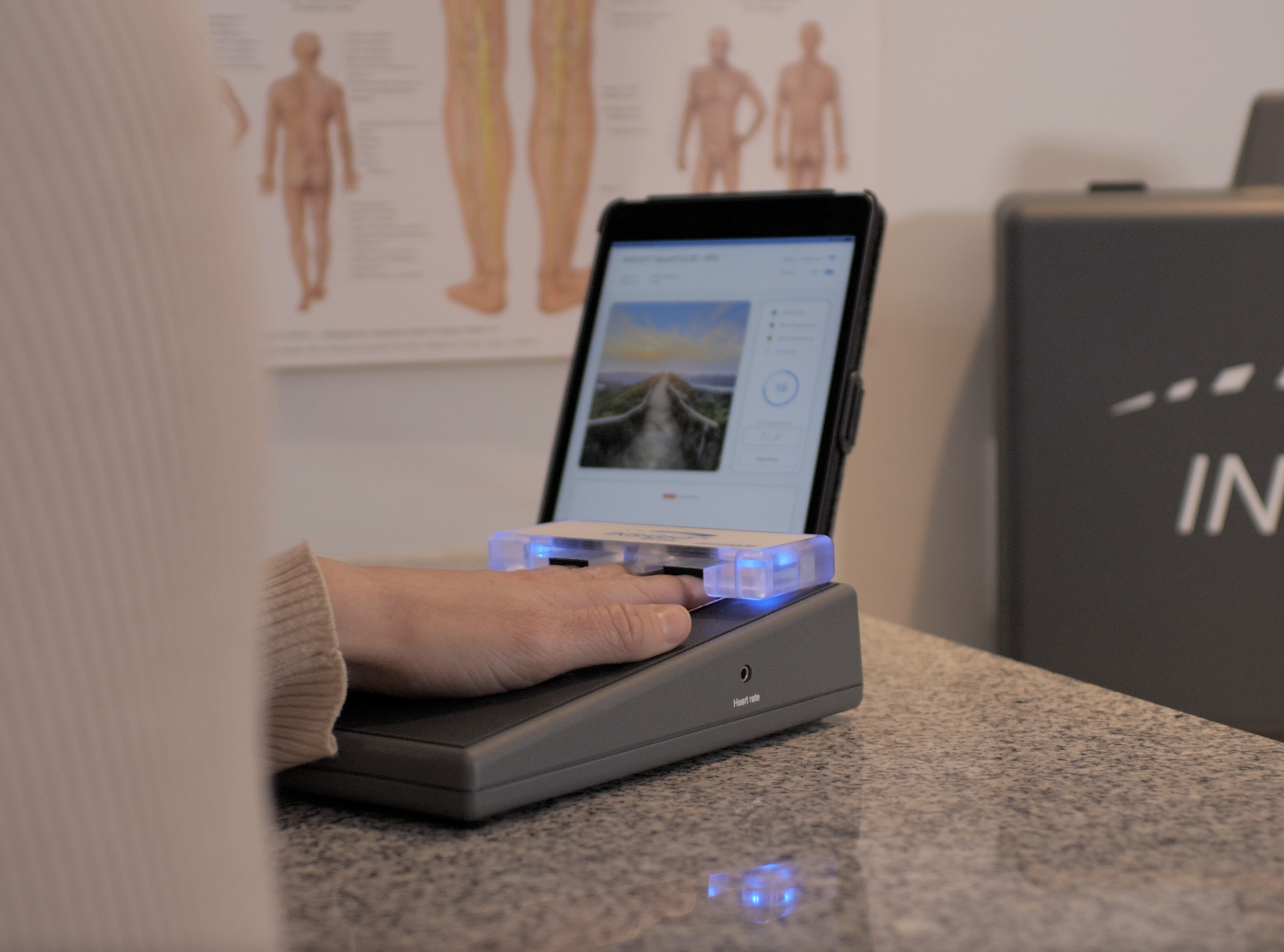
neuroPULSE HRV: Reserve
HRV measures autonomic balance and activity to show how much adaptive reserve a patient has. Low reserve often appears long before major symptoms develop. Seeing autonomic activity plotted visually helps patients understand why symptoms may fluctuate or spread.
neuroCORE sEMG: Energy
The sEMG scan evaluates postural tension and energy expenditure throughout the spinal regions. It shows which areas are recruiting too much or too little muscle activity. This is often where compensations appear after joint subluxation.
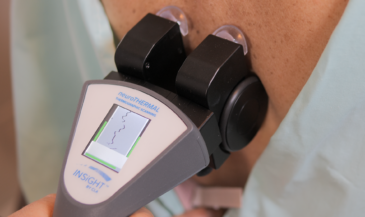
neuroTHERMAL: Dysregulation
Thermal scanning identifies asymmetries in temperature regulation that indicate autonomic imbalance. These patterns reflect deeper neurological distress that cannot be felt directly but influence symptoms throughout the body.
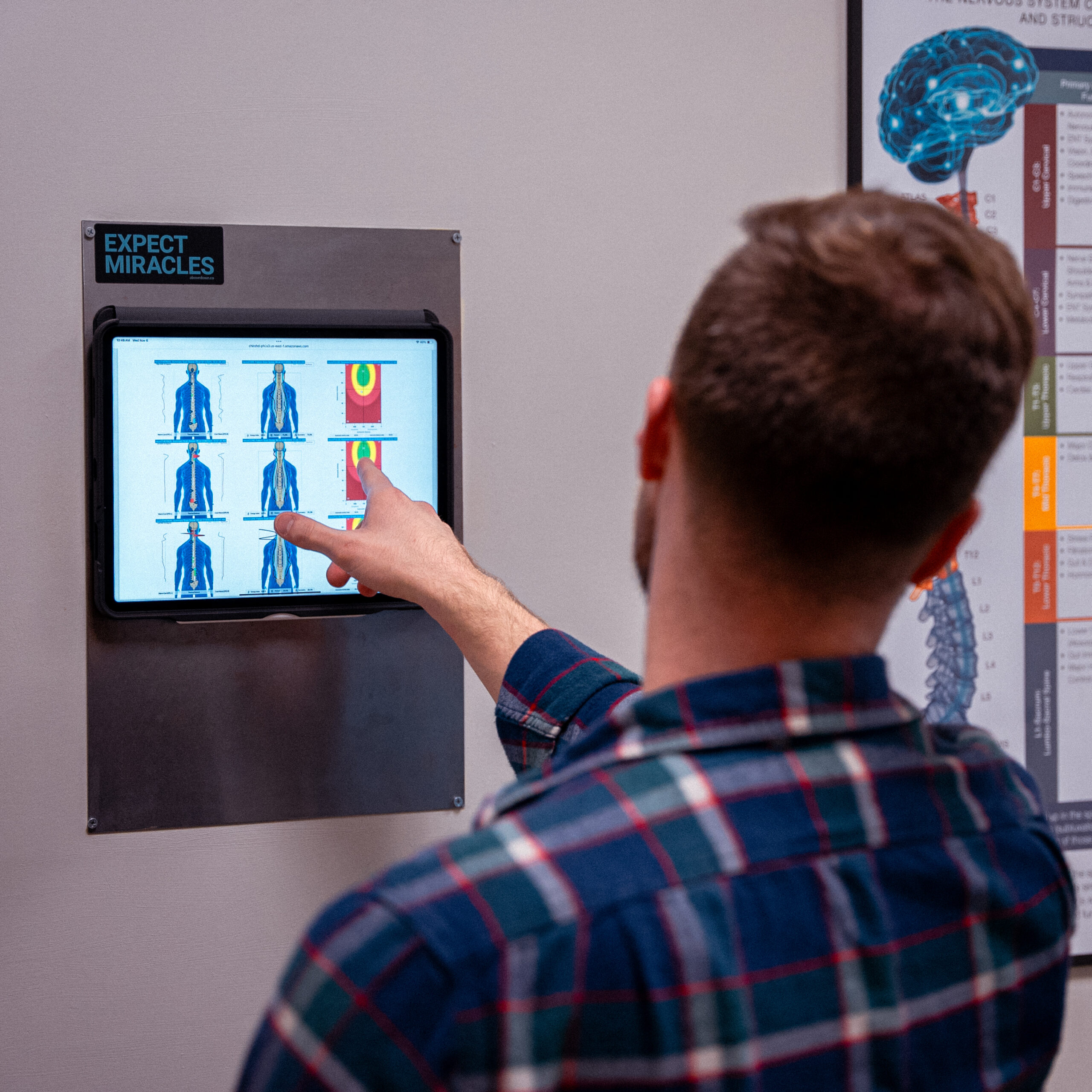
CORESCORE and RED
The CORESCORE combines HRV, sEMG, and thermal findings into a single neural efficiency number. The RED framework interprets these findings through the lens of Reserve, Energy, and Depth, providing a simple way to explain complex neurology. These tools help chiropractors design care plans and provide clear proof your care is making a difference.
Care Options and Recovery Considerations
Immediate care for joint subluxation
When a joint is partially dislocated, a healthcare provider may need to reduce the joint and protect it while tissues heal. This may include rest, ice, compression, elevation, bracing, or referral to a physical therapist who helps strengthen the muscles surrounding the joint.
Recovery time depends on the severity of the injury and how much ligament support has been lost. Rehabilitation focuses on stability and controlled movement.
Neurologically-Focused Chiropractic Care
For spinal subluxation, chiropractors use adjustments to restore motion and reduce neurological interference. Care plans are informed by objective scanning data and re-examinations that compare progress with baseline findings.
Symptoms of subluxation can present as local joint instability, radiating neurological traits, or broader shifts in breathing, digestion, sleep, and energy. Recognizing these patterns early helps chiropractors guide patients toward effective care rooted in understanding, not uncertainty.
Objective analysis through INSiGHT scanning technology elevates this process by clarifying how the nervous system is truly performing. When patients see their findings in color and understand the story behind their symptoms, they value care differently. They recognize that chiropractic is not only about relieving discomfort. It is about restoring adaptability and helping the entire system function at its best.