
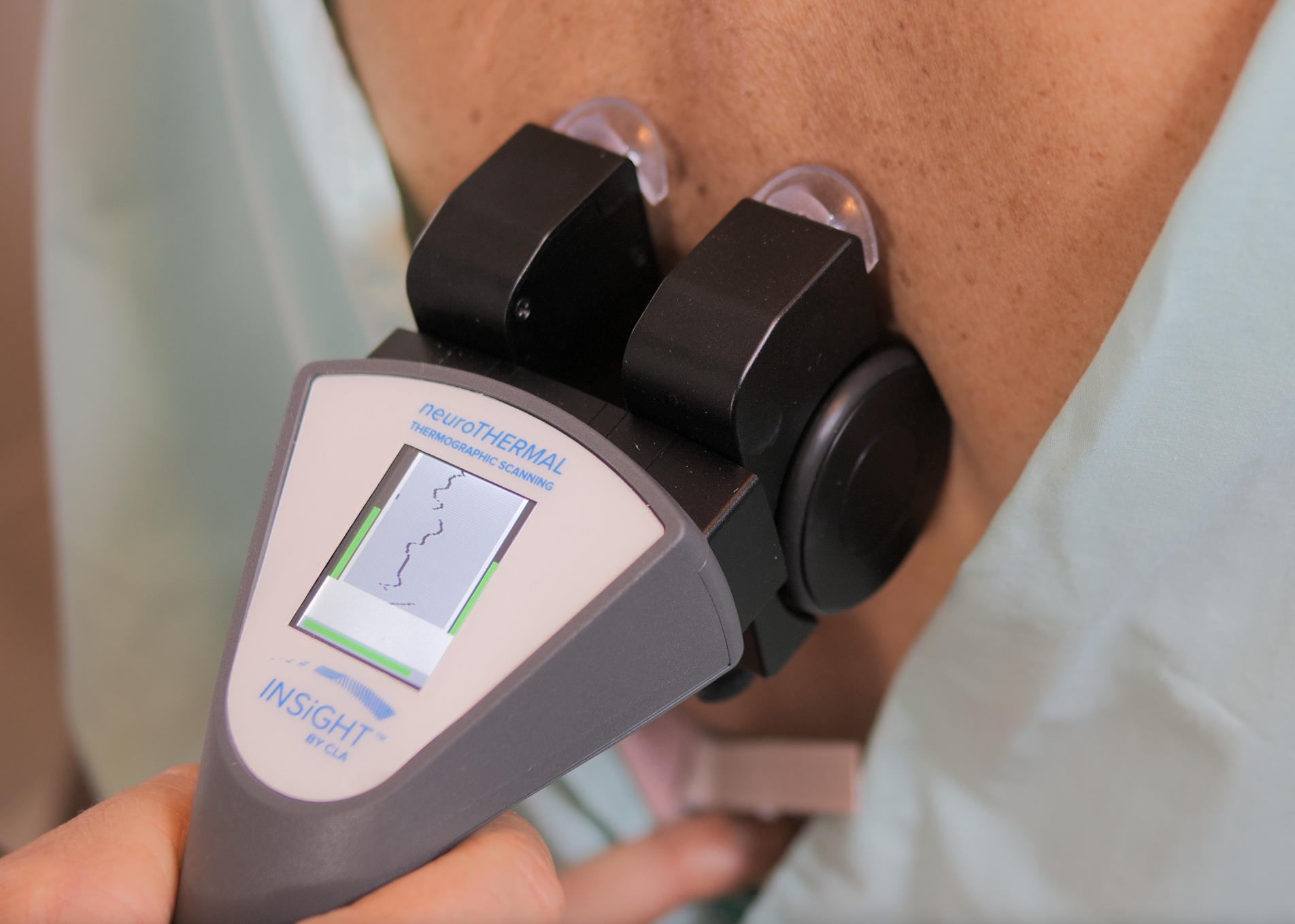
But in chiropractic, we don’t use those kinds of thermal cameras. They’re great for finding leaky pipes and overloaded wires, but they’re not designed to measure the subtle, segmental temperature patterns that reveal how the autonomic nervous system is regulating the spinal nerve functions. Instead, chiropractors use specialized instruments built specifically for neurological thermography (like the neuroTHERMAL, part of the three technologies that make up the INSiGHT neuroTECH assessment suite. to assess real-time changes in skin temperature along the spine.
This distinction matters, because thermography in chiropractic isn’t about taking a picture. It’s about understanding how well the nervous system is adapting, regulating, and responding to stress. So before you search for a traditional thermal camera used for spinal analysis, let me show you what we actually use, why it matters, and how thermography plays a vital role in understanding nervous system performance.
Why a Traditional Thermal Camera Can’t Assess the Spinal Nerves
A typical thermographic camera used for electrical inspection, home insulation, or plumbing diagnostics is engineered to detect broad temperature zones from a distance. These devices produce wide-angle thermal images that show large surface temperature differences, often measured in whole degrees.
Chiropractic thermography requires something entirely different. Along the spine, the autonomic nervous system regulates blood flow to the skin. When there is tension or neurological interference, that regulation shifts. These shifts often appear as temperature differences of only fractions of a degree — changes that a general-purpose thermal camera simply cannot resolve with any reliability.
That’s why chiropractors do not use traditional thermal imagers for spinal analysis. They aren’t consistent enough. And they aren’t designed to track segmental patterns along the spine. Instead, chiropractors use instruments built specifically for paraspinal thermography — instruments that measure, compare, and record tiny bilateral temperature differences along each spinal region. These instruments are Class II medical grade technologies that are rigorously tested to maintain diagnostic levels of accuracy.
So yes, thermography is key in chiropractic. But no, we don’t use the thermal camera you might be picturing.
What Chiropractic Thermography Actually Measures
When you and I first learned to examine a spine, we were taught to feel for tension, observe posture, and listen carefully to what our patients were telling us. Those skills still matter. But if all we ever do is look at vertebra, posture, and symptoms, we miss the deeper story that lives inside the nervous system. That is where a thermography changes everything.
Thermography in chiropractic focuses on the autonomic nervous system, which controls blood vessel tone, skin temperature, and the body’s response to stress. When the spine is under strain or when neurological interference is present, the autonomic system’s ability to regulate those processes becomes distorted.
Thermography helps a chiropractor detect:
- Temperature asymmetries along the spine that reflect autonomic imbalance
- Heat patterns that indicate increased sympathetic activity
- Cool zones where the body has lost regulatory responsiveness
- Persistent patterns of dysregulation that correlate with chronic stress
The beauty of thermography is that it allows us to see changes in autonomic performance long before symptoms appear. It is one of the clearest windows into how the nervous system is responding to the daily demands of life and how it has adapted to daily stress.
But in order to see these patterns clearly, we need equipment designed specifically for the task. That’s where chiropractic thermography instruments come in.
Learn more about INSiGHT scanning?
Fill this out and we’ll get in touch!
"*" indicates required fields
The neuroTHERMAL: Chiropractic’s Answer to the Thermographic Camera
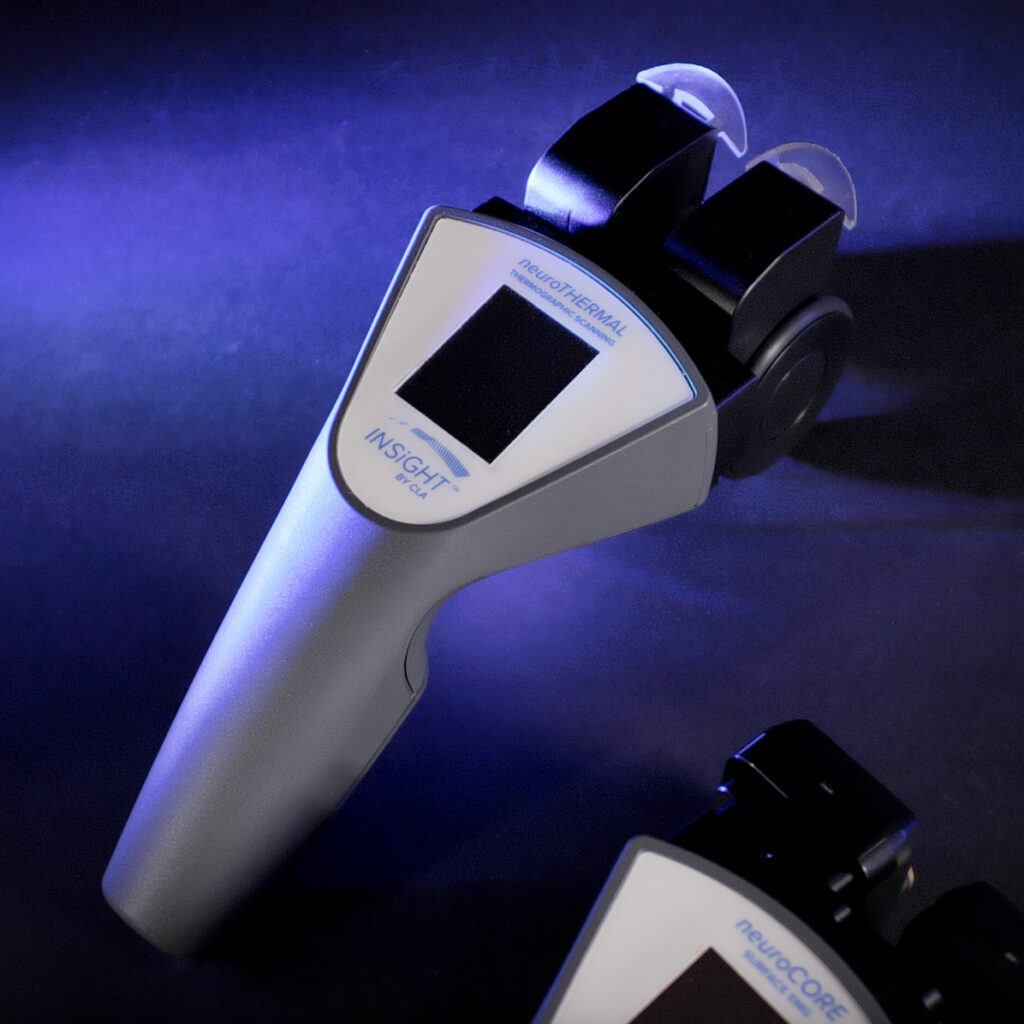
To measure the tiny temperature variations that matter to a chiropractor, you need an instrument built precisely for spinal evaluation. The INSiGHT neuroTHERMAL is one of the most widely used tools for this purpose.
Unlike a general infrared camera, the neuroTHERMAL:
- Measures skin temperature changes as small as 0.01°C
- Scans using sensors that capture radiant heat from the skin for consistent readings
- Follows the contours of the spine from sacrum to upper cervical
- Provides segmental and rolling scans that highlight autonomic patterns
- Captures reproducible readings needed for progress tracking
Instead of giving you a wide-angle thermal image, it gives you precise, clinically meaningful thermal patterns from every spinal level — the kind that help you analyze nerve tension, sympathetic overdrive, and how the body is adapting under care. In other words: the neuroTHERMAL isn’t “a camera.” It’s a neurological medical/chiropractic device.
How Chiropractic Thermography Works During a Scan
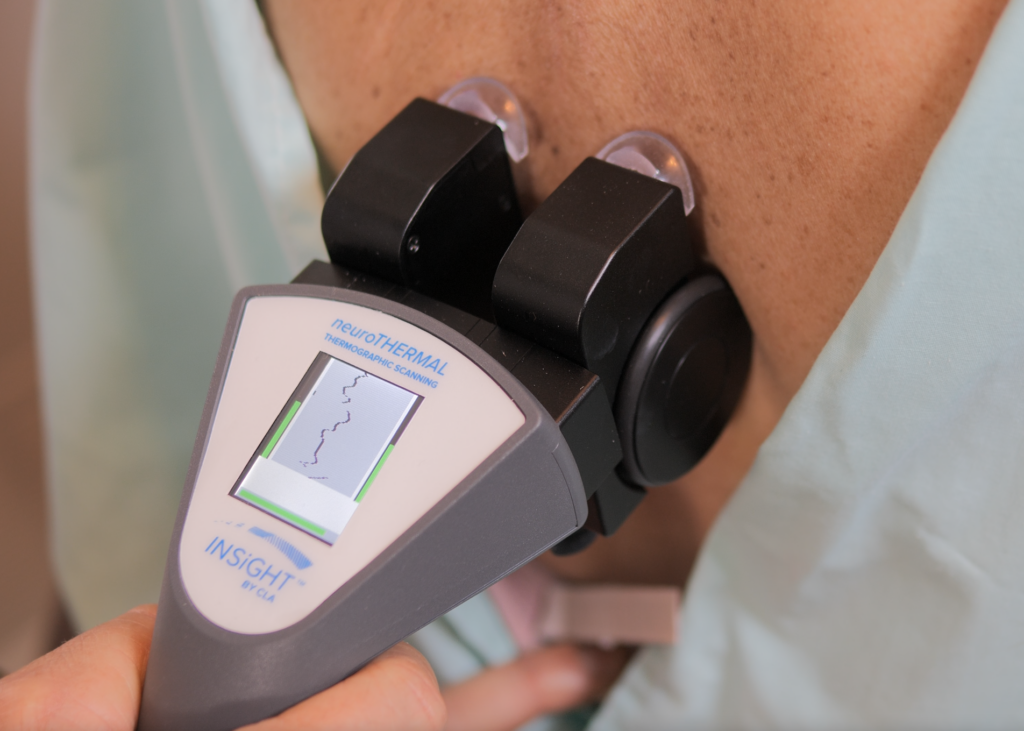
The process is fast, simple, and non-invasive. The patient sits comfortably as the chiropractor or examining staff guides the neuroTHERMAL along both sides of the spine. The device measures the radiant heat emitted from the skin and compares left-to-right readings at each segment.
What the chiropractor sees is not a picture, but a pattern — a map of temperature variation that reflects the underlying autonomic activity at the spinal level.
Common patterns include:
- Local temperature spikes from increased sympathetic activity
- Cool regions reflecting decreased autonomic responsiveness
- Segmental asymmetries revealing nerve dysfunction
- Clusters of imbalanced readings showing chronic stress patterns
These patterns help the chiropractor understand where the nervous system is struggling, how intense the dysregulation is, and how the body is responding to chiropractic adjustments over time.
Why Thermography Matters in a Stress-Filled World
Most patients don’t realize this, but the nervous system doesn’t wait for symptoms to show before it becomes overwhelmed. Stress is carried through the autonomic system long before pain arrives.
Thermography reveals this hidden stress. It shows how well the body is adapting, or failing to adapt. It gives insight into patterns of sympathetic overdrive, parasympathetic exhaustion, and segmental nerve tension — often years before a patient would describe symptoms.
This makes thermography one of the most important tools in a neurologically focused practice, because it connects what we feel with what the nervous system is actually doing.
Part of a Bigger Picture: neuroTHERMAL + HRV + sEMG
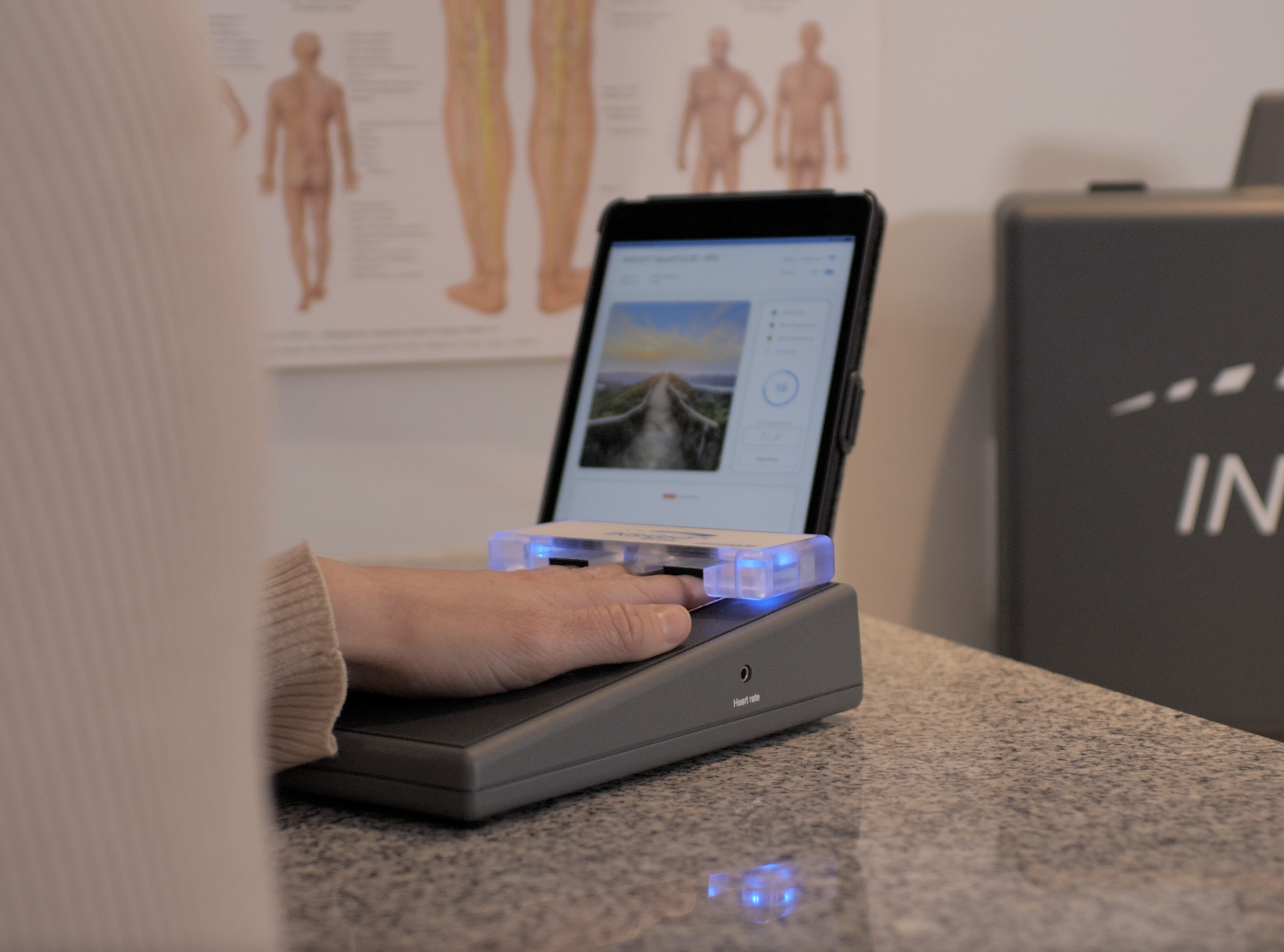
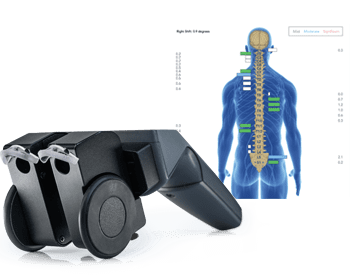
In chiropractic, thermography doesn’t stand alone. The neuroTHERMAL is part of INSiGHT’s neuroTECH suite, which includes the neuroPULSE HRV and neuroCORE sEMG. Together, they create a three-dimensional view of nervous system performance.
- HRV (neuroPULSE): Shows overall adaptability and autonomic balance
- sEMG (neuroCORE): Shows energy expenditure and postural muscle activity
- Thermography (neuroTHERMAL): Shows dysregulation patterns along the spine
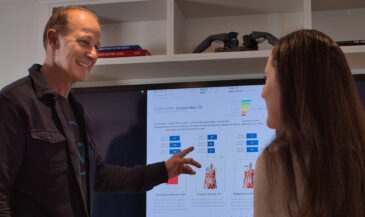
These three insights combine inside Synapse software to create clear, easy-to-understand reports. Patients can see their progress, track improvements, and understand why ongoing care matters. It becomes proof your care is making a difference in a way they can see and remember.
Why Chiropractors Use Thermography Instead of Relying on Symptoms Alone
If you have been in practice for any length of time, you already know that symptoms are unreliable reporters. Some of your most stressed patients say they “feel fine,” while others feel awful even as their body is beginning to reorganize and heal. That is why a neurologically focused chiropractor cannot build a care plan around symptoms alone. We need objective ways to see what the nervous system is doing underneath the surface. Thermography gives us that window.
The autonomic nervous system is constantly regulating blood flow, skin temperature, and vascular tone as it responds to physical, chemical, and emotional stress. When vertebral subluxation and neurological interference are present, that vasomotor control can become distorted, creating abnormal temperature patterns along the spine. Research in chiropractic thermography has shown that paraspinal skin temperature differentials are a valid way to assess autonomic dysfunction related to vertebral subluxation and dysautonomia, and that paraspinal thermal scanning can be performed with good to excellent reliability.
This is where thermography shines. Instead of guessing where the nervous system is in sympathetic overdrive or where regulation has begun to fail, a thermal scan reveals temperature differences that your hands cannot feel. Those differences may represent:
- Areas of increased sympathetic activity and vasoconstriction, indicating nerve interference and heightened stress responses
- Zones of cooling where autonomic control has been blunted, suggesting reduced responsiveness or chronic dysregulation
- Segmental temperature patterns that correlate with specific spinal regions and their autonomic outflow
Because thermography focuses on physiology rather than anatomy, it often picks up functional abnormalities long before any structural changes would appear on an X-ray. In that sense, thermography can help with early detection of stress patterns that, if left unaddressed, may progress into more obvious symptoms down the road. Instead of waiting for the body to wave a red flag, you can see the stress building in the heat patterns and temperature variations along the spine.
Most importantly, thermography moves your conversations away from, “How do you feel today?” and toward, “How is your nervous system adapting today?” That subtle shift is the hallmark of a vitalistic, nerve-first practice. Thermography scanning tech gives you objective, reproducible data about nervous system performance, while still honoring the patient’s story. It allows you to blend their lived experience with clear thermal findings, so your recommendations are grounded in both what they feel and what their nervous system is actually doing.
Bringing Clarity to the Nervous System
Thermography is about understanding how the nervous system is adapting. With chiropractic-specific instruments like the neuroTHERMAL, we can see patterns of stress that our hands alone cannot detect. We can track progress objectively. We can show patients what’s happening inside their spine and nervous system in a way they instantly understand.
And for many patients, that visual moment is the moment they grasp why chiropractic care is essential for long-term resilience, not just temporary relief.